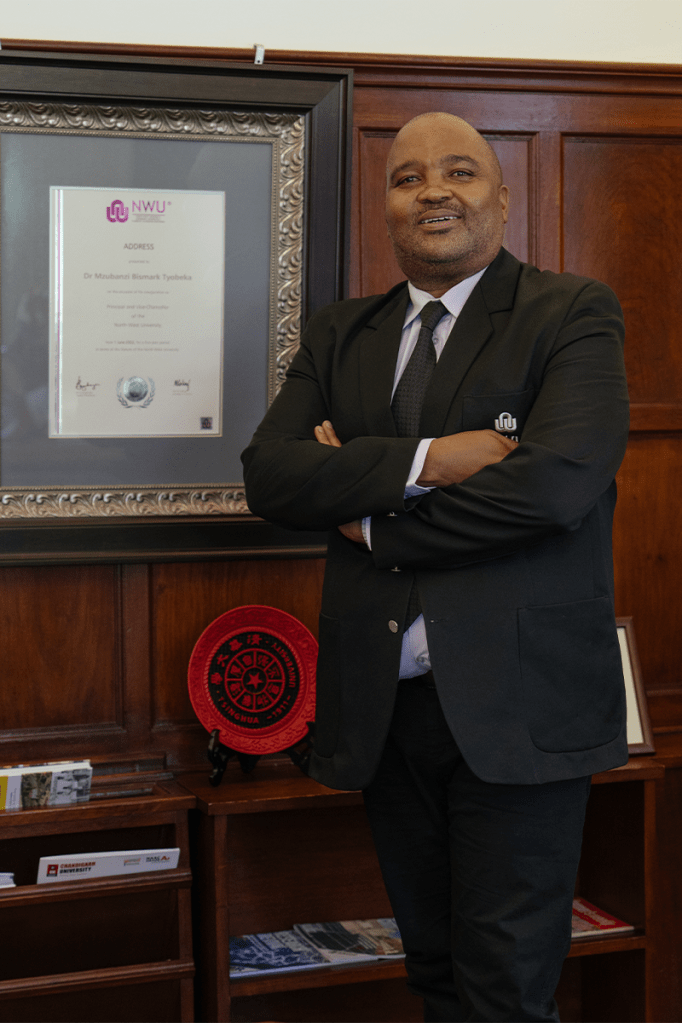
Picture: NWU vice-chancellor and principal, Bismark Tyobeka
By AGISANANG SCUFF
4 August 2026 – The North West University (NWU) vice-chancellor and principal, Professor Bismark Tyobeka said science, technology, engineering and mathematics (STEM) education is essential to South Africa’s future. Tyobeka said the country needs a new generation of scientists, engineers, innovators and technically skilled professionals to address challenges such as energy security, water scarcity, food production, healthcare, climate change and digital transformation.
He further said a strong foundation in STEM also equips young people with critical-thinking, problem-solving and analytical skills that are valuable in almost every modern career. Tyobeka added that, yet talent is not determined by geography, family income or access to well-resourced schools.
“Promising young minds can be found in every community, including rural areas where learners may have had limited exposure to laboratories, researchers or STEM career opportunities. By inspiring learners to pursue these fields, South Africa can broaden its skills base, reduce inequality and ensure that more young people can participate meaningfully in the industries and innovations that will shape the country’s economic and social development.
“This is why the NWU is deliberately taking science beyond its campuses and into rural communities. The 2026 Vice-Chancellor’s Science Day, to be hosted at Hoërskool Wolmaransstad on 5 August 2026, reflects the belief that science belongs to everyone and should never be restricted by location, background or opportunity,” he said.
Tyobeka said presented under the theme: “Science, technology and innovation are for everyone”, the event will give learners from Wolmaransstad and surrounding schools an opportunity to interact with researchers, innovators and industry experts. He said choosing a town outside a major urban centre is an important part of the initiative.
“It brings possibilities directly to learners who may otherwise have little contact with universities or scientific careers. Through practical demonstrations, conversations and exposure to real-world applications, the NWU hopes to awaken curiosity, build confidence and help learners recognise that a future in STEM is both achievable and worth pursuing,” said Tyobeka.
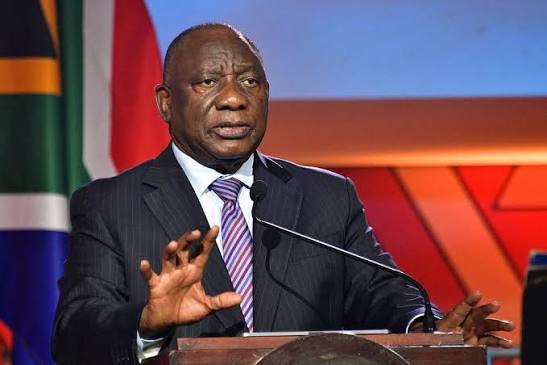
4 August 2026 – The Republic of South Africa (RSA) president, Cyril Ramaphosa said the Mpumalanga Highveld, between the towns of Bethal, Davel and Morgenzon, are powerful symbols of South Africa’s energy future. Ramaphosa said wind turbines rise above a landscape that was once dominated by the cooling towers of coal-fired power stations.
He further said the wind turbines form part of the first phase of the Ummbila Emoyeni wind farm that entered into commercial operation last week. Ramaphosa added that the facility has been built by Seriti Green, a subsidiary of Seriti Resources, a South African company.
“This is a demonstration that South Africa’s clean energy investments are not only being driven from abroad, but also by domestic firms with the foresight to invest in their country’s future. The 155 MW of clean energy generated by the 25 wind turbines will be wheeled through Eskom’s transmission network to supply Seriti’s coal mining operations.
“Once completed, this 900 MW hybrid energy cluster will comprise wind, solar and battery storage. Once fully operational, it will be the largest hybrid energy facility in the country. The Ummbila Emoyeni project is an important contribution to South Africa’s evolving energy mix,” he said.
Ramaphosa said the 2025 Integrated Resource Plan aims to achieve a diversified portfolio of energy sources that relies more on wind and solar and a reduced share of coal, supported by gas, battery storage and nuclear power. He said since the late 1800s, the coalfields of Mpumalanga have helped industrialise our country.
“Coal miners, artisans and power station workers in Mpumalanga have produced the electricity to power our mines, factories, businesses, hospitals, schools and homes. It is therefore significant that it is on the Mpumalanga highveld where some of the energy systems of tomorrow are being built, while drawing on the strengths and resources we already possess, including coal-fired power.
“Even though coal continues to dominate South Africa’s energy mix, the growth of renewable energy is accelerating. According to Statistics SA, in 2016 renewable energy supplied just 2% of locally generated electricity. By 2021 that number had risen to 6% and by 2024 renewables accounted for 9% of local electricity generation,” said ramaphosa.
He said the country now has close to 16 GW of installed renewable capacity, with 32 GW of projects now in the grid connection process and expected to connect by 2030. Ramaphosa said the installation of rooftop solar by households and businesses has exceeded expectations.
“According to Statistics SA, there has been an 86% increase in households with solar panels over just a three-year period, totalling 675,000 households in 2025. The investment in clean energy technologies, which was accelerated by load shedding in recent years, was enabled by far-reaching legislative and regulatory reforms.
“The removal of the self-generation licensing threshold and the revival of the Renewable Energy Independent Power Producer Procurement Programme unlocked large-scale private investment in electricity generation. Attracting clean energy investment supports our climate commitments while promoting inclusive growth and job creation,” he said.
Ramaphosa said at this year’s South Africa Investment Conference more than R50 billion in green energy investment commitments were announced. He said they also released South Africa’s first Energy Infrastructure Investment Prospectus, a coordinated pipeline of investment-ready projects across the electricity value chain.
“Secure, reliable and affordable energy is critical to growing industry, developing our economy and improving the lives of citizens. The just energy transition is not only about protecting affected communities, workers and businesses from the impact of the shift towards renewable energy. ‘Going green’ must also make electricity cheaper for consumers.
“That is why we are working to establish a competitive electricity market in which several operators will compete to provide electricity most efficiently and at the lowest cost. Last week, the Cabinet approved the publication of the Revised Electricity Pricing Policy and the draft Electricity Sector Market Transformation Position Paper for public comment,” said Ramaphosa.
He said, also in the past week, he received a progress report from the task team working towards the establishment of a fully independent state-owned entity responsible for transmission and the operation of the electricity market. Ramaphosa said the opening of the Ummbila Emoyeni facility in Mpumalanga and the clean energy revolution underway bear witness to a country that, even when confronted with an energy crisis, adapted, reformed and laid the groundwork for a new future.
“It is now incumbent on the government, working with business, labour and civil society, to ensure that South Africa’s energy transition delivers for all.
It must be a transition that is inclusive, that expands opportunity and that leaves communities stronger than before. Most importantly, it must deliver affordable electricity for all, now and into the future,” he said.
4 August 2026 – The Chairperson of the Portfolio Committee on Higher Education, Tebogo Letsie said Technical and Vocational Education and Training (TVET) colleges, if properly managed and adhered to their legislative mandate, could be an important response to the country and industry skills needs. Speaking during the committee’s oversight visit to Gert Sibande TVET College in Standerton, Mpumalanga on Monday, Letsie said these institutions should be used to their full potential to address skills needs as well as access to higher education.
“If they do what they are supposed to be doing, these institutions can be the country’s response to access to higher learning, our universities do not have enough spaces to accommodate the thousands of young people who pass matric every year, we need to move to occupational studies as a response to country and industry needs for skills.
“The committee also recommended that TVET colleges in the various locations across the country should partner with industries, ensure that the curriculum was aligned with industry needs and avoid producing outdated skills that might not be needed and could negatively affect students when looking for work,” he said.
However, Letsie warned that acts of poor leadership, mismanagement and other forms of breaking the law could threaten TVET colleges from realising their full potential. He further said during yesterday’s visit to Gert Sibande, college management and the Department of Higher Education struggled to respond to the committee’s oversight questions on filling of vacancies, employment of foreign nationals in non-scarce skills positions, as well as what seemed to be confusion in the recruitment process of the college principal.
“The committee wanted to know why so many senior positions were occupied in acting capacity. The recruitment process for the principal was halted after the panel raised concerns about the legality of the requirement of the Nyukela Senior Management Service pre-entry certificate as well as why foreign nationals were employed in posts that were not classified as scarce skills.
“Another question which the committee demanded an explanation on was the reinstatement of an official who was dismissed after being found guilty of tampering with marks, but got her job back after appealing with the department,” added Letsie.
He said having an acting principal and other senior posts occupied in acting capacity is causing instability in the leadership of the institution. Letsie said they would like the department to look into that and address the situation.
“The issue of foreign nationals employed in non-scarce skills jobs is in violation of the Employment Service Act. It is against the law and we are not xenophobic, but we are protecting the laws of the country. Both the college leadership and the department committed to provide comprehensive written responses to the committee on all the raised concerns.
“Today, the portfolio committee will conduct oversight to Nkangala TVET College in Emalahleni,” he said.
4 Phatwe 2026 – Sepodisi kwa Kuruman se batlisisa kgetsi ya polao ntle le maikaelelo. Se, se tla morago ga kotsi e masisi ya dijanaga kwa tselakgolo ya N14 magareng ga Kuruman le Kathu e latotseng matshelo a le robedi ka Lamatlhatso. Go begwa fa tiragalo e, e diragetse fa masigo asa ka ura ya bongwe mo mosong.
Sebueledi sa sepodisi kwa porofenseng ya Kapa Bokone, Lieutenant Colonel Thabo Litabe are batho ba le robedi ba ba magareng ga dingwaga di le 26 le 42, ba ile ba latlhegelwa ke matshelo a bone mo kotsing eo. Litabe are banna ba le supa le mosadi a le mongwe ba ile ba tlhokafala.
“Mongwe wa bapalami go tswa mo sejanageng sa modiro wa Toyota Starlet one a tlhokafalela kwa lefelong la tiragalo, fa mokgweetsi wa sejanaga seo, a ile a tlhokafalela kwa bookelong. Batho ba le batlhano go tswa kwa sejanageng se sengwe sa modiro wa Nissan Micra, le bone ba ile ba latlhegelwa ke botshelo mo kotsing ya sejanaga.
“Mongwe wa bone o tlhokafaletse kwa bookelong. Sepodisi se tsweletse go kopana le balosika go ka netefatsa itshupo ya baswi. Dipatlisiso di tsweletse mabapi le kotsi eo,” Litabe wa tlhalosa.