Ramaphosa suspends National Police Commissioner


By OBAKENG MAJE

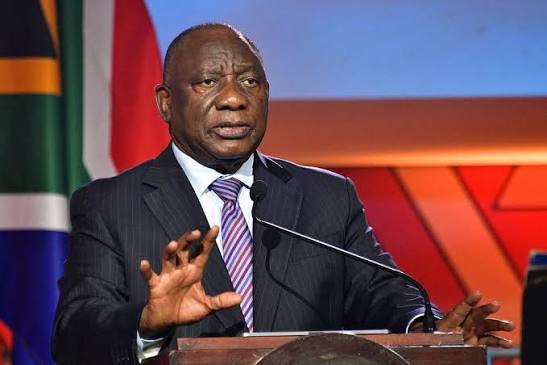
23 April 2026 – The Republic of South Africa (RSA) president, Cyril Ramaphosa has placed the National Police Commissioner, General Fannie Masemola on precautionary suspension. This comes after Masemola briefly appeared before the Pretoria Magistrate’s Court earlier this week over contravention of the Public Finance Management Act (PFMA) related to the awarding of a R228 million contract to Medicare 24 – a business linked to alleged criminal mastermind Vusimuzi “Cat” Matlala. Ramaphosa held a media briefing together with acting Minister of Police, Prof Firoz Cachalia at the Union Buildings on Thursday afternoon.

“In consideration of the seriousness of these charges and the critical role of the National Police Commissioner in leading the fight against crime, I have agreed with Masemola that he be deemed to be on precautionary suspension pending the conclusion of the case.

“Recalling the commitment made during the 2026 State of the Nation Address (SONA) to step up the fight against organised crime, corruption and violence, the decision to suspend Masemola was one rooted in accountability,” he said.

Ramaphosa further said he laid bare the government’s efforts to restore credibility of the police service following years of state capture. He added that they have worked hard over the last few years to rebuild the law enforcement agencies and security services in the wake of state capture, to restore their credibility and integrity.

“We have taken measures to uncover malfeasance and investigate allegations of wrongdoing within the ranks of the police and other institutions.

“These measures have been necessary to ensure accountability and to devise remedial action to prevent the abuse of office and the theft of public resources. In all these efforts, we have promoted respect for the rule of law and upheld the principle that law enforcement and prosecutorial agencies must be able to act without fear, favour, or prejudice,” said Ramaphosa.

He said it is this principle that informs their response to the appearance in the Pretoria Magistrate’s Court earlier this week of Masemola on charges of contravention of the Public Finance Management Act (PMFA). Ramaphosa acknowledged that Maaemola’s court appearance is “understandably a cause of great concern for all South Africans”.

“However, we should not allow this development to weaken our determination or diminish our ability to fight against crime and corruption. We should not allow anything to destabilise the police service or undermine the morale of those entrusted to protect our people.

“We must hold firm to the values of our Constitution and, in this case as in all cases, allow the law to take its course,” he said.

Meanwhile, Ramaphosa has appointed Major General Puleng Dimpane as the acting National Police Commissioner.

taungdailynews@gmail.com

“We must defend and build democracy across the world”


By STAFF REPORTER

20 April 2026 – The Republic of South Africa (RSA) president, Cyril Ramaphosa said as they prepare for Freedom Day on 27 April 2026, they reflect on their journey to deepen democracy and advance human rights for all. Ramaphosa said 30 years after they adopted their new constitution, South African society remains grounded in a culture of human rights, the rule of law and the expression of people’s will through regular elections. 

He further said what they have built and continue to build in this country is distinct. Ramaphosa added that this places a responsibility on South Africa as an active member of the international community to advance the constitutional values beyond the borders. 

“This is why I was proud to represent democratic South Africa at the 4th meeting of the ‘In Defence of Democracy’ initiative in Barcelona, Spain this past weekend. The initiative was launched by Brazil and Spain in 2024 to confront the threat posed to democratic institutions by extremism, polarisation, disinformation and other forms of intolerance.

“This initiative, which brings together countries from across the world, has become especially critical at this time. In many places, democracy is under threat,” said Ramaphosa.

He said the principles of solidarity, cooperation and friendship are being challenged by the resurgence of narrow nationalism, prejudice and intolerance. Ramaphosa said conflicts and wars rage across the globe.

“Some of these are linked to battles over resources, while others have their origins in colonial-era divisions shaped by violent conquest. 

“At the gathering in Barcelona, I said that we cannot allow ourselves to be bullied into silence when the dignity and human rights of others are being trampled on. We made a call for the United Nations to reassert itself in global affairs,” he said.

Ramaphosa said for democratic values to thrive, all institutions of global governance need to be reformed so that all the countries and peoples of the world are represented. He said it has become clear that bodies like the UN Security Council are powerless to intervene in conflicts and prevent genocide. 

“The gulf of inequality within and among nations is a serious challenge to democracy. The laws, rules and institutions that support democracy must ensure that people’s lives are improved. All people must have an equal opportunity to contribute to decisions that affect them. 

“That is why we called on leaders to support the establishment of an International Panel on Inequality, which will evaluate alternative policies for addressing inequality to inform governments, policy makers and the international community,” said Ramaphosa. 

He said the establishment of the panel was one of the recommendations of the groundbreaking global inequality report produced by a committee of independent experts that South Africa commissioned during its G20 Presidency. Ramaphosa said the ‘In Defence of Democracy’ initiative is aligned with their foreign policy and they are committed to supporting its work. 

“The erosion of democracy in other parts of the world affects South Africa too. Our economy and society feel the effects of conflicts beyond borders, intensified geopolitical tensions and the weaponisation of trade, foreign direct investment and aid. 

“The erosion of democracy has contributed to mistrust of the very values of equality, human rights and freedoms that characterise progressive societies. This mistrust is evident even in our own country,” he said. 

Ramaphosa said they mark Freedom Day next week. He urged South Africans to recommit themselves to defend and strengthen democracy. 

“We must continue to work together to overcome the challenges of poverty, inequality and underdevelopment, which undermine our democratic gains. We must not go the way of societies that have lost faith in democracy and that are increasingly anchored in the rule of the strong and the erosion of human rights. 

“Our experience with building a united nation from a deeply fractured past means that we must cherish our democracy and be part of the struggle to defend democratic values across the globe,” said Ramaphosa.

taungdailynews@gmail.com

SA’s Investment Prospects Buoyed by Economic Recovery


Picture: RSA president, Cyril Ramaphosa

By REGINALD KANYANE

30 March 2026 – The Republic of South Africa (RSA) president, Cyril Ramaphosa said this week, they will be welcoming delegates from more than 50 countries to the 6th South Africa Investment Conference (SAIC) in Sandton, Gauteng. Ramaphosa said since its inception in 2018, the SAIC has grown to become a premier global forum for showcasing the attractiveness of investment opportunities in our country to domestic and international investors.

He further said investment conferences play a key role in attracting foreign direct investment (FDI) as high-profile platforms that connect international investors with local opportunities. Ramaphosa added that they also facilitate strong partnerships by bringing together governments, business, banks and development finance institutions.

“As investors look to destinations that have demonstrated resilience in the face of increasingly volatile global financial conditions, South Africa presents a favourable proposition. We are Africa’s largest economy with a diversified industrial base.

“Since we began our first R1.2 trillion investment mobilization drive in 2018, we have secured investment pledges in mining, healthcare, automotive, food and beverage and others, reflecting the sophistication of our economy,” he said.

Ramaphosa said South Africa is also the leading destination for renewable energy investment on the continent, with these investments making up a considerable share of the total pledges made at previous conferences. He said they have a sound policy and regulatory environment, offering certainty to investors at a time when they are just one of many emerging markets across the globe vying for capital.

“We are also a gateway for businesses looking to set up or expand their operations in Africa. Through this conference, as well as the five preceding ones, we will be seeking to build even greater confidence in our country as an investment destination, and to demonstrate our commitment to structural reform, policy certainty and policy execution.

“The green shoots of economic recovery we are experiencing further bolster our position. The macroeconomic outlook has improved. We experienced four consecutive quarters of growth by the end of 2025, national debt has stabilized and more jobs are being created,” said Ramaphosa.

He said last year, their sovereign rating was upgraded for the first time in 17 years and they were removed from the Financial Action Task Force grey list. Ramaphosa said the structural reform agenda being driven through Operation Vulindlela has unlocked progress in electricity, freight logistics, water, telecommunications, and the visa system.

“We have brought load-shedding to an end and are creating a new, competitive electricity market that will ensure energy security and attract investment. The country’s logistics sector is being rapidly modernised, and we are enabling private investment in port and rail operations.

“Among the projects for which we have initiated a Private Sector Participation (PSP) process are the Ngqura Manganese Export Corridor in the Eastern Cape and the Richards Bay Dry Bulk Terminal in KwaZulu-Natal,” he said.

Ramaphosa said last year, they also signed a 25–year concession for the Durban Container Terminal Pier 2, representing R11 billion in private investment. He said a system for third-party access to the freight rail network is in place and 41 freight rail slots have been allocated to private companies.

“We have implemented reforms to the visa regime to attract new skills and promote tourism. These include operationalising the Remote Work Visa, introducing a Trusted Employer Scheme to support major investors, and piloting an Electronic Travel Authorisation system.

“By showcasing the progress and durability of the reform agenda, our goal is to grow the pool of inward investment from businesses and countries that will ultimately be a bridge to new markets, technologies and networks for South Africa,” said Ramaphosa.

taungdailynews@gmail.com

Picture: RSA president, Cyril Ramaphosa

Excellent medical care must be available to all


Picture: RSA president, Cyril Ramaphosa

By BAKANG MOKOTO  

25 March 2026- The Republic of South Africa (RSA) president, Cyril Ramaphosa said last week, surgeons at Mankweng Hospital in Limpopo completed a remarkable operation. Ramaphosa said a team of doctors, nurses and other health workers, successfully separated conjoined twins in a complex operation that demanded extraordinary skill and precision.

He further said they owe the medical teams that performed the operation, that helped deliver the twins and that are now caring for them our deepest admiration and gratitude. Ramaphosa added that this achievement is more than a medical milestone.

“It is proof of what our public health system is capable of. It is a reminder that South Africa possesses world-class medical expertise, not only in the private hospitals in our cities, but also in public facilities serving communities that have historically been neglected and underserved.

“It is also the visible outcome of sustained national investment in cultivating medical excellence. This includes heavily subsidising the country’s medical schools, providing study bursaries for needy medical students, and providing on-the-job training through the Internship and Community Services Programme,” said Ramaphosa.

He said and yet, for every story of excellence like Mankweng, they know there are too many South Africans, who cannot access the quality healthcare they need and deserve. Ramaphosa said the constitution guarantees every person the right of access to healthcare services.

“That right cannot depend on where you were born, how much you earn or where you live. A child in rural Limpopo has the same right to quality healthcare as a child in the suburbs of Johannesburg or Cape Town.

“Closing the gap between the constitutional promise of healthcare and the daily lived reality is precisely what motivates the National Health Insurance (NHI). The NHI is more than a funding mechanism,” he said.

Ramaphosa said it is a commitment, grounded in their constitutional values, that every South African will have access to quality health services without suffering financial hardship. He said it is the instrument through which they will ensure that the skills and dedication on display at Mankweng are available to all our people, regardless of their ability to pay.

“To realise this vision, we need genuine and sustained partnerships between the public and private health sectors, as well as academic institutions, medical professionals, pharmaceutical companies, non-governmental organisations and communities.

“South Africa has a well-equipped and well-funded private healthcare sector, with some of the finest hospitals, specialists and medical technology on the continent. Yet only around 16% of South Africans have access to these facilities,” said Ramaphosa.

He said by contrast, the majority of the population, some 84%, uses public health facilities. Ramaphosa said on average, the amount of money spent each year on a person who uses private health care is around five times what is spent on someone in the public sector.

“These two parts of our healthcare system cannot continue to operate in parallel, as if serving two separate nations. They must work together in service of one nation. There are few people in South Africa who can disagree with this view, and there are a great many role-players who are eager for collaboration.

“They recognise that there is both a great need and much opportunity to build stronger partnerships in health care. We should be doing more to share skills and knowledge across the public-private divide, as happens when private specialists contribute time to public hospitals,” he said.

Ramaphosa said it means investing in the training and retention of healthcare workers so that public facilities do not continue to lose their best people to private employers or to opportunities abroad. He said as they prepare to implement the NHI, they are already making significant investments to strengthen the public health infrastructure.

“We are building and refurbishing clinics and hospitals, expanding our community health worker programme, working to ensure the availability of essential medicines, introducing digital systems and improving the management of facilities.

“At the heart of all of this are the women and men who dedicate their lives to healing others. The surgeons at Mankweng did not separate the conjoined twins for recognition or reward, but because they understood their responsibility as health professionals. We owe it to every healthcare worker to give them the support, tools and working conditions they need to do their vital work,” said Ramaphosa.

He said the great achievement at Mankweng Hospital has shown them what is possible. Ramapahosa said it has also reminded them of what is necessary – a health system that serves every South African with excellence, compassion and dedication.

“Equal access to quality health care must be the standard we set and the constitutional promise that we keep,” he said.

taungdailynews@gmail.com

‘Every person must be able to live in dignity, comfort and peace’


Picture: RSA president, Cyril Ramaphosa

By REGINALD KANYANE

16 March 2026 – The Republic of South Africa (RSA) president, Cyril Ramaphosa said this year, they mark three decades since South Africa adopted its democratic constitution. Ramaphosa said the constitution is more than the supreme law of the land.

He further said it is a solemn promise that never again should any person be stripped of their humanity and dignity. Ramaphosa added that on 21 March 2026, they will observe Human Rights Day.

“As we celebrate the rights we have enshrined in our constitution, we also recall the events at Sharpeville on that day in 1960 when apartheid police opened fire on unarmed protesters, killing 69 people and injuring many more.

“As we observe this day, we must reflect on whether we are fulfilling the promise contained in our constitution. Of all the values enshrined in our constitution, one of the most fundamental is the advancement of human dignity,” he said.

Ramaphosa said it is the foundation on which the rights to equality, to freedom from discrimination, to education, to health, to a safe environment and others are built. He said it is the idea that every person possesses an inherent worth that must be respected and protected.

“This is a right that must be preserved in all circumstances. In our Constitution, human dignity is not an abstract ideal, but a concrete right that has meaning in people’s daily lives.

“The right to dignity is operationalised through law, institutions and policies. Our courts continue to assert this right and, where necessary, order the government and those in power to take measures to enhance people’s dignity,” said Ramaphosa.

He said protecting a person’s right to dignity is not limited to the way people treat each other. Ramaphosa said it is also about improving the circumstances in which people live.

“It lies at the heart of the policies and programmes of this government and of the work of many organisations and individuals across society. Since the adoption of our constitution, indeed since the advent of our democracy, we have worked to restore the dignity of all South Africans.

“Millions of South Africans have access to water, electricity, healthcare, education and social support that were denied to them under apartheid,” he said.

Ramaphosa said this work, which they have undertaken together as a society, has enhanced the human dignity of children, who are supported by a child support grant, who have access to early childhood development, who attend fee-free schools, who receive school meals and who will be able to access funding to study at a university or college.

He said the provision of housing, water and electricity has changed the lives of families across the country, reducing poverty and improving their quality of life.

“Human dignity also means that people have to be involved in decisions that affect their lives and that shape their country. That is why it is so important that democratic institutions are built and defended.

“And that a free media, an independent judiciary and a vibrant civil society reinforce accountability. We know that our work is far from complete. Poverty, inequality and unemployment remain stubborn obstacles to the full realisation of human dignity for every South African,” said Ramaphosa.

He said closing those gaps is a constitutional imperative that belongs to all of them. Ramaphosa said that is why they are working even harder to accelerate the momentum of economic recovery, so that our economy can grow faster, create employment and reduce poverty.

“When we mobilise investment to build factories or open mines to create jobs and opportunities for emerging businesses, or when we build new roads and revitalise hospitals, we are working towards a society in which everyone has dignity.

“When we lay new pipes to bring water to outlying villages or repair ageing water infrastructure in cities and towns, or when we restore the supply of electricity to communities, we are advancing the right to dignity,” he said.

Ramaphosa said as the global economic outlook becomes increasingly uncertain, they must hold fast to the path they are on. He said they must sustain their massive investment in infrastructure, continue with far-reaching reforms in energy, water and logistics, overhaul their skills development system and expand support to small businesses.

“On Human Rights Day this year, let us rededicate ourselves to the constitution and to its most cherished principles.

“Let us resolve in our homes, schools, workplaces and communities to treat every person with the dignity that is their right – and let us never stop working until we have ensured that every person can live in dignity, comfort and peace,” said Ramaphosa.

taungdailynews@gmail.com

eThekwini provides lessons on stabilising local government


Picture: RSA president, Cyril Ramaphosa

By KEDIBONE MOLAETSI

9 March 2026- The Republic of South Africa (RSA) president, Cyril Ramaphosa said the progress being made by the eThekwini metro towards stabilisation demonstrates how effective leadership, coordinated action and strong societal partnerships can support struggling municipalities to regain their footing.

Ramaphosa said, last week, he met with the Presidential eThekwini Working Group stakeholders, which include national government, provincial government, local government, business, community-based organisations and organised labour.

He further said they established the working group in 2024, in response to concerns from business and residents about the city’s decline. Ramaphosa added that at the time, the metro was beset by service delivery failures, deteriorating infrastructure and sliding business and investor confidence.

“Two years later, the interventions undertaken to tackle poor service delivery and failing infrastructure are driving an effective sustained recovery in the metro. The Durban Business Confidence Index is at its highest level since it was established.

“In the manufacturing sector, confidence has risen by nearly 16% quarter-on-quarter, a significant development for a city with a major port and a strong industrial base. Tourism has also rebounded strongly, with more than 1.2 million visitors to the metro during the recent festive season,” said Ramaphosa.

He said in addition, the key infrastructure projects are underway and they are seeing improvements in safety and security coordination across the metro. Ramaphosa said while stabilisation is not the same as a complete turnaround and the metro still faces significant challenges, the experience of eThekwini offers a viable model for coordination and partnership that can be replicated in other metros and municipalities to enable them to recover.

“The working group approach is based on the District Development Model (DDM), which we launched in 2019 to improve service delivery by fostering collaboration across all three spheres of government.

“The model has proven effective in addressing challenges in government, but more importantly has encouraged various stakeholders to work together. It is designed to bring together government, business, labour and civil society to accelerate turnaround strategies,” he said.

Ramaphosa said, last year, the eThekwini metro approved a Partnerships Framework as a mechanism for public-private cooperation, particularly on infrastructure and catalytic projects. He said for business, supporting local government turnaround has a direct economic benefit because improved service delivery strengthens the economic environment in which companies operate.

“Drawing on lessons learned from the eThekwini Working Group, last year we established the Presidential Johannesburg Working Group, which is focused on governance, service delivery, infrastructure, urban renewal and safety.

“While working groups can contribute to stabilising municipalities, sustained progress depends on strengthening institutional capacity across the entire local government system. Municipalities must be able to deliver on their constitutional mandates without the need for national intervention,” said Ramaphosa.

He said the review of the White Paper on Local Government currently underway will result in a far-reaching overhaul of the entire local government system. Ramaphosa said among the reforms under consideration are a differentiated approach to municipal powers and responsibilities, improving appointment processes for senior municipal officials and stronger cooperation between municipalities and traditional leadership institutions.

“A number of municipalities are characterised by poor revenue management and rising municipal debt. Audit outcomes show that around two-thirds of municipalities are in financial distress. Without stronger revenue management and financial discipline, service delivery challenges will persist and backlogs will only worsen.

“The revenues collected from service provision are meant to be reinvested into maintaining and upgrading infrastructure to improve service delivery. However, in far too many instances these resources are redirected to cover other costs,” he said.

Ramaphosa said to address this problem, R27.7 billion has been allocated over the next three years to encourage metros to reform their water, sanitation, solid waste and electricity services. He said the government is reforming the municipal infrastructure grant to address persistent underspending, misuse of funds and capacity constraints.

“The progress being made in eThekwini and other municipalities is part of a broader programme of reforms that are contributing to better economic growth and improved business confidence. The reforms we are undertaking in the energy, water, telecommunications and logistics sectors are already making an impact on the efficiency and competitiveness of our economy.

“The progress being made in eThekwini to rebuild capacity and restore accountability shows how municipalities can achieve a turnaround with political will and the involvement of stakeholders and residents,” said Ramaphosa.

He said when local government fails, the impact is felt by communities, businesses and households. Ramaphosa said when local government works well, villages, towns and cities become engines of opportunity and growth.

“With local government elections on the horizon, this is an opportunity for all stakeholders to work together – not to campaign for the ballot box, but to renew the promise of local government to uphold the dignity and improve the life of every citizen,” he said.

taungdailynews@gmail.com

A budget to accelerate our economic and social recovery


Picture: RSA president, Cyril Ramaphosa

By OBAKENG MAJE

2 March 2026- The Republic of South Africa (RSA) president, Cyril Ramaphosa said last week, Minister of Finance Enoch Godongwana presented a Budget that will accelerate the momentum of inclusive growth, create jobs and tackle poverty. Ramaphosa said every budgetary allocation is a developmental choice ensuring there are teachers in classrooms, nurses and doctors in clinics, electricity and basic services in homes and businesses, infrastructure to grow the economy, and employment opportunities for communities.

He further said after a prolonged period of economic uncertainty, this budget builds on the progress made over the last few years to stabilise, reform and transform our economy. Ramaphosa added that improvements in public finances, stabilising debt, a narrowing budget deficit, credit rating upgrades and improved market confidence all signal the beginning of an economic recovery.

“A stable macroeconomic environment boosts investor confidence and increases the government’s capacity to invest in both growth and poverty relief without compromising sustainability.

“The stabilisation of public finances gives us space to accelerate public investment, sustain the social wage, and direct resources to reforms that drive growth and job creation. The social wage accounts for over 60% of government spending after interest payments,” he said.

Ramaphosa further said the allocation for this financial year will enable them to provide healthcare services to 84% of the population, social grants to 26.5 million beneficiaries and free basic services to over 11 million indigent households. He added that it will support approximately 13.6 million learners at school.

“This is a redistributive budget that reduces inequality, builds the capabilities of our people and strengthens the foundations for inclusive growth.

“Basic education is one of those key foundations. We will be allocating additional spending to employ more educators. Additional funds have been allocated to the early childhood development grant to reach an additional 300,000 children and to align the National School Nutrition Programme to food inflation,” said Ramaphosa.

He said the budget supports inclusive growth by accelerating public investment, particularly on infrastructure. Ramaphosa said improved infrastructure lowers the cost of doing business, raises productivity and supports our country’s exports.

“Over the next three years, public spending on infrastructure will exceed R1 trillion to build and maintain roads and rail lines, expand energy infrastructure, and build and maintain water and sanitation infrastructure.

“Government alone cannot finance the scale of infrastructure our country needs. We are therefore mobilising investment from private and other sources, and opening the space for public-private partnerships,” he said.

Ramaphosa said as they encourage private investment in electricity, rail and port operations, they are maintaining state ownership of strategic national infrastructure. He said under Operation Vulindlela, government departments and public entities are undertaking impactful reforms in energy, telecommunications, water and logistics.

“The budget acknowledges that many municipalities are in financial distress, driven by weak revenue collection, poor management and substantial service delivery backlogs.

“Many municipalities are not spending appropriately. For several years, water and electricity revenue has not been invested in infrastructure maintenance or expansion, but has been redirected to cover other municipal costs,” said Ramaphosa.

He said local government finances have to be placed on a more sustainable footing to support the delivery of basic services. Ramaphosa said over the medium term, R19.2 billion will be reallocated to the reform of electricity, water, sanitation and solid waste trading services in metros.

“These allocations will be linked to performance against clear targets. The Municipal Infrastructure Grant is being reformed to address underspending and misuse of funds. Over the next three years, R86.9 billion has been allocated to support the provision of free basic services to indigent households.

“This year’s budget reflects the government’s goals of inclusive growth and job creation through additional support for mass public employment programmes and relief for small businesses,” he said.

Ramaphosa said an additional R4.1 billion has been allocated to the Presidential Employment Stimulus to provide work opportunities to more young South Africans. He said to ease the regulatory burden for small businesses, the threshold for businesses to register for VAT has been increased by more than double.

“For small business owners who wish to sell or transfer their businesses, the capital gains tax exemption has also been significantly increased. Together, these measures will help small and informal businesses to grow and employ more South Africans.

“This year’s Budget focuses on three imperatives: maintaining fiscal sustainability, driving inclusive growth and protecting society’s most vulnerable. It is a balanced budget that reflects the realities of our economy, limited financial resources, high unemployment and urgent infrastructure needs,” said Ramphosa.

He said as they build on the momentum of our recovery, they will continue to be guided by fiscal discipline, structural reform, targeted investment and an overarching commitment to improving the material conditions of every South African.

taungdailynews@gmail.com

ANC calls for urgent dialogue in the Middle East


Picture: RSA president, Cyril Ramaphosa

By OBAKENG MAJE

2 March 2026- The Republic of South Africa (RSA) president, Cyril Ramaphosa and the Government of the Republic of South Africa expresses deep concern regarding the escalation of tensions in the Middle East. Ramaphosa said these developments pose a serious threat to regional and international peace and security, with far-reaching humanitarian, diplomatic and economic consequences.

He further calls on all parties to exercise maximum restraint and to act in a manner consistent with international law, international humanitarian law and the principles of the United Nations Charter. Ramaphosa added that Article 51 of the UN Charter provides for self-defence only when a state has been subjected to an armed invasion.

“Anticipatory self-defence is not permitted under international law and self-defence cannot be based on assumption or anticipation. Experience has repeatedly demonstrated that there can be no military solution to fundamentally political problems that can and should be resolved diplomatically.

“Military confrontation has never delivered sustainable peace, nor has it addressed the legitimate grievances that underlie conflict. Long-term peace and stability can only be achieved through inclusive dialogue and a genuine commitment to justice and coexistence,” he said.

Ramaphosa therefore, reiterates his call for intensified diplomatic efforts to de-escalate tensions and create space for continued meaningful negotiations. He urged the international community, including multilateral institutions and regional partners, to redouble efforts aimed at promoting mediation and peaceful resolution.

“As a nation that has emerged from conflict through dialogue and reconciliation, South Africa remains steadfast in its belief that peace is not only possible, but imperative for the shared future of the Middle East and the world,” said Ramaphosa.

Meanwhile, the African National Congress has shared the same sentiments. ANC said it expresses a deep concern at the escalating tensions in the Middle East, which threaten regional and global peace and security.

The ANC spokesperson, Mahlengi Bhengu said the intensification of hostilities carries serious humanitarian, diplomatic and economic consequences. Bhengu said the ANC also conveys its sincere condolences to the people of the Islamic Republic of Iran following reports of the passing of their Supreme Leader, extending sympathies to his family and to the Iranian nation during this period of mourning.

“Guided by South Africa’s principled foreign policy rooted in justice, peace and respect for international law, the ANC calls on all parties to exercise maximum restraint.

“All actions must be consistent with international law, international humanitarian law and the Charter of the United Nations. Article 51 of the UN Charter provides for self-defence only in response to an armed attack, and does not permit anticipatory self-defence based on assumption or conjecture,” she said.

Bhengu said the ANC reiterates that there can be no lasting military solution to fundamentally political conflicts. She said escalation deepens instability and suffering of innocent people, while durable peace can only be secured through inclusive dialogue, meaningful negotiations and a genuine commitment to coexistence.

“We therefore urge the international community, including multilateral institutions and regional partners, to intensify diplomatic efforts aimed at de-escalation and peaceful resolution.

“As a movement that led South Africa to freedom through dialogue and reconciliation, the ANC remains steadfast in its belief that peace is not only possible, but imperative for the shared future of the Middle East and the world,” said Bhengu.

taungdailynews@gmail.com

‘Creating opportunities for young people while strengthening schools’


Picture: RSA president, Cyril Ramaphosa

By KEDIBONE MOLAETSI

17 February 2026- In his State of the Nation Address (SONA) last week, the Republic of South Africa (RSA) president, Cyril Ramaphosa, spoke about the work they are doing in schools to prepare young people to compete and thrive in a rapidly changing world. Ramaphosa said while they have made significant progress over the last three decades from expanding access to school to steadily improving matric results, there are still huge challenges in education.

He further said access to resources and quality teaching is uneven. Ramaphosa added that schools in townships and rural areas often struggle with overcrowding and educators have limited access to professional development and support.

“One of the efforts helping to fill this gap is the Basic Education Employment Initiative, which was founded in 2020 as part of the Presidential Employment Stimulus. The initiative deploys young people to schools as education assistants.

“To date, the school assistants’ programme has created more than 1.3 million work opportunities. It is the largest youth employment programme in our country’s history, giving young people their first foothold in the world of work while strengthening the foundations of learning in the schools that need it most,” he said.

Ramaphosa said the young people involved in the programme go into schools well prepared. He said general school assistants need to at least have Grade 9, while education assistants need at least a matric certificate.

“In the most recent phase of the programme, 32% of education assistants had some sort of tertiary qualification and 14% had a teaching qualification. Education assistants are provided with both compulsory and optional training including on school safety, online safety, financial literacy, word processing, AI fluency and coding.

“The initiative provides work experience and livelihood support while at the same time advancing the public good. This is part of the goal of the Public Employment Stimulus to deliver public employment and livelihood programmes on a large scale while providing social value in the process,” said Ramaphosa.

He said the work of the education assistants allows teachers to spend more time on teaching and on lesson preparation, thereby contributing directly to improved educational outcomes. Ramaphosa said education assistants have been placed at 19 000 no-fee primary schools to support numeracy and as Reading Champions to support literacy and bilingual reading.

“The effect of this intervention is being seen in rapid improvements in foundational literacy skills in many schools. Beyond educational and curriculum support, education assistants are supporting digital learning, working in care and support with at-risk learners, and serving as laboratory and workshop assistants.

“This is not only good for the schools. For many of the school assistants, this experience is transformative. They are gaining skills and real work experience that will serve them well in finding employment and succeeding in their careers,” he said.

Ramaphosa said as they work to expand access to Early Childhood Development (ECD) through the Bana Pele mass registration of ECD facilities and an increase in subsidies for ECD learners, the Presidential Employment Stimulus has stepped up support to the sector through the Social Employment Fund. He said the Department of Trade, Industry and Competition, working with an implementing partner, is helping more than 1,000 previously disadvantaged, underfunded ECD centres to meet the qualifying criteria for ECD subsidy.

“The centres are also receiving nutritional support for learners, as well as toys, books and learning materials. The work supported by the Social Employment Fund now reaches over 50,000 children in ECD centres across the country.

“Meeting the constitutional imperative to provide quality education to our nation’s young is an all-of-society effort. These initiatives illustrate clearly the benefits of multisectoral cooperation between government, the private sector and civil society,” said Ramaphosa.

He said it is their aspiration that this successful programme should continue to grow as we strive to create more work opportunities for young South Africans and at the same time deliver quality education for all.

taungdailynews@gmail.com

‘Ramaphosa operates in political climate that is no longer simmering’


Picture: NWU political analyst, Prof André Duvenhage/Supplied 

By BAKANG MOKOTO

10 February 2026- The Republic of South Africa (RSA) president, Cyril Ramaphosa will deliver his 2026 State of the Nation Address (SONA) on 12 February 2026, and he will do so in a world starkly different from that of a year ago. Political uncertainty, strained international relations and domestic pressures mean the president is operating in a political climate that is no longer simmering, but rapidly reaching boiling point.

According to the North West University (NWU) political analyst, Prof André Duvenhage said SONA 2026 is likely to reflect domestic tensions and demands, as well as shifting global dynamics, rather than signalling a dramatic policy shift. Duvenhage said before getting to the SONA itself, he would like to sketch a bit of the broader context.

“We are living in dramatically changing times — at the level of local government, nationally in terms of political developments, but especially internationally. I think all of these environments will, in one way or another, be reflected in the SONA.

“At the local level, I expect the president to highlight certain aspects relating to local government. He may possibly announce an election date or offer particular perspectives in that regard. The fact remains that local government — not only within an electoral context but also as a governance focus — will receive considerable attention,” he said.

Duvenhage further said the ANC is very concerned about its declining support and therefore, he expects both the SONA and the subsequent Budget Speech to place particular emphasis on local government, especially service delivery and related issues. He added that at the national level, he thinks the focus will very strongly be on the Government of National Unity (GNU), its performance and perhaps somewhat concealed its lack of performance.

“Much of the recent populist legislation that has been passed or is in progress — such as land expropriation without compensation, the BELA Act, higher education matters and National Health Insurance — will likely be presented in a positive light.

“The president will attempt to ‘sell’ these developments to South Africans and highlight achievements in particular ways. Naturally, he is unlikely to focus on failures or limited successes, but I do not think that should necessarily dominate our interpretation of the address,” said Duvenhage.

He said internationally, he expects the government to adopt a stance that leans towards Russia, China, Iran, Venezuela and Cuba, which implies a fairly strong anti-American posture. Duvenhage said the relations between the United States and South Africa have clearly deteriorated significantly.

“One can think, for example, of legislation currently being considered in the US Congress that increasingly identifies South Africa not merely as an opponent of the US, but potentially even as an adversary. Donald Trump has spoken quite explicitly on this matter.

“I also expect that there may be passing references to issues of perceived disloyalty. Here one might think of organisations such as Solidarity and AfriForum, which the president has suggested are not acting patriotically, as well as debates around farm murders, transformation and minority concerns. I expect he may respond quite strongly to those narratives,” he said.

Duvenhage said furthermore, the president is likely to follow traditional ANC themes. He said he thinks he will refer to commissions of inquiry and investigative processes, emphasising that committees have been appointed, that investigations are underway, and that progress will continue over the course of the year.

“The identification of certain police officials in ongoing matters may also be presented as evidence that action is being taken. Economic growth will almost certainly receive strong emphasis. Figures will probably be cited to suggest either improved growth or improved prospects, despite the reality that the economy has grown at less than 1% annually over the past decade.

“Infrastructure development should also feature prominently. Issues relating to women and children, gender inequality, crime prevention and related social concerns will likely form part of the familiar political rhetoric. The recent appointment of a new National Director of Public Prosecutions may also be highlighted, although arguably this is simply another Ramaphosa-era appointment,” said Duvenhage.

He said it will be interesting to observe the behaviour of opposition parties in this context. Duvenhage said he knows for a fact that within the Government of National Unity there is no consensus on certain issues, particularly foreign policy.

“We are also seeing a significant repositioning of political forces and alliances, and this could in some way be reflected in the State of the Nation Address. In short, I do not believe the president has much genuinely positive to report, and I expect the aftermath of the address to involve substantial and possibly intense criticism, both of him personally and of the substance of the speech.

“This brings me back to my opening point: we are living in very uncertain times. Political dynamics are being reshaped rapidly, and in my personal view — which is simply an opinion — South Africa is struggling to adapt to these changing circumstances,” he said.

taungdailynews@gmail.com