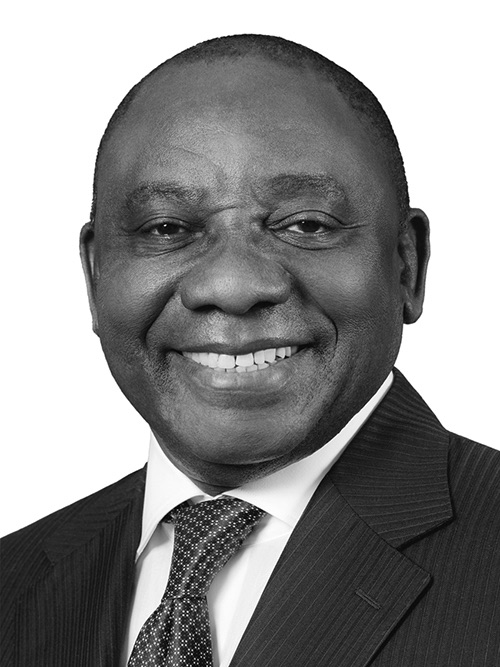
By OBAKENG MAJE
28 April 2026 – The Republic of South Africa (RSA) president, Cyril Ramaphosa said 32 years ago, South Africa was born. Ramaphosa said the morning of 27 April 1994 did not begin like an ordinary day.
He further said it began with great anticipation, excitement and a determination by millions of South Africans to participate in the birth of a nation. Ramaphosa added that before sunrise millions of people stood in long lines – young and old, rural and urban, black and white.
“Many were exposed to heavy rain and burning sun but they waited with patience, pride and dignity to cast their votes for the very first time. More than 20 million South Africans participated in an election that was peaceful, free and fair. It was a celebration of the human spirit and its capacity to overcome adversity.
“It is an honour to mark this occasion here in Bloemfontein, where the flame of freedom was lit. It was here in Mangaung that the African National Congress (ANC) was born in 1912, bringing together for the first-time people from across our country to stand against oppression and dispossession,” he said.
Ramaphosa said this is a province that suffered terribly from the cruelty of colonialism and apartheid. He said here in Bloemfontein and in towns across the province, tens of thousands of Afrikaners and Africans were held in inhuman conditions in British concentration camps during the Anglo-Boer War.
“Many thousands, mostly women and children, died. Their suffering stands as a shared, though unevenly remembered, chapter of South Africa’s past, one that calls for remembrance, honesty and humanity.
“This is a province with a history of courageous resistance. Women from the then Orange Free State were among the first to rise against the extension of pass laws in 1913, with protests breaking out in Jagersfontein, Winburg and Bloemfontein,” said Ramaphosa.
He said they were arrested and imprisoned and their families were left without caregivers. Ramaphosa said instead of being broken, the women of the Orange Free State became more determined because they would not accept a system that denied them dignity and freedom.
“This was the site of the Witsieshoek Peasants’ Revolt of 1950 against the apartheid government’s oppressive land control policies. This was one of the most significant acts of resistance in rural South Africa.
“The revolt was about the livelihood of rural people regarding their cattle, wealth, security, identity and dignity that an oppressive government wanted to destroy. The Witsieshoek Peasants’ Revolt demonstrated that the struggle for freedom was also fought in the valleys, in the fields and in the hearts of rural communities,” he said.
Ramaphosa said it was fought by farmers in the rural areas, families and ordinary people who choose courage over silence. He said it was the people of this province that took Mama Winnie Mandela into their hearts and gave her comfort when she was banished to Brandfort in 1977.
“History is often told through great speeches and grand events. But sometimes, its most powerful chapters are written by ordinary people who choose humanity over fear. When Mama Winnie Mandela was banished to Brandfort, the apartheid rulers thought they were isolating her and breaking her spirit and influence.
“The people of Brandfort here in the Free State did something remarkable: they did not let that voice fade. They carried it. They strengthened it. And they made it their own. They united in compassion and that became stronger than the system of a apartheid itself,” said Ramaphosa.
He said last month, they laid to rest a son of this province, the first Premier of the Free State and a stalwart of the liberation struggle, Mosiuoa ‘Terror’ Lekota. Ramaphosa said he was a brave and principled leader who served this country with distinction.
“On this Freedom Day, we honour his memory. On that first day of our freedom, as a nation, we entered into a social contract to build a society anchored in human dignity, equal rights and freedom for all.
“Thirty years ago, the Constitution of the Republic, the legal foundation of that contract, was signed into law. That constitution became our birth certificate as a nation. Our Constitution, which is widely regarded around the world as one of the most progressive, visionary and influential constitutions ever adopted, is a powerful promise about freedom and stands as our collective shield – protecting the freedom our people fought for,” said Ramaphosa.
He said out of struggle came freedom. Ramaphosa said through the constitution, they have entrenched it as the unshakable foundation of the nation.
“We have come far. We stand here today not only as citizens of a democratic nation, but as custodians of a hard-won legacy of freedom. A legacy won in struggle. A legacy shaped by sacrifice, courage and an unbreakable belief in freedom and justice. There was a time in this country when freedom was not a right but a dream.
“It was a time when voices were silenced, dignity was denied to millions who were excluded from the life of the country they called home. But our people refused to accept that fate. They organised. They resisted. They endured. And they won their freedom,” he said.

