27 October 2026 – A man (49) has been sentenced to 10 years imprisonment after being convicted of rape and assault with intent to cause grievous bodily harm (GBH) against his girlfriend (29) in Niekerkshoop. The conviction and sentence were secured through the diligent investigative work of Detective Constable Boipolelo Criselda Polelo of the Pixley ka Seme District Family Violence, Child Protection and Sexual Offences (FCS) Unit.
The Northern Cape police spokesperson, Lieutenant Colonel Thabo Litabe said the incident occurred at the victim’s home on Monday, 30 March 2026. Litabe said the evidence presented in the Griekwastad Regional Court revealed that the accused, Floyd van Wyk, arrived at the woman’s home at approximately 7:45pm and accused her of selling her body to other men.
“He then slapped her in the face, undressed her and raped her before stabbing her in the hip with a knife. He also twisted her already broken leg. The police were alerted to the incident and a case of rape and assault with intent to cause grievous bodily harm was registered at the Niekerkshoop Police Station.
“The accused was arrested on the same day. Detective Constable Polelo was assigned to investigate the case. Her investigation ultimately led to the accused’s conviction and sentencing,” he said.
The acting Northern Cape Police Commissioner, Major General Luntu Ngubelanga, commended Polelo for her dedication and thorough investigative work, which ensured that the perpetrator was brought to justice. Ngubelanga said South African Police Service (SAPS) in the Northern Cape reaffirmed its commitment to intensifying efforts to combat gender-based violence and femicide (GBVF), in line with the organisation’s newly established Reset Agenda.
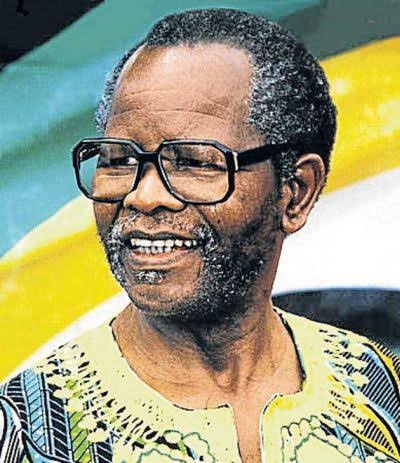
Picture: ANC former president, Reginald Oliver Tambo
By KEDIBONE MOLAETSI
27 October 2026 – The African National Congress Veterans’ League (ANCVL) has called on South Africans to uphold the legacy of former ANC president Oliver Reginald Kaizana Tambo by promoting ethical leadership, accountability, non-racialism and effective governance. In a media statement, the league said the principles championed by Tambo should translate into tangible improvements in the lives of ordinary South Africans, particularly amid persistent poverty, unemployment, inequality and social exclusion.
The statement, issued to commemorate the 109th anniversary of Tambo’s birth, described him as a revolutionary whose life was characterised by sacrifice, humility, integrity and an unwavering commitment to the freedom and dignity of all South Africans.
ANCVL president, Snuki Zikalala said Tambo had sustained the liberation movement during some of its most difficult years in exile and under apartheid oppression. Zikalala highlighted Tambo’s leadership during periods of low morale, internal divisions and military setbacks, noting that the Morogoro ANC Conference was convened to help steer the organisation away from the brink of collapse.
He also recalled Tambo’s international diplomatic efforts in the late 1980s to secure support for the Consensus Resolution, which helped establish a framework for negotiations towards a democratic South Africa.
“This is the mark of a true leader and shows what is possible when leadership prioritises the will of the people and trusts them. The league linked Tambo’s legacy to contemporary global political developments, expressing concern about the rise of authoritarian and right-wing governments, violence, exploitation and discrimination against vulnerable communities.
“It also highlighted the role of young people and student-led movements in challenging political establishments in different parts of the world,” said Zikalala.
With elections approaching in several countries, he expressed hope that opposition to exploitation, violence and discrimination against migrants, Palestinians, black people and LGBTIQ+ communities would gain momentum. Turning its attention to South Africa, Zikalala said the forthcoming local government elections would test whether voters believed the ANC continued to uphold Tambo’s legacy and his faith in the will of the people.
“Voting for the ANC should not simply be an endorsement of its liberation history, but should also reflect confidence in its ability to deliver effective governance and improve people’s lives.
“Thirty-two years into our democracy, we have made significant strides, but poverty, unemployment, inequality and social exclusion continue to undermine what freedom promised,” he said.
Zikalala warned that frustration over persistent socio-economic challenges had driven some people towards political parties promising quick solutions, while others had become disillusioned with voting and government. He also raised concern about attempts to blame migrants for the country’s challenges, arguing that complex social and economic problems required meaningful solutions rather than scapegoating.
“The ANC remains the political party most committed to the constitutional principles associated with Tambo and the protection of democratic processes and institutions. However, we stress that respect for Tambo’s legacy must be demonstrated through ethical leadership, accountability and a renewed commitment to serving the public.
“We call for leaders to acknowledge the complexity of the country’s challenges and avoid making unrealistic promises. We further reaffirm the importance of Tambo’s commitment to non-racialism, saying South Africa’s diversity should unite rather than divide its people,” said Zikalala.
He said at a time when social fragmentation and intolerance threaten their national cohesion, they must reaffirm their common humanity and embrace the values of Ubuntu, mutual respect and solidarity. Zikalala said although Tambo did not live to witness South Africa’s democratic breakthrough in 1994, the league said his contribution had helped lay the foundations for democracy.
“We call on South Africans to honour his legacy by defending democratic institutions, holding political leaders accountable and ensuring that the needs and aspirations of ordinary citizens remained central to governance.
“This responsibility extended to the more than 10 000 ANC candidates contesting positions across the country in the forthcoming local government elections,” he said.
Zikalala concluded by urging voters to support the ANC in the elections scheduled for 4 November 2026, presenting the vote as an opportunity to advance democratic governance and resist authoritarianism.
Picture: The Minister of Justice and Constitutional Development, Mmamoloko Kubayi
By REGINALD KANYANE
27 October 2026 – Government is strengthening its engagement with traditional leaders, community organisations and civil society to address illegal migration, reclaim hijacked state-owned buildings and improve the enforcement of immigration laws. This follows a meeting between the Inter-Ministerial Committee (IMC) on migration.
The Minister of Justice and Constitutional Development, Mmamoloko Kubayi said delegation included representatives of the Black Business Forum, Binca Nation, led by its president, Ngizwe Mchunu, and leaders of Hlangana Mzansi. Kubayi said the engagement comes amid several marches to Home Affairs offices by groups calling for stricter enforcement of immigration laws and action against undocumented migrants.
Briefing the media in Pretoria on Monday, Kubayi said the delegation had expressed its willingness to work with government to find practical solutions to illegal migration while supporting efforts to build a safe, secure, prosperous and united South Africa.
“The delegation expressed its support for the government’s efforts to build a safe, secure, prosperous and united country and to address illegal migration decisively. We welcome the community leaders’ commitment to nation-building and to finding solutions to illegal migration.
“The delegation had reaffirmed its respect for South African laws, the judiciary and court judgments, while committing to initiatives aimed at promoting stability and economic growth,” she said.
Kubayi further said the group also raised concerns about unemployment, particularly among young people and pledged to support government efforts to restore investor confidence and revitalise the tourism sector, especially in KwaZulu-Natal. She added that the delegation had clarified that its concerns were directed at illegal migration and undocumented migrants, rather than lawful immigration.
“They also reaffirmed that they are not opposed to immigration that is legal and migrants who respect South Africa’s laws and live amongst the South African people engaged in legal and productive activities. They made it clear that what they vehemently oppose is illegal migration and undocumented migrants.
“The reclaiming of hijacked and illegally occupied state-owned buildings was among the key issues discussed during the meeting. The delegation had expressed an interest in partnering with government to address the unlawful occupation of government buildings, which are allegedly being used for criminal activities, including drug dealing and human trafficking,” said Kubayi.
She said IMC has already engaged provincial and municipal leadership, including premiers, members of provincial executive councils, mayors, city managers, metropolitan police and senior South African Police Service officials, to develop a coordinated response. Kubayi sais they have identified hijacked government buildings by street in the eight metros [of the country] and appointed legal representatives to facilitate the removal of unlawful occupants.
“The government is also working with the private sector to repurpose abandoned and illegally occupied buildings. Government has also identified and profiled state-owned buildings across all metropolitan municipalities, with the next phase focusing on identifying such properties in secondary cities.
“A team of lawyers has been appointed to assist with the legal processes required to reclaim the buildings,” she said.
Kubayi said the delegation also expressed interest in participating in ongoing legal proceedings concerning migration and asylum seekers. She said these include the Scalabrini matter, in which the Constitutional Court delivered a judgment on the rights of asylum seekers, as well as proceedings in the Gauteng High Court concerning conflicting judgments on whether undocumented people who have applied for asylum may be detained.
“The IMC raised concerns about the contradictory Gauteng High Court judgments and requested that the matter be heard by a full bench. The matter is scheduled to be considered on 29 October 2026.
“We urge members of the public to exercise caution when sharing information about the Constitutional Court judgment, warning against the spread of unverified claims,” said Kubayi.
She also urge all citizens not to spread unverified information about the Constitutional Court Judgement. Kubayi said residents must ensure that they verify the sources of information about this judgment. Check that the information you get is from a credible source and that it is correct.
“Government’s response to migration would continue to be guided by the five-point plan announced by President Cyril Ramaphosa in June. The plan focuses on cracking down on violations of immigration laws, securing the country’s borders, strengthening the immigration system, closing gaps in migration laws and policies, and working with other African countries to manage migration.
“During the meeting, the delegation also raised concerns about migrant documentation, allegations that South African immigration officials were issuing illegal documents, and the role of law enforcement agencies in enforcing immigration laws,” she said.
Kubayi said the group further emphasised that calls for stricter enforcement of immigration laws should not automatically be interpreted as xenophobia. She said it expressed its willingness to work with government towards building a prosperous South Africa.
“The meeting concluded with an agreement that government would collaborate with the delegation and other interested parties, including traditional leaders, to address the concerns raised and strengthen cooperation in managing migration,” said Kubayi.
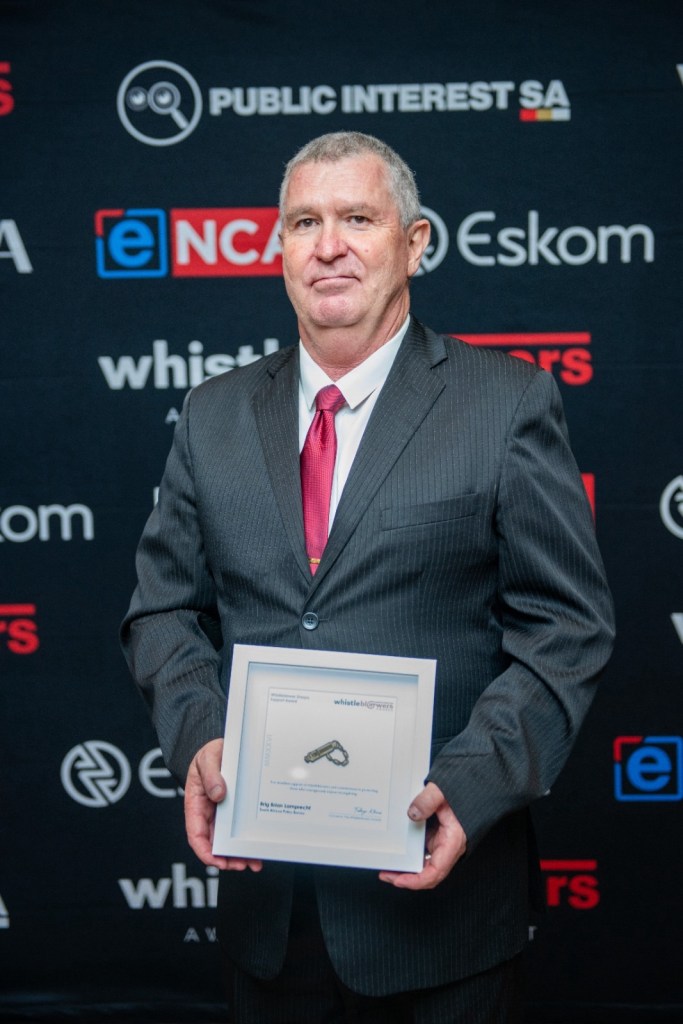
27 October 2026 – The National Police Commissioner, General Fannie Masemola has congratulated Brigadier Adriaan Jacobus “Attie” Lamprecht (59), on receiving the Whistleblower Sherpa Support Award at Public Interest South Africa’s 2026 Whistleblower Awards. Held under the theme: “Honouring Courage. Inspiring Integrity,” the awards ceremony recognised Lamprecht and nominees from various sectors for their courage, integrity and outstanding contributions to the people of South Africa.
With 42 years of service in the SAPS, Lamprecht currently oversees several sections at national level, including Crime Stop, Harmful and Occult Crimes, and the Bureau for Missing Persons, which he established in 1994. For more than 30 years, he has headed the internationally recognised Crime Stop Call Centre, which can be reached on 08600 10111.
Masemola said the service enables members of the public to report information about criminal activities anonymously. He said Crime Stoppers International has previously recognised South Africa for its exceptional handling of anonymous tip-offs from members of the public.
“Since its establishment 34 years ago, Crime Stop has maintained a strong track record of protecting the identities of informants who provide information through the platform.
“Over the years, information received through Crime Stop has contributed to thousands of arrests and the seizure of illicit goods and other criminal assets worth hundreds of millions of rand,” said Masemola.
He further said Lamprecht also serves as a director of Crime Stoppers International, a global organisation committed to strengthening anonymous crime-reporting systems and supporting crime-prevention initiatives. Masemola added that he holds a PhD in Sociology and previously managed the Witness Protection Programme when it was administered by the SAPS.
“His experience further underscores his longstanding commitment to protecting individuals who assist law enforcement agencies in the fight against crime.
“We commend Lamprecht for his decades of dedicated service and his significant contribution to strengthening public confidence in anonymous crime-reporting platforms,” he said.
Masemola said Lamprecht’s award is a testament to his unwavering commitment to protecting those who come forward with information to help fight crime. He said his work demonstrates the importance of safeguarding the identities of informants and ensuring that members of the public can contribute to the fight against crime without fear.
“The SAPS congratulates him on this well-deserved honour,” said Masemola.
27 October 2026 – Magalies Water has warned bidders to remain vigilant following a recent tender scam in which unknown individuals allegedly impersonated the entity’s spokesperson, David Magae and implicated its General Manager for Project and Engineering Services, Sibongiseni Mbadamana in attempts to influence tender outcomes. The entity said the individuals were targeting bidders for a tender currently under consideration by Magalies Water’s Bid Committees.
According to Magalies Water, the scammers were using contact details, including the email address davidm@magalieswater.co.za and cellphone numbers 063 660 0464 and 064 968 1664, which do not belong to Magae or Mbadamana as alleged.
An assessment conducted by the entity’s Information and Communication Technology (ICT) department confirmed that the email had not originated from Magalies Water’s official email system. It was classified as a spoof email, meaning the sender had forged email details to impersonate an official Magalies Water account.
Magalies Water spokesperson David Magae said the incident was concerning, particularly because it was not the first time in recent months that the names of officials and members of the executive had allegedly been used for unlawful activities.
“This sustained campaign is aimed at tainting the reputation and image of Magalies Water. We urge bidders participating in both advertised and closed tenders to exercise caution and verify any suspicious communication purporting to come from the entity.
“Magalies Water conducts its financial affairs in strict compliance with the Public Finance Management Act (PFMA), read together with the National Treasury Regulations,” he said.
Magae further said bidders are encouraged to report suspicious activities, including those relating to tender administration, through the following channels:
27 October2026 – The North West MEC for Cooperative Governance, Human Settlements and Traditional Affairs (COGHSTA), Oageng Molapisi has placed the Provincial Disaster Management Centre on high alert amid concerns over extreme heat and the possible intensification of the current El Niño event. This comes after the latest weather forecasts indicate persistent heat conditions associated with the El Niño climate phenomenon, which affects rainfall and temperature patterns.
Molapisi said these conditions could result in below-normal rainfall, water shortages, drought, challenges in crop and livestock management, increased veld fires and a heightened risk of heat-related illnesses. He warned that these conditions could place additional pressure on communities already experiencing dry weather conditions.
“Climate change and the current El Niño event remind us of the importance of preparedness and collective responsibility. While we cannot control weather patterns, we can take proactive measures to minimise their impact on our communities.
“So, we call on municipalities, traditional leaders and community structures to raise awareness about the dangers of extreme heat, promote responsible water use and ensure that vulnerable residents are protected,” he said.
Molapisi further said this particular attention should be given to children, older persons and people with existing health conditions, who are more vulnerable to the effects of extreme heat. He urged residents to use water sparingly, take precautions against high temperatures and heed official weather warnings.
“The provincial and municipal disaster management structures, together with relevant provincial departments, must strengthen early-warning systems, community awareness initiatives and coordinated responses to ensure vulnerable communities are protected.
“As part of preparations for the El Niño phenomenon, municipalities and residents have been encouraged to conserve water by repairing leaking pipes and taps immediately, limiting unnecessary water consumption, watering gardens early in the morning or in the evening, and reusing greywater where it is safe to do so,” added Molapisi.
He said residents are also encouraged to install rainwater tanks where possible to improve water availability during dry periods. Molapisi said to prevent veld fires and other fire incidents, communities have been urged to clear dry vegetation around their homes, avoid making open fires during hot or windy conditions, maintain required firebreaks and report fires immediately.
“We further advised residents to remain hydrated, avoid strenuous outdoor activities around midday and stay in shaded or cool areas during periods of extreme heat.
“We urge communities to check on older persons and other vulnerable residents and seek medical assistance if anyone displays signs of a heat-related illness,” he said.
Molapisi said residents are also encouraged to follow official weather warnings and take the necessary precautions to protect themselves, their families, livestock and property. His department reiterated the importance of community cooperation and preparedness in reducing the potential impact of extreme weather conditions associated with El Niño.
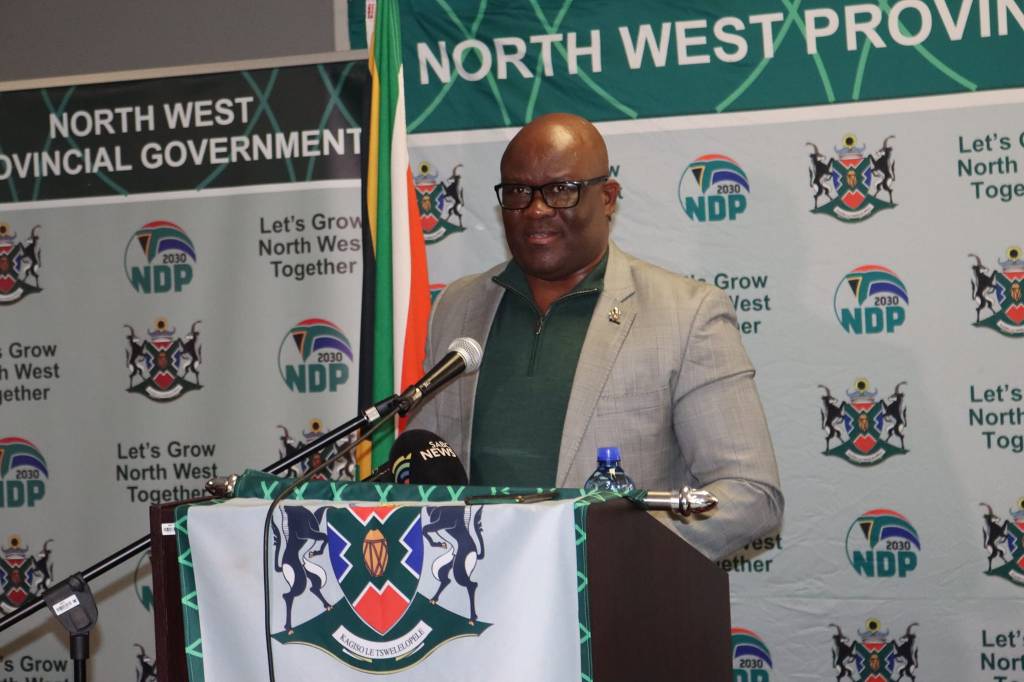
Picture: The North West MEC for COGHSTA, Oageng Molapisi
By REGINALD KANYANE
27 October 2026 – The North West MEC for Cooperative Governance, Human Settlements and Traditional Affairs (COGHSTA), Oageng Molapisi will brief the media on the province’s state of readiness for the 2026 Local Government Elections on 30 October 2026. According to COGHSTA spokesperson, Lerato Gambu, the briefing will provide an update on provincial preparations and coordination measures aimed at ensuring smooth and successful local government elections across the North West.
Gambu said Molapisi would also outline the department’s post-election transition plan, including arrangements for the constitution of newly-elected municipal councils and the induction of councillors.
“The transition plan is aimed at ensuring continuity of governance, institutional stability and effective service delivery following the elections.
“The media briefing will take place at 9am at the Provincial Disaster Management Centre in Mahikeng. Members of the media wishing to attend are requested to RSVP to Lemogang Pule via WhatsApp on 072 142 3738,” he said.
Gambu further said transport has been arranged for local media practitioners based in and around Mahikeng. He added that the briefing is being convened by the North West Department of Cooperative Governance and Traditional Affairs (COGTA).
27 October 2026 – Suspended Pretoria Chief Magistrate Desmond Nair has pleaded not guilty to all corruption charges against him in the Pretoria Commercial Crimes Court. Nair appeared in court on 26 October 2026, where the trial commenced with the state presenting its evidence through its first witness, an employee of a BOSASA subsidiary.
The witness testified about the alleged installation of security upgrades at Nair’s home.
According to the Investigating Directorate Against Corruption (IDAC) spokesperson, Henry Mamothame, Nair is accused of allegedly receiving security upgrades valued at approximately R200 000 at his home in Gauteng in September 2016. Mamothame said the upgrades were allegedly provided by African Global Operations, formerly known as BOSASA.
“The upgrades reportedly included an electric fence, an alarm system, perimeter beams and a closed-circuit television (CCTV) system. The alleged gratification was intended to induce Nair to act dishonestly or improperly in the exercise of his influential position within the judiciary.
“The state commenced leading its evidence through its first witness, who provided testimony regarding the alleged installation of security upgrades at the accused’s residence,” he said.
The matter was postponed to 27 October 2026, for the continuation of the trial.
26 October 2026 – Seven accused are facing 46 charges, including corruption, fraud, money laundering and contraventions of the Municipal Finance Management Act in connection with an alleged R144 million municipal land fraud and a separate social housing funding scheme worth more than R100 million in Mahikeng. The accused, Hendrik Smith, Petrus van der Merwe, Barbra van der Merwe, Sarel van Niekerk, Brian Moholo, Tshepiso Moholo and Reggie Mutsi, appeared before the Specialised Commercial Crime Court sitting at the Molopo Regional Court on 22 and 23 October 2026.
According to a joint statement by the National Prosecuting Authority (NPA) and the Directorate for Priority Crime Investigation (DPCI), the accused were arrested on 22 and 23 October 2026, by members of the Hawks’ Serious Corruption Investigation and Crimes Against the State units. The first alleged scheme relates to the unlawful sale of municipal land valued at R144 million between 2007 and 2009.
The National Prosecuting Authority (NPA) regional spokesperson in North West, Lindiwe Mabasa said the state alleges that the first and second accused acted together to defraud the then Mahikeng Local Municipality through a sale agreement that required the purchaser to pay the full purchase price. Mabasa said, however, only R5 million was allegedly paid, leaving an outstanding balance of R139 million.
“Investigators allege that the R5 million payment was made through an unauthorised arrangement involving the accused and other parties, without the municipality’s knowledge or approval. The payment was allegedly part of an attempt to amend the original sale agreement and reduce the purchase price.
“In February 2009, the land was transferred after the first accused lodged an application with the Deeds Registry in Vryburg. The state alleges that the transfer proceeded despite the outstanding balance and without the necessary municipal authorisation,” she said.
Mabasa further said the second alleged scheme involves more than R100 million in social housing funding obtained from the Social Housing Regulatory Authority (SHRA) between 2011 and 2013. She added that the NPA and Hawks allege that the second to seventh accused participated in a scheme to defraud the SHRA using the land acquired through the alleged municipal land fraud.
“The accused allegedly applied for more than R100 million in funding to construct social housing units in Mahikeng. The fifth accused, Brian Moholo, who was the SHRA chief executive officer (CEO) at the time, allegedly facilitated and authorised the process through which the funding was obtained.
“Investigations allegedly revealed that the intended housing units were never completed. Instead, only structures were erected, allegedly to conceal the true purpose of the scheme. The SHRA reportedly suffered financial losses exceeding R100 million.
“All seven accused were granted bail. Six were granted bail of R10 000 each, while the fifth accused, Moholo, was granted bail of R5 000. The matter was postponed to 7 December 2026, for further investigations,” said Mabasa.
“The allegations have yet to be tested in court,” she said.
26 October 2026 – An accused, Ntombifuthi Mavis Rumo (37), has appeared in the Kwa-Thema Magistrate’s Court for allegedly staging her own kidnapping with two other people to extort money from her family. Rumo briefly appeared in court, while her co-accused, Bonginkosi Mndebele (27), appeared in absentia because he is in hospital.
The National Prosecuting Authority (NPA) regional spokesperson in Gauteng, Lumka Mahanjana said both accused are facing a charge of defeating the administration of justice. Mahanjana said the incident allegedly began on 7 October 2026, when Rumo, Mndebele and a third suspect, who has not yet been charged, met and discussed staging her kidnapping because they were experiencing financial difficulties.
“The trio allegedly contacted Rumo’s family and demanded money in exchange for her release. When the family was unable to pay the demanded amount, the suspects allegedly released Rumo on 12 October 2026, and left her along Vlakfontein Road.
“They then reportedly asked her family to collect her from the location. Following an investigation into the reported kidnapping, Rumo was arrested on 20 October 2026, after her husband brought her to the police,” she said.
Mahanjana further said a her arrest, she allegedly pointed out Mndebele to the police. She added that the matter was postponed to 29 October 2026, for bail investigations and for Mndebele to appear in court.
“The state intends to oppose bail for both accused,” said Mahanjana.
26 October 2026- The police in Mooinooi are appealing to the public for assistance in locating Katlego Constance Nkotswe (19), who has been missing since 25 September 2026. Nkotswe resides in Matameng Section, Mooinooi and was last seen by her grandmother in Tornado Section on the morning of her disappearance.
According to information received by the police, Nkotswe allegedly told her family that she was going to attend graduation ceremonies in Pretoria. She has not been seen since.
The North West police spokesperson, Constable Thuto Bobelo said the police have launched a search and conducted extensive investigations, but these have so far yielded no positive results. Bobelo said Nkotswe is described as tall, with a medium build and long black hair.
“The clothes she was wearing when she disappeared are unknown. The police are urging anyone who may have information about her whereabouts to contact the investigating officer, Constable Wendy Mazolwana, on 083 563 3972 or 014 574 5014.
“Members of the public can also contact their nearest police station or Crime Stop on 08600 10111. Anonymous tips can be submitted through the MySAPS application on a smartphone,” he said.
26 Diphalane 2026 – Babelaelwa ba le bane ba kwa Reivilo ba solofetswe go tlhagelela kwa kgotlhatshekelo ya Taung mabapi le go teketa Keneilwe Molatlhwa (44) ka maikaelelo a go mo ntsha dikgobalo. Se, se tla morago ga dipego tsa gore babelaelwa ba, ba latofatse Motlatlhwa ka boloi.
Go ya ka dipego, bangwe ba maloko a lelapa la babelaelwa, ba ile ba itatlhela ka dikago tsa seteishene sa sepodisi, le go ipelaetsa gore barwa rrabone ba gololwe. Go begwa fa ba ile ba tshosetsa motlhankedi wa sepodisi o neng a le mo tirong ka nako eo, le go mo goga-goga ka diaparo.
Go begwa fa motlhankela o wa sepodisi, a ile a patelesega go dirisa gase ya dikeledi go okobatsa seemo.
26 October 2026 – The Republic of South Africa (RSA) president, Cyril Ramaphosa said last week, the Minister of Finance, Enock Godongwana, presented the Medium-Term Budget Policy Statement (MTBPS) in Parliament, which showed just how far they have travelled along the path of restoring the health of the public finances. Ramaphosa said for many of them, the state of the country’s public finances might feel like something far removed from the struggles of daily life.
He further said the truth is, the decisions they make about how they raise, spend and manage public money have a direct impact on their lives. Ramaphosa added that they determine whether the children get a good education, if their local clinics and hospitals actually work, if their roads are kept in good shape, and if their economy can finally create the jobs people so desperately need.
“Over the last few years, we have been walking a difficult path to both stabilise our public finances and tackle the high levels of poverty and unemployment in our country. We have been working to recover and clean up the mess left behind by state capture, which weakened our institutions, hurt economic growth and drove up our public debt.
“The COVID-19 pandemic made this worse, as the government had to implement a stimulus package to protect workers, communities and businesses from the worst effects of the subsequent economic contraction. As our debt went up, so did the cost of paying interest on it,” he said.
Ramaphosa said every rand they spent on interest was a rand that could not be used to build a school, build houses, equip a hospital, fix a road or provide essential services. He said they simply could not let that continue forever.
“For the first time in nearly two decades, public debt has stabilised and it is now beginning to decline. Since 2023, we have maintained a primary budget surplus, meaning that, excluding debt service costs, we have been spending less than we have been earning. This allows us to further reduce our debt and lower the cost of borrowing, while increasing confidence in our economy.
“These improvements are part of a bigger economic recovery. The end of load shedding, our improved fiscal position and our removal from the Financial Action Task Force (FATF) grey list have contributed to the rise in public confidence and our first sovereign credit rating upgrade in over 16 years,” said Ramaphosa.
He said the recovery of the South African Revenue Service following the era of state capture has enabled better collection rates. Ramaphosa said this is revenue being used to deliver tangible benefits to the South African people as more resources are made available for social and development spending.
“It is being used to build more schools and clinics, improve public services, deliver social grants and invest in public infrastructure that communities rely on. We are allocating more funds to combat gender-based violence and femicide.
“This includes additional funds to hire more than 3,500 social workers and to improve the capacity of our forensic and investigative services to ensure gender-based violence cases result in successful prosecution and conviction,” he said.
Ramaphosa said the social wage, which covers health, education, social development and services for low-income households, makes up around 60% of non-interest spending. He said it funds free basic services for over 11 million households, school meals and grants to more than 18 million beneficiaries.
“We know the rising cost of living is putting a massive strain on households. The temporary reduction in the fuel levy announced by the Minister is one of the ways we are trying to provide some relief. The improved fiscal position allows us to invest more in infrastructure, which is an essential driver of inclusive economic growth and job creation. Payments for capital assets are the fastest-growing item in our budget, and new measures have been put in place to increase private sector investment in infrastructure.
“The improved financial position is being supported by the reform of the budgeting process. We are fundamentally changing how public money is being spent, monitored and accounted for,” said Ramaphosa.
He said, however, fixing their finances is not just about collecting more tax or cutting debt. Ramaphosa said it is also about making sure every single rand of public money is spent wisely, honestly and effectively.
“We are eliminating waste and inefficiencies in government programmes. We are phasing out programmes that perform badly or lack clear outcomes. This process is already producing measurable savings.
“More than R11 billion in savings has been identified in the medium term from rationalising low-priority programmes. This means that we are making targeted savings rather than indiscriminate cuts to departmental budgets to reduce overall spending,” said Ramaphosa.
He said as part of this approach, they are reviewing the Infrastructure Conditional Grant to assess why provinces and municipalities underspend, why projects are not delivered on time and within budget and why the quality of deliverables is poor in many cases. Ramaphosa said their aim is not to spend less, but to spend smarter.
“Beyond the funds that have been dedicated over the next three years to growing the economy, creating jobs and fighting poverty, this MTBPS signals confidence and stability. It shows that we have made significant progress along the path of recovery and demonstrates our commitment to continue along that path.
“In doing so, we are steadily improving the conditions for far greater investment, growth and job creation. We know that many South Africans haven’t felt the benefits of this economic recovery yet. Unemployment is still far too high, too many families are struggling to get by and too many communities are dealing with poor services,” he said.
Ramaphosa said they should not mistake financial stability for the end of the road. He said there is still a lot of work to do.
“But we should recognise how far we have come. A country that manages its money responsibly is better equipped to protect its most vulnerable citizens, handle economic shocks, attract investment and build for the future.
“The progress we are seeing gives us confidence that we are moving in the right direction. It also puts a bigger responsibility on the government to make sure these financial gains turn into real improvements that South Africans can actually see and feel,” said Ramaphosa.
He said their job now is to turn financial stability into economic opportunity and a better quality of life for everyone. Ramaphosa said at the end of the day, that is what responsible management of public money is all about.
“Not just a healthier balance sheet for the government, but a better life for the people of South Africa,” he said.
26 October 2026 – The Gauteng High Court sitting in Johannesburg has reserved judgment until 26 November 2026, in a Section 342A application brought by accused persons in the Transnet corruption case. The application was heard by the court, with the state opposing it.
The Investigating Directorate Against Corruption (IDAC) spokesperson, Henry Mamothame said the accused include former Transnet executives, Brian Molefe, Anoj Singh, Siyabonga Gama, Garry Pita and Phetolo Ramosebudi, as well as Regiments Capital directors, Niven Pillay and Litha Nyhonhya, Trillian Asset Management director Daniel Roy of Novum Asset Management, Kuben Moodley and Albatime (Pty) Ltd owner. Mamothame said during the proceedings, the state outlined proposed arrangements to ensure that the accused could access electronic disclosure data required to prepare for trial.
“However, defence software experts presented opposing views on the proposed arrangements, prompting the judge to reserve judgment on the application. The accused face charges including contraventions of the Public Finance Management Act (PFMA), fraud, corruption and money laundering linked to a locomotive procurement transaction.
“The case stems from a transaction advisory tender awarded in 2012 to a McKinsey-led consortium, which resulted in the procurement of 1,064 locomotives valued at more than R54 billion,” he said.
Mamothame further said Regiments Capital was allegedly irregularly brought into the contract, benefiting from its appointment and contributing to an increase in the contract’s value and scope to more than R305 million. He added that the company’s services included sourcing loans on behalf of Transnet from the China Development Bank and through the Club Loan, amounting to $2.5 billion, equivalent to approximately R30 billion at the time.
“The accused also face charges relating to a payment of R93.4 million made to Trillian Asset Management in 2015. The court is expected to deliver its judgment on the Section 342A application on 26 November 2026,” said Mamothame.
Setshwantsho: Bangwe ba balatofadiwa mo kgetsing ya polao
Ka OBAKENG MAJE
26 Diphalane 2026 – Kgetsi ya polao kgatlhanong le banna ba le bane ba kwa motseng wa Manthe, gaufi le Taung, e buseditswe morago ke kgotlhatshekelo ya sedika ya Taung go fitlha ka di 11 Ferikgong 2027. Bakang Katong (33), yo o atlholetsweng dingwaga di le robedi kwa kgolegelong mo kgetsing ya petelelo, ga mmogo le balatofadiwa nae mo kgetsing ya polao, Thabang Lenyai (24), Katlego Mosimege (32), le Phenyo Katong (35), ba ne ba tshwarwa dingwaga di le nne tse di fetileng morago ga go latofadiwa ka go bolaya Thabiso Mothibedi (35), setlhogo.
Go begwa fa ba ile ba mo teketa le go mo golegelela mo generateng. Seno se tla morago ga gore ba mo latofatse ka go ba utswetsa madi a seatleng a lekang ka R20 000 le diritibatsi tsa R1200.
Sebueledi sa sepodisi mo Bokone Bophirima, mokaptein Sam Tselanyane, o ile a tlhalosetsa ba lekwalo-dikgang la The Guardian Newspaper gore dipatlisiso di shupa fa tiragalo e, ele ya di 29 Moranang 2022. Tselanyane are go ile ga begwa fa moswi a ile a siela kwa motseng wa Longaneng.
“Fela, go begwa fa balatofadiwa ba ile ba tswa letsholo le go mo latela. Go begwa fa go gorogeng ga bone kwa motseng wa Manthe, ba ile ba mo gokelela mo generateng, mme ba mo teketa go fitlhelela a tlhokafala.
“Go begwa fa balatofadiwa ba ile ba tabogisetsa moswi kwa kliniking ya selegae fa ba bona a neela mowa. Baoki ba ne ba tlhalosa fa go se sepe se ba ka se dirang go boloka moswi, gonne one a setse a balelelwa le badimo,” Tselanyane wa tlhalosa.
Kgabagare, ka di 1 Motsheganong 2022, baagi ba ile ba bolotsa mogwanto kgatlhanong le balatofadiwa, mme ba ile ba fisa matlo a bone a le mararo mo tiragalong e. Gape, baagi ba ile thuba le go senya ntlo-maitiso ya balatofadiwa, mme ba itseela le nnotagi.
Go fitlha ga jaana, dipaki tsa puso di setse di ntshitse bopaki go akaretsa le mooki yo o neng a amogela setopo sa moswi kwa kliniking ya Manthe.
Setshwantsho: Molatofadiwa mo kgetsing ya polao le maiteko a polao, Tshwaro Mangwegape
Ka OBAKENG MAJE
26 Diphalane 2026 – Ditheetso mo kgetsing ya polao le maiteko a polao kgatlhanong le Tshwaro Mangwegape yo e leng mogwebi o itsegeng gape ele mong wa lefelo le le rekisang bojalwa la The Meat Brother’s Pub, di buseditswe morago go fitlha di 11 Ferikgong 2027, ke kgotlhatshekelo ya sedika ya Taung mo letsatsing la maabane. Se, se tla morago ga gore mmueledi wa gagwe a se iponatse kwa kgotlhatshekelo ka ntlheng ya bolwetsi.
Mangwegape o latofadiwa ka go thuntsa le go bolaya naledi ya kgwele ya dinao ya setlhopha sa NWU Soccer Institute, Undivile “Vila” Mdi (28) le go gobatsa tsala ya gagwe, Aobakwe Ernest Kokwe (34).
Go begwa fa Mdi le Kokwe, ba ne ba etela lefelo la The Meat Brother’s Pub mono Taung ka di 16 Sedimonthole 2023, go ya go ijesa monate. Fela go begwa fa lefelo leo le ne le tletse phetelelo.
Go ya ka dipego, Mdi le Kokwe ba baneng ba le mo gare ga lefelo leo, ba ile ba tswela kwa ntle, mme batlhokomedi ba ile ba ba lemotsha fa ba se kitla ba kgona go boela mo teng, gonne go tletse.
Go begwa fa go ile ga tsoga tlhatlharuane magareng ga Mangwegape le banna ba, gonne ba ne ba batla go tsena ka kgang. Go begwa fa Mangwegape a ile a ntsha sethunya le go thuntsa Mdi, ga mmogo le Kokwe.
Go begwa fa Mdi a ile a tlhokafalela kwa bookelo, mme Kokwe ene o ile a amogelwa le go kgaolwa leoto. Mangwegape, yo o neetsweng beile ya R5000 ke kgotlha-tshekelo kgolo ya North West, o boela kgotlha-tshekelo gompieno go tswelela ka ditheetso motshekong.
Kgabagare, dipaki di le mmalwa, go akaretsa Kokwe, di se ntse di neelane ka bopaki.
Picture: SAPS members during the launch of the Provincial Safer Festive Season Operations/Supplied
By REGINALD KANYANE
26 October 2026 – As the festive season approaches, the South African Government is intensifying efforts to prevent crime and ensure the safety and security of communities, visitors and holidaymakers through Safer Festive Season Operations, coordinated under the Justice, Crime Prevention and Security (JCPS) Cluster. On 23 October 2026, the Divisional Commissioner of Legal Services, Lieutenant General (Adv) Simemosenkosi Wiseman Chamane, presented an overview of the 2026/2027 Safer Festive Season Operations, outlining the operational priorities and strategies aimed at enhancing public safety during the Safer Festive Season launch.
The North West police spokesperson, Constable Thuto Bobelo said against this background, the Deputy Minister of Police, Dr Polly Boshielo, the North West MEC for Community Safety and Transport Management, Virginia Tlhapi and the North West Police Commissioner, Lieutenant General Arthur Adams, officially launched the Provincial Safer Festive Season Operations for 2026/2027 at Lehurutshe Sportsground in Zeerust. Bobelo said the operations already commenced on 1 October 2026 and will continue until 31 January 2027.
“The operations will focus on increased police visibility, intensified crime prevention operations, compliance inspections at liquor outlets and second-hand goods dealers and targeted interventions to address serious and violent crimes.
“These crimes include murder, rape, Gender-Based Violence and Femicide (GBVF), aggravated robbery, car hijacking and the proliferation of illegal firearms,” he said.
Bobelo further said the operations also include roadblocks, stop-and-searches and border security operations aimed at preventing crime, enforcing the law and ensuring the safety of all road users during the festive season. He added that in her address, Boshielo emphasised the importance of integrated law enforcement operations and strong community partnerships in preventing crime and ensuring a safe and secure festive season for all.
“Tlhapi reaffirmed the provincial government’s commitment to supporting law enforcement agencies and called on communities to work closely with the police and other stakeholders in the fight against crime,” said Bobelo.
Meanwhile, the North West Police Commissioner, Lieutenant General Arthur Adams assured residents and visitors that the police in the North West are ready to implement measures to safeguard communities throughout the festive period. Adams warned criminals that law enforcement agencies would maintain a strong presence across the province and take decisive action against those involved in criminal activities.
“Furthermore, we call on members of the public to remain vigilant, report criminal activities and work with law enforcement agencies to ensure a safer festive season for everyone. During the launch, the North West Community Police Forum (CPF) demonstrated the spirit of Ubuntu by joining hands to improve the living conditions of a vulnerable community member.
“The initiative saw 13 men and three women come together to build a two-roomed house for Joseph Mosiane (60), who had been living in a mud house. The project was made possible through donations from various business owners, demonstrating the positive impact of community partnerships in restoring dignity and improving the lives of those in need,” he said.
The Community Police Forum (CPF) Provincial Board Chairperson, Robert Malungane emphasised that community participation goes beyond fighting crime. Malungane said it also involves identifying social challenges, supporting vulnerable members of society and strengthening relationships between communities and the police.
Picture: The police conducting stop and search/Supplied
By OBAKENG MAJE
26 October 2026 – The police in the Northern Cape continue to intensify crime prevention and law enforcement operations through sustained Operation Shanela II interventions, as part of the broader 2026/2027 Safer Festive Season Operations aimed at ensuring safer communities throughout the festive season. High-density, intelligence-driven operations were conducted across all five districts of the Northern Cape From 19 until 25 October 2026.
The Northern Cape police spokesperson, Colonel Cherelle Ehlers said operations focused on disrupting criminal activities, apprehending wanted suspects, combating drug-related offences, addressing Gender-Based Violence and Femicide (GBVF), preventing crime and enhancing police visibility across communities. Ehlers said during the week-long operations, 264 suspects were arrested for various offences, while detectives also intensified focused tracing operations, resulting in the arrest of 220 wanted suspects who were sought in connection with alleged criminal activities.
“The arrests emanated from a range of serious offences, including drug- and alcohol-related crimes, property-related offences, attempted murder, assault with intent to cause grievous bodily harm and other criminal offences.
“The operations incorporated stop-and-searches, roadblocks, high-density patrols, vehicle control points and tracing operations, reinforcing the SAPS intelligence-driven approach to crime prevention and law enforcement,” she said.
Ehlers further said as part of the Safer Festive Season Operations, police also conducted compliance inspections at licensed liquor outlets, second-hand goods dealers, formal and informal businesses, public and private institutions, farms, scrapyards and mines. She added that these inspections were aimed at ensuring compliance with relevant legislation, disrupting illicit activities and identifying establishments or activities that may contribute to or facilitate criminality.
“Several unlicensed liquor outlets were closed for contravening applicable regulations. The police also confiscated alcoholic beverages, dangerous weapons, drugs and other items suspected to be linked to criminal activities, further disrupting activities that pose a threat to the safety and security of communities,” said Ehlers.
Meanwhile, the acting Northern Cape Police Commissioner, Major General Luntu Ngubelanga commended the police and participating law enforcement stakeholders for their continued commitment, dedication and operational readiness. Ngubelanga appealed to community members to remain vigilant and to continue sharing information regarding criminal activities with the police.
“The 2026/2027 Safer Festive Season Operations are aimed at creating a safe and secure environment for communities, travellers, businesses and visitors during the festive season. These operations will focus on preventing and combating crime, disrupting criminal networks, addressing high-risk and priority crimes, enhancing police visibility, tracing wanted suspects and enforcing compliance with the law.
“Operation Shanela II will continue to form an integral part of these interventions, with operations being intensified at identified crime hotspots and other strategic areas across the province. The sustained operations further reaffirm the commitment of the SAPS to the SAPS Reset Agenda, which places renewed emphasis on restoring discipline, professionalism, integrity, accountability and service excellence within the organisation,” he said.
Ngubelanga said the police together with its law enforcement and community partners, remains steadfast in its commitment to creating safer communities. He said Safer Festive Season Operations will continue unabated as police work towards ensuring that the people of the Northern Cape are safe and feel safe in their homes, on the roads, in public spaces and at places of entertainment throughout the festive season.
Picture: The Speaker of the North West Provincial Legislature, Viola Motsumi
By OBAKENG MAJE
22 October 2026 – The North West Provincial Legislature (NWPL) has dismissed reports circulating on social media alleging that members, officials or employees of the Legislature have been arrested or questioned by the Political Killings Task Team (PKTT) or any other law enforcement agency.
In a media statement, the Office of the Speaker, expressed concern over what it described as false reports targeting the integrity of the Legislature, the Speaker and senior officials. This comes after widespread allegations on social media platforms suggesting that the Speaker of the North West Provincial Legislature, Viola Motsumi has been arrested by the PKTT.
Motsumi spokesperson, Vuyo Mantshule said the Legislature urged members of the public, the media and colleagues to refrain from sharing or commenting on the reports, including through their personal social media accounts. Mantshule said sharing such reports further spreads false information and serves the interests of those responsible for creating it.
“The Legislature also called on journalists to verify information with the Office of the Speaker before publishing reports to ensure accuracy.
“It reaffirmed its accountability to the people of the North West province and indicated that the Office of the Speaker was attending to the matter and considering legal and other remedies,” he said.
Setshwantsho: Monna o go begwang fa a timetse, Johannes Hallem
Ka OBAKENG MAJE
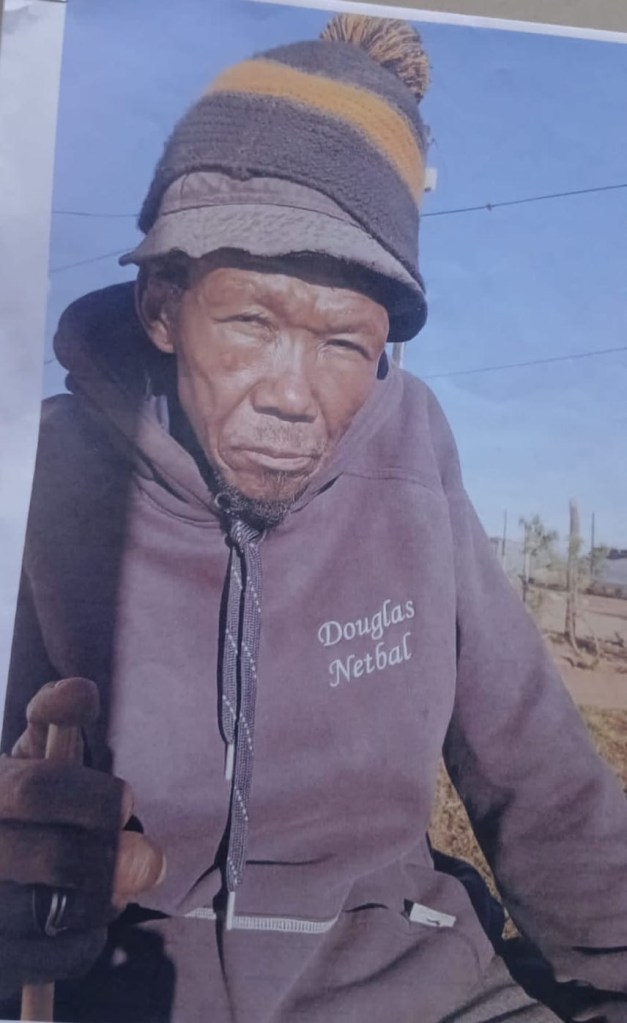
22 Diphalane 2026 – Mapodisi a Kimberley kwa porofenseng ya Kapa Bokone, ba kopa thuso ya setšhaba go batla Johannes Hallem (61), yo gape a itsegeng ka leina la Pampoen, yo a begilweng fa a timetse. Ka la 21 Lwetse 2026, Hallem o ne a itsise ba lelapa la gagwe kwa Greenside, Kimberley gore o ya kwa Jacobsdal, mme ga a ise a goroge kwa a neng a ya teng.
Sebueledi sa sepodisi kwa porofenseng ya Kapa Bokone, Warrant Officer Molefi Shemane are Hallem o ne a apere jase e ntsho e e nang le kapi, mme kwadilwe mafoko a a reng: “Douglas Netbal”, hutshe e e nang le moriti o o bulegileng, borokgwe jo botala le ditlhako tse dintsho. Shemane are ba ikuela go mongwe le mongwe yo o ka tswang a na le tshedimosetso e e ka thusang go bona Hallem go ikgolaganya le motlhankedi yo o eteletseng pele dipatlisiso, Sergeant Clive Moshotloa, mo nomorong ya 082 302 0407.
“Setšhaba se ka ikgolaganya le SAPS Crime Stop mo nomorong ya 08600 10111 kgotsa sa dirisa MySAPS App go neela mapodisi tshedimosetso. Baagi ba gopodiwa gore ga go na nako ya go leta pele ga go ka begwa motho yo o timetseng.
“O rotloeditse malapa go bega ka bonako fa mongwe wa one a timetse,” Shemane wa tlhalosa.
22 Diphalane 2026 – Mogokgo wa sekolo se se potlana sa Othaile kwa motseng wa Morokweng, gaufi le Ganyesa, e bong Scoco Kgatlhane (30), go begwa fa a ne a tshwarwa ka ntlheng ya go fitlhelwa fa a na le sethunya se se belaelwang se se mo molaong ga mmogo le matlhatlhela. Go begwa fa mapodisi a ne a amogela tshedimosetso ya gore go na le motho yo go belaelwang gore o na le sethunya se se se nang laesense.
Kgatlhane o neetswe beile ya R3000, mme kgetsi e buseditswe morago go fitlha 26 Ngwanatsele 2026.
Sebueledi sa sepodisi mo sedikeng sa Dr Ruth Segomotsi Mompati, Warrant Officer Tryphosa van Rooyen, a re morago ga gore mapodisi a latelele tshedimosetso eo, mmelaelwa o ne a fitlhelwa a na le sethunya seo, mme a tshwarwa.
“Mapodisi a ne a amogela tshedimosetso ya gore go na le motho yo go belaelwang gore o na le sethunya se se se nang laesense. Fa tshedimosetso eo e sena go latelwa, mmelaelwa o ne a fitlhelwa a na le sethunya seo, mme a tshwarwa.
“Molatofadiwa o go tlhageletse ka boripana kwa kgotlatshekel ya Ganyesa ka di 21 Diphalane 2026, a lebane le ditatofatso tsa go nna le sethunya le matlhatlhela tse di seng mo molao,” ga rialo van Rooyen.
Van Rooyen are mapodisi a santse a tsweletse ka go diragatsa maikarabelo a one a go netefatsa gore batho ba ikobela molao, segolobogolo mabapi le go nna le dithunya tse di nang le tetla e e maleba.
Kgabagare, Lefapha la Thuto mono Bokone Bophirima ga se le tsibogele dipotso tse di rometsweng ke ba The Guardian Newspaper mabapi le seno.
Setshwantsho: NWK e bonesa disilo ka mmala o mo pinki
Ka KEDIBONE MOLAETSI
22 Diphalane 2026 – NWK e bonesitse disilo tsa yone di le tlhano ka mmala o mopinki go tshegetsa letsholo la go lemosa setšhaba ka kankere ya letswele mo kgweding ya Diphalane 2026, e e itsegeng lefatshe ka bophara e le kgwedi ya tsiboso ka kankere ya letsele. Kgwedi ya Diphalane e tsewa e le kgwedi ya go rotloetsa temoso ka kankere ya letsele, go lemoga bolwetse jono go sa le gale le go tokafatsa phitlhelelo ya kalafi.
NWK e tsere tshwetso ya go tshegetsa letsholo leno ka go bonesa disilo tsa yone di le tlhano ka mmala o mopinki, e le sesupo sa tsholofelo, bopelokgale le kutlwano le batho ba ba tshelang ka kankere, ba ba fentseng bolwetse jono le malapa a bone. Letsholo leno le simolotse fa Suzanne Swanepoel, yo lelapa la gagwe le nang le polase mo kgaolong ya Koster, a ne a ikgolaganya le NWK morago ga go lemogiwa gore o na le kankere ya matswele oo mabedi dingwaga di le pedi tse di fetileng, a le dingwaga di le 38.
Swanepoel o ne a ikgolaganya le lebenkele la NWK la mo Koster, a kopa gore silo ya mo lefelong leo e bonesiwe ka mmala o mopinki go tshegetsa letsholo la kankere ya letsele. Setlamo ga se a ka sa dumela fela go tshegetsa maiteko ano, mme gape se ne sa itlama go duelela ditshenyegelo tsotlhe.
Mo godimo ga silo ya Koster, NWK e ne ya tsaya tshwetso ya go fetola mabone a disilo tse dingwe kwa Bodenstein, fa gare ga Coligny le Ventersdorp, Gerdau, Blaauwbank, fa gare ga Lichtenburg le Mahikeng, ga mmogo le Delareyville.
Motsamaisi wa ditirelo tsa disilo, mmogo le setlhopha sa batsamaisi ba disilo, baenjenere ba motlakase le badiri, ba ne ba fetola dikhurumelo tsa mabone ka go dirisa Perspex ya mmala o mopinki. Ba ne ba tshwanelwa ke go leta go fitlha bosigo gore ba kgone go baya mabone sentle.
Jaco Du Rand, mokaedi-khuduthamaga yo o rweleng maikarabelo a dithoto tsa temo kwa NWK, a re letsholo leno ke sesupo sa tsholofelo, bopelokgale le kutlwano le balwetse ba kankere, bafalodi ba bolwetse jono le baratiwa ba bone. Du Rand are NWK e dumela gore letsholo leno le tla gopotsa batho botlhokwa jwa go ema mmogo le go thusana.
“Mabone a mapinki ke bosupi jwa gore kwa morago ga go lemogiwa ga kankere go na le motho yo o lwantshang kgotsa a falotseng bolwetse jono, lelapa le kgang ya bopelokgale le boitshoko. Ka tiro eno, NWK e itlama go tsweletsa ngwao ya go tlhokomelana le go tshegetsana.
“Re ka dira gore tsholofelo e tswelele go phatsima fa re dira mmogo,” ga oketsa Du Rand.
Swanepoel o lebogile badiri ba lephata la mabenkele la NWK kwa Koster le baagi ba lefelo leo ka tshegetso e ba mo neileng yone. A re o ne a batla go dira sengwe se se tla bonwang ke setšhaba sotlhe, se se tla dirang gore batho ba eme nakwana mme ba gakologelwe gore go na le basadi le banna mo motseng wa bone ba ba lwantshang kankere, ba ba nang le tsholofelo e bile ba rapela letsatsi le letsatsi gore ba nne le nonofo ya go lebana le dikgwetlho tsa botshelo.
Swanepoel o okeditse ka gore o solofela gore disilo tse di bonesitsweng ka mmala o mopinki di tla nna matshwao a tsholofelo le dikgakololo tsa gore go nna le lesedi ka metlha, le fa motho a lebane le dinako tse di thata thata.
22 October 2026 – The South African Football Association (SAFA) has resolved to cover all legal costs incurred by its president, Dr Danny Jordaan, and Chief Financial Officer (CFO) Gronie Hluyo in the ongoing criminal case involving allegations of theft, corruption and fraud. The decision was taken during an ordinary meeting of the SAFA National Executive Committee (NEC) held in Johannesburg over the past weekend.
In a statement issued on Wednesday, SAFA said it had never lodged a complaint with the South African Police Service (SAPS), the Directorate for Priority Crime Investigation (Hawks) or any other authority in connection with the matter, which has been before the Palm Ridge Magistrate’s Court for approximately two years.
Jordaan, Hluyo, Grit Communications director Trevor Neethling and former SAFA chief executive officer (CEO) Russel Paul have been required to address allegations brought before the court. SAFA maintained that it was not the complainant in the case, arguing that the individuals who initiated the proceedings were disgruntled former NEC members and employees acting in their personal capacities.
According to the association, SAFA CEO Lydia Monyepao wrote to the court in December 2024, stating that the association had never been a complainant and that the individuals involved had no legal authority to represent SAFA in the proceedings. Monyepao also pointed to its unqualified audit outcomes during the period under investigation by the National Prosecuting Authority (NPA) and in subsequent audit periods up to the present.
“Following our deliberations, the NEC resolved that SAFA would intervene in the criminal proceedings by submitting a detailed written statement refuting allegations of wrongdoing against Jordaan, Hluyo and former acting CEO Paul.
“The association further announced plans to institute civil action against any individuals it believes have brought SAFA into disrepute or damaged the reputations of the association and its officials,” she said.
Monyepao further said SAFA also confirmed that it would cover all legal costs incurred by Jordaan and Hluyo, including expenses accumulated to date. In addition, she said the NEC resolved to appoint an attorney and senior counsel to attend future court proceedings on a watching brief.
Meanwhile, the association said these steps form part of its official position on the ongoing case before the Palm Ridge Magistrate’s Court.
Setshwantsho: Molatofadiwa mo kgetsing ya polao le maiteko a polao, Tshwaro Mangwegape
Ka OBAKENG MAJE
22 Diphalane 2026 – Ditheetso mo kgetsing ya polao le maiteko a polao, Tshwaro Mangwegape yo e leng mogwebi o itsegeng gape ele mong wa lefelo le le rekisang bojalwa la The Meat Brother’s Pub, di buseditswe morago go fitlha di 11 Ferikgong 2027, ke kgotlhatshekelo ya sedika ya Taung mo letsatsing la maabane. Se, se tla morago ga gore mmueledi wa gagwe a se iponatse kwa kgotlhatshekelo ka ntlheng ya bolwetsi.
Mangwegape o latofadiwa ka go thuntsa le go bolaya naledi ya kgwele ya dinao ya setlhopha sa NWU Soccer Institute, Undivile “Vila” Mdi (28) le go gobatsa tsala ya gagwe, Aobakwe Ernest Kokwe (34).
Go begwa fa Mdi le Kokwe, ba ne ba etela lefelo la The Meat Brother’s Pub mono Taung ka di 16 Sedimonthole 2023, go ya go ijesa monate. Fela go begwa fa lefelo leo le ne le tletse phetelelo.
Go ya ka dipego, Mdi le Kokwe ba baneng ba le mo gare ga lefelo leo, ba ile ba tswela kwa ntle, mme batlhokomedi ba ile ba ba lemotsha fa ba se kitla ba kgona go boela mo teng, gonne go tletse.
Go begwa fa go ile ga tsoga tlhatlharuane magareng ga Mangwegape le banna ba, gonne ba ne ba batla go tsena ka kgang. Go begwa fa Mangwegape a ile a ntsha sethunya le go thuntsa Mdi, ga mmogo le Kokwe.
Go begwa fa Mdi a ile a tlhokafalela kwa bookelo, mme Kokwe ene o ile a amogelwa le go kgaolwa leoto. Mangwegape, yo o neetsweng beile ya R5000 ke kgotlha-tshekelo kgolo ya North West, o boela kgotlha-tshekelo gompieno go tswelela ka ditheetso motshekong.
Kgabagare, dipaki di le mmalwa, go akaretsa Kokwe, di se ntse di neelane ka bopaki.
Setshwantsho: Bangwe ba ba latofadiwa, Bakang Katong, Phenyo Katong ga mmogo le Katlego Mosimege
Ka OBAKENG MAJE
22 Diphalane 2026 – Ditheetso mo kgetsing ya polao kgatlhanong le mmeteledi, Bakang Katong (33), morwa rragwe Phenyo Katong (35), Thabang Lenyai (24) ga mmogo le Katlego Mosimege (32), di tsweletse kwa kgotlhatshekelo ya sedika ya Taung. Mo letsatsing la maabane, mogoloe moswi, Thabiso Mothibedi e leng Boingotlo Mothibedi, o neelane ka bopaki mabapi le se se lebisitseng kwa go bolaweng ga monnawe.
Balatofadiwa ba lebagane le melato e le metlhano. Ba latofadiwa ka dikgetsi di le pedi tsa go thopa ka dikgoka, polao e rulagantsweng, ga mmogo le dikgetsi di le pedi tsa go teketa ka maikaelelo a go ntsha dikgobalo tse di masisi.
Boingotlo Mothibedi o boleletse lekgotha fa ka di 22 Moranagng 2022, a ile a makadiwa ke go bona banna ba feta nne ba ikgorotsa kwa lelapeng la kwa gagabo kwa motsesetoropong wa Kanana, gaufi Orkney. Are banna ba, ba ne ba kgweetsa sejanaga sa modiro wa Toyota GD6 single cab, mme ba tsamaya le ngwana wa ga ausi wa gagwe.
O tlhaloseditse lekgotlha fa bangwe ba banna ba, e ne e le molatofadiwa wa ntlha, Bakang Katong le Thabang Lenyai.
“Banna ba, ba ile ba fitlha ba kokotha, mme o mongwe wa bone o ne a itatlhela ka kgoro e kwa morago ntle le go kokotha. Bakang Katong o ne a botsa gore a Thabiso Mothibedi ga e se a tle kwa gonna. Ke ne ka mo bolelela fa le ka matlho ke ise ke mmone. Bakang Katong, o ne a nlotlege fa Thabiso a mo utsweditse madi a magareng ga R21 000 le R23 000, ga mmogo le diritibatsi tsa boleng jwa R1200,” Mothibedi wa tlhalosa.
Boingotlo Mothibedi o ne a tlhalosetsa lekgotlha fa a ile a ikuela go Katong go se dire monnawe sepe fa a ka mo bona, mme a mo letsetse gore ba dire dithulaganyo tsa go duela madi ao. Mothibedi are Katong o ne a mo tshepisa jalo.
Go begwa fa kgwedi ya Moranang e tlhola matsatsi a le 29 ka ngwaga wa 2022, balatofadiwa, Bakang Katong, Phenyo Katong ga mmogo le moswi Setshwantsho Tlhomelang, ba ile ba tswa letsholo le go leba kwa motseng wa Longaneng mono Taung go ya go batlana le Thabiso Mothibedi. Tsala ya ga Thabiso Mothibedi, e leng Goitsemodimo Tlhomelang, o boleletse lekgotlha fa balatofadiwa ba ile ga goroga ba shakgetse kwa lelapeng la gagwe kwa ba fitlhetseng Thabiso Mothibedi gone.
Tlhomelang o kaile fa e ne ya re mo kgorogong ya bone, Bakang ga mmogo le mogoloe, Phenyo Katong, ba ile ba tlhasela moswi ka go mo teketa.
“Ba ile ba teketa moswi go utlwa, mme motho o a ileng a mo digela dingalo thata ke Phenyo. O ne a mo ragakaka le go mo itaya ka mabole. Bakang ene o ne a mo itaya fela ka matsogo, mme a mo phuruphutsa. One a fitlhela madi a kanang ka R4900 go tswa go moswi.
“Ba ile ba mo hapa ka thudi, le go tlhalosa fa a batliwa kwa gagabo mabapi le go utswa madi. Ka nako eo, moswi o ne a phukgapukga madi. Ba ile ba mo latlhela kwa morago ga sejanaga le go tsamaya ka ene,” Tlhomelang wa tlhalosa.
Go begwa fa balatofadiwa ba ile ba fitlha ba digela moswi dingalo go utlwala kwa legaeng la ga Bakang Katong. Go begwa fa Bakang Katong, a ile a letsetsa Boingotlo Mothibedi ka nako eo.
Go ya ka Boingotlo Mothibedi, e ne ya re mo go arabeng mogala wa gagwe, go ne ga bua monnawe e leng Thabiso Mothibedi yo o neng a utlwala a le mo ditlhabing. Boingotlo Mothibedi o tlhaloseditse lekgotlha fa a ile a botsa monnawe gore a o teketilwe, gonne o ne a buela kwa tlase.
“Thabiso o ile a nkaela fa a teketilwe, mme e seng thata. Thabiso o ne a ntlhalosetsa gore ene ga utswa madi a boleng jwa R23 000 jaaka molatofadiwa a buile, fela ene o tshotse madi a kanang ka R9100. Gone foo, ke fa mogala wa letheka o tsewa ke molatofadiwa.
“Ke ne ka mo botsa gore go baneng ba teketa Thabiso le mororo re dumalane gore ga nkitla a dira jalo. Molatofadiwa wa ntlha one a dumela gore ee ke nnete ba mo teketile. Moragonyana, ke ile ka amogela mogala go tswa kwa go Bakang Katong yo o neng a tlhalosa fa Thabiso a tlhokafetse,” Mothibedi wa tlhalosa.
Mothibedi are Bakang Katong o ile a mo laela fa setopo sa ga Thabiso se le kwa kliniking ya selegae. Are o ile a mo laela gore a tsamaye motse le motsana kwa masikeng a ga Thabiso le go ba tlhalosetsa gore o dirileng.
“Ke ne ka mo laela gore a ye kwa ga rra Phiri, Komane ga mmogo le kwa ga rra-Mothibedi go ya go ba tlhalosetsa gore o dirileng,” Mothibedi wa tlhalosa.
Mothibedi are Bakang Katong o ne a dira fela jalo, go fitlhelela a tsaya mongwe wa leloko la lelapa go ya le ene kwa motseng wa Tlapeng go ya go kopana le mamogolo wa gagwe, gonne molatofadiwa wa ntlha a sa mo fitlhela kwa ga rra Mothibedi.
Mmueledi wa molatofadiwa wa ntlha, wa boraro ga mmogo le wa bone, o tlhaloseditse lekgotlha fa balatofadiwa ba le bararo ba sa ipone molato mabapi le ditatofatso tsotlhe di le tlhano kgatlhanong le bone. Are ba tlile go ntsha bopaki jo bo shupang fa moswi a bolailwe ke molatofadiwa wa bobedi, Thabang Lenyai ga mmogo le setlhopa sa basimanyana ba ba sa itsiweng.
Lenyai o boleletseng le lekgotlha fa a tlile go ipuelela mo kgetsing e. Fela Lenyai yo o bontshang a sa tlhaloganye sepe ka tsa semolao le dikgato tsa kgotlhatshekelo, ene ya re go utlwa gore gatwe ke ene a bolaileng moswi ka go mo ngata ka sengwe se se boima mo tlhogong, o ile a thukutha tlhogo ka go makala, mme tsholetsa letsogo la gagwe la moja.
Magistrata o ne a tlhalosetsa Lenyai fa go na le tsamaiso ya kgotlhatshekelo, mme o tla neelwa tshono ya go ntsha letlhakuri la gagwe fa nako eo e fitlha.
Kgabagare, bosekisi bo solofetswe go bitsa dipaki di le tharo, fa ditheetso mo kgetsing e di tswelela.
Setshwantsho: Balatofadiwa, Vuyani Vincent Nobula ga mmogo le Xolani Lloyd Nkonyana/Facebook
Ka OBAKENG MAJE
21 Diphalane 2026 – Banna ba le babedi ba ba latofadiwang ka tshenyo ya dithoto, e leng Xolani Lloyd Nkonyana (47) ga mmogo le Vuyani Vincent Nobula (50), ba golotswe ka beile ya R2000 mongwe le mongwe. Nkonyana ga mmogo le Nobula, ba ile ba tshwarwa mo bekeng e e fetileng mabapi le ditatofatso tsa go thubakaka dijanaga di le pedi tsa bakgweetsi ba di 7-seaters jaaka ba itsege.
Go begwa fa go ile ga tsoga ntwa e matlho mahibidu magareng ga borra ditekesi le bakgweetsi ba di 7-seaters. Borra ditekesi ba latofatsa bakgweetsi ba di 7-seaters ka go ba tseela kgwebo.
Nkonyana o boleletseng le kgotlha fa e le moipereki, mme a na le ditekesi. Gape Nkonyana o tlhalositse fa a na le kgetsi ya go teketa e a e sekang gone mo kgotlhatshekelo ya Taung.
O tlhalositse gape fa a tlile a bonwa molato mo kgetsing ya bogodu jwa leruo ga mmogo le kgetsi ya go teketa. Nobula ene o begetse lekgotlha fa a seka kgetsi ya polao.
Nobula was tlhaloseditse lekgotlha fa le ene a na le ditekesi di le pedi.
Banna ka bobedi ba tla boela kgotlhatshekelo fa kgwedi ya Ngwanatsele e tlhola matsatsi a le 26, fa dipatlisiso di tswelela.
Setshwantsho: Bangwe ba balatofadiwa mo kgetsing ya polao
OBAKENG MAJE
21 Diphalane 2026 – Kgetsi ya polao kgatlhanong le banna ba le bane ba kwa motseng wa Manthe, gaufi le Taung, e tla boela kwa kgotlhatshekelo ya sedika ya Taung mo letsatsing la gompieno. Bakang Katong (33), yo o atlholetsweng dingwaga di le robedi kwa kgolegelong mo kgetsing ya petelelo, ga mmogo le balatofadiwa nae mo kgetsing ya polao, Thabang Lenyai (24), Katlego Mosimege (32), le Phenyo Katong (35), ba ne ba tshwarwa dingwaga di le nne tse di fetileng morago ga go latofadiwa ka go bolaya Thabiso Mothibedi (35), setlhogo.
Go begwa fa ba ile ba mo teketa le go mo golegelela mo generateng. Seno se tla morago ga gore ba mo latofatse ka go ba utswetsa madi a seatleng a lekang ka R20 000 le motsoko wa R600.
Sebueledi sa sepodisi mo Bokone Bophirima, mokaptein Sam Tselanyane, o ile a tlhalosetsa ba lekwalo-dikgang la The GuardianNewspaper gore dipatlisiso di shupa fa tiragalo e, ele ya di 29 Moranang 2022. Tselanyane are go ile ga begwa fa moswi a ile a siela kwa motseng wa Longaneng.
“Fela, go begwa fa balatofadiwa ba ile ba tswa letsholo le go mo latela. Go begwa fa go gorogeng ga bone kwa motseng wa Manthe, ba ile ba mo gokelela mo generateng, mme ba mo teketa go fitlhelela a tlhokafala.
“Go begwa fa balatofadiwa ba ile ba tabogisetsa moswi kwa kliniking ya selegae fa ba bona a neela mowa. Baoki ba ne ba tlhalosa fa go se sepe se ba ka se dirang go boloka moswi, gonne one a setse a balelelwa le badimo,” Tselanyane wa tlhalosa.
Kgabagare, ka di 1 Motsheganong 2022, baagi ba ile ba bolotsa mogwanto kgatlhanong le balatofadiwa, mme ba ile ba fisa matlo a bone a le mararo mo tiragalong e. Gape, baagi ba ile thuba le go senya ntlo-maitiso ya balatofadiwa, mme ba itseela le nnotagi.
21 Diphalane 2026 – Mogwebi o itsegeng gape ele mong wa lefelo le le rekisang bojalwa la The Meat Brother’s Pub, Tshwaro Mangwegape, yo a lebaganeng le kgetsi ya polao le maiteko a polao o solofetswe go tlhagelela kwa kgotlhatshekelo ya sedika ya Taung mo letsatsing la gompieno.
Mangwegape o latofadiwa ka go thuntsa le go bolaya naledi ya kgwele ya dinao ya setlhopha sa NWU Soccer Institute, Undivile “Vila” Mdi (28) le go gobatsa tsala ya gagwe, Aobakwe Ernest Kokwe (34).
Go begwa fa Mdi le Kokwe, ba ne ba etela lefelo la The Meat Brother’s Pub mono Taung ka di 16 Sedimonthole 2023, go ya go ijesa monate. Fela go begwa fa lefelo leo le ne le tletse phetelelo.
Go ya ka dipego, Mdi le Kokwe ba baneng ba le mo gare ga lefelo leo, ba ile ba tswela kwa ntle, mme batlhokomedi ba ile ba ba lemotsha fa ba se kitla ba kgona go boela mo teng, gonne go tletse.
Go begwa fa go ile ga tsoga tlhatlharuane magareng ga Mangwegape le banna ba, gonne ba ne ba batla go tsena ka kgang. Go begwa fa Mangwegape a ile a ntsha sethunya le go thuntsa Mdi, ga mmogo le Kokwe.
Go begwa fa Mdi a ile a tlhokafalela kwa bookelo, mme Kokwe ene o ile a amogelwa le go kgaolwa leoto. Mangwegape, yo o neetsweng beile ya R5000 ke kgotlha-tshekelo kgolo ya North West, o boela kgotlha-tshekelo gompieno go tswelela ka ditheetso motshekong.
Kgabagare, dipaki di le mmalwa, go akaretsa Kokwe, di se ntse di neelane ka bopaki.
21 Diphalane 2026 – Motlhankela wa sepodisi, Constable Itumeleng Pule (40), yo o neng a dira kwa lephateng la twantsho ya bogodu kwa dirui le tshireletsego ya diphologolo, o tlhokafetse mo kotsing ya sejanaga magareng ga Vryburg le Ganyesa mo letsatsing la Tshipi. Go begwa fa se, se tla morago ga kotsi ya go thulana ga dijanaga ka dinko di le pedi mo tseleng ya R378, mo e ka nnang dikilometara di le 20 go tswa kwa Ganyesa.
Sebueledi sa sepodisi mo sedikeng sa Dr Ruth Segomotsi Mompati, Warrant Officer Tryphosa van Rooyen are ba tlhomamisa fa batho ba le bane ba ne ba amega mo kotsing eno. Van Rooyen are kotsi e, e ne e akaretsa dijanaga di le pedi.
“Go begwa fa dijanaga tseno, di ne tsa thulana di lebane, mme Volkswagen Polo e ne ya menoga morago ga thulano. Mopagami wa sejanaga sa modiro wa VW Polo, yo o nang le dingwaga di le 30, o ne a bona dikgobalo tse di botlhotshwana, fa batho ba ba neng ba le mo sejanageng se se nngwe bone ba sa gobala.
“Ka maswabi, mokgweetsi wa Polo yo o nang le dingwaga di le 40 o ne a tlhokafala mo kotsing eno,” ga rialo van Rooyen.
Van Rooyen are Pule o ne a dira jaaka Constable kwa lephateng ntwantsho ya Lwantsha bogodu jwa duruiwa le diphologolo tse di ileditsweng go tsoniwa kwa Vryburg. le go Sireletsa Diphologolo tse di mo Kotsing kwa Vryburg. Van Rooyen are go butswe kgetsi ya polao e e seng ya maikaelelo, mme dipatlisiso di tsweletse.
“Ga go na pelaelo ya gore go ka tswa go nnile le sengwe se se sa siamang kgotsa tiragalo ya bosenyi e e amanang le kotsi eno.
“Sepodisi se tsweletse ka dipatlisiso go bona mabaka a a bakileng kotsi eno e e tsereng botshelo jwa ga Pule,” ga rialo van Rooyen.
Picture: Four suspects arrested during raids/Supplied
By OBAKENG MAJE
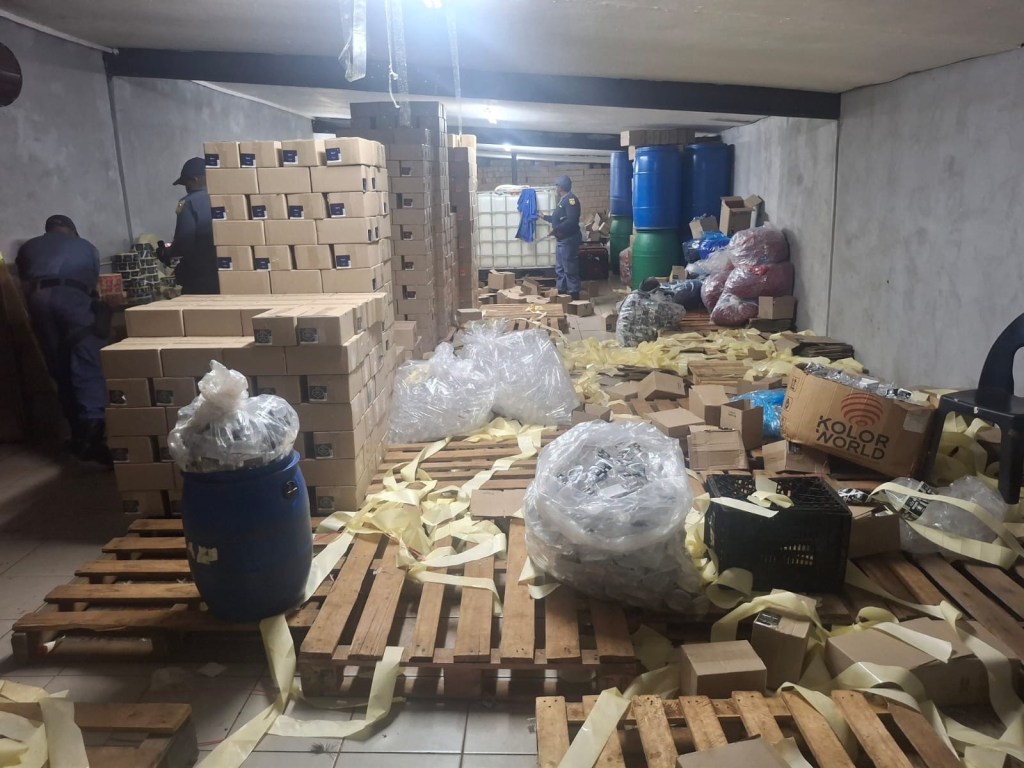
20 October 2026 – Four accused who were arrested after police discovered an alleged illegal liquor manufacturing plant on a farm in the Rietfontein, outside Stilfontein remanded in custody. The arrests followed a raid conducted by members of the South African Police Service (SAPS) Public Order Policing Unit on 15 October 2026, acting on a tip-off.
The police reportedly approached the premises at approximately 10pm, prompting several suspects to flee in different directions. However, the police managed to apprehend four men aged between 28 and 54. The suspects have been identified as Renier Willem Volschenk (34), Gaecious Sakuli (32), Hurry Othema (54) and Martin Fernando (28).
The North West police spokesperson, Colonel Adele Myburgh said three of the accused are believed to be undocumented foreign nationals from Malawi, while the fourth is a South African citizen allegedly linked to the ownership of the business. Myburgh said the estimated value of the illicit liquor discovered at the premises at approximately R1.4 million.
“During the operation, police confiscated raw materials allegedly used in liquor production, including flavourants, colourants, pots and flow bins. Several storage tanks were also discovered, with their contents set to undergo testing after police suspected that they contained ethanol,” she said.
“These illicit plants, they compromise our economy in many ways. They employ illegal national foreigners and they kill our formal liquor traders,” she said.
North West Police Commissioner, Lieutenant General Arthur Adams, said the police would continue targeting criminal syndicates involved in the illicit liquor trade. Adams highlighted that these syndicates exploit tax differentials and expose consumers to significant health and safety risks through the production and distribution of illicit liquor.
“We welcome the operation and such enforcement efforts formed part of broader government initiatives to combat illicit economic activities and strengthen compliance in key sectors.
“We would also like to express appreciation to North West Premier Lazarus Mokgosi, North West MEC for Community Safety and Transport Management, Virginia Tlhapi and North West MEC for Cooperative Governance, Human Settlements and Traditional Affairs, Oageng Molapisi for demonstrating their support by visiting the crime scene,” he said.
Adams said they faced allegations relating to contraventions of liquor, revenue and immigration legislation.
Meanwhile, the North West MEC for Community Safety and Transport Management, Virginia Tlhapi, expressed shock at the discovery of the alleged illegal liquor manufacturing operation on a privately owned farm. Tlhapi warned that illicit liquor manufacturing threatens the province’s economy and undermines legitimate businesses operating within the formal liquor industry.
19 October 2026 – A man (25) was sentenced to 15 years imprisonment by the Bafokeng Regional Court for assault with intent to cause Grievous Bodily Harm (GBH), read with the provisions of the Domestic Violence Act. This comes after the accused, Aroni Mabunda, stabbed his ex-girlfriend.
The National Prosecuting Authority (NPA) regional spokesperson in North West, Lindiwe Mabasa said on 10 October 2025, Mabunda stabbed the victim once in the back with a knife after accusing her of cheating. Mabasa said she sustained serious injuries and was hospitalised for two weeks.
“Mabunda pleaded not guilty to the charge. However, the state, represented by prosecutor Zola Mpayipheli, presented compelling witness testimony that proved the case against him and secured his conviction.
“In aggravation of sentence, the state argued that Gender-Based Violence (GBV) remains a serious concern in South Africa and that offences involving violence against women require appropriately severe sentences,” she said.
Mabasa said the state further submitted that the sentence should reflect the seriousness of the offence and send a strong message that violence within domestic relationships will not be tolerated. She said in imposing the sentence, the court remarked that some perpetrators continue to demonstrate disregard for women and the law despite severe sentences imposed by the courts.
“The court emphasised that the message to prospective offenders must be clear: the courts will not hesitate to impose appropriate sentences on those who resort to violence to resolve domestic disputes,” said Mabasa.
Meanwhile, the Director of Public Prosecutions (DPP) in North West, Dr. Rachel Makhari-Sekhaolelo, commended Mpayipheli and Investigating Officer, Sergeant Tshireletso Ramafoko for their diligence and commitment in ensuring that Mabunda was held accountable. Makhari-Sekhaolelo said the NPA welcomes the sentence as another demonstration of the criminal justice system’s commitment to holding perpetrators of gender-based violence accountable.
“The NPA remains resolute in prosecuting GBVF matters without fear, favour or prejudice, and in pursuing justice for victims of these crimes,” she said.
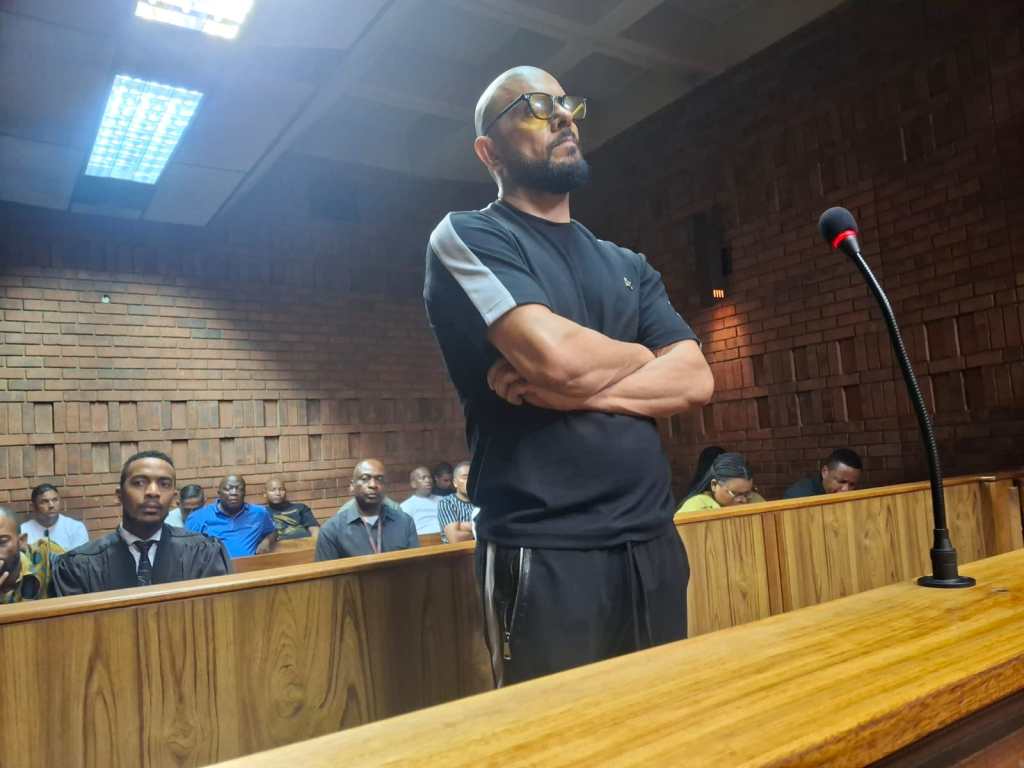
19 October 2026 – The North West prominent businessman, Suliman Carrim (49) briefly appeared in the Pretoria Magistrate’s Court today, facing a charge of contravening Section 6(1) of the Commissions Act 8 of 1947, by failing to appear before the Madlanga Commission of Inquiry. It is alleged that Carrim, who is former ANC regional treasurer in Ngaka Modiri Molema region, failed to appear before the Commission after he was warned to appear on 14 August 2026.
The National Prosecuting Authority (NPA) regional spokesperson in Gauteng, Lumka Mahanjana said following his alleged failure to appear, a criminal case was registered and investigated by the Commission’s Recommendations Task Team. Mahanjana said Carrim was subsequently arrested at the OR Tambo International Airport on 15 October 2026, shortly before he was due to board an international flight.
“In court, the state opposed Carrim’s release on bail, arguing that he is likely to evade his trial and that the state would not know where to locate him since his addresses were not verified,” she said.
The matter was postponed to 28 October 2026 to allow for the verification of documents submitted to the court by the defence and continuation of the bail application.
Picture: The North West MEC for Social Development, Susanna Dantjie
By KEDIBONE MOLAETSI
19 October 2026 – The North West MEC for Social Development, Susanna Dantjie will lead the department’s Re Thuse Re Go Thuse service delivery campaign in Tlokweng Village, near Rustenburg on 20 October 2026. Dantjie said the campaign that will bring integrated services to the community will also see the handing over material support to women beneficiaries and recognise 20 Community Nutrition and Development Centre (CNDC) cooks who have completed training.
She further said the Tlokweng outreach also follows up on commitments made by the Minister of Social Development, Dinah Pule during a visit to the area in January 2026. Dantjie added that through the campaign, her department aims to report back to the community, improve access to services and sustain coordinated support beyond the commemorative activities.
“The identified women will receive support material intended to strengthen livelihoods and support their chosen small-business initiatives. Approximately 200 women have been identified across the province for support during the 2026 financial year.
“The handover forms part of the department’s contribution to improving household livelihoods and helping women pursue opportunities suited to their circumstances,” said Dantjie.
She said the programme will also recognise 20 CNDC cooks from across the province, who have completed training facilitated by the Department’s Sustainable Livelihoods Directorate. Dantjie said their certification supports the department’s contribution to community nutrition and food-security efforts.
“The outreach that is expected to reach about 400 participants, will be followed on 21 October, by a round-table discussion in Robega, Chaneng, in Rustenburg. It will bring together service beneficiaries and stakeholders to explore stronger partnerships in the fight against poverty.
“The focus will be on strengthening collaboration between government, community representatives and other stakeholders to turn community-identified needs into practical interventions. Discussions are expected to include household and community profiling, alignment of programmes with available resources, and opportunities for partnerships to improve implementation at community level,” said Dantjie.
She said the two-day programme takes place in the context of the International Day for the Eradication of Poverty, observed annually on 17 October. Dantjie said this year’s theme: “Ending social and institutional maltreatment: Acting together for just, peaceful and inclusive societies,” calls attention to the barriers people living in poverty can face when seeking support, including stigma, discrimination and exclusion from services.
“Through Re Thuse Re Go Thuse, the department is seeking to strengthen an integrated approach to service delivery and deepen engagement with communities with the aim of ensuring that support responds to needs identified on the ground.
“The event will be held at Tlokweng sport park on 20 October 2026, at 8:30am,” she said.
19 October 2026 – The Republic of South Africa (RSA) president, Cyril Ramaphosa said this week, the second Bana Pele Leadership Summit is taking place in Gauteng. Ramaphosa said Bana Pele means ‘children first’ in Sesotho.
He further said it is a campaign led by the Department of Basic Education to strengthen and transform the delivery of early learning in the country. Ramaphosa added that the Early Childhood Development (ECD) shapes a child’s cognitive, social, emotional and behavioural development.
“Quality early learning introduces the foundations of literacy and numeracy, such as recognising letters and numbers, building vocabulary, counting and solving simple problems. Children who start school with these skills are ready to read, write and work with numbers from their first year.
“Grade R is now compulsory, so these skills are needed by the time a child turns five. Yet more than 1.3 million children aged three to five are not enrolled in any early learning programme. Most of these children live in poorer communities, where paying even a low fee for a child to attend an ECD centre is a challenge,” he said.
Ramaphosa said in contrast, children in better-resourced communities are far more likely to enter the foundation phase able to read for meaning and handle basic numeracy. He said expanding access to early learning is therefore a development priority and a way of addressing historical inequalities.
“Every child, regardless of the circumstances of their birth, deserves the chance to learn and grow. The second Bana Pele Summit brings together government, practitioners, communities, business, funders and civil society.
“It will take stock of progress towards our goal of ensuring that all children between the ages of three and five have access to affordable, equitable and quality early learning programmes by 2030,” said Ramaphosa.
He said over the past two years, they have substantially increased investment in early learning. Ramaphosa said they have increased the subsidy for ECD attendees and committed further resources to expand access.
“Through these efforts, we aim to reach an additional 300,000 children by 2027 and a further 900,000 by 2030. But investment alone is not enough. Public resources must reach the programmes and communities where they are needed most.
“Through the Bana Pele Mass Registration Drive, thousands of previously unregistered early learning programmes have taken their first step towards formal registration. The drive is bringing more providers into the national system, giving us a clearer picture of where programmes are located and helping us identify where further support is needed,” he said.
Ramaphosa said he has often said that they are starting late in building a formalised early childhood development system. Yet starting late should not mean starting slowly, he said.
“The reforms we have embarked upon in early learning are part of a broader effort to renew South Africa’s socio-economic architecture. Early learning touches on education, health, social protection, employment and the economy, and it is in these interconnected areas that its benefits will be felt most widely.
“By investing in our youngest children, we are laying the foundations for stronger schools, healthier communities, more inclusive growth and a more capable workforce for the decades ahead,” said Ramaphosa.
He said early learning is a vital part of the care economy. Ramaphosa said these programmes do more than sustain the livelihoods of the people, mostly women, who run them.
“They also free parents and caregivers in communities where employment opportunities are often scarce to work, study or simply to provide for their families. Strengthening early learning is therefore an investment not only in our children, but also in families, local economies and the people whose work sustains their care.
“Credit must go to the people who care for and teach our children every day. A few years ago, I visited an early learning centre in Bizana in the Eastern Cape, where I met with staff who had kept the centre going even when they could not be paid,” he said.
Ramaphosa said he was deeply moved when they told him that they would not turn away a child simply because their family could not afford to pay an already low fee. He said across South Africa, countless practitioners show this same dedication.
“Many are women who have built small enterprises of their own to care for children in their communities. We are committed to supporting them and to ensuring they get the recognition they deserve. Early childhood development practitioners play a vital role in the future educational outcomes of young learners.
“We can further accelerate access to ECD through the support of the private sector. Many companies already incorporate education in their Environmental, Social and Governance strategies, but much of it is on basic education and not specifically targeting early learning,” said Ramaphosa.
He said corporate support, whether in the form of subsidising fees, upgrading facilities or funding practitioner training, will help them to achieve their early learning goals. Ramaphosa said advancing early learning is a shared national responsibility.
“Our efforts to support our youngest citizens today are a solid investment not only in their future, but in the very growth and progress of our country,” he said.
Picture: Former GTLM employee, Mmoloki Ramosotho Moleboge/Facebook
By OBAKENG MAJE
19 October 2026 – The Greater Taung Local Municipality (GTLM) has reportedly dismissed its employee, Mmoloki Ramosotho Moleboge, following allegations that he defrauded the municipality by selling three municipal-owned stands worth hundreds of thousands of rand in Pudimoe Township, near Taung.
Moleboge, who is now the African Congress for Transformation (ACT) ward 5 councillor candidate, is alleged to have generated a fraudulent power of attorney and forged the signatures of Municipal Manager Andrew Makuapane and former Municipal Manager Katlego Gabanakgosi to bypass the required council approval.
The municipality said an investigation was conducted into serious maladministration relating to the transfer of the three vacant stands.
According to the municipality, the investigation assessed actions that allegedly contravened applicable legislation, unlawful conduct by a municipal employee, and potential financial losses suffered by the municipality as a result of the land transfers.
GTLM spokesperson Ricky Oliphant confirmed that the matter had been reported to law enforcement authorities and the Public Protector.
“This case is currently with the Public Protector and the Hawks. The municipality is therefore unable to discuss the merits of the matter,” he said.
However, Hawks spokesperson in North West, Lieutenant Colonel Tinyiko Mathebula, said he was not aware of the allegations.
“I am not aware of these allegations, and I cannot comment if there are no suspects charged,” he said.
Meanwhile, Moleboge has strongly denied the allegations, describing them as a smear campaign and an attempt at political sabotage. He claimed that he had been dismissed by the Greater Taung Local Municipality in 2024 and questioned why the allegations had resurfaced only now.
“I am not aware of these allegations. After you left, I spoke to my legal adviser and the ACT provincial chairperson. My formal response is that I am not aware of these allegations. I believe this is political propaganda being used against me because I am campaigning,” he said.
Moleboge added that he would only respond to questions about his dismissal after the elections, alleging that the matter was being used for political purposes.
“I will explain why I was dismissed by the municipality after the elections because these people are playing political games. I am now with ACT, which is contesting the Local Government Elections (LGE) against the ANC and has a stronghold in Pudimoe. I have a formal response that I can give you now, but I am not at liberty to do so,” he said.
Picture: Kagisano-Molopo Local Municipality/Facebook
By REGINALD KANYANE
19 October 2026 – The Kagisano-Molopo Local Municipality said it wishes to clarify misleading information circulating in the public domain alleging that the municipality acted in Contravention of the Moratorium imposed by the North West MEC for Cooperative Governance, Human Settlements and Traditional Affairs (COGHSTA), Oageng Molapisi on 24 August 2026. The municipality said it wishes to place on record that it did not disregard Molapisi’s directive, but followed the exemption process expressly provided for in the moratorium.
The municipality spokesperson, Mosimanegape Khumalo said the Clause 3.2 of the moratorium makes provision for municipalities to apply for exemptions through written motivation to the MEC, while Clause 4.3 requires written approval from the MEC before an appointment process may commence. Khumalo said in a statement that, in compliance with these provisions, the municipality formally submitted a motivated request to the MEC seeking exemption to proceed with the recruitment of identified senior management positions.
“Following consideration of the municipality’s motivation, the MEC granted written exemption on 3 September 2026, authorising the filling of the senior management positions such as Director for Local Economic Development (LED), Tourism and Agriculture, Director for Good Governance and Public Participation, Director for Infrastructure and Technical Services, including position of Chief Financial Officer (CFO).
“The Municipality therefore wishes to emphasise that the continuation of the recruitment process in respect of the approved positions was not undertaken in defiance of the moratorium, but pursuant to written authorisation granted by MEC.
“The Municipality finds it regrettable that information is being circulated without acknowledging these material facts, thereby creating an inaccurate impression of deliberate non-compliance. Kagisano-Molopo Local Municipality remains committed to lawful administration, transparency, accountability and strengthening institutional capacity to improve service delivery,” he said.
Khumalo further said the municipality appeals to members of the public to rely on verified information and official documentation rather than misleading assertions.
19 Diphalane 2026 – Motsamisi wa maloba wa lebenkele la Boxer Liquor Store mono Taung, Tebogo Romeo Mahusi (32), o solofetswe go tlhagelela kwa kgotlhatshekelo ya sedika mono Taung. Mahusi yo o mo beileng ya R1000, o ne a tshwarwa mabapi le ditatofatso tsa go betelela modiri wa mosadi wa teng kwa Boxer Liquor Store.
Go begwa fa modiri wa dingwaga di le 20, teng kwa Boxer Liquor Store, a ne a tsweletse ka tiro ya gagwe ya go paka dilo fa motsamaisi a ne a mo biletsa kwa kantorong ya gagwe ka Lamatlhatso motshegare. Go begwa fa go tseneng ga bone kwa kantorong eo, Mahusi o ile a lotlela lebati la kantoro.
Go begwa fa e ne ya re fa modiri o a sentse a maketse gore go diragalang, ke fa Mahusi a mo phamola a mo atla ka pateletso. Go begwa fa Mahusi a ile a mo fekeetsa ka maatla, mme a mo apola borokgwe.
Go begwa fa Mahusi a ile a mo rapamisa mo tafoleng le go mo betelela a mo tlhaga kwa morago.
Kgabagare, go solofetswe go tsenela ditheetso tsa pele ga tsheko mo letsatsing la gompieno.
Picture: SAFA Vice Presidents elected at successful NEC Ordinary Meeting in Sandton/Supplied
By OBAKENG MAJE
19 October 2026 – The South African Football Association’s (SAFA) National Executive Committee (NEC) met at an Ordinary Meeting in Sandton, Johannesburg on Sunday where the Members elected new Vice Presidents, and also addressed various other important issues. This was the first meeting of the new NEC following the successful SAFA Elective Congress held in Midrand on 12 September 2026.
The SAFA NEC elected Anastasia Tsichlas, Linda Zwane and Tankiso Modipa as the Vice Presidents to serve for the next four years.
SAFA president, Dr Danny Jordaan explained the process that guided the election of the three Vice Presidents.
“As far as today’s meeting was concerned, the meeting addressed various issues. First, we had to deal with the question of the Vice Presidents we have here at the front table. Now, you know that in the elections at SAFA, you only elect national list members, they are national executive members and out of those members, you then elect the three Vice Presidents arising out of that pool of administrators.
“We have on my left Linda Zwane, who was a Vice President, served one term and is in his second term as Vice President. We also have Natasha Tsichlas as a Vice President and the new man on the block, Tankiso Modipa sitting next to me,” he said.
He further said the way in which they determined the Vice President is by an open ballot, which was observed by all of the members and as the vote was counted, it was displayed behind us on the screen. So, there’s no question that the election showed the transparency and the commitment of SAFA to deal with these matters in an open and transparent way. Jordaan added that the next step is for the Vice Presidents to come together with the CEO, Lydia Monyepao to put together Vision 2030, which will end in Morocco.
“In the elements of the Vision 2030, it’s about schools’ football, it’s about development, it’s about excellence of our various national teams, it’s about coaching education and making sure that we have and sustain quality coaches in the country, which is an important issue.
“The members also appointed several committees, including technical, finance, schools and competitions among others. Former Bafana Bafana midfielder, Doctor Khumalo has been appointed as vice chairman of the SAFA Technical Committee,” said Jordaan.
The NEC member, Lebogang Riet confirmed to the gathered members in Sandton that he has withdrawn the criminal complaint he laid against SAFA CEO, Lydia Monyepao on the eve of the SAFA elective congress.
“We had this discussion even prior to the NEC, where we admitted that a lot of things were done in the way they were done. But we agree that it was campaigning (before the elective congress last month), we had a campaign period and that is it.
“We have to put SAFA first and that is the most important thing. There’s a new NEC, there is a (newly elected) president and we must support the growth of football,” he said.
Riet said he has withdrawn the complaint that went viral on social media. He said the matter as it was, the agreement is to withdraw the matter.
In another matter, North West’s Jack Ramorei confirmed to the members that he never opened a case at the police station against a fellow NEC member.
The SAFA NEC Meeting was preceded by a two-day workshop that the association hosted in partnership with FIFA at the same venue. It was an induction workshop for the recently elected SAFA NEC and SAFA’ senior Management.
Several sessions were conducted and they included governance, financial governance, leadership, forward development programme, women’s football, among others.
Picture: The National Police Commissioner, General Fannie Masemola
By OBAKENG MAJE
16 October 2026 – The acting Minister of Police, Professor Firoz Cachalia has welcomed President Cyril Ramaphosa’s decision to lift the precautionary suspension of National Commissioner of the South African Police Service (SAPS), General Fannie Masemola, following the formal withdrawal of charges against him. In a statement issued on Friday, Cachalia said the decision paves the way for Masemola to return to his duties as head of the country’s police service.
Cachalia also expressed his appreciation to Lieutenant-General Puleng Dimpane for her professionalism, leadership and dedicated service while serving as acting National Commissioner during Masemola’s suspension.
He reaffirmed the Ministry’s commitment to strengthening the SAPS through the Police Reset Agenda, which focuses on promoting professionalism, accountability and ensuring that the police service remains committed to its constitutional mandate to protect and serve all people in South Africa.
“The return of the National Commissioner provides an opportunity for the leadership of the SAPS to maintain focus on operational priorities and the ongoing work to build a professional, capable and trusted police service as per the Police Reset Agenda.
“The Ministry said it remains committed to advancing reforms aimed at strengthening public confidence in the police service and ensuring that the organisation fulfils its responsibilities effectively,” he said.
Cachalia further said Masemola’s return is expected to allow SAPS leadership to continue focusing on operational priorities and the broader efforts to build a professional and accountable police service.
Setshwantsho: SAFA e thakgola lenaneo la bosetšhaba la go naya ditheo tsa kgwele ya dinao dilaesense le go godisa ditalente
Ka STAFF REPORTER
16 Diphalane 2026 – Mokgatlo wa Kgwele ya Dinao wa Aforika Borwa (SAFA) o thankgolotse lenaneo la bosetshaba la go naya ditheo tsa kgwele ya dinao dilaesense le go godisa ditalente, le le tshegediwang ke lenaneo la FIFA la tlhabololo ya ditalente (TDS).
Lenaneo leno le ikaeletse go nonotsha tlhabololo ya kgwele ya dinao ya bašwa le go tlhama ditsela tse di bonalang tse di tla thusang ditalente tsa kgwele ya dinao mo Aforika Borwa go gola le go fitlhelela maemo a a kwa godimo.
Lenaneo leno le tla tlhoma maemo a bosetšhaba a a tla latelwang ke ditheo tsa kgwele ya dinao, gape le go tlhama mokgwa o o rulagantsweng wa go lemoga, go tlhabolola le go tsweledisa pele batshameki ba ba nang le bokgoni mo nageng.
Lenaneo leno le ikaegile ka dintlha tse pedi tsa botlhokwa, e leng go naya ditheo dilaesense le go tlhama melawana e e tla di laolang.
Mokhuduthamaga wa SAFA, Lydia Monyepao are ba tla tlhagisa letlhomeso la bosetšhaba le le tla kaelang tsela e ditheo di tsamaisiwang ka yone, go sekaseka tiro ya tsone le go di amogela semmuso. Monyepao are letlhomeso leno le tla tsepamisa mogopolo mo pusong e e siameng ya ditheo, tshireletso ya bana le bašwa, maemo a katiso, mafaratlhatlha, tlhokomelo ya batshameki le tlhabololo ya bona ya nako e telele.
“Lenaneo leno gape le tla nonotsha tirisanommogo magareng ga dikolo, ditheo tsa kgwele ya dinao, ditlhopha, makala a diporofense le ditlhopha tsa bosetšhaba, gore batshameki ba ba nang le bokgoni ba lemogiwe le go tshegediwa ka tsela e e rulagantsweng sentle.
“Kgato ya ntlha e akaretsa ditherisano le bannaleseabe le tlhamo ya letlhomeso. Tiragatso ya lenaneo e tla simolola ka ditherisano tsa naga ka bophara tse di tla akaretsang ditheo tsa kgwele ya dinao, ditlhopha, mekgatlho ya kgwele ya dinao ya diporofense, dikolo, diyunibesithi, bakatisi, baitseanape ba setegeniki le bannaleseabe ba bangwe ba botlhokwa,” Monyepao wa tlhalosa.
Are SAFA gape e tla tlhoma Setlhopha sa Bosetšhaba sa Tiro sa Dilaesense tsa Ditheo le Tlhabololo ya Ditalente, se se tla bopiwang ke baitseanape ba setegeniki, baemedi ba ditheo, baitseanape ba tshireletso le bagakolodi ba Lenaneo la FIFA la Tlhabololo ya Ditalente. Go ya ka Monyepao, setlhopa seno se tla kaela tlhamo ya letlhomeso.
“Aforika Borwa e na le ditalente tse dintsi tsa kgwele ya dinao mme maikarabelo a bona ke go tlhama tikologo e mo go yone mosha mongwe le mongwe a ka bonang ditšhono tsa boleng jo bo kwa godimo tsa tlhabololo.
“Lenaneo leno le tla thusa go tlhoma maemo a a tshwanang mo ditheong tsotlhe, fa gape le tlhama tsela e e golaganeng sentle e e tshegetsang kgatelopele ya batshameki go tloga kwa kgweleng ya dinao ya mo metseng go fitlha kwa maemong a a kwa godimo a motshameko,” ga rialo Monyepao.
Mokaedi wa Setegeniki wa SAFA, Molefi Ntseki, o tlhalositse gore go naya ditheo dilaesense le go tlhama ditsela tsa tlhabololo ya ditalente ke dikarolo tsa botlhokwa mo go ageng tsamaiso e e atlegileng ya tlhabololo ya kgwele ya dinao.
O rile ka lenaneo leno, SAFA e ikaeletse go tokafatsa maemo a tlhabololo, go nonotsha go lemoga ditalente le go naya batshameki ba ba nang le bokgoni ditšhono tse di bonalang tsa go gatela pele mo Aforika Borwa.
Faisal Chibsah, wa Lenaneo la FIFA la Tlhabololo ya Ditalente le Moitseanape wa FIFA wa Maemo a a Kwa Godimo, o rile ka go kopanya mafelo a boleng jo bo kwa godimo a tlhabololo le ditsela tse di rulagantsweng tsa ditalente, SAFA e tsaya kgato ya botlhokwa ya go dirisa bokgoni jotlhe jwa batshameki ba bašwa mo nageng.
“Lenaneo leno le bontsha boikano jwa nako e telele jwa go aga isagwe ya kgwele ya dinao ya Aforika Borwa. Lenaneo la Bosetšhaba la go Naya Ditheo tsa Kgwele ya Dinao Dilaesense le go Godisa Ditalente le tsewa e le kgato e kgolo ya go nonotsha tsamaiso ya tlhabololo ya kgwele ya dinao mo Aforika Borwa, ka go tokafatsa maemo a ditheo le go tlhama ditsela tse di bonalang tsa go thusa kokomana e e latelang ya batshameki.
“Lenaneo le simolotse kwa SAFA House mo bekeng eno mme ditherisano di tla tswelela kwa diporofenseng tse dingwe mo malatsing a a tlang,” ga rialo Chibsah.
Lenaneo la ditherisano tsa ditheo tsa kgwele ya dinao
– KwaZulu-Natal (Durban): Southern Sun Elangeni & Maharani Hotel
Letlha: 16 Diphalane 2026
Nako: 10:00 go fitlha ka 17:00
– Kapa Botlhaba (Gqeberha): Radisson Blu Hotel
Letlha: 18 Diphalane 2026
Nako: 10:00 go fitlha ka 17:00
– Kapa Bophirima (Cape Town): Protea Sea Point Hotel
16 Diphalane 2026 – Setheo sa Aforika Borwa sa Tshireletso ya Loago (SASSA) se itsisitse ka matlha a mantsha a tuelo ya dithuso tsa loago tsa Ngwanatsele 2026 pele ga ditlhopho tsa dipusoselegae tse di rulaganyeditsweng go tshwarwa ka la 4 Ngwanatsele 2026. Setheo seno, se tlhalositse gore phetogo eno e dirilwe morago ga ditherisano le bannaleseabe ba ba farologaneng ka maikaelelo a go netefatsa gore dithuso tsa loago di duelwa ka tsela e e manontlhotlho le e e sireletsegileng go sa nne le dikgoreletsi tse dintsi ka nako ya ditlhopho.
Lefapha la Matlotlo la Bosetšhaba (National Treasury) le amogetse matlha a mantsha a tuelo, ka jalo SASSA e ka diragatsa thulaganyo e ntšhwa. Go ya ka thulaganyo e e fetotsweng, matlha a tuelo, dithuso tsa bagodi di tla duelwa ka di 30 Diphalane 2026.
Dithuso tsa batho ba ba tshelang ka bogole, di tla duelwa ka 2 Ngwanatsele 2026, fa dithuso tsa bana di tl duelwa ka di 3 Ngwantsele 2026. SASSA e rile diphetogo tseno di diretswe go netefatsa gore dithuso tsa loago di duelwa ka thelelo mo nakong e e dikologileng ditlhopho.
Sebueledi sa SASSA, Dr Paseka Letsatsi are setheo sa gagabo se sa ntse se ikemiseditse go netefatsa gore botlhe ba ba tshwanelwang ke go amogela dithuso tsa loago ba di amogela ka thulaganyo e e siameng le ka tsela e e ikanyegang.
“SASSA gape e gakolotse bajalefa ba dithuso tsa loago ba dikopo tsa bone di sekasekwang gape gore ba arabele melaetsa ya semmuso mme ba nne teng kwa dikopanong tsa tshekatsheko fa ba kopiwa go dira jalo,” Letsatsi wa tlhalosa.
Are letsatsi le lengwe la tuelo, e leng 5 Ngwanatsele, le beetswe kwa thoko ka tlhamalalo go thusa bajalefa ba dithuso tsa bone di leng mo thulaganyong ya tshekatsheko. Letsatsi are SASSA e kopile bajalefa gore ba se ka ba etela dikantoro tsa yone go sa tlhokege, ka gonne dituelo di tla dirwa go ya ka thulaganyo e e itsisitsweng.
“Bajalefa ba rotloediwa gape go dirisa ditsela tsa semmuso tsa puisano tsa setheo seno go bona tshedimosetso e e nepagetseng le go itshireletsa kgatlhanong le tshedimosetso e e seng boammaaruri kgotsa e e tsietsang malebana le dithuso tsa loago.
“SASSA e gateletse gape boikemisetso jwa yone jwa go sireletsa seriti le botshepegi jwa thulaganyo ya thuso ya loago, fa e ntse e netefatsa gore dimilione tsa Maaforika Borwa a a ikaegileng ka dithuso tseno di tswelela go di bona,” ga rialo Letsatsi.
Picture: The Speaker of North West Provincial Legislature, Viola Motsumi
16 October 2026 – The North West Provincial Legislature (NWPL) has welcomed an investigation by the Commission for Gender Equality (CGE) into institutional accountability and the effectiveness of measures to prevent and address harassment, bullying, sexism and violence against women and vulnerable groups within provincial legislatures. The investigation seeks to assess whether existing institutional policies and mechanisms adequately protect vulnerable employees and provide effective channels for reporting and addressing complaints.
The Speaker of the North West Provincial Legislature, Viola Motsumi said the Legislature fully supports the investigation and remains committed to promoting equality, human dignity, transparency and accountability.
“The NWPL affirms that non-racialism and non-sexism are foundational values of the Constitution. The Bill of Rights binds the Legislature, Executive and Judiciary to respect, protect, promote and fulfil all rights.
“The constitutional right to equality prohibits conduct that undermines gender equality, while the right to human dignity recognises the inherent worth of every person,” she said.
Motsumi further said these principles were essential in combating gender discrimination, sexual harassment and gender-based violence. She added that the Legislature had established various policies and mechanisms to promote a safe, respectful and harassment-free working environment.
“Its Workplace Harassment Policy, which has been in place since 2016, is currently being aligned with the Code of Good Practice on the Prevention and Elimination of Harassment in the Workplace, introduced in 2022.
“The Legislature also has mechanisms to report, investigate and manage complaints involving employees, management and Members of the Provincial Legislature (MPLs),” said Motsumi.
She said these include safeguards against victimisation, the appointment of external investigators where necessary and precautionary measures such as suspension or changes to reporting lines. Motsumi said records are also maintained of complaints, including those that do not proceed to formal disciplinary hearings.
“The Legislature had further established the Office of the Integrity Commissioner, an independent office responsible for investigating ethical complaints by or against members and making detailed recommendations to the Speaker.
“Members are required to uphold the constitution and the law, act with honesty and integrity, and avoid conduct that could undermine public confidence in their offices,” she said.
Motsumi said Legislature has also introduced awareness initiatives aimed at addressing workplace harassment and Gender-Based Violence (GBV). She said these include its annual Men’s and Women’s Conferences, held for four consecutive years, which have addressed sexual harassment, workplace bullying, femicide and GBV.
“The NWPL noted research indicating that between 68% and 76% of women in South Africa experience sexual harassment at least once during their lifetime or professional careers.
“The statement also cited University of KwaZulu-Natal studies indicating that 9.8%, or approximately 2.1 million women, have experienced sexual violence,” said Motsumi.
She said according to the Legislature, these figures highlight the importance of strengthening institutional interventions and ensuring that complaints are handled effectively. Motsumi said the institution acknowledged that gaps remain in workplace harassment prevention, employee wellness, policy implementation and organisational alignment.
“To address these challenges, the Legislature has finalised a workplace climate and culture survey instrument, which is expected to be administered in early 2027.
“It has also developed a Human Resources Change Management Strategy to guide the implementation of employee climate surveys,” she said.
Motsumi said the strategy is currently undergoing internal consultation and once approved, will provide a framework for assessing workplace culture and identifying institutional challenges. She said their corrective measures would include continuous workplace climate surveys, aligning policies with amended legislation and strengthening information and communication technology-based advocacy to improve accessibility.
“Future interventions will focus on intensifying awareness programmes on gender-based violence and femicide, workplace bullying, harassment and bystander intervention.
“The Legislature also plans to encourage victims to report all forms of harassment, develop a Protected Disclosure Policy and expand public outreach on sexual harassment and GBV,” said Motsumi.
In promoting women’s empowerment and gender equality, she said the NWPL continues to support initiatives through the Multi-Party Women’s Caucus, Commonwealth Women Parliamentarians, the Women Sectoral Parliament, the Integrated Women’s Day Event and the Basadi Re Aga Setshaba event.
“As of May 2026, the Legislature’s approved administrative establishment consisted of 322 positions, with 236 employees.
“Management comprised 23 managers, of whom 15 were men and eight were women. The Legislature also acknowledged that it had not yet met the 3% disability employment target and we are participating in the North West Disability Forum to address the shortfall,” said Motsumi.
She reiterated the Legislature’s commitment to strengthening accountability, improving workplace conditions and ensuring that everyone is treated with dignity and respect. Motsumi said the North West Provincial Legislature remains committed to following up on our commitments and making your future work better — building an ethos based on equality and dignity for all. taungdailynews@gmail.com
16 Diphalane 2026 – Kokwanopeo Molao mono Bokone Bophirima, e tla tshwara Palamente ya Lekala la Boitekanelo ka ga HIV le TB. Kopano e, e solofetswe go tshwarwa ke Palamente ya Lekala la Boitekanelo ya 2026 kwa motsesetoropong wa Khuma, kwa Stilfontein ka Labotlhano, maitlhomo e le go nonotsha maiteko a go lwantsha HIV le bolwetse jwa mafatlha (TB).
Mmusakgotlha wa Kokwanopeo Molao, Viola Motsumi ga mmogo le motlatsi wa gagwe, Collen Maine, ba tla etelela pele dipuisano tse. Motsumi are Palamente eno e tla tshwarwa ka fa tlase ga setlhogo se se reng:
“Re a Tlhatloga Mmogo: Batho ba le Dimilione di le 1.1 ba Kopane go Fedisa TB. E tla kopanya baagi, baemedi ba puso, kgotlhakgothe ya Porofense ya TB, mekgatlho ya setšhaba le balekane ba tlhabololo go buisana ka dikgwetlho tse di leng teng mo thibelong, go lemogeng le go alafeng HIV le TB.
“Tiragalo eno e rulaganyeditswe go simolola ka ura ya lesome mo mosong kwa Holong ya Transnet kwa Khuma ka Labotlhano.
Palamente eno e ikaelela go tshegetsa matsholo a 1.1 Million Close the Gap le End TB, mmogo le go akofisa kgatelopele ya go fitlhelela maikaelelo a HIV a 95-95-95,” Motsumi wa tlhalosa.
Are Aforika Borwa e simolotse letsholo la Close the Gap ka di 25 Tlhakole 2025, ka maikaelelo a go busetsa batho ba bangwe ba le dimilione di le 1.1 ba ba tshelang ka HIV, ba ba iseng ba lemogwe kgotsa ba ba tlogetseng go bona tlhokomelo ya kalafi, mo kalafing ya di-antiretroviral (ART) e e bolokang matshelo.
“Ditherisano gape di tla sekaseka ka fa maemo a loago le ikonomi a amang phitlhelelo ya ditirelo tsa boitekanelo le kalafi ka teng, segolobogolo mo bathong ba e kileng ya bo e le badiri ba meepo,” ga rialo Motsumi.
Tonakgolo ya Bokone Bophirima, Lazarus Mokgosi, o solofetswe go nna teng, mmogo le Maloko a Khansele ya Khuduthamaga ya Porofense (MECs), baemedi ba Khansele ya Porofense ya AIDS le badiredi ba mafapha a Badiri, Tlhabololo ya Loago, Boitekanelo le Merero ya Selegae. Ba bangwe ba ba solofetsweng go nna teng ba akaretsa baemedi ba AURUM, baagi, mekgatlho ya setšhaba le lekala la poraefete.
Maloko a bobegadikgang a lalediwa go nna teng le go bega ka tiragalo eno.
Setshwantsho: Mokhuduthamaga wa Tlhabololo ya Loago, Sussana Dantjie ga mmogo le maloko a mokgatlho wa LGBTQ+
Ka OBAKENG MAJE
16 Diphalane 2026 – Mokhuduthamaga wa Lefapha la Tlhabololo ya Loago mono Bokone Bophirima, Sussana Dantjie, o kopile setšhaba go tlotla, go sireletsa le go amogela batho ba setšhaba sa LGBTIQ+, a gatelela gore ga go ope yo o tshwanetseng go sotliwa, go kobiwa kgotsa go patelediwa go tshela ka poifo ka ntlha ya gore ke mang. Dantjie o buile jaana ka nako ya puisano le maloko a setšhaba sa LGBTIQ+ kwa Ipelegeng Community Care Centre kwa Schweizer Reneke ka Labone. Bangwe ba maloko a LGBTQ+ ba abelane ka maitemogelo a a tshwenyang a go tlhaolwa, go betelelwa, go sotliwa, go kgaphelwa kwa thoko le mathata a go bona thuso le tshireletso.
“Ga go ope yo o tshwanetseng go sotliwa, go ganwa kgotsa go patelediwa go tshela ka poifo ka ntlha ya gore ke mang,” ga rialo Dantjie, a kopa gore go nne le maiteko a magolwane a go sireletsa ditshwanelo le seriti sa batho ba LGBTIQ+. Puisano eno e ne ya naya maloko a setšhaba sebaka sa go tlhagisa dingongorego tsa bone ka tsela e ba tshwarwang ka yone kwa magaeng, kwa dikolong, kwa dikerekeng le mo setšhabeng ka kakaretso.
Ba kopile gore go nne le ditsereganyo tse di nang le mosola go rarabolola dikgwetlho tse di amang pabalesego le boitekanelo jwa bone. Maloko a, a tlhagisitse matshwenyego ka go tlhaolwa ga bone mo mafelong a botlhe le go kgaphelwa kwa thoko ga batho ba ba nang le boitshupo jo bo farologaneng jwa bong ka ntlha ya manane a go kwadisa batho a a sa akaretseng boitshupo jwa bone.
Ba tlhalositse gape gore ka dinako dingwe maitemogelo a bone a tsenngwa mo dipegong tsa puso, mme go sa nne le puisano e e lekaneng le bone kgotsa diphetogo tse di bonalang mo maemong a bone.
Maloko a setšhaba a kopile gore ditirelo tsa boitekanelo jwa thobalano le jwa pelegi di tokafadiwe, go akaretsa go fitlhelela dikhondomo, didirisiwa tsa go sireletsa thobalano ya bomme le bomme (dental dams), dikhondomo tsa menwana le tshedimosetso e e tletseng ka boitekanelo jwa thobalano go thusa go thibela malwetse a a tshelanwang ka thobalano.
Ba kopile gape gore go nne le kamogelo e kgolwane mo ditheong tsa bodumedi, ba gatelela gore ba tshwanetse go kgona go obamela ka kgololesego kwa mafelong a bone a kobamelo ntle le poifo ya go tlhaolwa, go kgala kgotsa go ganwa.
Mongwe wa maloko a setšhaba sa LGBTIQ+, Seoketsi Mooketsi, o lebogile Dantjie ka go ipha nako ya go buisana le bone ka dikgang tse di amang matshelo a bone a letsatsi le letsatsi.
“Re leboga mokhuduthamaga ka go re naya sebaka sa go tlhagisa matshwenyego le ditlhobaelo tsa rona. Se se tlhagileng sentle mo puisanong eno ke dikgang tse di jaaka bonno jwa tshireletso, tlhaolele le tirisodikgoka ya bong e e dirwang kgatlhanong le rona.
“Ga go ope yo o tshwanelwang ke go sotliwa, go ganwa kgotsa go amogwa ditshwanelo tsa gagwe ka ntlha ya tshekamelo ya gagwe ya thobalano kgotsa boitshupo jwa gagwe jwa bong,” ga rialo Mooketsi.
Dantjie o rotloeditse maloko a setšhaba sa LGBTIQ+ go dirisa diphala go tlhagisa kotsi le go kopa thuso fa ba ikutlwa ba le mo kotsing, kgotsa ba iphitlhela ba le mo seemong se se sa babalesegang. O gateletse gape gore ditshwanelo tsa batho ba LGBTIQ+ di tshwanetse go sirelediwa go ya ka Molaotheo wa Rephaboliki ya Aforika Borwa, o o tlhomamisang tekatekano le tshireletso kgatlhanong le tlhaolele e e sa siamang.
Ka nako ya dipuisano, Lefapha la Merero ya Selegae le netefaleditse gore maloko a a LGBTQ+ a ka etela diofisi tsa lone go botsa ka ditsela tsa go fetola matshwao a bong mo ditlankeng tsa boitshupo le go dira dikopo tsa diphetogo tseo, go ya ka ditsamaiso tse di maleba, ntle le go tlhaolwa.
Tirelo ya Sepodisi sa Aforika Borwa (SAPS) e itsisitse bokopano gore go tlhomilwe diphaposi tse di diretsweng go thusa batswasetlhabelo, tse di nayang batho ba ba itemogetseng tirisodikgoka lefelo le le babalesegileng, la sephiri le le ba tshegetsang gore ba kgone go bega dikgetsi tsa tirisodikgoka.
Dantjie o rulaganyeditswe go tsweletsa dipuisano le dithapelo tse di malebana le tirisodikgoka e e ikaegileng ka bong le dipolao tsa basadi (GBVF) kwa dikgaolong tse dingwe mo kgweding ya Diphalane, e leng karolo ya lenaneo la gagwe la maemo a a kwa pele la Re thuse re go thuse ka nako ya Kgwedi ya Tlhabololo ya Loago.
15 October 2026 – In an effort to curb crimes committed using non-government organisations, the Kimberley Serious Commercial Crimes Court convicted Nathan Baldwin Ramailane (62) on one count of fraud and two counts of money laundering. Ramailane was charged alongside his NGO Heseqwa Caring Network.
The Hawks spokesperson in Northern Cape, Lieutenant Colonel Tebogo Thebe said, the accused had submitted a request for funding from the National Lottery Commission (NLC). Thebe said the application was approved to the tune of R700 000 and paid to the charitable organisation.
“As part of the monitoring processes, the NLC requested a progress report which was followed by a visit to the organisation’s premises. The organisation was found not to be in operation. A suspected fraudulent report signed by the directors was sent to the (NCL) officials to mislead that the NPO was in operation.
“The NLC instituted an internal investigation into the matter and further laid a complaint with the Hawks Serious Commercial Crimes Investigating unit (SCCI) in Kimberley. The actual loss suffered is R700 000 caused by the conduct of the accused. Investigation revealed the funds were used to purchase a motor vehicle, which was later used for personal reasons by the Director,” he said.
Meanwhile, the Provincial Head of the Directorate for Priority Crime Investigation in the Northern Cape, Major General Stephen Mabuela said: “Ramailane will be sentenced on the 8 December 2026, by Kimberley Serious Commercial Crimes Court. We are hoping for a good sentence that will send the message that crimes committed using NGO/NPO’s will not be tolerated.”
Picture: A suspected stolen copper cable seized/Generic
By STAFF REPORTER
15 October 2026 – Six Lesotho nationals have appeared in the Odendaalsrus Magistrate’s Court on charges of theft of essential infrastructure and contravention of immigration legislation following the discovery of copper cables in a vehicle allegedly travelling in convoy with another vehicle. The accused, Ntoane Mokoto (42), Nako Lengau (25), Teboho Molupe (42), Major Mohlolo (48), Katleho Ramphaololi (40) and Thuso Leeto (40), appeared in court on 14 October 2026.
The National Prosecuting Authority (NPA) regional spokesperson in the Free State, Mojalefa Senokoatsane said they were arrested on 12 October 2026, following a police operation prompted by a tip-off received regarding two vehicles allegedly transporting copper cables. Senokoatsane said the police stopped a vehicle bearing Lesotho registration plates and discovered rolls of copper cables inside.
“The vehicle had four occupants, including the driver. A second vehicle, a bakkie bearing North West registration plates and carrying two occupants, was also stopped. No copper cables were found in the bakkie.
“The preliminary information indicates that the two vehicles were travelling in convoy and that the owner of the bakkie was a passenger in the vehicle in which the copper cables were found. All six accused are Lesotho nationals,” he said.
Senokoatsane further said the four accused produced passports, which remain subject to verification, while the other two allegedly failed to produce travel or identification documents required to establish their immigration status. He added that the accused allegedly did not provide police with information regarding the origin of the copper cables.
“The relevant municipal infrastructure unit and Eskom are expected to conduct further investigations to establish the ownership and origin of the recovered cables. The matter was postponed to 23 October 2026, for bail information and a possible bail application.
“The NPA views the theft and damage of essential infrastructure in a serious light. Cable theft undermines the delivery of critical services, imposes significant financial costs on the state and affected communities, and compromises the reliability of electricity and other essential services,” said Senokoatsane.
He said the NPA remains committed to prosecuting those who allegedly target essential infrastructure and to ensuring that those responsible are held accountable through the criminal justice system.
15 October 2026 – The case against Fani John Sibeko (46), who is accused of killing four ANCYL members and injuring three others during a shooting incident in Katlehong North, Gauteng, briefly appeared before the Palmridge Magistrate’s Court. Sibeko faces four counts of murder and three counts of attempted murder, as well as charges of discharging a firearm in a public place and failure to safeguard a firearm.
The National Prosecuting Authority (NPA) regional spokesperson in Gauteng, Magaboke Mohlatlole said the charges relate to an incident that allegedly occurred on 13 October 2026, when a group of African National Congress (ANC) supporters was returning from a memorial service for the late councillor, Jeanese Magugu at Mogobeng Primary School. Mohlatlole said it is alleged that while the group was walking and chanting, gunshots were heard from behind them.
“A man driving a motor vehicle allegedly approached the group and initially fired shots into the air before firing multiple shots into the crowd. Four people were killed and three others injured. The deceased have been identified as Nqobile Faneli (23), Njabulo Ngcongo (23), Zanga Bingwa (21) and Yonwaba Tunce (27).
“Following the incident, Sibeko allegedly handed himself over to the police and remains in custody. The case docket has been assigned to the Gauteng Political Killings Task Team (PKTT) for further investigation,” he said.
Mohlatlole further said the state requested a seven-day postponement to allow for further bail investigations. He added that the matter was accordingly postponed to 22 October 2026.
“The NPA remains committed to ensuring that serious violent crimes are prosecuted effectively and that those alleged to be responsible are held accountable through the criminal justice process,” said Mohlatlole.
Picture:New species of jumping plant lice: Paternapsyllidium mckayi/Supplied
By KEDIBONE MOLAETSI
15 October 2026 – Three tiny insects that lived about 90 million years ago have helped a North West University (NWU) researcher uncover new clues about life on earth during the age of the dinosaurs. The discovery also sheds light on how insects fed on plants and how some became the crop pest farmers face today.
A senior lecturer in Agriculture at the NWU’s Potchefstroom Campus, Dr Sandiso Mnguni, has identified plant-feeding insects as fossils, which includes two new species of jumping plant lice and one aphid, found at Botswana’s Orapa Diamond Mine. Mnguni said the aphid is unique as it is the first complete fossil aphid from Africa and it had an unusual mouthpart.
“The insect has distinct body parts that helped him identify it. The other two insects have unusual wing patterns that set them apart from previously known species of jumping plant lice. The fossils were collected at the diamond mine during the 1980s and stored at the University of the Witwatersrand, where they remained available for further study.
“I began examining the collection in 2018, while studying towards my PhD. I had previously studied ancient beetles, but decided to explore other insect groups. One of the discoveries (the first jumping plant lice) has special meaning for me,” he said.
Mnguni further said he named it Paternapsyllidium mckayi in honour of his late PhD supervisor, Dr Ian McKay, who trained him in the study of ancient insects. He added that the second jumping plant lice, Derivatupsyllidium kimperlitis, takes its name from kimberlite, a type of rock linked to diamond deposits.
“The name reflects the fossils’ origin at Botswana’s Orapa Diamond Mine. A volcanic eruption triggered by volatile gases like carbon dioxide, steam and mineral-rich fluids from the kimberlite resulted in a crater lake in the centre and helped form the rock deposits at the mine.
“The third insect, an aphid named Oviparosiphum adamas, takes its name from the Latin word for diamond. The name reflects the diamond mining operation where the fossils were discovered. The findings help scientists understand how insects lived and survived millions of years ago,” said Mnguni.
He said the work contributes towards a more accurate documentation of diversity and enables us to map their distribution at the time. Mnguni said during that period, flowering plants became more common, which changed the environment and created new food sources for insects.
“Like their modern relatives, these ancient insects fed on plant sap. Today, similar insects damage crops, spread plant diseases and affect food production. The descriptions provide further insight into the insect diversity of the Orapa Diamond Mine during the Cretaceous period, a time between 145 million and 66 million years ago when dinosaurs roamed the earth.
“We worked with researchers from the Agricultural Research Council, Citrus Research International and the University of Fort Hare due to their expertise on working with modern relatives of the ancient insects,” he said.
Mnguni plans to continue studying the fossils to understand how these insects are related to other species. His work will help scientists build a clearer picture of ancient life and how insects have changed over millions of years.
Mnguni said the work will also help crop farmers to understand how the insect pests have evolved over the years. He said the work shares insights into plant-insect relationships.
“The knowledge can support the development of more effective and sustainable crop protection and integrated pest management strategies in the future,” concluded Mnguni.
15 October 1016 – An alleged attack on nurses by approximately 60 young people carrying dangerous weapons and a toy gun at Mamusa Community Healthcare Centre (CHC) in Ipelegeng Township, near Schweizer Reneke, prompted healthcare workers to protest for several days, demanding the deployment of armed security guards before returning to their duties. The incident allegedly occurred at approximately 3am on Sunday, 4 October 2026, at the healthcare facility in Extension 5.
Mamusa Local Municipality’s Member of the Mayoral Committee (MMC) for Infrastructure, Nomathemba Mvala, disclosed details of the incident in a video published on the municipality’s official Facebook page.
“There was an incident at Mamusa Community Health Centre in Extension 5, Ipelegeng, where approximately 60 young people allegedly attacked nurses at around 3am on a Sunday. They were carrying dangerous weapons, including a toy gun,” Mvala said.
According to Mvala, the incident resulted in healthcare workers protesting for approximately 3–4 days, during which the facility was not operating. The nurses reportedly refused to return to their duties until their concerns regarding security at the facility were addressed.
“The nurses protested for approximately 3 to 4 days following the incident, and the facility was not operating during that period,” she said.
Mvala explained that the municipality subsequently intervened and engaged senior managers from the Mamusa Health Sub-District to address the situation and find a solution to the employees’ concerns. She said as the municipality, they had to intervene and meet with senior managers from the Mamusa Health Sub-District to address the situation at the facility.
“The healthcare workers had demanded armed security personnel as a condition for returning to work, raising concerns about their safety while performing their duties.
“The healthcare workers requested that security at the facility be strengthened through the deployment of armed guards. They indicated that they would only return to work once those security measures were implemented,” Mvala said.
Mvala said the municipality and senior health officials held a meeting on 11 October 2026, where decisions were taken to strengthen security at the facility. She said during their meeting with the senior managers from the Mamusa Health Sub-District on Sunday, they agreed on the necessary security measures to address the concerns raised by the nurses.
“The decisions were implemented the following day, allowing healthcare workers to resume their duties and the facility to return to normal operations.
“The decisions taken during Sunday’s meeting were implemented on Monday, allowing the healthcare facility to resume normal operations,” Mvala said.
However, the South African Police Service (SAPS) has indicated that no attack was reported at the healthcare facility, raising questions about whether the alleged incident was formally brought to the attention of law enforcement authorities.
Responding to an enquiry from The Guardian, police spokesperson in the Dr Ruth Segomotsi Mompati District, Warrant Officer Tryphosa van Rooyen said the Ipelegeng Police Station had no record of a criminal complaint relating to the alleged incident.
“The Ipelegeng Police Station confirmed that no case was opened in this regard and there was no attack reported at the clinic,” Van Rooyen said.
Meanwhile, North West Department of Health spokesperson Tebogo Lekgethwane acknowledged being aware of the incident when approached for comment.
“The department can confirm that an incident occurred at Mamusa Community Healthcare Centre (CHC), wherein armed members of the community forcefully entered the facility. No nurses were attacked or injured.
“Yes, the facility was temporarily non-operational during the night and patients were referred to the hospital. The department has deployed armed security at the CHC. This was demanded by staff members who felt unsafe following this incident,” he said.
Lekgethwane said the matter was reported to the police when the incident occurred and the police were part of the multi-disciplinary team attending to the matter. He said the facility is fully operational.
15 October 2016 – The National Prosecuting Authority (NPA) said it is ready to proceed with the case against Lawrence Chamurwa Mudzinganyama (40), who is facing multiple charges stemming from an alleged incident at Vlamo Restaurant in Randburg. The NPA said the state had furnished the defence with the contents of the case docket and that the matter had been transferred to the Regional Court at the Randburg Magistrates’ Court for further proceedings.
The NPA spokesperson, Kaizer Kganyago said the NPA is ready to proceed with the matter and remains committed to ensuring that cases are prosecuted diligently and that all accused persons are afforded a fair trial.
“Mudzinganyama was arrested on 20 September 2026, at the Randburg Police Station. He was initially released on warning on a charge of intimidation,” he said.
Kganyago further said, however, following further investigations, including the collection of witness statements and the securing of video footage, the State added further charges against him. He added that Mudzinganyama is now facing three counts of intimidation, three counts of assault with intent to do Grievous Bodily Harm (GBH), three counts of crimen injuria and one count of fraud.
“The charges relate to an incident that allegedly occurred on 18 September 2026 at Vlamo Restaurant in Randburg.
“According to the state, Mudzinganyama allegedly entered the women’s restroom and demanded to take photographs of one of the witnesses. He is also accused of threatening three witnesses with violence and death,” said Kganyago.
He said crimen injuria charges stem from allegations that he insulted the complainants and impaired their dignity by calling them a derogatory name in the presence of other people. Kganyago said the fraud charge relates to an allegation that Mudzinganyama falsely presented himself to the witnesses as the owner of Vlamo Restaurant, despite allegedly knowing that he was not its lawful owner.
“The defence requested additional time to consult with the accused, resulting in the matter being postponed to 30 October 2026, for a trial date to be determined. His bail was extended until his next court appearance.
“The NPA reiterated its commitment to prosecuting cases diligently while upholding the right of every accused person to a fair trial,” he said.