Lenkopane hand over grants and training certificates to young entrepreneurs


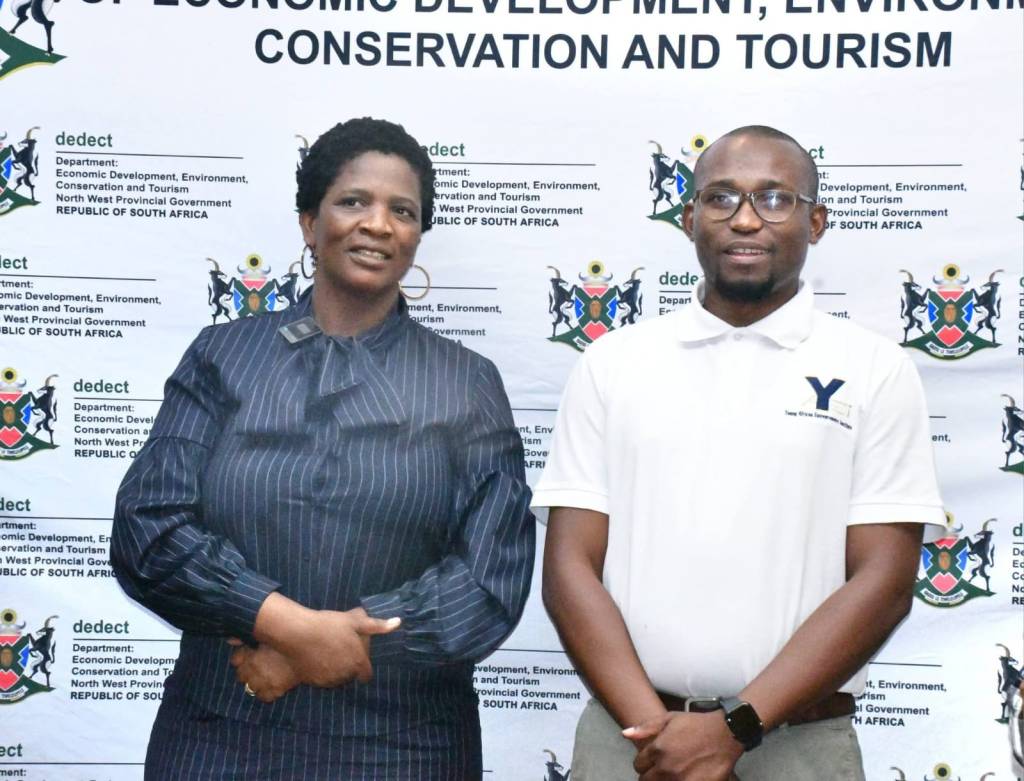
Picture: The North West MEC for DEDECT, Bitsa lenkopane and the YAEI CEO, Mr Risuna Maluleke/Supplied

By STAFF REPORTER

17 April 2026 – The North West Department of Economic Development, Environment, Conservation and Tourism (DEDECT) in partnership with the Young African Entrepreneurs Institute (YAEI), North West University (NWU) and Miss Naledi Pageant, hosted a certification and grant handover ceremony for 25 young participants, who successfully completed a practical innovation training programme conducted in a hackathon format in Vryburg.

This initiative forms part of DEDECT’s ongoing commitment to youth empowerment, as announced during the Miss Naledi 2025 pageant held in December 2025.

The North West MEC for Department of Economic Development, Environment, Conservation and Tourism (DEDECT), Bitsa Lenkopane said the initiative was initially designed to assist participants in transforming their ideas into viable businesses, while promoting professionalisation and diversification within the pageant-linked value chain. Lenkopane said, however, the programme has since been translated into a practical intervention – North West Entrepreneurship and Innovation

Programme facilitated by DEDECT and YAEI.

“The programme has empowered 25 young people with entrepreneurship development skills and facilitated business registration through the companies and Intellectual Property Commission (CIPC). The 25 participants were grouped into seven companies, where each team identified a priority problem, validated market needs, developed innovative solutions, and produced investable business pitches for adjudication.

“The initiative contributes to the government’s broader efforts to combat youth unemployment and stimulate economic participation. Business opportunities linked to the pageant value chain, which these young people may explore, include events management, pageant coaching, photography and videography, makeup and hair styling, fashion design, as well as personal branding and influencer development,” she said.

Lenkopane further said some young people proposed diversifying into agro-processing and waste management to boost the local economy and create employment opportunities. She commended them for taking the initiative to improve their lives through entrepreneurship and innovation, and for committing themselves to skills development as a foundation for success.

“We encourage other youth to organise themselves and devise solutions to challenges faced by the government in developing the lives of the people of the North West. The handover of training certificates and grand support represents more than a ceremonial milestone, but a decisive investment in the capabilities of young people, particularly young women—to move from the margins of the economy into positions of ownership, innovation, and leadership.

“By integrating skills development with financial support and tools of trade, we are not only nurturing ideas but enabling sustainable enterprises that will contribute meaningfully to local economic growth,” added Lenkopane.

She said this initiative reflects a government that is intentional, responsive and committed to delivery. Lenkopane said it signals a shift from promises to practical empowerment, where partnerships targeted

interventions and accountability converge to create real opportunities.

“The success of these beneficiaries will stand as a testament to what is possible when the government acts with purpose to unlock the full potential of its people. We also acknowledge 33 additional informal traders from

the Dr Ruth Segomotsi Mompati District, who received machinery and equipment from the department.

“This support forms part of the department’s Informal Traders Support

Programme, which provides resources to traders who responded to a formal call for assistance. The event marks a significant milestone in demonstrating the impact of government support in empowering entrepreneurs to participate meaningfully in the economy and drive the next wave of innovation and job creation,” she said.

Meanwhile, the YAEI CEO, Risuna Maluleke, reaffirmed the organisation’s commitment to advancing youth entrepreneurship, emphasising that young people are a vital source of innovation and

solutions to the country’s challenges. Maluleke said the skills you have acquired are a weapon for success, enabling them to turn entrepreneurial visions into reality and secure sustainable business growth.

taungdailynews@gmail.com

Three foreign nationals nabbed for illegally occupying government properties


Picture: Illegal occupation of government buildings a concern/Supplied  

By OBAKENG MAJE

17 April 2026 – The Deputy Minister of Public Works and Infrastructure, Sihle Zikalala together with the North West MEC for Public Works and Roads, Elizabeth Mokua have found several businesses illegally operating at one of government properties in Potchefstroom. Zikalala and Mokua were undertaking Operation Bring Back (OBB), a nation-wide government plan to reclaim unlawfully occupied and hijacked state properties.

Zikalala further said the North West province has 43 illegally occupied state properties with 29 of them pending evictions. He added that the businesses found to be illegally operating from the property in Grobler Street in Potchefstroom, include recycling, a warehouse storing building materials, a car storage and residential letting.

“The illegal residents at the property claim to be paying monthly rent to unnamed and faceless individuals. In December 2025, DPWI issued eviction notices to 13 residents who illegally occupied the property. Of the 13, 10 of them have since left, but new illegal tenants were brought in by the unscrupulous and illegal landlord.

“Government is willing to work with the small business owners illegally operating in the property by looking for alternative accommodation for them so that they continue operating their businesses. We cannot allow the small businesses to continue working in this property because the SAPS has an interest in utilising the property,” said Zikalala. 

He said currently, the SAPS is renting R400 000 per month when they can be using this property. Zikalala called for an investigation into the identity of the rent collector and government officials in all spheres of government assisting criminals to hijack government properties.

Meanwhile, Mokua expressed appreciation for ongoing collaboration with the national government and said the three spheres of government will continue working together to remove illegal occupants in government properties. She said they extend their sincere gratitude to Zikalala for the continued working relationship and coordinated efforts in reclaiming state assets.

“This work requires a strong multi-sectoral approach, where all three spheres of government must act in unison to decisively reclaim public property from illegal occupants. While we remain committed to supporting economic upliftment and the growth of small businesses, this cannot override the prescripts governing the lawful occupation of state-owned properties.

“Compliance with legal processes is non-negotiable as we work to restore order and protect public resources. We were accompanied by the executive mayor of JB Marks Local Municipality, Gaba Thithiba kaQhele, MMC for Infrastructure Andre Swarts, SAPS officials and Home Affairs officials,” said Mokua. 

She said the OBB led to the nabbing of three illegal foreign nationals by the Home Affairs department.

taungdailynews@gmail.com

Translating academic work into societal value


By KEDIBONE MOLAETSI

17 April 2026 – The Chief Director for Teaching and Learning at the North West University (NWU), Prof. Mpho Chaka said South Africa is not failing to educate—it is failing to convert education into outcomes. Chaka said a growing disconnect between knowledge and capability risks leaving graduates behind.

He further said the problem is not access to education. Chaka added that it is what happens after.

“That is why universities must shift from teaching content to designing capability. As artificial intelligence reshapes the world of work, universities face a blunt reality: preparing students for jobs is no longer enough. They must prepare them for change.

“South Africa does not suffer from a knowledge deficit. It suffers from a translation deficit. The country produces knowledge at scale as universities generate research, publishing extensively and graduating thousands of students each year,” he said.

Chaka said yet, despite this intellectual productivity, graduate unemployment remains high, critical skills shortages persist and a divide remains between what graduates know and what they are able to do. He said the contradiction is stark.

“There is a clear and systemic gap between access and success, as well as between qualification and employability. Universities do not create value by producing knowledge alone; they create value by translating it into meaning – competence, capability, adaptability and societal contribution. At the North West University (NWU), the Centre for Teaching and Learning (CTL) is designed to do exactly that.

“The challenge is not simply to teach. This reality necessitates a decisive shift in how we conceptualise and enact teaching in a changing landscape. Centres for teaching and learning are becoming essential because the system is under pressure on multiple fronts,” said Chaka.

He said access has expanded, but success has not kept the pace. Chaka said the role of the centres is becoming critical in this regard, not merely as a support structure, but as a strategic driver of pedagogical transformation.

“Academics are appointed for their disciplinary expertise, yet they are expected to teach increasingly diverse student cohorts. Without deliberate intervention, the system cannot translate access into meaningful outcomes. This is where the CTL intervenes.

“It moves academics beyond content delivery towards intentional learning design, evidence-based teaching and continuous improvement, addressing the disconnect between what is taught and what is realised in society,” he said.

Chaka stated that this shift is both deliberate and necessary. He said CTL must enable the redesign of the curricula, the integration of innovative and digitally enabled teaching practices and the alignment of learning outcomes with real world competencies.

taungdailynews@gmail.com

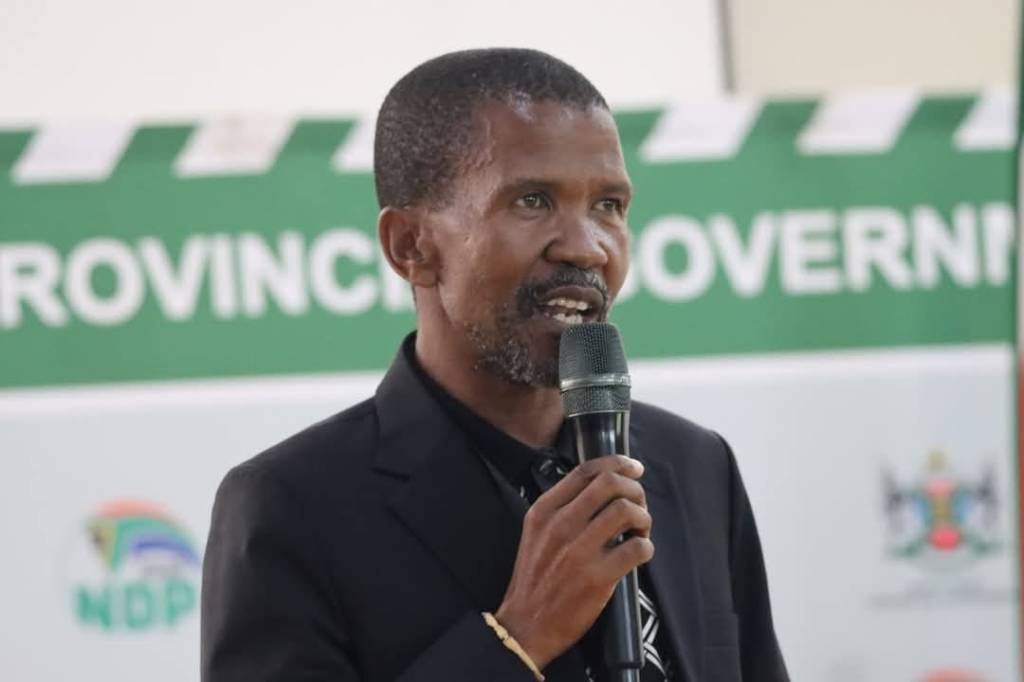
Picture: The Chief Director for Teaching and Learning at NWU, Prof. Mpho Chaka/Supplied

Dr Ruth Segomotsi Mompati District Municipality receives R882m funding


Picture: Executive mayor of Dr Ruth Segomotsi Mompati District Municipality, Motseokae Maje

By BAKANG MOKOTO

17 April 2026 – The Dr Ruth Segomotsi Mompati District Municipality has been allocated additional funding at the tune of R136 million on infrastructure projects by the National Treasury. The municipality said about R50 million has been allocated to the Municipal Infrastructure Grant (MIG).

The executive mayor of Dr Ruth Segomotsi Mompati District Municipality, Motseokae Maje said the Regional Bulk Infrastructure Grant (RBIG), received R31 million and Water Services Infrastructure Grant (WSIG) was allocated R55 million. Maje said in total for the current financial year, the municipality has received funding to the tune of R882 million.

“We welcome the additional funding as it arrived at a critical time. This augurs well for the municipality like ours, which do not have sufficient revenue generated over a period of time. It augurs well in the sense that it enables us to reduce service delivery backlogs that we have experienced over a period of time.

“It enables us to implement a number of projects which may have been stopped as a result of lack of funding. We appreciate the additional funding; we think it will go a long way to bring socio-economic relief to the people of Dr Ruth Segomotsi Mompati,” he said.

Meanwhile, the Municipal Manager of Dr Ruth Segomotsi Mompati District Municipality, Itumeleng Jonas has attributed the allocation of additional funding to good performance. Jonas said they have been allocated additional funds to the tune of R50 million to the Municipal Infrastructure Grant (MIG) that will be utilized for other projects in rural sanitation and also to refurbish the wasteful treatment plant of Christiana and the wasteful treatment plant of Bloemhof.

“Those are as a result of the good performance of the municipality in the MIG. We have also performed very well in the RBIG, where the municipality is allocated an additional R31 million. The municipality also was able to attract an additional funding on WSIG at the tune of R55 million that will also be utilized in projects in Christiana and also to finish projects in Bloemhof.

“We express gratitude to all staff with special recognition for the technical and engineering services team for their dedication,” he said.  

taungdailynews@gmail.com

Police urge farmers to brandmark their livestock  


Picture: Suspected stolen cattle/Generic

By STAFF REPORTER

17 April 2026- The police from the Stock Theft and Endangered Species Unit (STEU) addressed residents on stock theft related issues and shared general safety hints on the topic. Sergeant Jan Barend attached to the Calvinia Stock Theft and Endangered Species Unit highlighted the importance of brand‑marking livestock, especially for small-scale farmers who remain vulnerable to stock theft.

Barend emphasised that proper identification of animals not only strengthens investigations, but also increases the chances of recovering stolen stock. He further encouraged farmers to embrace modern technology and early warning communication groups that can alert neighbouring farms and SAPS of suspicious activity.

“We appeal to the community to work hand‑in‑hand with the police. The strong partnerships between farmers, farmworkers, neighbourhood structures, and SAPS are essential to combat stock theft effectively in the Hantam area.

“There are several practical safety tips with farmers such as brand‑mark all livestock and keep updated records of numbers, colours and distinguishing features. Report suspicious vehicles or unknown persons immediately to SAPS or local farm watch groups,” added Barend.

He said farmers should avoid selling livestock without proper documentation and insist on proof of ownership when buying animals. Barend said farmers should strengthen farm perimeters, including gates, fences, and night‑time security routines.

“Use technology such as cameras, alarms and WhatsApp alert groups to improve response times. Move livestock to safer camps during high‑risk periods, especially weekends and month‑end. Do regular headcounts to detect missing animals early.

“SAPS Namakwa remains committed to supporting farmers and strengthening rural safety initiatives,” he said.

taungdailynews@gmail.com