A budget to accelerate our economic and social recovery


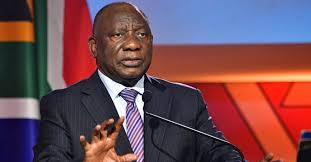
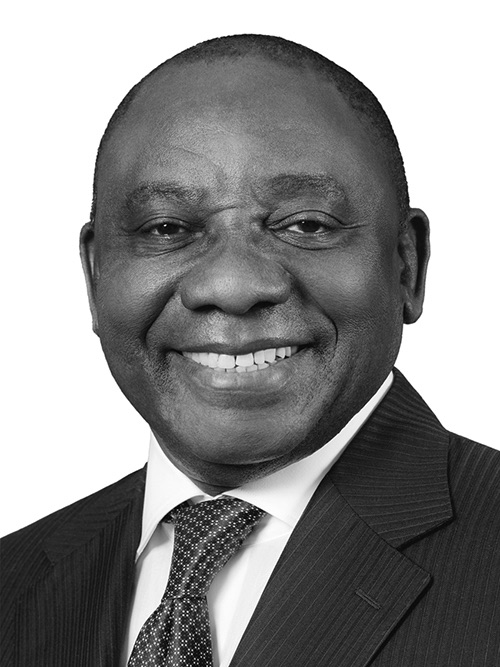
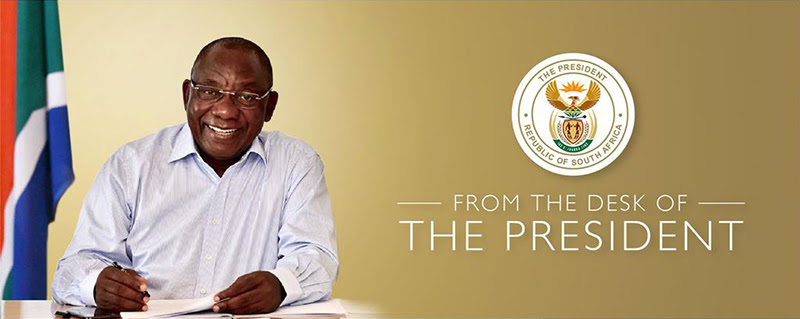
Picture: RSA president, Cyril Ramaphosa

By OBAKENG MAJE

2 March 2026- The Republic of South Africa (RSA) president, Cyril Ramaphosa said last week, Minister of Finance Enoch Godongwana presented a Budget that will accelerate the momentum of inclusive growth, create jobs and tackle poverty. Ramaphosa said every budgetary allocation is a developmental choice ensuring there are teachers in classrooms, nurses and doctors in clinics, electricity and basic services in homes and businesses, infrastructure to grow the economy, and employment opportunities for communities.

He further said after a prolonged period of economic uncertainty, this budget builds on the progress made over the last few years to stabilise, reform and transform our economy. Ramaphosa added that improvements in public finances, stabilising debt, a narrowing budget deficit, credit rating upgrades and improved market confidence all signal the beginning of an economic recovery.

“A stable macroeconomic environment boosts investor confidence and increases the government’s capacity to invest in both growth and poverty relief without compromising sustainability.

“The stabilisation of public finances gives us space to accelerate public investment, sustain the social wage, and direct resources to reforms that drive growth and job creation. The social wage accounts for over 60% of government spending after interest payments,” he said.

Ramaphosa further said the allocation for this financial year will enable them to provide healthcare services to 84% of the population, social grants to 26.5 million beneficiaries and free basic services to over 11 million indigent households. He added that it will support approximately 13.6 million learners at school.

“This is a redistributive budget that reduces inequality, builds the capabilities of our people and strengthens the foundations for inclusive growth.

“Basic education is one of those key foundations. We will be allocating additional spending to employ more educators. Additional funds have been allocated to the early childhood development grant to reach an additional 300,000 children and to align the National School Nutrition Programme to food inflation,” said Ramaphosa.

He said the budget supports inclusive growth by accelerating public investment, particularly on infrastructure. Ramaphosa said improved infrastructure lowers the cost of doing business, raises productivity and supports our country’s exports.

“Over the next three years, public spending on infrastructure will exceed R1 trillion to build and maintain roads and rail lines, expand energy infrastructure, and build and maintain water and sanitation infrastructure.

“Government alone cannot finance the scale of infrastructure our country needs. We are therefore mobilising investment from private and other sources, and opening the space for public-private partnerships,” he said.

Ramaphosa said as they encourage private investment in electricity, rail and port operations, they are maintaining state ownership of strategic national infrastructure. He said under Operation Vulindlela, government departments and public entities are undertaking impactful reforms in energy, telecommunications, water and logistics.

“The budget acknowledges that many municipalities are in financial distress, driven by weak revenue collection, poor management and substantial service delivery backlogs.

“Many municipalities are not spending appropriately. For several years, water and electricity revenue has not been invested in infrastructure maintenance or expansion, but has been redirected to cover other municipal costs,” said Ramaphosa.

He said local government finances have to be placed on a more sustainable footing to support the delivery of basic services. Ramaphosa said over the medium term, R19.2 billion will be reallocated to the reform of electricity, water, sanitation and solid waste trading services in metros.

“These allocations will be linked to performance against clear targets. The Municipal Infrastructure Grant is being reformed to address underspending and misuse of funds. Over the next three years, R86.9 billion has been allocated to support the provision of free basic services to indigent households.

“This year’s budget reflects the government’s goals of inclusive growth and job creation through additional support for mass public employment programmes and relief for small businesses,” he said.

Ramaphosa said an additional R4.1 billion has been allocated to the Presidential Employment Stimulus to provide work opportunities to more young South Africans. He said to ease the regulatory burden for small businesses, the threshold for businesses to register for VAT has been increased by more than double.

“For small business owners who wish to sell or transfer their businesses, the capital gains tax exemption has also been significantly increased. Together, these measures will help small and informal businesses to grow and employ more South Africans.

“This year’s Budget focuses on three imperatives: maintaining fiscal sustainability, driving inclusive growth and protecting society’s most vulnerable. It is a balanced budget that reflects the realities of our economy, limited financial resources, high unemployment and urgent infrastructure needs,” said Ramphosa.

He said as they build on the momentum of our recovery, they will continue to be guided by fiscal discipline, structural reform, targeted investment and an overarching commitment to improving the material conditions of every South African.

taungdailynews@gmail.com

ANC calls for urgent dialogue in the Middle East


Picture: RSA president, Cyril Ramaphosa

By OBAKENG MAJE

2 March 2026- The Republic of South Africa (RSA) president, Cyril Ramaphosa and the Government of the Republic of South Africa expresses deep concern regarding the escalation of tensions in the Middle East. Ramaphosa said these developments pose a serious threat to regional and international peace and security, with far-reaching humanitarian, diplomatic and economic consequences.

He further calls on all parties to exercise maximum restraint and to act in a manner consistent with international law, international humanitarian law and the principles of the United Nations Charter. Ramaphosa added that Article 51 of the UN Charter provides for self-defence only when a state has been subjected to an armed invasion.

“Anticipatory self-defence is not permitted under international law and self-defence cannot be based on assumption or anticipation. Experience has repeatedly demonstrated that there can be no military solution to fundamentally political problems that can and should be resolved diplomatically.

“Military confrontation has never delivered sustainable peace, nor has it addressed the legitimate grievances that underlie conflict. Long-term peace and stability can only be achieved through inclusive dialogue and a genuine commitment to justice and coexistence,” he said.

Ramaphosa therefore, reiterates his call for intensified diplomatic efforts to de-escalate tensions and create space for continued meaningful negotiations. He urged the international community, including multilateral institutions and regional partners, to redouble efforts aimed at promoting mediation and peaceful resolution.

“As a nation that has emerged from conflict through dialogue and reconciliation, South Africa remains steadfast in its belief that peace is not only possible, but imperative for the shared future of the Middle East and the world,” said Ramaphosa.

Meanwhile, the African National Congress has shared the same sentiments. ANC said it expresses a deep concern at the escalating tensions in the Middle East, which threaten regional and global peace and security.

The ANC spokesperson, Mahlengi Bhengu said the intensification of hostilities carries serious humanitarian, diplomatic and economic consequences. Bhengu said the ANC also conveys its sincere condolences to the people of the Islamic Republic of Iran following reports of the passing of their Supreme Leader, extending sympathies to his family and to the Iranian nation during this period of mourning.

“Guided by South Africa’s principled foreign policy rooted in justice, peace and respect for international law, the ANC calls on all parties to exercise maximum restraint.

“All actions must be consistent with international law, international humanitarian law and the Charter of the United Nations. Article 51 of the UN Charter provides for self-defence only in response to an armed attack, and does not permit anticipatory self-defence based on assumption or conjecture,” she said.

Bhengu said the ANC reiterates that there can be no lasting military solution to fundamentally political conflicts. She said escalation deepens instability and suffering of innocent people, while durable peace can only be secured through inclusive dialogue, meaningful negotiations and a genuine commitment to coexistence.

“We therefore urge the international community, including multilateral institutions and regional partners, to intensify diplomatic efforts aimed at de-escalation and peaceful resolution.

“As a movement that led South Africa to freedom through dialogue and reconciliation, the ANC remains steadfast in its belief that peace is not only possible, but imperative for the shared future of the Middle East and the world,” said Bhengu.

taungdailynews@gmail.com

‘Creating opportunities for young people while strengthening schools’


Picture: RSA president, Cyril Ramaphosa

By KEDIBONE MOLAETSI

17 February 2026- In his State of the Nation Address (SONA) last week, the Republic of South Africa (RSA) president, Cyril Ramaphosa, spoke about the work they are doing in schools to prepare young people to compete and thrive in a rapidly changing world. Ramaphosa said while they have made significant progress over the last three decades from expanding access to school to steadily improving matric results, there are still huge challenges in education.

He further said access to resources and quality teaching is uneven. Ramaphosa added that schools in townships and rural areas often struggle with overcrowding and educators have limited access to professional development and support.

“One of the efforts helping to fill this gap is the Basic Education Employment Initiative, which was founded in 2020 as part of the Presidential Employment Stimulus. The initiative deploys young people to schools as education assistants.

“To date, the school assistants’ programme has created more than 1.3 million work opportunities. It is the largest youth employment programme in our country’s history, giving young people their first foothold in the world of work while strengthening the foundations of learning in the schools that need it most,” he said.

Ramaphosa said the young people involved in the programme go into schools well prepared. He said general school assistants need to at least have Grade 9, while education assistants need at least a matric certificate.

“In the most recent phase of the programme, 32% of education assistants had some sort of tertiary qualification and 14% had a teaching qualification. Education assistants are provided with both compulsory and optional training including on school safety, online safety, financial literacy, word processing, AI fluency and coding.

“The initiative provides work experience and livelihood support while at the same time advancing the public good. This is part of the goal of the Public Employment Stimulus to deliver public employment and livelihood programmes on a large scale while providing social value in the process,” said Ramaphosa.

He said the work of the education assistants allows teachers to spend more time on teaching and on lesson preparation, thereby contributing directly to improved educational outcomes. Ramaphosa said education assistants have been placed at 19 000 no-fee primary schools to support numeracy and as Reading Champions to support literacy and bilingual reading.

“The effect of this intervention is being seen in rapid improvements in foundational literacy skills in many schools. Beyond educational and curriculum support, education assistants are supporting digital learning, working in care and support with at-risk learners, and serving as laboratory and workshop assistants.

“This is not only good for the schools. For many of the school assistants, this experience is transformative. They are gaining skills and real work experience that will serve them well in finding employment and succeeding in their careers,” he said.

Ramaphosa said as they work to expand access to Early Childhood Development (ECD) through the Bana Pele mass registration of ECD facilities and an increase in subsidies for ECD learners, the Presidential Employment Stimulus has stepped up support to the sector through the Social Employment Fund. He said the Department of Trade, Industry and Competition, working with an implementing partner, is helping more than 1,000 previously disadvantaged, underfunded ECD centres to meet the qualifying criteria for ECD subsidy.

“The centres are also receiving nutritional support for learners, as well as toys, books and learning materials. The work supported by the Social Employment Fund now reaches over 50,000 children in ECD centres across the country.

“Meeting the constitutional imperative to provide quality education to our nation’s young is an all-of-society effort. These initiatives illustrate clearly the benefits of multisectoral cooperation between government, the private sector and civil society,” said Ramaphosa.

He said it is their aspiration that this successful programme should continue to grow as we strive to create more work opportunities for young South Africans and at the same time deliver quality education for all.

taungdailynews@gmail.com

‘Ramaphosa operates in political climate that is no longer simmering’


Picture: NWU political analyst, Prof André Duvenhage/Supplied 

By BAKANG MOKOTO

10 February 2026- The Republic of South Africa (RSA) president, Cyril Ramaphosa will deliver his 2026 State of the Nation Address (SONA) on 12 February 2026, and he will do so in a world starkly different from that of a year ago. Political uncertainty, strained international relations and domestic pressures mean the president is operating in a political climate that is no longer simmering, but rapidly reaching boiling point.

According to the North West University (NWU) political analyst, Prof André Duvenhage said SONA 2026 is likely to reflect domestic tensions and demands, as well as shifting global dynamics, rather than signalling a dramatic policy shift. Duvenhage said before getting to the SONA itself, he would like to sketch a bit of the broader context.

“We are living in dramatically changing times — at the level of local government, nationally in terms of political developments, but especially internationally. I think all of these environments will, in one way or another, be reflected in the SONA.

“At the local level, I expect the president to highlight certain aspects relating to local government. He may possibly announce an election date or offer particular perspectives in that regard. The fact remains that local government — not only within an electoral context but also as a governance focus — will receive considerable attention,” he said.

Duvenhage further said the ANC is very concerned about its declining support and therefore, he expects both the SONA and the subsequent Budget Speech to place particular emphasis on local government, especially service delivery and related issues. He added that at the national level, he thinks the focus will very strongly be on the Government of National Unity (GNU), its performance and perhaps somewhat concealed its lack of performance.

“Much of the recent populist legislation that has been passed or is in progress — such as land expropriation without compensation, the BELA Act, higher education matters and National Health Insurance — will likely be presented in a positive light.

“The president will attempt to ‘sell’ these developments to South Africans and highlight achievements in particular ways. Naturally, he is unlikely to focus on failures or limited successes, but I do not think that should necessarily dominate our interpretation of the address,” said Duvenhage.

He said internationally, he expects the government to adopt a stance that leans towards Russia, China, Iran, Venezuela and Cuba, which implies a fairly strong anti-American posture. Duvenhage said the relations between the United States and South Africa have clearly deteriorated significantly.

“One can think, for example, of legislation currently being considered in the US Congress that increasingly identifies South Africa not merely as an opponent of the US, but potentially even as an adversary. Donald Trump has spoken quite explicitly on this matter.

“I also expect that there may be passing references to issues of perceived disloyalty. Here one might think of organisations such as Solidarity and AfriForum, which the president has suggested are not acting patriotically, as well as debates around farm murders, transformation and minority concerns. I expect he may respond quite strongly to those narratives,” he said.

Duvenhage said furthermore, the president is likely to follow traditional ANC themes. He said he thinks he will refer to commissions of inquiry and investigative processes, emphasising that committees have been appointed, that investigations are underway, and that progress will continue over the course of the year.

“The identification of certain police officials in ongoing matters may also be presented as evidence that action is being taken. Economic growth will almost certainly receive strong emphasis. Figures will probably be cited to suggest either improved growth or improved prospects, despite the reality that the economy has grown at less than 1% annually over the past decade.

“Infrastructure development should also feature prominently. Issues relating to women and children, gender inequality, crime prevention and related social concerns will likely form part of the familiar political rhetoric. The recent appointment of a new National Director of Public Prosecutions may also be highlighted, although arguably this is simply another Ramaphosa-era appointment,” said Duvenhage.

He said it will be interesting to observe the behaviour of opposition parties in this context. Duvenhage said he knows for a fact that within the Government of National Unity there is no consensus on certain issues, particularly foreign policy.

“We are also seeing a significant repositioning of political forces and alliances, and this could in some way be reflected in the State of the Nation Address. In short, I do not believe the president has much genuinely positive to report, and I expect the aftermath of the address to involve substantial and possibly intense criticism, both of him personally and of the substance of the speech.

“This brings me back to my opening point: we are living in very uncertain times. Political dynamics are being reshaped rapidly, and in my personal view — which is simply an opinion — South Africa is struggling to adapt to these changing circumstances,” he said.

taungdailynews@gmail.com

SA Revenue Service leads the way in rebuilding the state


By KEDIBONE MOLAETSI

9 February 2026- The Republic of South Africa (RSA) president, Cyril Ramaphosa said last week, he visited the South African Revenue Service (SARS) National Command Centre in Tshwane to commend and congratulate its staff and leadership on their outstanding work. Ramaphosa said in the last financial year, SARS achieved the highest revenue collection in the tax authority’s history, collecting R2.3 trillion.

He further said these revenues collected into the fiscus return to our citizens as lifeblood. Ramaphosa added that basic services are delivered, social grants are paid out to society’s most vulnerable, public infrastructure is built and maintained, and the machinery of government is kept running.

“In many ways, SARS is a standard-bearer for a capable state. It has been a trailblazer in the use of technology to construct a citizen-friendly ecosystem, making it easier for taxpayers to meet their obligations.

“It is little wonder that SARS is regarded as one of the best tax authorities in the world. The South African Revenue Service also stands as a credible blueprint for rebuilding institutional capacity in the wake of the state capture era,” he said. 

Ramaphosa said in 2018, he appointed a commission of inquiry into SARS headed by Judge Robert Nugent. He said when the commission began with its work, SARS was crippled by political interference, leadership purges were commonplace, and specialist enforcement capacity had been substantially dismantled. 

“Morale at the tax authority was at an all-time low and revenue collection had been significantly weakened. Levels of compliance were steadily declining, with both corporate income tax and personal tax collections down. 

“Seven years since the Nugent Commission issued its recommendations, nearly all those recommendations have been implemented. Among the key recommendations were restoring capable independent leadership and governance, restoring compliance and enforcement capabilities, modernising systems and improving efficiency and services to taxpayers,” said Ramaphosa.

He said as a consequence, the tax authority has achieved a turnaround that has exceeded expectations. Just five years ago, public trust in SARS stood at 48%. Ramaphosa said it is now around 75%.

“Attitudes towards tax compliance also continue to improve. SARS played an important role in South Africa’s exit from the Financial Action Task Force (FATF) grey list and in the sovereign credit ratings upgrade from S&P last year. 

“Certainty in tax policy and honesty and efficiency in tax administration is a key consideration for investors looking to bring their business to our country. It sends a strong signal that South Africa is serious about institutional integrity and regulatory certainty,” he said.

Ramaphosa said it is confidence that is hard to price, but easy to feel when a core institution like SARS regains public and investor trust. He said for citizens, an efficient tax administration translates into a more reliable revenue stream for grants, infrastructure and basic services.

“For businesses, this means fairness and predictability. The rebuilding of SARS illustrates the value of commissions of inquiry. Not only did the commission unearth the full architecture of wrongdoing but it proposed steps to ensure that there is no recurrence.

“Credit must go to the leadership and staff of SARS for implementing the recommendations with diligence. As we continue in our efforts to build an ethical, capable state and prevent a recurrence of that dark period in our nation’s history, we will look to SARS as an example of what can be done when institutional integrity is restored,” said Ramaphosa.

He said just as state capture took place over a prolonged period of time, the work of rebuilding will not happen overnight. Ramaphosa said recommendations have been and will continue to be acted upon.

“Laws and processes have changed. Investigations have been undertaken and prosecutions have been initiated. Most importantly, institutions have been rebuilt. 

“The turnaround of SARS has shown what is possible with a clear mission, committed leadership and capable people,” he said.

taungdailynews@gmail.com

Ramaphosa pays tribute to struggle veteran Leon Levy


Picture: The deceased, Leon Levy

By REGINALD KANYANE

3 February 2026- The Republic of South Africa (RSA) president, Cyril Ramaphosa has expressed his deep sadness at the passing of Leon Levy aged 96, who was the last surviving signatory of the Freedom Charter and Accused No 4 in the 1956 Treason Trial. Ramaphosa offers his deep sympathy to the family and friends of Levy who took on numerous roles in the struggle alongside his equally committed identical twin brother, Norman, who passed away in July 2021.

He further said Levy, whose parents had emigrated from Lithuania, joined the Communist Party of South Africa when he was a teenager and became a trade unionist when he was 24 – two years before he was elected president of the South African Congress of Trade Unions that he had helped to establish. Rampahosa added that Levy was among the organisers of the Congress of the People which adopted the Freedom Charter on 26 June 1955.

“The six Charter signatories were African National Congress President Chief Albert Luthuli; Jimmy La Guma of the South African Coloured People’s Congress; Monty Naicker of the Natal Indian Congress; Pieter Beyleveld of the Congress of Democrats and Leon Levy of the South African Congress of Trade Unions.

“In December 1956, security police arrested the Levy brothers as part of a crackdown on liberation movement leaders and charged the activists with high treason, which carried the death penalty as a possible sentence. While Norman Levy was discharged later, Leon Levy remained on trial until his acquittal in 1961,” he said.

Ramaphosa said the brothers remained politically active, with Norman Levy serving three years after being convicted under the Suppression of Communism Act. He said Leon Levy was subjected to two periods of detention, after which he went into exile in England, where Norman joined him after being released from prison.

“The passing of Leon Levy is a sad moment for us as fellow human beings. It is particularly sad for us as citizens of a South Africa that attained freedom from apartheid through the hard and sacrificial activism of Leon Levy and those who were in the trenches with him, including his brother, Norman.

“As we mark 70 years since the Treason Trial of 1956, we are obliged to pay tribute to the cohort of leaders and other activists who fought the apartheid state based on their belief in the inherent equality and dignity of all people. Leon Levy attached his signature to the Freedom Charter that lives on in our Constitution whose 30th anniversary we observe as well in 2026,” said Ramaphosa.

He said Leon Levy was part of a generation whose contributions to a better life and a better world for all South Africans and humanity globally must never be forgotten or dishonoured.

taungdailynews@gmail.com

International tourist arrivals reach new heights


Picture: RSA president, Cyril Ramaphosa

By OBAKENG MAJE

2 February 2026- The Republic of South Africa (RSA) president, Cyril Ramaphosa said the country’s reputation as a premier global tourism destination has been buoyed by a major milestone. Ramaphosa said between January and December 2025, approximately 10.5 million tourists visited South Africa, which is the highest number of international arrivals on record.

He further said this surpasses the number of visitors they welcomed before the COVID-19 pandemic and is a vote of confidence in a sector that continues to show great potential for further growth. Ramaphosa added that every visitor to the country contributes to the foreign revenue earnings, supports local businesses, bolsters local economies and helps to create and sustain jobs.

“It is estimated that tourism currently sustains 1.8 million direct and indirect jobs, with one job created for every 13 international arrivals. According to the World Travel and Tourism Council, tourism contributes nearly 9% to our country’s GDP.

“South Africa’s expanding global tourism footprint, supported by intensive destination marketing and branding, is an important part of our country’s public diplomacy. The more tourists that arrive from a given country, the greater the likelihood of strengthening diplomatic relations with that country,” he said.

Ramaphosa said an increase in international visitors is also a vote of confidence in South Africa’s brand appeal and in their reputation as a safe, reliable, value for money tourism destination. He said as government, they are determined to strengthen the regulatory and policy environment to further grow the sector.

“We are equally committed to deepening collaboration with the private sector, labour and other stakeholders to further bolster the industry. The Tourism Growth Partnership Plan that was endorsed by Cabinet last year outlines a series of priority initiatives aimed at improving the performance of the sector.

“They include the expansion of the Electronic Travel Authorisation system, which was successfully piloted during the G20 Summit last year, and is currently being rolled out in key tourism markets. We will also be strengthening the Trusted Tour Operator Scheme launched last year, which streamlines visa processes for groups whose applications are submitted by vetted tour operators,” said Ramaphosa.

He said a significant number of tourists from key markets like India and China are already using group tour operators for a more structured, tailored travel experience. Ramaphosa said improving connectivity is also being prioritised.

“We have seen an increase in direct flight routes to South Africa from key markets such as Australia and France. Tourists must be able to enjoy our country under conditions of safety. The deployment of additional tourism monitors and the establishment of a crime call centre by the private sector will help to further reduce crime directed at tourists.

“Major tourism infrastructure investments are expected to further boost the sector’s growth. At last year’s inaugural Tourism Infrastructure Investment Summit, eight projects worth R1 billion were launched, signalling renewed investor confidence in our tourism sector,” he said.

Ramaphosa said their strategic destination marketing efforts continue, as does the focus on niche markets such as halal and green tourism to attract diverse visitors. He said as government, they are equipping citizens with skills to embrace the burgeoning tourism industry.

“For example, the Department of Tourism offers fully funded Mandarin language training for registered freelance and employed tourism guides to enable them to better support tourists from the growing Chinese market. We also continue to support the transformation of the industry through various support programmes.

“Retaining our reputation as a tourism destination of choice is a society-wide effort, one in which communities has a particularly important role to play. Every South African should be a tourism ambassador and every community a potential tourist attraction,” said Ramaphosa.

He said the country is rich in natural beauty, history and culture, with much of this potential untapped. Ramaphosa said working together as government, communities and tour operators, they can popularise and attract more tourists to regions and locations that do not traditionally feature highly as destinations for tourists.

“Working together as government, industry, communities and civil society we can realise even greater value from this jewel in our nation’s crown,” he said.

taungdailynews@gmail.com

Ramaphosa to address IBTs Summit


By KEDIBONE MOLAETSI

2 February 2026- The Republic of South Africa (RSA) president, Cyril Ramaphosa will on 3 February 2026, deliver a keynote address at the Innovative Building Technologies (IBTs) Summit. The summit is a two-day event at the Nasrec Expo Centre in Johannesburg.

Ramaphosa spokesperson, Vincent Magwenya said the gathering brings together government, the building and construction industry, academia, investors, and civil society to advance innovative solutions for the delivery of sustainable human settlements.

Magwenya said held under the theme: “Mainstreaming Innovative Building Technologies for Sustainable Human Settlements”, the IBT Summit aims to accelerate the adoption of Innovative Building Technologies (IBTs) to enhance the delivery of housing across South Africa.

“IBT’s offer viable and cost-effective alternatives that enhance efficiency through lightweight structures, energy-efficient designs, prefabrication, and environmentally sustainable construction methods.

“The Summit comes at a critical time as South Africa continues to confront a significant housing backlog, rapid urbanisation, and the increasing impacts of climate change,” he said.

Magwenya further said the objectives of the IBT Summit include strengthening policy integration for IBTs within human settlements, fostering collaboration and investment between government, the private sector, non-profit organisations and international stakeholders and showcasing disruptive innovation in construction. He added that the Summit will promote IBT’s as solutions for disaster-resistant and climate-resilient housing, supporting community rebuilding efforts and ensuring better preparedness for future crises.

“In addition, it aims to raise awareness among beneficiaries, policymakers, and industry stakeholders about the affordability, speed, and sustainability of Innovative Building Technologies.

“The President’s participation in the IBT Summit affirms government’s commitment to addressing inequality and reversing pre-1994 spatial planning patterns, as articulated in the 2025 State of the Nation Address (SONA),” said Magwenya.

Meanwhile, the Summit will take place at Nasrec Expo Centre, Johannesburg on Tuesday at 10am.

taungdailynews@gmail.com

‘Our children hold the power to change our future’


By KEDIBONE MOLAETSI

21 December 2025- The Republic of South Africa (RSA) president, Cyril Ramaphosa said the best way to secure the country’s future is to invest in the health and well-being of its children. Ramaphosa said since the advent of democracy, they have made considerable progress in reducing child poverty and mortality.

He further said they have expanded access to education and are now focused on making sure every child has access to early childhood development. Ramaphosa added that earlier this month, cabinet approved the National Strategy to Accelerate Action for Children (NSAAC).

“It focuses on a range of interventions to improve the conditions and the development of our nation’s children and adolescents. The strategy follows extensive consultation with the children’s sector, relevant government departments and with children themselves.

“It identifies ten priorities for children and teenagers that seek to galvanise all of society. The strategy follows key milestones in the life of children, paying added attention to adolescents and children with disabilities. The strategy will be implemented through the 5th National Plan of Action for Children 2025-2030,” he said.

Ramaphosa said this is a comprehensive roadmap to promote and protect the rights of children as enshrined in their constitution. He said it relies on closer collaboration between government, civil society organisations and all other social partners.

Rampahosa said business has a critical role to play. He said the private sector has considerable resources and logistics infrastructure that could be used to distribute food, toys, information to parents and books to children in thousands of under-resourced early learning programmes across the country.

“Trade unions also play an important role because most workers are parents and need time and support to nurture their children. Today, our children live on the edge of great possibility, but also great risk. Many children in our country continue to bear the ill-effects of poverty, which negatively affects their health, social, educational and other outcomes.

“A recent report by Statistics South Africa on poverty trends showed that while child poverty declined from 69% in 2006 to 49% in 2023, the child poverty rate in South Africa is still the highest for any age group. Nearly half of our country’s children live in poverty. Many children are disadvantaged before they are even born, with maternal undernutrition contributing to low-birth weights,” said Ramaphosa.

He said because it is difficult for malnourished mothers to breastfeed, babies are being weaned onto low-protein diets, which lower their immunity and make them susceptible to infections. Ramphosa said as they grow up, their health suffers and they fall further behind.

“As children’s advocates keep reminding us, this domino effect must be broken. Crimes against children, including abuse, neglect and abandonment, are worryingly high. Figures released during Child Protection Month in May revealed that there were more than 26 000 cases of child abuse and neglect reported in the 2024/2025 financial year. The majority of cases involved sexual abuse.

“The experience of children today will determine our nation’s social and economic wellbeing over the next twenty years. If we protect and nurture them right from the time of conception until they leave school, they will be brighter, get better jobs and contribute more to their communities and the economy,” he said.

Ramaphosa said one of the initiatives emerging from the strategy is the national ‘Hold My Hand’ campaign. He said it calls on each of them to imagine what would happen, if every child born today, tomorrow, the next day and the next had enough love, enough food, safety and brainpower.

“It would change the future. As 2025 draws to a close and we look towards the new year’s ‘Hold my Hand’ calls on every person in South Africa to do just one thing to improve the lives of children. We pay tribute to the thousands of civil society activists who have championed child rights and provided care over many decades.

“Thank you to our health workers, teachers, child and youth care workers and social workers for protecting, developing and inspiring our children. We also pay tribute to the parents, grandparents and relatives who care for the young in our society,” said Ramaphosa.

He said for the sake of their shared future, they must work together to ensure that their nation’s children and young people grow, thrive and are happy.

taungdailynews@gmail.com