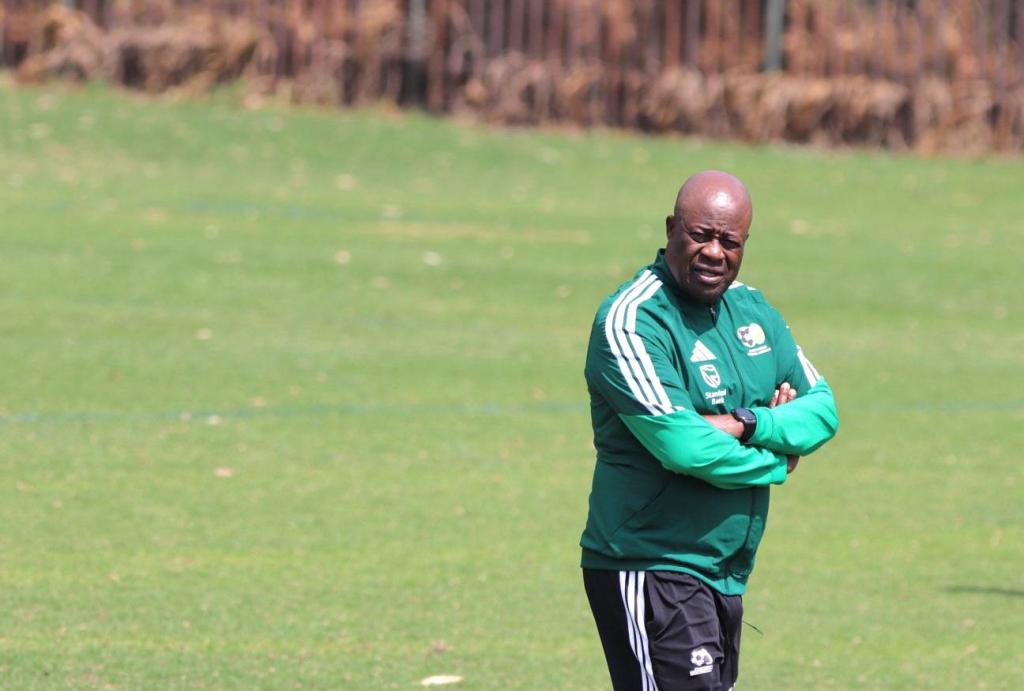
2 November 2026 – South African U23 Men’s head coach, Raymond Mdaka has announced a 24-man squad to face Madagascar in back-to-back CAF Africa Cup of Nations/Olympic Games qualifiers next month. With Madagascar not having venues suitable for the competition, the two third-round matches will be played in South Africa at the Lucas Moripe Stadium in Atteridgeville in Pretoria.
The first leg, which is a “home” fixture for the visitors, will take place on 14 November 2026, at 3pm, while the return leg will be hosted by the SA U23 squad on 17 November with an 8pm kick off. Mdaka has kept the bulk of the team that faced Algeria in two friendly matches played in Bloemfontein earlier this month, where South Africa won 3-1 and drew 1-1 at the Dr Petrus Molemela Stadium.
“This will be the first official fixtures for the SA U23 squad in a long time. South Africa received a bye in the previous round after the withdrawal of Comoros, giving Madagascar a free passage to this round.
“The overall winners between the two nations will face either Rwanda or Cameroon in the next phase in March next year. After the third round, the remaining seven countries will join hosts Egypt in the 2027 U23 Africa Cup of Nations (AFCON), where the top two nations from this tournament will represent Africa at the Olympic Games in Los Angeles, USA in 2028,” he said.
U23 MEN’S NATIONAL TEAM
OLYMPIC GAMES QUALIFIERS VS MADAGASCAR 9-18 October 2026 Goalkeepers: Fletcher SMYTHE-LOWE (Estoril Praia SAD FC, Portugal) Enrique ERASMUS (Thames FC) Kgoleng RATISANI (Orlando Pirates FC) DEFENDERS: Luthando VENA (Stellenbosch FC) Asekho TIWANI (Kruger United FC) Tylon SMITH (New England Revolution, USA) Moses MPHEKGOANE (Hope FC) Neo RAPOO (Orlando Pirates FC) Thato SIBIYA (LOSC Lille, France) Cassidy SNYDERS (University of Pretoria) Siviwe NKWALI (Stellenbosch FC)
MIDFIELDERS: Camren DANSIN (Orlando Pirates FC) Gomolemo KEKANA (Mamelodi Sundowns FC) Dhakier LEE (Cape Town City FC) Simphiwe SELEPE (Orlando Pirates FC) Lazola MAKU (Mamelodi Sundowns FC)
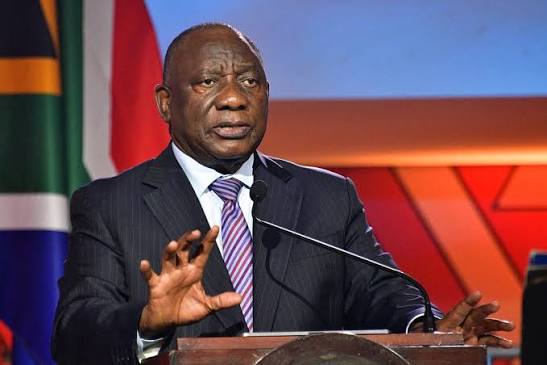
2 November 2026 – The Republic of South Africa (RSA) president, Cyril Ramaphosa said on 4 November 2026, the country will be holding local government elections. Ramaphosa said this is one of the biggest electoral contests in the country’s democratic history, with 546 parties and nearly 137 000 candidates.
He further said at a time when the political space is narrowing across many parts of the world, democracy in South Africa continues to evolve and mature. Ramaphosa added that they can see this, for example, in the strong participation of women in the electoral process and the proliferation of independent candidates.
“We can be proud that every election since 1994 has been free and fair and that public trust in the Independent Electoral Commission (IEC) remains high. As a nation, we must come together to ensure that the upcoming poll is not marred by acts of violence or intimidation.
“Over the past few months, the South African Police Service (SAPS) has been conducting risk assessments, operational planning and simulation exercises. It says that it is ready to ensure voting day takes place peacefully and safely. I call on all registered voters to go out to the polling stations on Wednesday because local government is essential to improving the quality of life of citizens,” he said.
Ramaphosa said municipalities are responsible for providing most of the services that people need and to which they are entitled by the constitution. He said the water, sanitation, electricity and other basic services that municipalities provide are important not only for communities.
“They are the foundations of a thriving economy. Businesses invest in areas where services are reliable and affordable, where infrastructure is maintained and which are stable and safe. The candidates elected to lead the eight metros, 44 district municipalities and 205 local municipalities will assume office at a time when we are undertaking a bold reset of the entire local government system.
“The new White Paper on Local Government, which was officially launched last month, aims to strengthen the ability of municipalities to fulfil their responsibilities. It proposes a series of reforms across the board to improve efficiency and ensure there is accountability when failures occur,” said Ramaphosa.
He said the priority is placing municipalities on a more sustainable financial footing through stronger financial management, better revenue collection, reducing losses and tighter spending on priorities. Ramaphosa said one of the most important developments is that revenues from the sale of electricity and water will be ring-fenced to be reinvested in maintaining critical infrastructure.
“This will ensure that our infrastructure is brought back up to standard. A compulsory licensing requirement will also be introduced for all water and electricity providers. This means that all service providers will need to meet minimum standards of competence.
“Where municipalities are unable to carry out a particular responsibility, this responsibility should be assigned to another sphere or entity that can perform it. The White Paper recommends changes to professionalise municipalities and build their administrative capacity. Local government structures must be led and staffed by people appointed for their qualifications and competence,” he said.
Ramaphosa said those responsible must be held to account, if public resources are stolen, procurement is manipulated or public duties are neglected. He said the shortcomings evident in the current design of the local government system have created space for corruption and patronage.
“We have seen corrupt local government officials’ scheme with business people to obtain tenders for services that are sub-standard or not delivered at all. Contestations over power and access to resources in local government have contributed to acts of violence, including disruptions of council meetings and the killings of ward candidates, councillors and municipal officials.
“Sadly, what is supposed to be a democratic contest for the opportunity to serve communities has in some cases become a transactional arrangement. Some councillors who are bought by business people often put matters of procurement above the needs of our people,” said Ramaphosa.
He said as a government, they are working to put a stop to these practices, but citizens carry an equally important responsibility to ensure that the people they elect are the right ones for the job. Ramaphosa said municipal failures have contributed to declining public trust and confidence in democratic governance.
“This election is an opportunity to turn this around and to build local government as an instrument for development. The voters of South Africa have an unprecedented breadth of choice of candidates and parties. However, we vote on Wednesday, let us strive for better, safer, cleaner and more prosperous communities. Let us vote for progress and development.
“Working together, as an active citizenry, we can make South Africa better. Through our votes, we can help ensure that the local government is able to fulfil the promise that our Constitution has made to our people,” he said.