‘South Africans are asking difficult, but legitimate questions’


Picture: RSA president, Cyril Ramaphosa

By OBAKENG MAJE

8 June 2026- The Republic of South Africa (RSA) president, Cyril Ramaphosa said over recent months, South Africans from every walk of life have raised concerns about migration and illegal immigration. Ramaphosa said these concerns are being expressed in communities, workplaces, schools, clinics and across social media platforms.

He further said many South Africans are asking difficult, but legitimate questions. Ramaphosa added that they are asking whether the borders are secure.

“They are concerned about jobs. South Africans are raising these matters because they are concerned about pressure on public services. They are concerned about safety, security and the rule of law. These concerns are real, they deserve to be heard and they deserve to be addressed.

“South Africans are asking whether the government is taking the necessary steps to address these challenges. Tonight, I want to address these concerns. I want to explain what the government is doing to address them. And I want to outline the principles that must guide us as we confront this challenge together,” he said.
Ramaphosa said they must be honest about the context in which these concerns arise. He said South Africa faces persistently high levels of unemployment, especially among young people.

“Too many families are struggling to make ends meet. Too many communities are experiencing poverty and inadequate access to opportunities. In such circumstances, frustration can easily be directed at those perceived to be competitors for jobs and resources. Yet, we must recognise that illegal immigration is not the cause of all our economic challenges.

“The answer must be faster economic growth, greater investment, industrial expansion, infrastructure development and the creation of millions of new jobs. We know that migration is a global issue. It affects all countries,” said Ramaphosa.

He said the country – like many others throughout history – is a product of migration. Ramaphosa said it is the reason for their diversity and contributes to their vibrancy.

“As a democracy, we have welcomed visitors to our country. In line with our international obligations and our constitutional values, we accept people from other countries in need of protection from wars, conflicts, discrimination and violence. Like every other country in the world, we have laws that determine who can come to our country, what they can do here and how long they can stay.

“The basic principle, on which we all agree, is that every person within the borders of South Africa should be here legally. Every person who works in our country must be legally permitted to work. Every person who runs a business here must be legally permitted to run a business,” he said.

Ramaphosa said the challenge they have is that some people have migrated to the country irregularly and are here illegally. He said South Africa has a right to implement policies and measures that prevent irregular migration.

“South Africa is committed to protect, uphold and advance the human rights of all people in our country, whether citizens or foreign nationals. We are committed to honour our international obligations. The responsibility for enforcing immigration laws rests with the state and the state alone.

“There have been weaknesses in the way migration has been managed. There have been weaknesses in rigorous and focused enforcement. There have been instances of corruption. There have been gaps in our systems that have undermined public confidence. South Africans are entitled to expect better,” said Ramaphosa.

He said they accept that responsibility and they are taking decisive action to correct these shortcomings. Ramaphosa said South Africans have a right to expect a state that is effective, professional and capable of enforcing its own laws.

“Government will accordingly take action to address the expectations of our people in dealing with the challenge of the violations of our immigration laws. I must make it clear that only the authorised government officials may act against violations of the law, including violation of our immigration laws.

“No other person is allowed, for example, to confront someone in the street to demand proof of nationality. We know that South Africans are not xenophobic as there is no space for xenophobia, racism, sexism, Afrophobia or any other forms of intolerance in South Africa,” he said.

Ramaphosa said as communities and as a society, they must not be tempted to join those who want them to turn against people who were not born in South Africa and who are in their midst. He said they will and must not allow groups to use the legitimate concerns of South Africans to destabilise the country through inciting lawlessness and violence.

“We will act against forces who are exploiting the concerns of our people about illegal immigration to further their own political, personal or criminal agendas. We will not be fooled or influenced by social media campaigns that spread misinformation, fake news and lies about foreign nationals.

“We must be concerned that anti-foreigner sentiment is at times accompanied by tribal and ethnic slurs, insults or attacks aimed at other South Africans. We expect foreign nationals to respect our laws. We therefore need to respect them ourselves. Almost all South Africans recognise that illegal immigration is a significant challenge,” said Ramaphosa.
taungdailynews@gmail.com

Eastern Cape flood damages at R5.18 billion


By OBAKENG MAJE

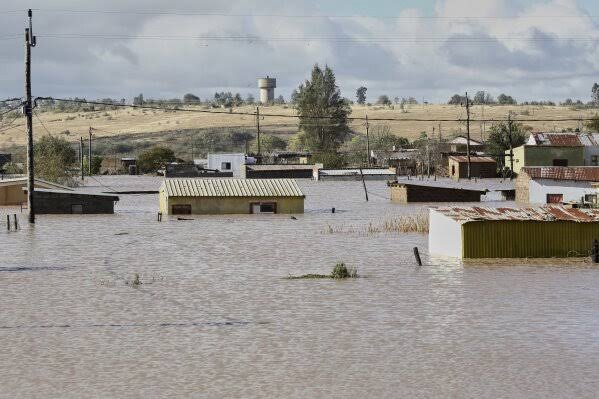
24 June 2025- The Democratic Alliance (DA) said the latest provincial assessment shared with the National COGTA Portfolio Committee this afternoon, confirms that repairing the roads, bridges, schools, clinics and water infrastructure destroyed in this month’s floods will require at least R5.18 billion.

The DA said human cost has been devastating, with the official death toll now rising to 95.

The DA leader of the Official Opposition in the Eastern Cape Provincial Legislature, Dr Vicky Knoetze said at least 4724 families have lost their homes and must now be accommodated in temporary residential units. Knoetze said a further 2145 houses have sustained partial damage from the flooding, predominantly to the roofing.

“A relief operation of this magnitude demands absolute unity of purpose, yet humanitarian workers on the ground are being forced to contend with criminal intimidation. Gift of the Givers teams distributing clean drinking water in Mthatha were threatened by an alleged “water mafia” linked to local service-provider interests, prompting police protection and national condemnation.

“Such acts of extortion are a direct assault on vulnerable communities and on every South African who has opened hand and heart to help. The DA is calling on the Premier, the SAPS and the South African National Defence Force to guarantee the safety of all accredited relief organisations, to arrest those who threaten or obstruct aid workers,” she said.

Knoetze further said the authorities must also establish a permanent, fully resourced joint operations command that includes municipal officials, Eskom, Amatola Water, COGTA and civil-society partners. She added that thousands of people remain in shelters, relying on donated food, water tanker deliveries and emergency health services.

“An additional R456 million is required for temporary residential units, with the province only able to provide R120 million. Across the province, dozens of roads and bridges have been washed away, including major links in the Chris Hani, Amathole and Alfred Nzo districts.

“Road infrastructure repair costs are estimated at an additional R935 million, of which R102 million has been reprioritised from the Provincial Department of Transport’s budget, leaving a deficit of R832 million for which intervention is required,” said Knoetze.

She said a total of 431 schools have also been affected, with exams disrupted. Knoetze said hospitals and clinics have experienced service interruptions, with 69 health facilities affected to varying degrees.

“Water infrastructure has been compromised, and electricity remains partially restored in many areas. Despite these challenges, the central Disaster Management hub remains desperately under-resourced, key leadership posts remain vacant and there is neither a Chief Director nor Directors for fire services or risk reduction, with no budget allocated for these positions in the current financial year.

“The public must see clear, visible coordination and a zero-tolerance approach to anyone who seeks to profit from disaster. Together, we must ensure that every family displaced by these floods receives shelter, clean water, healthcare, psychosocial support and a path to rebuild,” she said.

Knoetze said the people of the Eastern Cape have shown extraordinary resilience. She said they deserve an equally determined response from all spheres of government and society at large.

“Our focus now must be on restoring dignity, protecting aid workers and accelerating the massive reconstruction programme that lies ahead,” said Knoetze.

Meanwhile, the Eastern Cape Provincial Government spokesperson, Khuselwa Rantjie said: “It is coordinating the provision of burial support for the victims of the disaster. This includes the storage of the body, burial services, and transportation of the human remains to the area identified by the family for burial.

“The provision of this support has been made possible through support from AVBOB, and the government is also in engagement with other funeral parlours to mobilise support in line with the needs of each family.”

Rantjie said the government has provided support for 26 deceased persons that were buried from Thursday up to this weekend. She said in addition to the burial services, the government has provided support to the bereaved families.

taungdailynews@gmail.com

Pupils need psychologists to talk to…!!!!


Copy of ST_counselling0

By Workplace staff

South Africa needs the youth to perform well academically. But are we giving our young people the emotional support they need to shine at school? According to the SA College of Applied Psychology (SACAP) high school learners in our country face extreme pressures. They, however, often have few, if any, resources for support.

“Today’s teens face pressures that their parents didn’t have to deal with when they were at that age,” explains Shannon Pluke, counsellor at Norman Henshilwood High School in Cape Town, a SACAP graduate who earned her Diploma in Counselling and Communication with distinction. “Parents can thus hardly keep pace with the trends of adolescents. This causes conflict in the home which invariably spills over into the teen’s school and social life.”

Pluke points to cyber-bullying as an example. “It’s a big pressure for youngsters with the widespread use of social media such as MXIT and Facebook,” she says. “Social media makes teens vulnerable in any situation. Their status is constantly watched, recorded, commented on and judged.”

Add to this peer pressure, academic pressure, parents’ unrealistic expectations, past traumatic experiences not dealt with, divorce, conflict or poor communication in the home, escapism through substance and alcohol abuse, and various forms of bullying.

Today’s adolescents sometimes need to turn to someone for help even though talking about their problems isn’t easy for them as they find it difficult to voice their worries and to find the ‘right’ person to talk to.

“Teenagers are tight-lipped about their lives,” explains Pluke. “They are experiencing a phase where they are slowly removing themselves from their parents, a necessary part to their growth in becoming independent adults.”

There are two factors essential for teens to share their problems: rapport and confidentiality.

“Teens are seldom heard by parents or other authority figures, so the skill of listening becomes extremely important,” says Pluke. “In the counselling room they can vent without any limitations. A good counsellor won’t speak from the ‘parent voice’. When a counsellor can’t relate to a teen, or doesn’t have their trust, the therapeutic relationship will end.”

However, counselling for teens is in short supply at our schools.

“In SA the constitution has only really begun to fully recognise the needs of children. This may have come too late. The number of children in need, in relation to the resources available, means waiting for months before that child is attended to,” Pluke points out. “If the teen is fortunate to have greater financial access, then yes, various private counselling resources are available almost immediately. But, for most teens, there’s only the school counsellor.”

She notes that youngsters sometimes approach family members, but this isn’t always effective as the family member isn’t trained to deal with teens’ issues. There are also hotlines that offer support in case of physical or sexual abuse. Depending on the problem’s severity, the case may be referred to social services where there’s a huge queuing system.

“In light of this, counselling at high school is even more crucial,” says Pluke.

She explains the teens she counsels are equally distributed between those seeking help on their own and those referred by others for support.

“Teens who seek help on their own have come to a point where they are so desperate that they are willing to do almost anything to seek relief,” says Pluke. “Those who don’t seek help are referred by a concerned teacher. A minority of desperate parents also ask the school counsellor to assist their child.”

Being available and accessible to school learners is essential to providing an effective counselling service at high school level. “My colleague and I regularly pitch to the learners during assemblies and orientation, reminding them that we are available at any time. This has definitely increased the number of learners who feel they can approach us.”

Pluke’s own experience as a mother inspired her to work with teens: “Through the years of raising my own children and experiencing their teen-hoods, I found that I loved this phase of their lives. It wasn’t always easy, but I realised I could get through their tough layers by being non-judgmental, hearing what they had to say and not criticising their decisions. When I did this, I found they were far more receptive to the boundaries I set for them to have a balanced upbringing. I knew that if I could learn the skills of counselling in conjunction with this technique, I could facilitate other teens with their journeys.”

SACAP offers a diploma and an advanced certificate in counselling and communication for those pursuing vocations in counselling or coaching.

It also offers a higher certificate in counselling and communication skills – an entry-level qualification to develop foundational knowledge and skills. Both are available at its Cape Town and Johannesburg campuses. The Diploma also has a distance education study option. SACAP is a fully accredited higher education institution open to matriculants, mature and postgraduate students.

For more information on The South African College of Applied Psychology (SACAP), please visit http://www.sacap.edu.za, phone 0860 77 11 11 or e-mail info@sacap.edu.za.