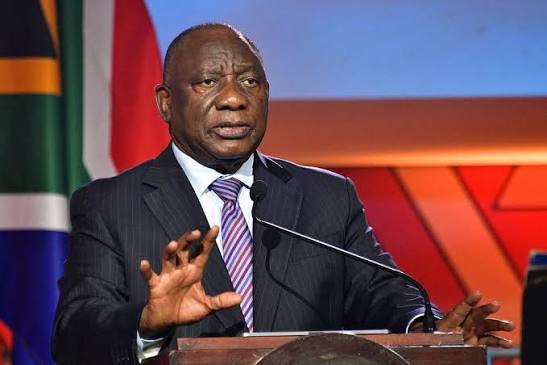
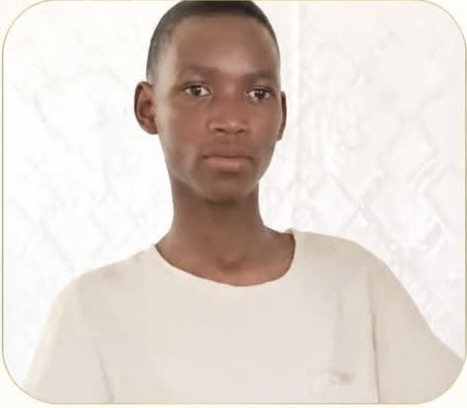
Picture: The North West MEC for Treasury, Kenetswe Mosenogi
By KEDIBONE MOLAETSI
21 August 2026 – The North West Provincial Treasury today convened all 22 municipalities in the province to assess their readiness to submit the 2025/26 annual financial statements to the Auditor-General South Africa (AGSA) by the legislated deadline of 31 August 2026. The engagement forms part of the province’s drive to achieve full, credible and timely compliance with the Municipal Finance Management Act (MFMA).
The North West MEC for Treasury, Kenetswe Mosenogi said Section 126(1)(a) of the MFMA requires each accounting officer to submit annual financial statements to the Auditor-General within two months of the end of the municipal financial year. Mosenogi said in the 2024/25 cycle, 21 of the 22 municipalities in North West submitted their Annual Financial Statements on time.
“Several of the statements submitted contained material misstatements and were not adequately supported by documentation. The Provincial Treasury has identified the credibility of financial data and municipalities’ reliance on consultants to prepare their statements, as key areas requiring attention ahead of the 2025/26 deadline.
“Today’s session set four objectives such as to achieve 100% submission of annual financial statements across the province, to improve the credibility of financial statements, to improve compliance with legislated timeframes and to improve accountability,” she said.
Mosenogi expressed that each municipality was required to account for its state of readiness, outstanding work, key risks, responsible officials and corrective action. She further said municipalities need to strengthen their internal review processes ahead of submission.
“Municipalities need to pay more attention to the credibility of their financial data and reduce their unsustainable reliance on consultants. Active participation by internal audit units and audit committees, reviewing financial statements before they go to the Auditor-General, will help us improve our audit outcomes.
“The gathering was attended by executive mayors, municipal managers, chief financial officers, managers responsible for financial management and internal audit officials and they all committed that their respective municipalities will be ready to submit their 2025/26 annual financial statements to the Auditor General of South Africa on 31 August 2026,” added Mosenogi.
She said the Provincial Treasury, the Department of Cooperative Governance and Traditional Affairs (COGTA) and the South African Local Government Association (SALGA), have committed to working together to close support gaps and address risks in the remaining weeks before the deadline.
21 Phatwe 2026- Masepala wa selegae wa Kagisano-Molopo o kaile fa o swabisitswe ke go senngwa ga ditshodi (containers) kwa toropong ya Ganyesa. Masepala o tlhalositse fa nngwe ya ditshodi di le 50 tse di neng tsa neelwa bagwebi-potlana, ile ya thubiwa le go senngwa.
Sebueledi sa masepala wa Kagisano Molopo, Modisaotsile Khumalo are tiragalo e, ke ya masa a Labone. Khumalo are tshenyo e, ga e se fela bogodu, mme e nyatse le matshelo a bagwebi-potlana ba ba tsweletseng go dirisa ditshodi tse go itshedisa.
“Masepala o butse kgetsi kwa sepodising, mme dipatlisiso di tsweletse. Re ikuela go mongwe le mongwe o a ka tswang a na le tshedimosetso mabapi le badiri ba tiro e, go ka itsise seteishene sa sepodisi se se gaufi. Kgotsa ba ka itsise motsamaisi wa masepala gore badiri ba tiro e ba tshwarwe.
“Tshedimosetso eo, e tla tsewa jaaka ya sephira. Masepala o tlhamile tiriso e ya ditshodi go ka ema nokeng magwebi-potlana mo tulong e. Jaanaong, ga nkitla re letla bosinyi go tla go tseela bagetsho ditiro kgotsa go kgoreletsa kgolo ya moruo wa tulo ya rona,” Khumalo wa tlhalosa.
Khumalo are masepala o tlile go matlafatsa tshireletso kwa ditshoding tseo go ka leka go efoga tiragalo e mo Nakong e e tlang.
Picture: The Chief Director of NWU Business School, Prof Joseph Sekhampu/Supplied
By OBAKENG MAJE
21 August 2026 – The Chief Director of NWU Business School, Prof Joseph Sekhampu said South Africa has created a local government system in which some municipalities may have become too failed to fail. Sekhampu said voters can replace councillors and governing parties, but municipal debt, damaged infrastructure and weak revenue systems survive elections.
He further said when municipalities fail, their financial burdens do not disappear. Sekhampu added that they migrate to Eskom, National Treasury and other parts of the state.
“Attempts to punish dysfunctional municipalities often hurt the residents who depend most heavily on essential services. South Africa has spent years pulling municipalities back from the cliff, but the institutions rescuing them may eventually lose their footing too.
“South Africa’s weakest municipalities acquire a form of protection from the severity of their own failure. As financial distress deepens, its consequences spread beyond councillors and officials to residents, creditors and other parts of government, making intervention progressively more necessary,” he said.
Sekhampu said in ordinary markets, extreme weakness increases the probability that an institution will disappear, while in local government, it can increase the probability that its liabilities and responsibilities will migrate elsewhere. He said South Africa has created a local government system in which some municipalities may become too failed to fail.
“By December 2025, municipalities reported owing creditors about R161 billion, while Eskom separately reported municipal arrears of R110.5 billion. Meanwhile, a large proportion of municipalities had adopted unfunded budgets during the 2024/25 financial year.
“National Treasury’s debt-relief programme captures the contradiction. Its 71 participating municipalities owed Eskom R85 billion by December, yet only 15 had consistently met the programme’s conditions. The government is now implementing arrangements under which financially distressed municipalities can delegate electricity distribution and revenue collection to Eskom, shifting responsibilities that they can no longer adequately fulfil,” said Sekhampu.
He said Nelson Mandela Bay in the Eastern Cape illustrates how difficult financial consequences can become to locate. Sekhampu said its Municipal Public Accounts Committee has recommended writing off roughly R23 billion in historical irregular expenditure accumulated between 2009 and 2021. Sekhampu said this is not R23 billion in newly discovered theft or money that has suddenly disappeared.
“The institutional significance is that political leaders change, officials leave and councils turn over, while the municipality survives to carry unresolved decisions made by people who may no longer be there. Moqhaka in the Free State reveals the problem from the creditor’s perspective, with its debt to Eskom reportedly reaching about R2.45 billion while the municipality participates in the debt-relief programme and continues to struggle with an unfunded budget.
“Eskom cannot behave exactly like an ordinary creditor because aggressive enforcement could threaten the provision of electricity to communities, while continued accommodation transfers financial pressure to Eskom,” he said.
Sekhampu said municipal distress therefore changes the incentives of creditor and debtor alike, allowing local financial weakness to migrate through the machinery of the state. He said the National Treasury encountered the same dilemma directly in July when it temporarily withheld equitable-share transfers from municipalities following persistent breaches of financial management rules.
“The intervention was intended to impose fiscal discipline, but Parliament warned that withholding the funds could jeopardise basic services, particularly for indigent households. By the end of the month, the remaining allocations to some municipalities had been released following further engagement and compliance processes.
“This exposed the constraint at the heart of municipal enforcement: once the costs of punishment migrate from the institution being disciplined to residents who depend on essential services, the pressure to restore funding becomes increasingly difficult to resist,” he said.
Sekhampu said Makana in the Eastern Cape and Ditsobotla in North West show how municipal recovery can itself become a prolonged condition of government. He said Makana had a financial recovery plan in place by 2015, yet five years later, the Eastern Cape High Court directed the province to implement the plan and dissolve the council.
“In June 2026, the South African Human Rights Commission (SAHRC) was still finding constitutional violations arising from persistent water and sanitation failures. Ditsobotla has endured eight unsuccessful interventions, the dissolution and re-election of its council, and eventually the escalation of responsibility from the provincial to the national government under the rarely used section 139(7) of the Constitution.
“The details differ, but the institutional pattern is remarkably similar: recovery plans accumulate, councils and administrations change, and higher spheres of government intervene while the municipality carries its underlying weaknesses forward,” he said.
Sekhampu said this history matters as South Africa approaches the November local government elections. He said elections make political failure consequential by allowing voters to remove those responsible, but Makana and Ditsobotla expose the limitations of treating electoral turnover as institutional renewal.
“Councillors and governing parties can be replaced while debts, damaged infrastructure and weak revenue systems pass into the next term. Whoever takes office therefore inherits not only responsibility for governing the municipality but also the accumulated consequences of previous administrations.
“This resembles a soft budget constraint, although officials need not consciously expect rescue for the mechanism to operate. Enforcement eventually reaches a point at which its costs migrate beyond those responsible and towards residents who still require essential services, making some form of intervention entirely rational,” said Sekhampu.
He said the challenge is to preserve those services without equally protecting officials, contractors and others responsible for avoidable financial failure, because repeated accommodation can otherwise make future discipline harder to sustain. Sekhampu said the protection created by municipal indispensability has a limit that South Africa has barely contemplated.
“A municipality approaching the edge can be pulled back because Eskom carries its arrears, National Treasury restructures its obligations, another sphere of government intervenes or residents absorb the consequences of deteriorating services.
“The system appears resilient because the fall keeps being interrupted. However, resilience built on transferring failure is not the same as eliminating it. If enough municipalities arrive at the edge together, their accumulated failures will eventually test the capacity of the institutions standing behind them to absorb the fall,” he said.
Picture: North West MEC for Education, Dr Desbo Mohono
By AGISANANG SCUFF
20 August 2026 — The North West MEC for Education, Dr Desbo Mohono has called for a culture of accountability, integrity, collaboration and decisive service delivery, declaring that there is no room for complacency in serving the province’s learners and education community. Mohono was addressing the department’s senior management team during her inaugural meet and greet at Seasons Wedding and Conference Centre in Mahikeng.
The meeting was facilitated by Superintendent-General, Lengane Bogatsu and provided Mohono with an opportunity to engage senior management on the department’s programmes, priorities, challenges and progress. Officials heading various divisions, including Finance, Curriculum, Management Services, Infrastructure and District Performance, among others, presented detailed briefings on their respective programmes and progress.
“The department must work as one team, with all hands on deck to improve education delivery. Regarding infrastructure, we have identified serious challenges requiring urgent attention and we call for greater empowerment of districts.
“Certain responsibilities should be decentralised from Head Office to districts, where this would accelerate the implementation and monitoring of outstanding projects,” she said.
Mohono further called for the department to embrace technology and adapt to the rapidly changing technological environment to improve efficiency and service delivery. Scholar transport was another area highlighted, with Mohono indicating that her department would explore stronger collaboration with the Department of Community Safety and Transport Management to address related challenges.
“ We would also like to reaffirm passion for food security, informed by my academic work and PhD in Agricultural Economics. There is a need for a holistic approach to the well-being and development of learners.
“I would like to challenge the department’s leadership to move with urgency and purpose,” she added.
Picture: A person of interest, Shadrick Makoosi alias Pain/Supplied
By AGISANANG SCUFF
19 August 2026 – The Kimberley Serious Violent Crimes Unit are investigating a murder case following the alleged fatal stabbing of a man (62), on 7 August 2026, at approximately 10:15pm at Samaria Shacks, Kenilworth in Kimberley. It is believed that the person of interest depicted in the photo, can possibly assist with the investigation.
The Northern Cape police spokesperson, Warrant Officer Molefi Shemane said the young female ran to the shack of an elderly victim after she was assaulted. Shemane said, however, the elderly man was fatally stabbed after he attempted to intervene.
“The person of interest is known as Shadrick Makoosi alias, “Pain” and believed to be from Lesotho. Anyone with information that can assist the police in locating the person of interest depicted in the photo attached, can report to the nearest police station or contact the Investigating Officer Detective Sergeant Immanuel Jeffries on 082 302 0407 or alternatively contact the SAPS Crime Stop number on 08600 10111 or use the MySAPS App.
“All information received will be treated with the strictest confidentiality,” he said.
19 August 2026 – The Northern Cape Premier, Dr Zamani Saul said following thorough consultations, he decided to accept the resignation of the Northern Cape MEC for Public Works and Roads, Fufe Makatong. Saul extended his sincere appreciation to Makatong for her service to the people of the Northern Cape during her tenure as a Member of the Executive Council (MEC).
He further thanks Makatong for her contribution to the work of the provincial government and wishes her success in all her future endeavours. Saul added that the resignation of Makatong has necessitated a reshuffling of the current Executive
Council.
“So, I have accordingly appointed the Bentley Vass as MEC responsible for Roads and Public Works, Lebogang Motlhaping as MEC responsible for Cooperative Governance, Human
Settlements and Traditional Affairs, Newreen Klaaste as MEC responsible for Agriculture, Environmental Affairs, Rural
Development and Land Reform and Mirriam Kibi as MEC in the Premier’s Office, responsible for Children, Women,
Youth and Persons living with Disabilities.
“These changes take place at an important time for the Northern Cape, as the province
continues to make significant progress in growing its economy, creating employment and
improving the lives of its people,” he said.
Saul said the province has recorded the highest decline in unemployment in the country in the second
quarter of 2026. He said according to the Quarterly Labour Force Survey for Quarter 2 of 2026, the
province’s unemployment rate stands at 28.7%, representing a 1.7 percentage-point decrease from the previous quarter and a 4 percentage-point decrease compared to the same period
last year.
“This progress is a clear indication that we are making major strides in our efforts to expand economic opportunities and create sustainable employment for the people of the Northern
Cape.
“While we welcome this positive development, we recognise that much more work
remains to be done, particularly in addressing the high levels of unemployment among young
people and ensuring that economic growth translates into meaningful opportunities across all
communities,” said Saul.
He said they remain focused and firmly committed to achieving their targets of growing the Northern
Cape economy to a R200 billion GDP and creating 60,000 new and sustainable jobs by 2030. Saul said reshuffling of the Executive Council is therefore intended to further strengthen the capacity
of the provincial government to respond to the challenges facing the province, accelerate the
implementation of government programmes and build on the progress already achieved.
“Therefore, I call on all Members of the Executive Council and the public service to
continue working with dedication, integrity and urgency in fulfilling the mandate entrusted to
them by the people of this province.
“The Northern Cape Provincial Government remains committed to being of service to the
Picture: The picture depicting Mahika Mahikeng logo/Supplied
By KEDIBONE MOLAETSI
19 August 2026 – The North West Department of Arts, Culture, Sports and Recreation (ACSR) said it condemns in the strongest terms the improper and unauthorised use of its intellectual property by any individual, entity or collective. The department said it reserves the right to take appropriate legal action to protect its good name and symbols from being used for dubious purposes.
The North West Department of Arts, Culture, Sports and Recreation spokesperson, Shuping Sebolecwe said an electronic poster currently circulating on social media, calling for a meeting to discuss Mahika Mahikeng Cultural Festival, gives the impression that it has the support of the organisers of Mahika Mahikeng, that being ACSR. Sebolecwe said the department calls on the organiser(s) of the meeting to retract the poster using the Mahika Mahikeng logo and desist from doing so in the future.
“ACSR enjoys the protection of the law and that includes the protection of its logos or name(s). The organiser(s) of the meeting do not have the authorisation to use the Mahika Mahikeng logo and are therefore transgressing the law.
“The department will not hesitate to take legal action against anyone or entity using any of its Intellectual Property and Trademarks in an improper manner. We therefore distance ourselves from such a meeting and urge members of the public not to be misled,” he said.
Sebolecwe further said they warn members of the public to respect state property, intellectual or otherwise.
Picture: North West MEC for Community Safety and Transport Management, Virginia Tlhapi leads NCOP engagement on GD Montshioa Airport overnight
By REGINALD KANYANE
19 August 2026 – The North West MEC for Community Safety and Transport Management, Virginia Tlhapi has led an National Council of Provinces (NCOP) engagement on oversight of GD Montshioa Airport. Tlhapi, accompanied by Head of the Department, Dr Hans Kekana, said the purpose of the engagement was to present the department’s plans on the development of GD Montshioa and Pilanesberg Airports.
The NCOP is currently conducting its long week oversight over key public infrastructure and service delivery projects as part of the annual NCOP Provincial Week programme.
The 2026 Provincial Week, an annual flagship oversight and public participation programme of the NCOP, is taking place under the themes: “Confronting the Challenges Facing the Timely Delivery of Viable Public Infrastructure to Communities”and “Building Viable Municipalities for Enhanced Delivery of Basic Services to Communities.”
“This year’s programme marks an important report-back phase in the NCOP’s oversight cycle. The programme includes site inspections, engagements with provincial executives, municipalities and other stakeholders, as well as direct interaction with communities to verify progress and identify outstanding service delivery challenges,” she said.
Picture: The North West Public Works and Roads’ Head of Department (HOD), Moses Kgantsi/Supplied
By OBAKENG MAJE
19 August 2026 – The North West Department of Public Works and Roads has on Monday, convened a Technical Executive Management Committee to strength it’s institutional capacity following the concurrence of its new structure. The committee discussed the job evaluation process following the Minister of Public Service and Administration’s concurrence with the new organisational structure in March 2026.
The North West Public Works and Roads’ Head of Department (HOD), Moses Kgantsi said one of the conditions of the concurrence is that newly created and redesigned posts be subjected to job evaluation, which is meant to systematically determine the relative worth of different posts within an organisation. Kgantsi indicated that the department embarked on a review of its organisational structure to align it with its constitutional mandate, strategic objectives and service delivery requirements.
“During consultation on the new structure and the Minister’s recommendations, additional operational gaps were identified. Amongst the additional positions identified was a Directorate to specifically deal with state buildings’ compliance with occupational health and safety (OHS) requirements.
“With this unit, we envisage reducing and ultimately doing away with the closing of government buildings by the Department of Labour due to noncompliance with OHS standards which leads to the use of private leasing as an alternative which is something that government is working towards reducing,” he said.
Kgantsi further said linked to the above gap was the department’s struggle to reach its revenue collection targets hence the additional proposed Directorate for Property Sales and Rentals. He added that they are currently dealing with the challenge of not having a dedicated maintenance budget as a department that would enable them to ensure OHS compliance for their 140 state buildings.
“Elevating this Property Sales and Rentals unit to Directorate level will ensure there is a dedicated unit to focus on revenue collection so we can motivate for the Provincial Treasury to ringfence the monies collected towards maintenance of state properties.
“The meeting further discussed the recruitment of critical vacant posts. We are currently accelerating the filling of prioritised critical vacant posts and thus far we have made 50 appointments during July and August. We are ramping up our recruitment drive to contribute to the reduction of the unemployment rate,” said Kgantsi.
He said more than 100 vacant posts are still to be filled and are at various stages of recruitment across the department’s head office and the four district offices.
Picture: North West MEC for Community Safety and Transport Management, Virginia Tlhapi/Supplied
By AGISANANG SCUFF
18 August 2026 – The newly- appointed North West MEC for Community Safety and Transport Management, Virginia Tlhapi said unity is strength and calls staff members to pull together inquest of moving the department forward. In her meet and greet meeting with Mahikeng based senior management and staff, Tlhapi said there is nothing that beats commitment and hard work which enables seamless service delivery to communities.
Meanwhile, the Head of Department (HoD), Dr Hans Kekana assured Tlhapi that the Team COSATMA has a spring in their steps and will ensure that as she hits the ground running, they will sprint for her. Kekana said Tlhapi will meet other staff in other districts at a date still to be determined.