Residents call for effective implementation Water Services Amendment Bill


Picture: Taung Dam

By OBAKENG MAJE

24 August 2026– The residents of the Dr Ruth Segomotsi Mompati District Municipality have expressed overwhelming support for the Water Services Amendment Bill (B24-2025), while calling for effective mechanisms to ensure that the proposed legislation translates into tangible improvements in water and sanitation services. The Portfolio Committee on Water and Sanitation conducted the first of three public participation sessions in the North West at the Depot Hall in Taung, where residents welcomed the Bill, emphasising that its success would ultimately depend on enforced effective implementation.

The Chairperson of the Portfolio Committee on Water and Sanitation, Leon Basson said the participants cautioned against the culture of well-intentioned legislation with poor or no implementation on the ground. Basson said they argued that poor implementation of the Bill diminishes the purpose of legislation and more importantly, denies communities’ constitutional rights to access quality water and sanitation services.

He further said a significant concern raised during the hearing was municipalities’ poor performance in providing reliable, quality water services. Basson added that participants expressed their hope in the Bill that it would lay new foundations of accountability and a culture of performance in the municipalities and of forcing water service providers to deliver on their obligations.

“Participants also welcomed the Bill’s provisions on consequence management for licence holders, stressing that the possibility of sanctions, including the forfeiture of a licence, could lead to water service providers improving their performance and ensuring better service delivery.

“Some community members described the Bill as a direct response to their longstanding concerns and prayers for improved water services. They argued that many of the challenges experienced by communities are rooted in poor governance and management at the municipal level,” he said.

Basson said calls were also made for stronger law enforcement to address alleged corruption within local government. He said participants argued that corrupt practices and poor governance contribute directly to failures in the provision of water services and that those responsible should be held accountable.

“Participants further called for improved communication channels through which residents can report poor or inadequate water services. They argued that effective enforcement of the proposed licensing regime would require communities to be able to provide information to the relevant licensing authorities about service-delivery failures.

“Participants also called for greater transparency, including public access to information on approved licence holders, as a means of strengthening accountability and enabling communities to know which entities are authorised to provide water services and what obligations they are required to fulfil,” said Basson.

He said the proposed enforcement powers of the Minister were also supported by participants, who also argued that the ability of the Minister to intervene where water service providers persistently fail to deliver quality services could help prevent lengthy delays in addressing serious service-delivery failures. Basson said although the public hearing focused on the provisions of the Bill, community members also used the opportunity to bring their immediate water challenges to the attention of the committee.

“In Taung, participants raised concerns about the perceived disconnect between the area’s water resources and the services received by local communities. Some participants told the committee that in spite of the existence of a dam with water in Taung, local communities do not sufficiently benefit from this water resource.

“They alleged that the dam supplies water to other areas. Another major concern was the overreliance on water tankers as a means of addressing water shortages. Participants argued that tanker provision is costly and often irregular, leaving communities without reliable access to water. Concerns were also raised over municipalities purchasing water tankers when, in the view of participants, those resources could be better utilised to address underlying infrastructure and service-delivery challenges,” said Basson.

taungdailynews@gmail.com

NCOP raises concerns over central challenges confronting Northern Cape


Picture: NCOP visit to Northern Cape

By AGISANANG SCUFF

24 August 2026 – The National Council of Provinces (NCOP) Northern Cape delegation commended the provincial departments for the improvements it described as remarkable in implementing infrastructure projects since the last two Provincial Week visits. However, the delegation remains concerned about the persistent implementation gaps in areas, including municipal capacity, financial management and accountability as the central challenges confronting the province.

The Provincial Whip, Patrick Mabilo said while the delegation acknowledged pockets of progress, it highlighted the recurring patterns of contractor failures, project delays, reliance on consultants and inadequate financial management that continue to undermine service delivery and diminish public trust. Mabilo said the Auditor-General highlighted excessive reliance on consultants and R656 million in irregular expenditure across municipalities.

“Nine municipalities remain distressed with 30 of 144 senior management posts vacant. Non-revenue water stands at approximately 45%, resulting in an estimated R2.93 billion annual revenue loss. No water system achieved Blue Drop certification in the 2023 assessment.

“The visit of the delegation to the province was part of the annual Provincial Week of the NCOP – an oversight and public participation programme, to assess progress on previous recommendations and examine the state of service delivery in the Sol Plaatje, Siyancuma and Siyathemba local municipalities,” he said.

Mabilo further said during the visit, the delegation inspected water treatment plants, housing projects and a tiger-eye mining plant. He added that they have seen that the Northern Cape’s principal challenge is not the absence of plans or commitments, but weak implementation and follow-through.

“The effectiveness of the NCOP oversight process will depend on time-bound implementation of recommendations, regular reporting on undertakings and firm consequence management where commitments are not honoured. In the Siyancuma Local Municipality, significant delays plague the 150 low-cost Housing Programme in Griekwastad, Schmidtsdrift, Campbell and Bongani. The project, originally intended to take eight months, has now been running for approximately 24 months, with only 20 of 150 houses completed.

“The municipality has qualified audit opinions for four consecutive years, with R66 million in unauthorised expenditure and approximately R21.256 million in irregular expenditure. The municipality owes approximately R321 million to Eskom and water boards,” said Mabilo.

He said revenue collection sits at approximately 49%, contributing to cash-flow constraints. Mabilo said the Schmidtsdrift Communal Property Association raised serious concerns regarding insufficient post-restitution support, lack of financial and institutional capacity, and poor cooperation from government departments.

“The community also reported severe water shortages and a poor gravel road to Douglas that is used daily by learners. In the Siyathemba Local Municipality, the municipality has received qualified audits for five consecutive years, with R611 million in unfunded budget overspend (dating back to 2011) and R350 million in Eskom debt.

“The stalled housing development in Prieska remains a critical concern. Phase 2 of the project, comprising 200 units, has 61 incomplete houses following contractor default in 2023. The incomplete site has become a hub for vandalism and criminal activities,” he said.

taungdailynews@gmail.com

Residents support revocation of licence amid service delivery failures


Picture: Ngaka Modiri Molema District Municipality building

By BAKANG MOKOTO

24 August 2026 – The residents of Ngaka Modiri Molema District Municipality have overwhelmingly supported the Water Services Amendment Bill, particularly the solidification of provisions to suspend and revoke the licences of water service providers that fail to deliver quality water services. The residents expressed their views on the Bill during the second leg of the North West public hearings on the Bill held at the Mahikeng Civic Centre in Mahikeng.

Participants argued that due to the current challenges within the district, they are of the view that the licence of Ngaka Modiri Molema should be the first to be revoked with immediate effect as they spend countless days without water. They also argued that, in most cases, municipalities are not adequately capacitated to meet the standards of their licences, and that renders them unable to deliver quality services.

The Chairperson of the Portfolio Committee on Water and Sanitation, Leon Basson said they told the committee that their support for the Bill is largely based on the Bill’s potential to address the lack of access to quality water and sanitation within the municipality. Basson said they pointed out that their support for the Bill should translate into legislation that will work for the people.

“They called for the effective implementation of the Bill to ensure that it yields the expected fruit. There were concerns that were highlighted that the Bill does not specifically address the plight of rural communities and the quality of water they should expect.

“There was a proposal for a clause in the Bill which explains, among other things, the quality of water the people will receive, and sanctions for non-compliance by water services licence holders,” he said.

Basson further said participants expressed concerns over the continued overreliance on water tankers. He added that they argued that the financial resources used on water tankers could be used for a long-term water provision arrangement.

“Some participants told the committee that water tankers supply questionable water and expose communities to health hazards. Some participants raised concerns that the provision of quality water was overemphasised than the provision of sanitation services, yet both are equally essential.

“Similar to other hearings already held in other provinces, participants raised various challenges regarding the provision of water, with many of them highlighting that they depend on untested boreholes,” said Basson.

He said some participants told the committee that communities rely on very few boreholes, despite the rising number of people that results in more demand. Basson said participants also told the committee that they live without water for a number of days sometimes in their communities.

“They described that as a gross deprivation of their constitutional rights to water,” he said.

taungdailynews@gmail.com

DA calls on municipality to explain missing contractor and R8.4 million road payment


Picture: Gamagara Local Municipality

By REGINALD KANYANE

24 August 2026 – The Democratic Alliance (DA) has called for urgent answers from Gamagara Local Municipality after allegedly a road contractor that received millions of rands in public funds, despite completing only a fraction of the work, disappeared. The DA said according to a Section 71 report received this week, R8.396 million was paid to Selenane in connection with the project.

DA Gamagara Local Municipality’s mayoral candidate, Henriette du Plessis said in June 2026, they raised concerns over the R15 million pothole-repair project after it emerged that work had been scheduled on roads showing little to no evidence of pothole damage. Du Plessis said to date, the contractor has only completed partial work in Hendrik van Eck Street and Frikkie Meyer Road.

“This could not have cost anywhere near R8 million. The contractor has since disappeared from the site, while the municipality has resumed filling potholes itself. The DA previously questioned the source of funding for the project, which was not included in the municipality’s budget.

“The municipality claims the money comes from disaster-response funding related to last year’s heavy rainfall. However, the municipality did not receive any disaster funding. The contractor’s apparent disappearance raises serious questions about a project already plagued by controversy,” she said.

Du Plessis further said despite the substantial payment, Gamagara has provided no clarity on the contractor’s whereabouts, the outstanding work or what steps have been taken to ensure the project is completed. She added that the DA is also still awaiting answers on why the municipality’s own road-repair team was not better capacitated to undertake the work.

“The DA has given the municipality a week to provide clear answers on the contractor’s whereabouts, the state of the project and the outstanding questions surrounding it. Should the municipality fail to provide satisfactory answers, we will consider further escalation. A DA-governed municipality will prioritise road maintenance and upgrades through better budget prioritisation and oversight.

“We will also make public procurement more transparent by requiring disclosure of all goods and services procured, including contracts awarded and contract prices. Gamagara residents deserve accountability. Every rand intended to improve local roads must be used to fix roads, not line pockets,” said du Plessis.

taungdailynews@gmail.com

Warona Setsome crowned 1st Princess Little Miss Universe


Picture: Warona Setsome crowned 1st Princess Little Miss Universe/Supplied

By OBAKENG MAJE

24 August 2026 – A Grade 5 learner, Warona Setsome (10) from R.B. Dithupe Primary School in Welvedagt Township, near Zeerust was crowned as the 1st Princess Little Miss Universe. Warona received the prestigious title at the Little Miss Universe pageant held in the Philippines on 19 August 2026.

She only started modelling in 2025 and within a very short space of time. Warona had the opportunity to walk for international fashion shows and designers, participate in events, develop her skills as a motivational speaker to children and became a host and young public figure.

Warona’s mother and manager, Kedijang Hendrietta Setsome highlighted how she saw her daughter’s interest in modelling and supported her dream.

“What started as a young girl’s interest in modelling has grown into something much bigger. I saw her potential and decided to nurture it, supported her and gave her every opportunity to grow. As her manager, I have had the privilege of walking alongside her, prepared her and watched her develop not only as a model, but also as a confident young girl who understands the importance of using her voice and platform positively.

“The journey to Little Miss Universe was not easy. Warona became unwell during the competition, but despite not feeling her best, she showed incredible determination. She continued to participate and represented herself, her family, the North West and South Africa with grace, discipline and commitment,” she said.

Kedijang further said Warona gave every activity her absolute best and carried herself with such strength and professionalism. She added that watching her push through those difficult moments and still perform at her best, is something that made her even more proud of her.

Meanwhile, the North West MEC for Education, Dr Desbo Mohono, commended Warona for this outstanding achievement, describing it as a source of pride for her family, school, community and the North West. Mohono said Warona’s achievement is a testament to the talent, determination and potential of young people in our province.

“We are extremely proud of her for representing North West and South Africa with distinction on an international stage. Last month, we had Mbulelo Tolom from Klerksdorp, who represented the North West and the entire country in the Spelling Bee competition held in China, where he obtained 6th position.

“This achievement shows that this province has talent that can conquer the world in different areas. On behalf of the North West Department of Education, I extend our warmest congratulations to Warona,” she said.

Mohono said may this achievement inspire her to continue pursuing her dreams and encourage other young learners to believe in themselves and strive for excellence. She further congratulated Warona’s parents, teachers and everyone who supported her throughout her journey, noting that their encouragement and commitment played an important role in helping her reach this significant milestone.

“The North West Department of Education wishes Warona continued success as she carries the title of 1st Princess at Little Miss Universe and looks forward to celebrating many more achievements throughout her journey ahead,” said Mohono.

taungdailynews@gmail.com

Police looking for missing teenager, Thembeka Mqweba


By OBAKENG MAJE

22 August 2026 – The police in Taung request the community’s assistance in locating Thembeka Mqweba (19). Mqweba was last seen on 24 July 2026.

The North West police spokesperson, Captain Majang Skalkie said a search commenced and extensive investigations were conducted around the surrounding area without any positive results. Skalkie said at the time of her disappearance, Mqweba was wearing a black track suit pants with a black top. She has a slim-built body and has black afro hair.

“The police request anyone who may have information regarding Thembeka Mqweba’s whereabouts to contact the Investigating Officer, Sergeant Kgosiyagae Monchoe, on 076 510 9418.

“Alternatively, they can call their local police station or Crime Stop on 08600 10111. Anonymous tip-offs can also be communicated via the MySAPS App from your smartphone,” she said.

taungdailynews@gmail.com

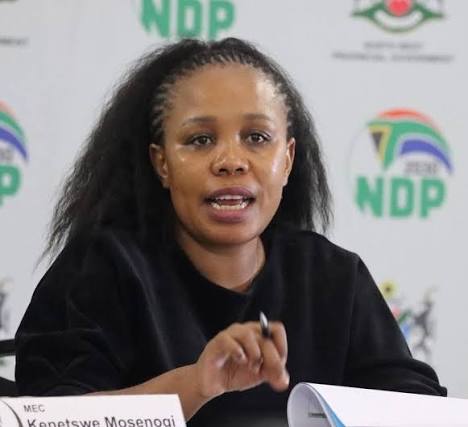
Mosenogi calls on municipalities to improve compliance ahead of AFS submission


Picture: The North West MEC for Treasury, Kenetswe Mosenogi

By KEDIBONE MOLAETSI

21 August 2026 – The North West Provincial Treasury today convened all 22 municipalities in the province to assess their readiness to submit the 2025/26 annual financial statements to the Auditor-General South Africa (AGSA) by the legislated deadline of 31 August 2026. The engagement forms part of the province’s drive to achieve full, credible and timely compliance with the Municipal Finance Management Act (MFMA).

The North West MEC for Treasury, Kenetswe Mosenogi said Section 126(1)(a) of the MFMA requires each accounting officer to submit annual financial statements to the Auditor-General within two months of the end of the municipal financial year. Mosenogi said in the 2024/25 cycle, 21 of the 22 municipalities in North West submitted their Annual Financial Statements on time.

“Several of the statements submitted contained material misstatements and were not adequately supported by documentation. The Provincial Treasury has identified the credibility of financial data and municipalities’ reliance on consultants to prepare their statements, as key areas requiring attention ahead of the 2025/26 deadline.

“Today’s session set four objectives such as to achieve 100% submission of annual financial statements across the province, to improve the credibility of financial statements, to improve compliance with legislated timeframes and to improve accountability,” she said.

Mosenogi expressed that each municipality was required to account for its state of readiness, outstanding work, key risks, responsible officials and corrective action. She further said municipalities need to strengthen their internal review processes ahead of submission.

“Municipalities need to pay more attention to the credibility of their financial data and reduce their unsustainable reliance on consultants. Active participation by internal audit units and audit committees, reviewing financial statements before they go to the Auditor-General, will help us improve our audit outcomes.

“The gathering was attended by executive mayors, municipal managers, chief financial officers, managers responsible for financial management and internal audit officials and they all committed that their respective municipalities will be ready to submit their 2025/26 annual financial statements to the Auditor General of South Africa on 31 August 2026,” added Mosenogi.

She said the Provincial Treasury, the Department of Cooperative Governance and Traditional Affairs (COGTA) and the South African Local Government Association (SALGA), have committed to working together to close support gaps and address risks in the remaining weeks before the deadline.

taungdailynews@gmail.com

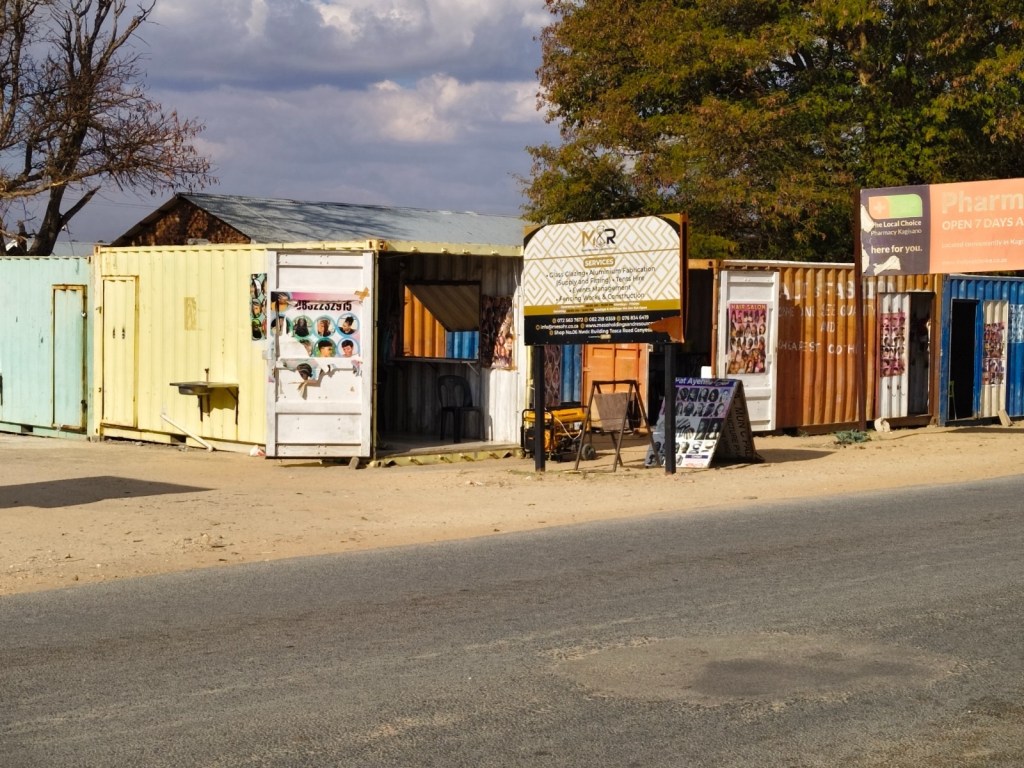
Masepala o kgala ka bogale tshenyo ya ditshodi


Ka OBAKENG MAJE

21 Phatwe 2026- Masepala wa selegae wa Kagisano-Molopo o kaile fa o swabisitswe ke go senngwa ga ditshodi (containers) kwa toropong ya Ganyesa. Masepala o tlhalositse fa nngwe ya ditshodi di le 50 tse di neng tsa neelwa bagwebi-potlana, ile ya thubiwa le go senngwa.

Sebueledi sa masepala wa Kagisano Molopo, Modisaotsile Khumalo are tiragalo e, ke ya masa a Labone. Khumalo are tshenyo e, ga e se fela bogodu, mme e nyatse le matshelo a bagwebi-potlana ba ba tsweletseng go dirisa ditshodi tse go itshedisa.

“Masepala o butse kgetsi kwa sepodising, mme dipatlisiso di tsweletse. Re ikuela go mongwe le mongwe o a ka tswang a na le tshedimosetso mabapi le badiri ba tiro e, go ka itsise seteishene sa sepodisi se se gaufi. Kgotsa ba ka itsise motsamaisi wa masepala gore badiri ba tiro e ba tshwarwe.

“Tshedimosetso eo, e tla tsewa jaaka ya sephira. Masepala o tlhamile tiriso e ya ditshodi go ka ema nokeng magwebi-potlana mo tulong e. Jaanaong, ga nkitla re letla bosinyi go tla go tseela bagetsho ditiro kgotsa go kgoreletsa kgolo ya moruo wa tulo ya rona,” Khumalo wa tlhalosa.

Khumalo are masepala o tlile go matlafatsa tshireletso kwa ditshoding tseo go ka leka go efoga tiragalo e mo Nakong e e tlang.

taungdailynews@gmail.com

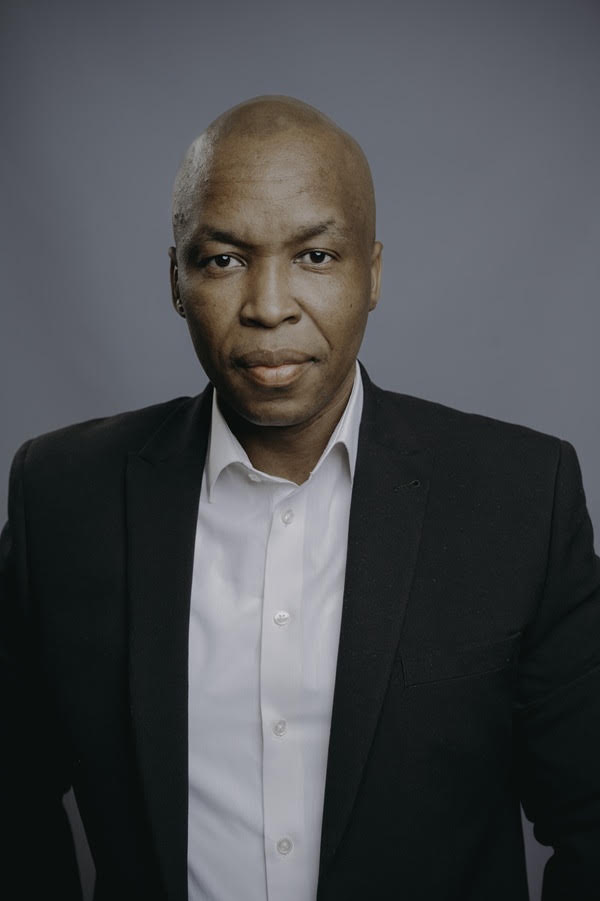
South Africa can vote out its councils, but it cannot vote out their failures


Picture: The Chief Director of NWU Business School, Prof Joseph Sekhampu/Supplied 

By OBAKENG MAJE

21 August 2026 – The Chief Director of NWU Business School, Prof Joseph Sekhampu said South Africa has created a local government system in which some municipalities may have become too failed to fail. Sekhampu said voters can replace councillors and governing parties, but municipal debt, damaged infrastructure and weak revenue systems survive elections.

He further said when municipalities fail, their financial burdens do not disappear. Sekhampu added that they migrate to Eskom, National Treasury and other parts of the state.

“Attempts to punish dysfunctional municipalities often hurt the residents who depend most heavily on essential services. South Africa has spent years pulling municipalities back from the cliff, but the institutions rescuing them may eventually lose their footing too.

“South Africa’s weakest municipalities acquire a form of protection from the severity of their own failure. As financial distress deepens, its consequences spread beyond councillors and officials to residents, creditors and other parts of government, making intervention progressively more necessary,” he said.

Sekhampu said in ordinary markets, extreme weakness increases the probability that an institution will disappear, while in local government, it can increase the probability that its liabilities and responsibilities will migrate elsewhere. He said South Africa has created a local government system in which some municipalities may become too failed to fail.

“By December 2025, municipalities reported owing creditors about R161 billion, while Eskom separately reported municipal arrears of R110.5 billion. Meanwhile, a large proportion of municipalities had adopted unfunded budgets during the 2024/25 financial year.

“National Treasury’s debt-relief programme captures the contradiction. Its 71 participating municipalities owed Eskom R85 billion by December, yet only 15 had consistently met the programme’s conditions. The government is now implementing arrangements under which financially distressed municipalities can delegate electricity distribution and revenue collection to Eskom, shifting responsibilities that they can no longer adequately fulfil,” said Sekhampu.

He said Nelson Mandela Bay in the Eastern Cape illustrates how difficult financial consequences can become to locate. Sekhampu said its Municipal Public Accounts Committee has recommended writing off roughly R23 billion in historical irregular expenditure accumulated between 2009 and 2021. Sekhampu said this is not R23 billion in newly discovered theft or money that has suddenly disappeared.

“The institutional significance is that political leaders change, officials leave and councils turn over, while the municipality survives to carry unresolved decisions made by people who may no longer be there. Moqhaka in the Free State reveals the problem from the creditor’s perspective, with its debt to Eskom reportedly reaching about R2.45 billion while the municipality participates in the debt-relief programme and continues to struggle with an unfunded budget.

“Eskom cannot behave exactly like an ordinary creditor because aggressive enforcement could threaten the provision of electricity to communities, while continued accommodation transfers financial pressure to Eskom,” he said.

Sekhampu said municipal distress therefore changes the incentives of creditor and debtor alike, allowing local financial weakness to migrate through the machinery of the state. He said the National Treasury encountered the same dilemma directly in July when it temporarily withheld equitable-share transfers from municipalities following persistent breaches of financial management rules.

“The intervention was intended to impose fiscal discipline, but Parliament warned that withholding the funds could jeopardise basic services, particularly for indigent households. By the end of the month, the remaining allocations to some municipalities had been released following further engagement and compliance processes.

“This exposed the constraint at the heart of municipal enforcement: once the costs of punishment migrate from the institution being disciplined to residents who depend on essential services, the pressure to restore funding becomes increasingly difficult to resist,” he said.

Sekhampu said Makana in the Eastern Cape and Ditsobotla in North West show how municipal recovery can itself become a prolonged condition of government. He said Makana had a financial recovery plan in place by 2015, yet five years later, the Eastern Cape High Court directed the province to implement the plan and dissolve the council.

“In June 2026, the South African Human Rights Commission (SAHRC) was still finding constitutional violations arising from persistent water and sanitation failures. Ditsobotla has endured eight unsuccessful interventions, the dissolution and re-election of its council, and eventually the escalation of responsibility from the provincial to the national government under the rarely used section 139(7) of the Constitution.

“The details differ, but the institutional pattern is remarkably similar: recovery plans accumulate, councils and administrations change, and higher spheres of government intervene while the municipality carries its underlying weaknesses forward,” he said.

Sekhampu said this history matters as South Africa approaches the November local government elections. He said elections make political failure consequential by allowing voters to remove those responsible, but Makana and Ditsobotla expose the limitations of treating electoral turnover as institutional renewal.

“Councillors and governing parties can be replaced while debts, damaged infrastructure and weak revenue systems pass into the next term. Whoever takes office therefore inherits not only responsibility for governing the municipality but also the accumulated consequences of previous administrations.

“This resembles a soft budget constraint, although officials need not consciously expect rescue for the mechanism to operate. Enforcement eventually reaches a point at which its costs migrate beyond those responsible and towards residents who still require essential services, making some form of intervention entirely rational,” said Sekhampu.

He said the challenge is to preserve those services without equally protecting officials, contractors and others responsible for avoidable financial failure, because repeated accommodation can otherwise make future discipline harder to sustain. Sekhampu said the protection created by municipal indispensability has a limit that South Africa has barely contemplated.

“A municipality approaching the edge can be pulled back because Eskom carries its arrears, National Treasury restructures its obligations, another sphere of government intervenes or residents absorb the consequences of deteriorating services.

“The system appears resilient because the fall keeps being interrupted. However, resilience built on transferring failure is not the same as eliminating it. If enough municipalities arrive at the edge together, their accumulated failures will eventually test the capacity of the institutions standing behind them to absorb the fall,” he said.

taungdailynews@gmail.com