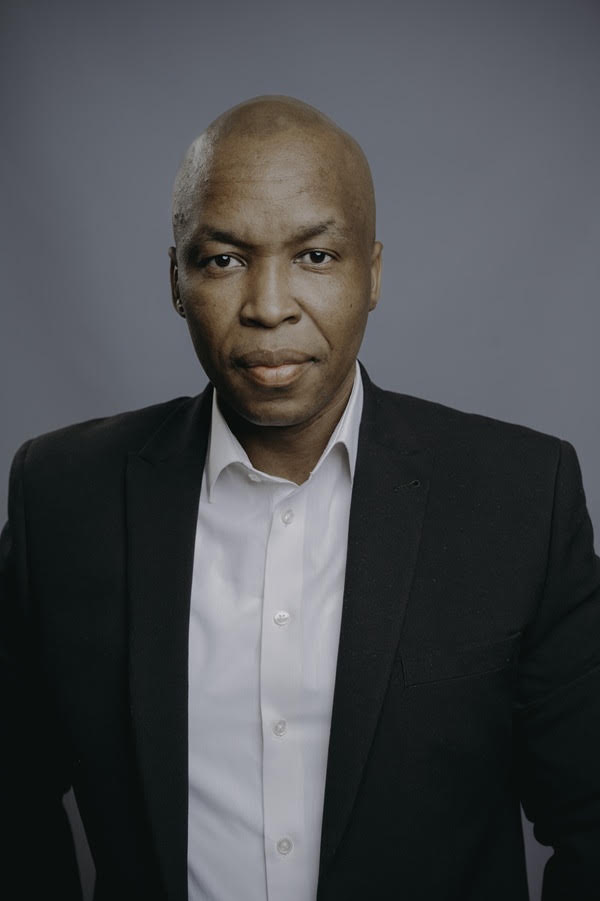
Picture: The Chief Director of NWU Business School, Prof Joseph Sekhampu/Supplied
By OBAKENG MAJE
21 August 2026 – The Chief Director of NWU Business School, Prof Joseph Sekhampu said South Africa has created a local government system in which some municipalities may have become too failed to fail. Sekhampu said voters can replace councillors and governing parties, but municipal debt, damaged infrastructure and weak revenue systems survive elections.
He further said when municipalities fail, their financial burdens do not disappear. Sekhampu added that they migrate to Eskom, National Treasury and other parts of the state.
“Attempts to punish dysfunctional municipalities often hurt the residents who depend most heavily on essential services. South Africa has spent years pulling municipalities back from the cliff, but the institutions rescuing them may eventually lose their footing too.
“South Africa’s weakest municipalities acquire a form of protection from the severity of their own failure. As financial distress deepens, its consequences spread beyond councillors and officials to residents, creditors and other parts of government, making intervention progressively more necessary,” he said.
Sekhampu said in ordinary markets, extreme weakness increases the probability that an institution will disappear, while in local government, it can increase the probability that its liabilities and responsibilities will migrate elsewhere. He said South Africa has created a local government system in which some municipalities may become too failed to fail.
“By December 2025, municipalities reported owing creditors about R161 billion, while Eskom separately reported municipal arrears of R110.5 billion. Meanwhile, a large proportion of municipalities had adopted unfunded budgets during the 2024/25 financial year.
“National Treasury’s debt-relief programme captures the contradiction. Its 71 participating municipalities owed Eskom R85 billion by December, yet only 15 had consistently met the programme’s conditions. The government is now implementing arrangements under which financially distressed municipalities can delegate electricity distribution and revenue collection to Eskom, shifting responsibilities that they can no longer adequately fulfil,” said Sekhampu.
He said Nelson Mandela Bay in the Eastern Cape illustrates how difficult financial consequences can become to locate. Sekhampu said its Municipal Public Accounts Committee has recommended writing off roughly R23 billion in historical irregular expenditure accumulated between 2009 and 2021. Sekhampu said this is not R23 billion in newly discovered theft or money that has suddenly disappeared.
“The institutional significance is that political leaders change, officials leave and councils turn over, while the municipality survives to carry unresolved decisions made by people who may no longer be there. Moqhaka in the Free State reveals the problem from the creditor’s perspective, with its debt to Eskom reportedly reaching about R2.45 billion while the municipality participates in the debt-relief programme and continues to struggle with an unfunded budget.
“Eskom cannot behave exactly like an ordinary creditor because aggressive enforcement could threaten the provision of electricity to communities, while continued accommodation transfers financial pressure to Eskom,” he said.
Sekhampu said municipal distress therefore changes the incentives of creditor and debtor alike, allowing local financial weakness to migrate through the machinery of the state. He said the National Treasury encountered the same dilemma directly in July when it temporarily withheld equitable-share transfers from municipalities following persistent breaches of financial management rules.
“The intervention was intended to impose fiscal discipline, but Parliament warned that withholding the funds could jeopardise basic services, particularly for indigent households. By the end of the month, the remaining allocations to some municipalities had been released following further engagement and compliance processes.
“This exposed the constraint at the heart of municipal enforcement: once the costs of punishment migrate from the institution being disciplined to residents who depend on essential services, the pressure to restore funding becomes increasingly difficult to resist,” he said.
Sekhampu said Makana in the Eastern Cape and Ditsobotla in North West show how municipal recovery can itself become a prolonged condition of government. He said Makana had a financial recovery plan in place by 2015, yet five years later, the Eastern Cape High Court directed the province to implement the plan and dissolve the council.
“In June 2026, the South African Human Rights Commission (SAHRC) was still finding constitutional violations arising from persistent water and sanitation failures. Ditsobotla has endured eight unsuccessful interventions, the dissolution and re-election of its council, and eventually the escalation of responsibility from the provincial to the national government under the rarely used section 139(7) of the Constitution.
“The details differ, but the institutional pattern is remarkably similar: recovery plans accumulate, councils and administrations change, and higher spheres of government intervene while the municipality carries its underlying weaknesses forward,” he said.
Sekhampu said this history matters as South Africa approaches the November local government elections. He said elections make political failure consequential by allowing voters to remove those responsible, but Makana and Ditsobotla expose the limitations of treating electoral turnover as institutional renewal.
“Councillors and governing parties can be replaced while debts, damaged infrastructure and weak revenue systems pass into the next term. Whoever takes office therefore inherits not only responsibility for governing the municipality but also the accumulated consequences of previous administrations.
“This resembles a soft budget constraint, although officials need not consciously expect rescue for the mechanism to operate. Enforcement eventually reaches a point at which its costs migrate beyond those responsible and towards residents who still require essential services, making some form of intervention entirely rational,” said Sekhampu.
He said the challenge is to preserve those services without equally protecting officials, contractors and others responsible for avoidable financial failure, because repeated accommodation can otherwise make future discipline harder to sustain. Sekhampu said the protection created by municipal indispensability has a limit that South Africa has barely contemplated.
“A municipality approaching the edge can be pulled back because Eskom carries its arrears, National Treasury restructures its obligations, another sphere of government intervenes or residents absorb the consequences of deteriorating services.
“The system appears resilient because the fall keeps being interrupted. However, resilience built on transferring failure is not the same as eliminating it. If enough municipalities arrive at the edge together, their accumulated failures will eventually test the capacity of the institutions standing behind them to absorb the fall,” he said.
 The Guardian