By OBAKENG MAJE
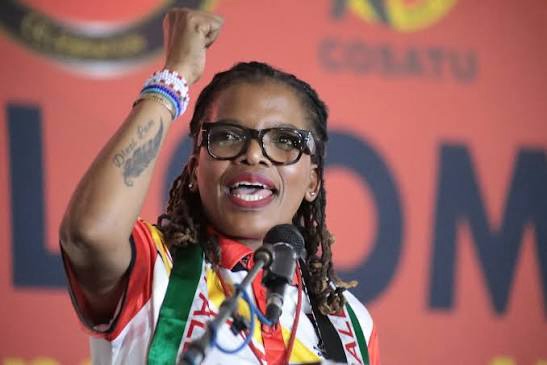
13 October 2026 – COSATU President Zingiswa Losi has called on the federation’s leadership and affiliates to put aside factional differences, unite behind the interests of workers and intensify the fight against unemployment, poverty, inequality and exploitation. Addressing the opening of the Congress of South African Trade Unions’ (COSATU) 15th National Congress on 12 October 2026, Losi said the federation faced a critical moment following recent divisions that resulted in an adjourned congress.
She urged delegates to use the gathering to rebuild unity and strengthen the labour movement rather than allow internal disputes to weaken the organisation.
“We have been down this road of division, and it does not end well. It weakens the Federation, it demoralises workers, it emboldens our class enemies. It is enough.
“The federation had to place workers’ interests above individual ambitions and factional differences. Continued division could undermine our ability to represent the working class,” said Losi.
She said let this adjourned Congress mark the moment when all of them step back from the precipice, unite and put aside their differences and place the unity of the federation and the interests of the working class ahead of our individual ambitions or factional imaginations. Losi said COSATU’s primary responsibility was to defend workers against unemployment, exploitation, poverty, inequality, racism, sexism, crime, corruption, homophobia and Gender Based Violence (GBV).
“The federation existed to serve workers, including domestic workers, public servants and employees in vulnerable sectors.
“We are here to serve the working class, from the domestic worker in Sandton forced to work for weeks at a time without seeing her children, to the police officer in Kimberley who risks his life to keep us safe. We are not here to serve ourselves,” she said.
Losi highlighted what she described as COSATU’s achievements in protecting labour rights, improving wages and securing social and economic reforms. She said the federation had played a significant role in defending South Africa’s progressive labour laws and preventing proposals that sought to weaken workers’ rights.
“I want to point out agreements we have reached with government following negotiations at the National Economic Development and Labour Council (Nedlac), including measures to double retrenchment payments, protect the National Minimum Wage from deductions and extend labour protections to workers in non-traditional employment arrangements.
“The national minimum wage had helped improve the earnings of millions of vulnerable workers since its introduction,” said Losi.
According to her, minimum wages for domestic workers, farm workers and employees in sectors such as hospitality, construction, cleaning, security and transport had increased substantially. She further highlighted the two-pot retirement system, which came into effect in 2024 after years of engagement and resistance, saying it had enabled millions of workers to access some of their retirement savings while retaining funds for long-term retirement provision.
“Today, more than R80 billion has been released into the pockets of over 4 million highly indebted workers whilst boosting long term savings and doubling the number of workers who will be able to retire in comfort.
“The federation would continue engaging government on tax reforms to reduce the financial pressure on working and middle-class households, added Losi.
She warned that South Africa could not continue to accept high unemployment and sluggish economic growth as normal. Losi called for a comprehensive economic stimulus package, increased public employment programmes and the revival of artisan training to create pathways into permanent employment for young people.
“We cannot continue to normalise the abnormal nor tolerate 43.8% unemployment and a stagnant economy,” she said.
She also urged government to abandon austerity measures and ensure that public institutions received adequate resources to deliver essential services.
Losi welcomed the recruitment of additional personnel in the public sector, including 10 000 police officers, 10 000 labour inspectors and 6 500 South African Revenue Service employees.
She said the country needed more teachers, police officers, nurses, paramedics, doctors and other public servants to meet the needs of communities.

