
Authorities intensify efforts to promote safe and lawful customary initiation practices


Picture: Some of initiation school owners/Supplied

By STAFF REPORTER

1 October 2026 – Authorities in the North West have intensified awareness efforts aimed at ensuring lawful, safe and responsible customary initiation practices ahead of the 2026 Summer Initiation Season. The National Department of Traditional Affairs, together with the North West Department of Cooperative Governance and Traditional Affairs, recently conducted an awareness campaign in Mahikeng to strengthen compliance with the Customary Initiation Act of 2021.

The North West MEC for Cooperative Governance, Human Settlement and Traditional Affairs (COGHSTA), Oageng Molapisi said the engagement brought together government departments, initiation practitioners, caregivers, parents and prospective initiates, with a focus on achieving zero deaths and zero illegal initiation schools. Molapisi said the 2026 Summer Initiation Season is scheduled to commence on 6 November 2026 for non-schooling initiates and 10 December 2026 for school-going initiates, with all pass-out activities expected to be completed by 8 January 2027.

He further said the province was committed to ensuring that customary initiation is conducted in accordance with the law while protecting the safety and wellbeing of initiates. Molapisi added that customary initiation remains an important part of their cultural heritage, but it must be practised within the law and with the safety, dignity and wellbeing of initiates as a priority.

“We are calling on traditional leaders, initiation practitioners, parents, communities and all relevant stakeholders to work together to prevent illegal initiation schools, negligence, abuse and other practices that place initiates at risk.

“Compliance with the Customary Initiation Act was essential in strengthening accountability and ensuring that initiation schools operated legally,” he said.

Molapisi said the awareness campaign forms part of broader preparations to ensure that the upcoming initiation season is conducted safely, lawfully and in accordance with customary practices and legislation.

The North West Provincial Initiation Coordination Committee (PICC) Deputy Chairperson, Andries Stemmer, highlighted the requirements of the Act, including the application for permits, registration of initiation schools, health and legal requirements, and reporting of non-compliance. Stemmer said registration of initiation schools was mandatory and had to be completed at least three months before the commencement of an initiation season.

“Mahikeng has been identified as one of the areas experiencing illegal initiation school operations, with concerns including the alleged kidnapping of children, fronting and gangsterism,” he said.

Speaking on behalf of the Mahikeng Initiation School Committee, Mamelani Tshabalala called for greater community involvement and parental responsibility, particularly in addressing challenges affecting initiates and young people.

Meanwhile, Secretary of the National House of Traditional and Khoi-San Leaders, Abram Sithole, called on traditional councils to establish Makgotla for young people to strengthen intergenerational dialogue and the transfer of indigenous knowledge. Sithole also urged communities to openly address challenges such as gender-based violence and femicide and substance abuse, which can contribute to harmful behaviour in society.
taungdailynews@gmail.com

Learners stationery found for sale at Mahikeng shop


By OBAKENG MAJE

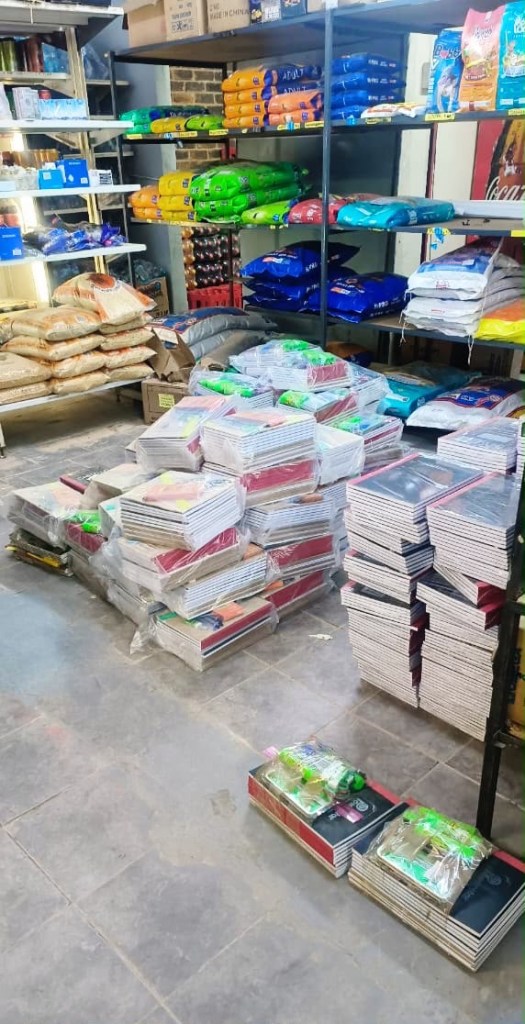
1 October 2026 – The North West Department of Education has raised concern after learner stationery intended for pupils in various grades was discovered being sold at a shop in Unit 9, Mahikeng. Members of the Community Police Forum (CPF), who were monitoring the area on Wednesday, discovered the stationery displayed on shelves and offered for sale to members of the public.

The North West MEC for Education, Dr Desbo Mohono said the police and officials from the North West Department of Education were called to the scene, where the department confirmed that the stationery belonged to government and had been procured for distribution to learners. Mohono condemned the sale of the learner support materials and called for those responsible to face the law.

“I wish to strongly condemn the selling of learner stationery. Government stationery is strictly not to be sold because the department has paid for it for the benefit of learners.

“The sale of the stationery meant that government was being forced to spend additional funds to replace materials that had already been procured,” she said.

Mohono further said the people who are found to be selling learner stationery should face the full might of the law. She added that the department is now paying twice for the same product and that is totally unacceptable.

“A learner somewhere is sitting without stationery because someone decided to sell it for a price. The police arrested the shop owner at the scene.

“The following learner materials were confiscated at Jackpot Supermarket in Unit 9. Thirty five packs of learner materials for Grades 10, 11 and 12, 39 packs for Grades 4, 5, 6 and 7,” said Mohono.

She said 39 packs for Grades 1, 2 and 3 and 46 counter books. The department welcomed the intervention by law enforcement and the CPF, reiterating that learner support materials procured by government are intended solely for the benefit of learners. Mohono said the department would continue working with law enforcement agencies and community structures to safeguard government resources and ensure that learner support materials reach their intended beneficiaries.

taungdailynews@gmail.com

A visit to the Taung Skull Fossil Site will introduce you to diverse wonders and attractions


By OBAKENG MAJE

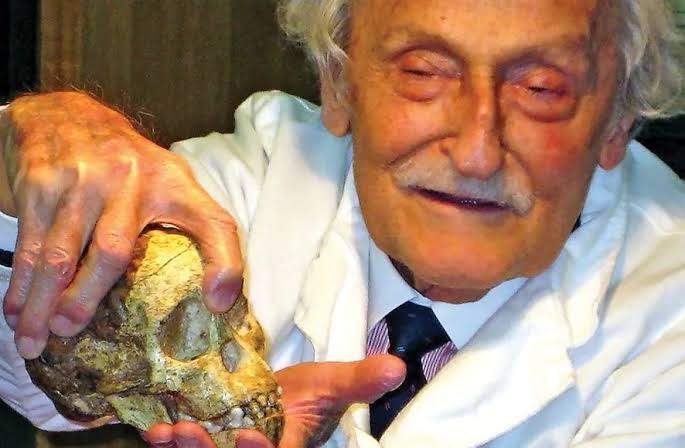
1 October 2026 – Taung Skull Fossil Site is best known for discovery of an endocranial skull of a juvenile ape-man in 1924 during the course of commercial mining. It was later classified by Professor Raymond Dart as Australopithecus Africanus.

The recognition of this early hominid is the first ever that confirmed that human ancestry originated in Africa. Taung Skull Fossil includes much more than just the site where the skull was found.

The site displays a rich history of early 20th century limestone mining with various buildings constructed in a variety of methods with aestheticism at different time frames. Archaeological and paleontological sites that contain rich fossil deposits that predate the mining area.

It has a fascinating natural and man-made landscape. A visit to the Taung Skull Fossil Site will introduce you to diverse wonders and attractions.

Due to the activities such as blasting and digging that took place during the mining era, a unique eye-catching landscape was formed. This has a fascinating geological and geomorphological appearance, which exposed different and interesting types of rocks and breccia that are visible over a distance of 10km (e.g: Leopard Rock).

The majestic beautiful waterfall (visible during rainy season) at the Blue Pools flows through the Thabasikwa river down the cliff of the Ghaap Escarpment. They slowly flow through the blue pools several meters below. The mixture of sounds of nature draws your attention to the uniqueness of this part of the world heritage while having a relaxed moment at the picnic site, which offers seating benches and tables (made out of local stone), as well as braai areas and other social infrastructures.    

The memorial site represents a place where the skull was found during the mining operations in 1924 – indicated by the Dart pinnacle on the left and Hrdlicka pinnacle on the right. The area offers breath-taking views of the mine dumps, Harts valley, a clear view of the Buxton village and awesome landscape.

Taung Skull Fossil Site has 17 recognisable and preserved fossil sites (archaeological and paleontological). Some of these archaeological sites yielded numerous fauna (animal) and flora (plants) remnants as well as Middle Stone Age artefacts dating back as far as 2.3 million years ago.

The relics of limestone mining are clearly represented not only by the mine dumps, but also by the historical architectural styles on various buildings and structures present on site. Buildings show different designs, styles and methods used during different time frames throughout the 1900’s.

The use of local material, in the fusion of old and modern is prevalent on both old and new buildings as applied during the restoration process.

The World Heritage Site is located along the flank of the Ghaap Escarpment and forms an elevated backdrop and provides extraordinary viewpoints over the valley of the Harts and the site. It is habitat to a variety of animals, birds, rocks, vegetation and plant commodities.

A local travel agent and a storyteller, Ontshebile Joseph Shambok said: “I would like to encourage people to visit Taung Skull Fossil and know more about our heritage. The Taung Skull Fossil is one of the oldest heritage sites, where the origins of humankind commenced.”  

The Greater Taung Local Municipality Chairperson of Finance, Mika Moeti shared the same sentiments. Moeti said Taung is rich in history and Taung Skull World Heritage Site can be turned into an economic driver.

“It is important to balance public or private investment in infrastructure with community-led commercial activities that generate sustainable tourism revenue. The Taung Skull World Heritage Site should benefit the locals.

“The site should boost the economy of the area and create job opportunities for locals, especially the youths. We need to preserve our heritage sites and ensure that they offer a range of benefits for tourism,” he said.

Moeti further said upgraded infrastructure and accessible roads are contributing factors to lure tourists to the area. He added that the Taung Skull should be returned to the area from Witwatersrand University as that will boost the economy.

taungdailynews@gmail.com