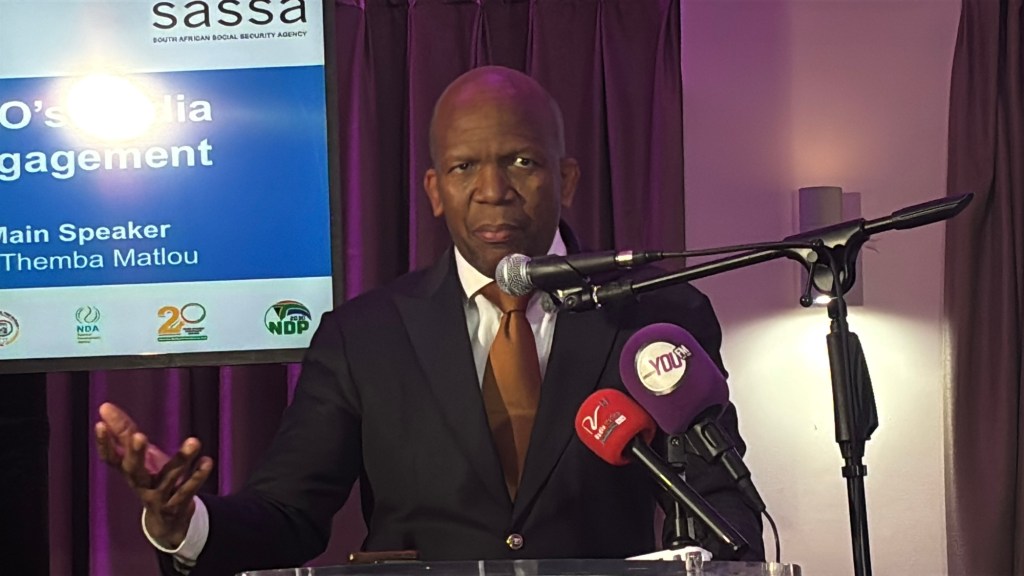
SASSA will increasingly rely on technology to improve service delivery


By OBAKENG MAJE

7 August 2026 – South African Social Security Agency (SASSA) Chief Executive Officer (CEO), Themba Matlou said every month, millions of women receive social grants that enable them to provide food, education, healthcare and dignity for their families. Matlou, who held CEO Media Engagement at Marang Hotel in Rustenburg on Thursday, said women remain the largest recipients of social grants, particularly Child Support Grants and Older Persons Grants, making them central to South Africa’s social protection system.

He further said beyond social assistance, SASSA continues to support government programmes aimed at empowering women through financial inclusion, improved access to services, digital transformation and partnerships with other institutions that promote economic participation and self-reliance. Matlou added that women’s empowerment remains at the heart of building resilient families and stronger communities.

“This year marks a historic milestone. SASSA celebrates 20 years since its establishment in 2006 as a Schedule 3A Public Entity for the National Department of Social Development. Twenty years ago, the government made a bold decision to establish a single national agency responsible for administering social assistance.

“That decision transformed South Africa’s fragmented grant administration into one of the largest and most comprehensive social protection systems in the developing world. During its first years, the focused on integrating provincial grant systems into one national system establishing nine regional offices, transferring around 6 000 grant administration staff from provincial governments,” he said.  

Matlou said they have improved grant payment systems and service delivery mechanisms. He said today, SASSA administers social grants to approximately 19 million permanent grant beneficiaries every month.

“Behind every grant payment is a child who is able to attend school, an elderly person who can buy medication or a person living with disability who can live with greater dignity. These grants are not simply financial transfers. They represent government’s constitutional commitment to protect the most vulnerable members of society.

“Over the past two decades, SASSA has undergone significant reforms. We have strengthened governance. We have improved payment systems. We have expanded digital services. We have enhanced financial controls. We have invested in stronger verification processes,” said Matlou.

He said SASSA has modernised payment systems and expanded access channels to provide beneficiaries with greater convenience, security and choice. Matlou said key interventions include migration from cash-based payments to electronic payment systems, increased use of bank accounts and digital payment channels.

“This includes electronic queue management systems, mobile and digital service channels and modernisation of call centres. We continue to improve accessibility for rural communities through outreach programmes and partnerships with various stakeholders.

“Importantly, we are building an organisation that is more responsive, transparent and accountable to the people we serve. Our vision for the future is clear. We want a modern SASSA that offers services that are accessible, secure and citizen-centred,” he said.

Matlou said they want to ensure there are biometrics and eKYC in place to strengthen identity authentication, fraud prevention and real-time verification. He said they have also implemented mobile, online, chatbot and call-centre modernisation to extend access beyond traditional office boundaries.

“Automated means testing, external data integration and legacy-system migration support and end-to-end digital processing. The future SASSA will increasingly rely on technology to improve service delivery, while ensuring that no beneficiary is left behind.

“Beneficiaries should spend less time standing in queues and more time living productive lives. Our modernisation programme focuses on expanding digital service channels, improving online application processes, strengthening electronic verification systems and integrating information systems with other government institutions,” said Matlou.

taungdailynews@gmail.com

The public service and the people need to work together


By REGINALD KANYANE

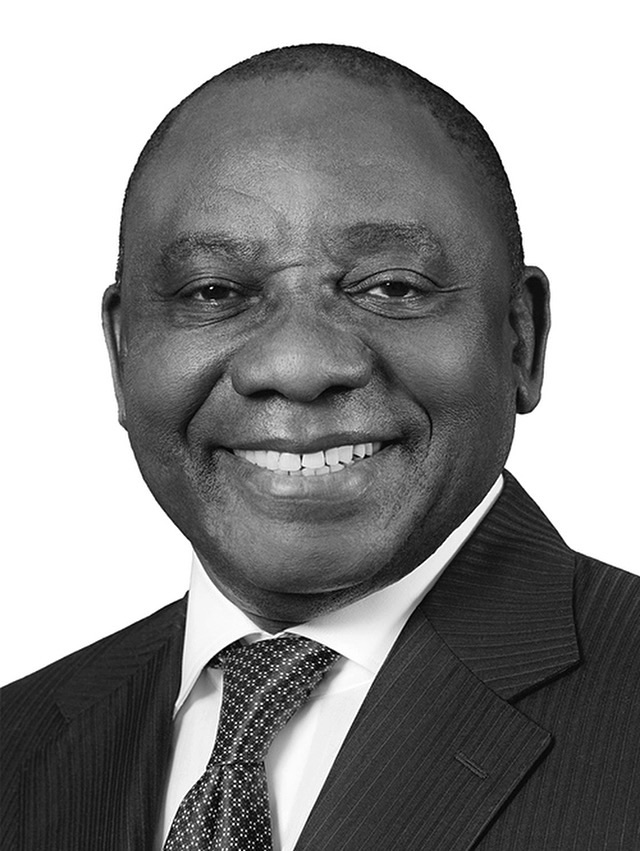
15 September 2025- The Republic of South Africa (RSA) president, Cyril Ramaphosa said once a year in September, South Africa marks Public Service Month, a time to focus on the essential contribution that the country’s 1.7 million public servants make to meeting the needs of the people. Ramaphosa said it is through public servants that the government provides healthcare, education, policing, social services and countless other essential functions that touch every South African’s life.

He further said when their public service operates at its best, it is a powerful instrument for social and economic development. Ramaphosa added that when it falters, it is often their most vulnerable citizens who bear the brunt.

“There are many dedicated public servants who work tirelessly in service of our nation. We thank them for the work they do to improve the lives of South Africans. But our public service faces significant challenges. These include skills gaps, outdated systems and processes, inconsistent service delivery and corruption.

“In many parts of the state, the values of Batho Pele – putting people first – have been eroded. That is why we are strengthening the professional foundations of our public service. Through the reforms underway we are working to attract the right skills, implement rigorous performance management and create career pathways that reward merit and excellence,” he said.

Ramaphosa said through the National School of Government we are investing in training and development. He said as they work to build a more professional, accountable and capable public service, they need to bring the public service closer to the people they serve.

“We must challenge the idea that public servants are providers and citizens are mere beneficiaries of goods and services. The National Dialogue, which was launched in August, provides an opportunity to change the relationship between public servants and the public.

“Over the next few months, South Africans will be meeting as communities across the country. They will be discussing the issues that most concern them and will together be forging a vision to take the country forward. These conversations will culminate in a National Convention next year, which will finalise a social compact that outlines clear actions and responsibilities for all sectors of society,” said Ramaphosa.

He said the thousands of public dialogues taking place across the country will also provide an opportunity for communities to address the immediate challenges that they face where they live. Ramaphosa said these challenges may include anything from electricity cuts to overcrowded schools, a lack of water provision to poorly maintained roads, or an increase in violent crime or drug use.

“Through the National Dialogue process, each community is encouraged to work with all relevant stakeholders – ward councillors, municipal officials, civic bodies, community organisations and provincial and national departments – on a common plan to address these challenges.

“By working together in an integrated way, drawing together resources from within and outside the state, these stakeholders can find ways to solve local problems. Public servants have a vital role to play in working towards solutions alongside and in cooperation with communities,” he said.

Ramaphosa said this approach is closely aligned with the District Development Model (DDM), which is about bringing government closer to the people and ensuring that local needs inform service delivery priorities. He said it is about building a public service that listens to citizens, adapts to their needs and continuously improves its services.

“Such a public service requires the active participation of citizens as partners in development, growth and transformation. I call on every South African to hold the government accountable, to engage constructively with public institutions and to recognise the vital role that a professional public service plays in building the society we all want.

“Together, we can build a public service that serves with excellence and integrity and works with South Africans to realise the promise of a better life for all,” said Ramaphosa.

taungdailynews@gmail.com

G20 First EWG meeting press for additional 5% reduction in the NEET rate by 2030


By REGINALD KANYANE  

21 February 2025- The G20 First Employment Working Group (EWG) came to an end on Friday, with a commitment by governments for a further five-year target called the Nelson Mandela Bay Target on youth unemployment, aiming for a 5% reduction in the not in employment, education, or training (NEET) rate by 2030.

South Africa’s Employment and Labour Attaché based in Geneva, Siyabonga Hadebe, told delegates at the G20 EWG that the Nelson Mandela Bay Target was aligned with the conclusion of the Sustainable Development Goals (SDGs) targets in 2030. Hadebe said the G20 Summit in Antalya Türkiye in 2015, focused on achieving a number of targets.

He further said findings of the International Labour Organization (ILO) and Organization for Economic Cooperation and Development (OECD) report, showed on its progress in 2022, that the goal towards achieving the Antalya target, to reduce the share of young people risked being permanently left behind by 15% by 2025.

Hadebe added that since the adoption of the G20 Antalya Goal in 2015, the past decade has been a period of unprecedented transformation in the world of work.

“The rise of remote and hybrid work models, breakthroughs in Artificial Intelligence (AI) and automation, and the rapid growth of the gig economy have fundamentally reshaped labour markets.

“These shifts have redefined the experience of young workers, presenting both new opportunities and complex challenges. The Nelson Mandela Bay Target is not merely a continuation of past efforts but a transformative step forward,” he said.

Hadebe said it builds on the progress and lessons learned from the Antalya Goal, while addressing the evolving realities of the global labour market. He said the new commitment calls on G20 members to reduce the proportion of youth (ages 15–29) not in employment, education, or training (NEET) by a further 5% by 2030.

“Address gender disparities and expand access to quality jobs for young people, focusing on empowering young women. The Nelson Mandela Bay Target on Youth Employment is a call to action to scale up investments in youth employment by operationalising comprehensive youth employment strategies.

“These strategies must prioritise the creation of more and better jobs for young people to ensure that they are not only employed but also engaged in work that offers dignity, security and opportunities for growth,” he said.

According to Hadebe the presidency is flexible and amenable to adjustments, counter-proposal and enhancements, aiming at introducing our joint and genuinely consulted Nelson Mandela Bay Target and its elements at the Meeting of Ministers in August and the Leaders’ Summit later in the year.

Meanwhile, the Department of Employment and Labour Acting Director General, Viwe Mlenzana, welcomed the constructive engagement by G20 member States and invited countries during the meeting. Mlenzana said youth unemployment in some G20 countries remains high at rates above 10% and inputs provided by delegates provide G20 with crucial tools for enhancing employment policies.

“The Nelson Mandela Bay Target builds on the Antalya goals and sets a clear goal on reducing NEETs, enhancing youth transitions through decent work and ensuring no young person is left behind.

“The strong support expressed by member States and invited countries today reaffirms our shared reality to turn this vision, inclusive growth, targeted skills development, and robust social protection systems,” he said.

taungdailynews@gmail.com