By OBAKENG MAJE
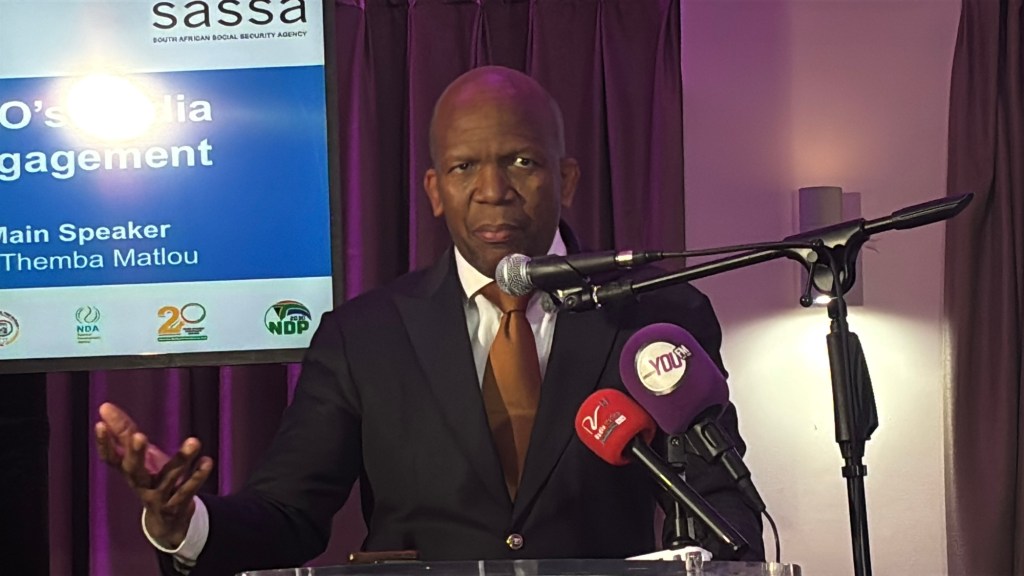
7 August 2026 – South African Social Security Agency (SASSA) Chief Executive Officer (CEO), Themba Matlou said every month, millions of women receive social grants that enable them to provide food, education, healthcare and dignity for their families. Matlou, who held CEO Media Engagement at Marang Hotel in Rustenburg on Thursday, said women remain the largest recipients of social grants, particularly Child Support Grants and Older Persons Grants, making them central to South Africa’s social protection system.
He further said beyond social assistance, SASSA continues to support government programmes aimed at empowering women through financial inclusion, improved access to services, digital transformation and partnerships with other institutions that promote economic participation and self-reliance. Matlou added that women’s empowerment remains at the heart of building resilient families and stronger communities.
“This year marks a historic milestone. SASSA celebrates 20 years since its establishment in 2006 as a Schedule 3A Public Entity for the National Department of Social Development. Twenty years ago, the government made a bold decision to establish a single national agency responsible for administering social assistance.
“That decision transformed South Africa’s fragmented grant administration into one of the largest and most comprehensive social protection systems in the developing world. During its first years, the focused on integrating provincial grant systems into one national system establishing nine regional offices, transferring around 6 000 grant administration staff from provincial governments,” he said.
Matlou said they have improved grant payment systems and service delivery mechanisms. He said today, SASSA administers social grants to approximately 19 million permanent grant beneficiaries every month.
“Behind every grant payment is a child who is able to attend school, an elderly person who can buy medication or a person living with disability who can live with greater dignity. These grants are not simply financial transfers. They represent government’s constitutional commitment to protect the most vulnerable members of society.
“Over the past two decades, SASSA has undergone significant reforms. We have strengthened governance. We have improved payment systems. We have expanded digital services. We have enhanced financial controls. We have invested in stronger verification processes,” said Matlou.
He said SASSA has modernised payment systems and expanded access channels to provide beneficiaries with greater convenience, security and choice. Matlou said key interventions include migration from cash-based payments to electronic payment systems, increased use of bank accounts and digital payment channels.
“This includes electronic queue management systems, mobile and digital service channels and modernisation of call centres. We continue to improve accessibility for rural communities through outreach programmes and partnerships with various stakeholders.
“Importantly, we are building an organisation that is more responsive, transparent and accountable to the people we serve. Our vision for the future is clear. We want a modern SASSA that offers services that are accessible, secure and citizen-centred,” he said.
Matlou said they want to ensure there are biometrics and eKYC in place to strengthen identity authentication, fraud prevention and real-time verification. He said they have also implemented mobile, online, chatbot and call-centre modernisation to extend access beyond traditional office boundaries.
“Automated means testing, external data integration and legacy-system migration support and end-to-end digital processing. The future SASSA will increasingly rely on technology to improve service delivery, while ensuring that no beneficiary is left behind.
“Beneficiaries should spend less time standing in queues and more time living productive lives. Our modernisation programme focuses on expanding digital service channels, improving online application processes, strengthening electronic verification systems and integrating information systems with other government institutions,” said Matlou.

