By OBAKENG MAJE
31 October 2026 – The North West University (NWU) Chancellor and Professor of Practice at the NWU Business School, Dr Anna Mokgokong, has called for stronger partnerships between communities, government, academia and the private sector to transform rural economies through agriculture, innovation and enterprise.
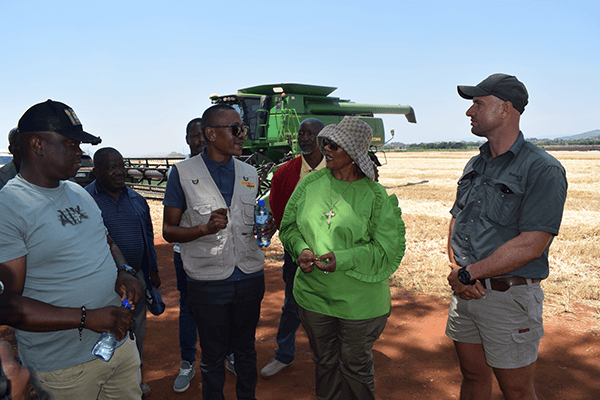
Speaking at an agricultural gathering outside Brits on 26 October 2026, Mokgokong highlighted the need to turn rural communities’ land, knowledge and resources into sustainable economic opportunities. She said rural communities should no longer be viewed merely as beneficiaries of development but as active participants in commercially sustainable agricultural value chains.
“The gathering brought together traditional leaders, representatives of the North West provincial government and its Department of Agriculture and Rural Development, researchers, commercial farmers and industry partners.
“Rural transformation required coordinated efforts to connect community resources with scientific research, investment, infrastructure, markets and accountable institutions,” she said.
Mokgokong described agriculture as more than food production, saying it could serve as a catalyst for industrialisation, job creation, entrepreneurship and wealth generation. She stressed the importance of supporting small-scale and emerging commercial farmers to move beyond supplying raw commodities and participate meaningfully across the agricultural value chain.
“This would require improved access to quality seeds, irrigation systems, machinery, financing, storage facilities, technical support and reliable markets.
“The role of mentorship programmes involving established commercial farmers, saying these partnerships could equip emerging producers with practical skills in production planning, soil management, machinery use, record-keeping and meeting buyer requirements,” said Mokgokong.
However, she further said, the ultimate objective should be to develop independent farming enterprises capable of meeting commercial standards rather than creating long-term dependency. Mokgokong added that reliable agreements between farmers and buyers, including malt producers, brewers, millers and food processors, were also identified as important in reducing uncertainty.
“Such agreements should clearly outline product specifications, production volumes, pricing arrangements, delivery schedules and contractual responsibilities before planting begins.
“The gathering also highlighted the strategic role the NWU could play in translating research and academic knowledge into practical agricultural solutions,” she said.
Mokgokong emphasised that research should extend beyond laboratories and field trials to demonstration farms and commercial production. She said theough collaboration with farmers and industry, the university could help improve crop yields, strengthen climate resilience, promote water efficiency, manage pests, improve crop nutrition and reduce post-harvest losses.
“The initiative also presents opportunities for the university to support research into crops such as maize, wheat and barley while strengthening skills in agricultural science, farm management, technology and entrepreneurship.
“By involving students and young people, the NWU could help demonstrate that agriculture is a modern, technology-driven industry encompassing mechanisation, logistics, processing, scientific innovation and business management,” said Mokgokong.
She said the university could further serve as a platform for collaboration between traditional councils, rural communities, government, financiers, established farmers and industry partners. Mokgokong said partnerships would need to respect land rights, customary processes and community interests while establishing clear arrangements for participation, accountability and the sharing of benefits.
“Another key focus was the need to retain more economic value within rural communities by expanding activities beyond primary agricultural production.
“We call for greater investment in agro-processing, including milling, malting, animal-feed production, food processing, packaging, warehousing and logistics,” said Mokgokong.
She said establishing these activities closer to production areas could create employment, stimulate local suppliers and connect rural enterprises to national, regional and international markets where commercially viable. Mokgokong also stressed the importance of balancing export ambitions with domestic food-security needs and demand from local industries.
“The gathering provided a platform for discussions on practical areas of cooperation, including access to suitable land, farmer participation, shared storage facilities, irrigation, production financing, mentorship, research and market access.
“The emphasis was on moving beyond broad development commitments towards measurable results, such as hectares cultivated, farmers supported, jobs created, agricultural volumes produced locally, processing capacity established and the long-term sustainability of rural enterprises,” she said
Mokgokong said at NWU, the initiative presents an opportunity to demonstrate how teaching, research and community engagement can contribute to South Africa’s development priorities. Her vision centres on connecting rural communities’ existing assets — including land, people, knowledge and institutions — with investment, technology and market demand.
“Through sustained partnerships, these resources could help expand agricultural production, stimulate rural industrialisation and create broader economic opportunities for communities across the North West province,” said Mokgokong.
taungdailynews@gmail.com

