BMA processes 663 Ghanaian nationals for repatriation


9 June 2026 – BMA processes 663 Ghanaian nationals for repatriationCommissioner of the Border Management Authority (BMA), Dr Michael Masiapato, has confirmed that the BMA has successfully processed 663 Ghanaian nationals for repatriation from South Africa to Ghana through OR Tambo International Airport over the weekend. 

The repatriation process was coordinated through the Port Management Committee (PMC), comprising various government stakeholders responsible for facilitating lawful and orderly movement across the port of entry.

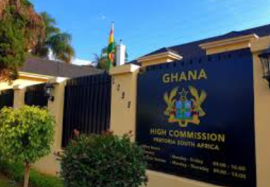
On Saturday, a group of 332 Ghanaian nationals was brought to OR Tambo International Airport by the Ghanaian High Commission in Pretoria for repatriation. Following an extensive check-in process, the travelers proceeded to BMA Immigration for verification and clearance.

“Of the travelers processed, 170 were travelling on Ghanaian ordinary passports, while 162 were using Emergency Travel Certificates issued by the Ghanaian High Commission in Pretoria. Emergency Travel Certificates are single-use travel documents issued to facilitate the return of citizens to their country of origin,” the BMA said in a statement.

During immigration processing, 321 travelers were found to have overstayed their allocated period of stay in South Africa by 30 days or longer. Consequently, they were declared undesirable in terms of Section 30 of the Immigration Act, read together with Regulation 27(3)(c) of the Immigration Regulations.

At the conclusion of the immigration process, 323 passengers were found eligible to depart and subsequently boarded a chartered flight arranged by the Government of Ghana through its High Commission in Pretoria.

Nine passengers were, however, offloaded from the flight. These included two couples and their five children. 

“The wife of one couple and the husband of the other were declared medically unfit to travel by airline personnel. Airport paramedics were called to assist and subsequently transferred the two travelers to the airport clinic for further medical attention.

“On Sunday, a further group of 331 Ghanaian nationals was brought to OR Tambo International Airport by the Ghanaian High Commission for repatriation. Following check-in procedures, the travelers proceeded to BMA Immigration for processing.

“Among those processed, 117 travelers were using Ghanaian ordinary passports, while 90 were travelling on Emergency Travel Certificates issued by the Ghanaian High Commission in Pretoria. In addition, 37 minor children born in South Africa were also processed using Emergency Travel Certificates,” the BMA said.

BMA Immigration officials further processed 25 asylum seekers, who voluntarily submitted withdrawal letters to cancel their asylum applications. 

During the verification process, 170 travelers were found to have overstayed their allocated period of stay in South Africa by 30 days or longer and were consequently declared undesirable in terms of Section 30 of the Immigration Act, read together with Regulation 27(3)(c) of the Immigration Regulations.

At the end of the process, 341 passengers, including 10 deportees brought by the Department of Home Affairs from Lindela Holding Facility, were cleared for departure. 

One traveler did not check in, but the remaining 340 boarded a chartered flight arranged by the Government of Ghana through its High Commission in Pretoria. The flight departed at 09h30 SA local time.

The repatriation of these Ghanaian nationals demonstrates effective cooperation between the Government of Ghana, through its High Commission in Pretoria, and South African authorities responsible for migration management and border security.

Masiapato commended the Port Management Committee and all officials involved in facilitating the operation. 

He further encouraged foreign missions to continue working closely with relevant government departments and entities to ensure the smooth and lawful facilitation of repatriation movements.

“The successful processing of these repatriation movements reflects the importance of coordinated efforts between foreign missions and South African authorities. Such cooperation contributes to effective migration management, while ensuring compliance with the country’s immigration laws,” said Masiapato. – SAnews.gov.za

taungdailynews@gmail.com

Monna o thuntsitse lekgarebe la gagwe, lesea pele ga a ipolaya kwa Tlolas


Ka OBAKENG MAJE

8 Seetebosigo 2026 – Sepodisi mono Taung se batlisisa kgetsi ya morago ga loso le dikgetsi di le pedi tsa maiteko a polao. Se, se tla morago ga gore monna wa dingwaga di le 36, eleng Tebogo Seboko, go begwe fa a thuntsitse lesea la gagwe la dikgwedi di le thataro ga mmogo le lekgarebe la gagwe la dingwaga di le (18).

Go begwa fa tiragalo e, e diragetse ka letsatsi la Tshipi kwa motseng wa Khibitswane Extension kgotsa Tlolas jaaka o itsege mono Taung.  Go begwa fa Seboko a ile a ithuntsa morago ga moo.

Sebueledi sa sepodisi mono sedikeng sa Dr Ruth Segomotsi Mompati, Warrant Officer Tryphosa van Rooyen, are ba thuso ya potlako ba ile ba biletswa kwa lefelong la tiragalo. Van Rooyen are moswi le batswasetlhabelo ba ile ba tabogisetswa kwa bookelo jwa selegae go bona thuso ya potlako.

“Fela, moswi o ile a tlhokafala mo mosong wa Moshupulogo kwa bookelong, fa lekgarebe la dingwaga di le 18 ga mmogo le lesea la gagwe ba kokotlegela sentle kwa bookelong. Go begwa fa sethunya se moswi a se dirisitseng se le mo molao.

“Sepodisi se butse dikgetsi di le pedi tsa maiteko a polao ga mmogo le kgetsi ya morago ga loso. Dipatlisiso di tsweletse,” van Rooyen wa bega.

taungdailynews@gmail.com

Monna o fitlhetswe a tlhokafetse kwa Matsheng


Setshwantsho: Monna o fitlhetswe a tlhokafetse

Ka OBAKENG MAJE

8 Seetebosigo 2026- Sepodisi sa Taung se butse kgetsi ya morago ga loso. Se, se tla morago ga gore monna wa dingwaga di le 20 a fitlhelwe a tlhokafetse kwa mmileng kwa motseng wa Matsheng, gaufi le Taung ka letsatsi la Tshipi mo mosong.

Sebueledi sa sepodisi mo sedikeng sa Dr Ruth Segomotsi Mompati, Warrant Officer Tryphosa van Rooyen are: “Sepodisi se ile sa itelekela kwa lefelong la tiragalo. Ba ile ba fitlhela setopo sa monna wa dingwaga di le 20 kwa lefelong leo.

“Monna o, o ile a netefadiwa fa a tlhokafetse, mme kgetsi ya morago ga loso e ile ya bulwa. Go fitlha ga jaana, ga go itsiwe se se ka tswang se tlhodile loso la gagwe, fela dipatlisiso di tsweletse.”

taungdailynews@gmail.com

‘Together we can manage migration and stay true to our shared humanity’


Picture: RSA president, Cyril Ramaphosa

By BAKANG MOKOTO

8 June 2026- The Republic of South Africa (RSA) president, Cyril Ramaphosa said in recent months, many South Africans have raised concerns about illegal immigration, asking whether our borders are secure and our laws are being enforced. Ramaphosa said it is in this context that he addressed the nation last night on the action’s government is taking to manage migration in the country and specifically to address the challenge of illegal immigration.

“We are responding to real concerns communities have about the effects that unchecked illegal immigration has on jobs and economic opportunities. We know that some companies employ – and exploit – undocumented foreign nationals in violation of the law. There is also a perception that spaza shops owned by foreign nationals are squeezing out local traders in communities.

“People are also concerned that illegal immigration puts increased pressure on public services like clinics, hospitals and schools. In reality, when one looks at the statistics, foreign nationals account for a very small proportion of users of these public services,” he said.

Ramaphosa further said nevertheless, there is a perception among some people that the public services are being overwhelmed. He added that some people associate illegal immigration with crime.

“While there are organised syndicates that exploit weaknesses in our immigration system to commit crimes like drug trafficking, illegal mining and extortion, we know that the overwhelming majority of foreign nationals in South Africa have no involvement in crime.

“In conditions of unemployment and poverty, crime, violence and service delivery challenges, people often direct their frustrations at those perceived to be competitors for jobs and resources,” said Ramaphosa.

He said as they work to address the causes of the economic challenges – by driving faster and inclusive economic growth, infrastructure development, industrial expansion and the creation of new jobs – they are taking decisive action to tackle illegal immigration. Ramaphosa further said through the Comprehensive Approach for Migration Management that was adopted last week by Cabinet, they are cracking down on violations of the immigration, labour and other laws.

“We are deploying more resources and technology to secure our borders. Government is also stamping out corruption and improving the efficiency of our immigration system. Another part of our comprehensive approach is to close the gaps in our citizenship and immigration laws.

“We are introducing legislation which allows quotas for foreign nationals in different sectors and ensuring that informal businesses are properly registered. Lastly, we are seeking to work with countries across our region and continent to address the conflict, instability and economic hardship that compel people to leave their homes,” he said.

Ramaphosa said the task of managing migration belongs to all of them. He said that does not mean that communities should take the law into their own hands – only authorised officials of the state may enforce the immigration laws – but there is a role for all South Africans in upholding the laws and building social cohesion.

“As we undertake all these actions, we are guided by our constitution, our laws and our international obligations. As a society, we must hold firmly to the rule of law. We must work to reduce tensions in our communities.

“We must stand together against violence, intimidation and intolerance. Importantly, we must not allow anyone to exploit the genuine concerns of South Africans to incite violence, spread misinformation or destabilise our country,” said Ramaphosa.

He said they call on traditional and religious leaders, civil society, business, labour, political parties and every South African to work with the government to support the actions they have announced to tackle illegal immigration. Ramaphosa said they must actively work against efforts to divide them.

“We must confront racism, sexism, xenophobia and Afrophobia. Our goal must be to build united and cohesive communities where all laws are respected and upheld. We are a nation built by migration and we are more diverse, dynamic and stronger for it.

“By strengthening our laws and enforcing them fairly, we can tackle illegal immigration while remaining true to our Constitution and to our shared humanity,” he concluded.

taungdailynews@gmail.com

Committee to be briefed over ex-mine workers intervention project


Picture: A mine worker underground/Generic 

By KEDIBONE MOLAETSI

8 June 2026 – The Portfolio Committee on Mineral and Petroleum Resources will on Tuesday, be briefed by the departments of Mineral and Petroleum Resources, Employment and Labour and Health on progress made in the implementation of the Ex-Mine Workers Intervention Project. The project is a government initiative aimed at improving access to healthcare services, compensation benefits and social support for former mineworkers and their dependents, particularly those affected by occupational diseases contracted during their employment in the mining sector.

The National Parliament spokesperson, Moloto Mothapo said the briefing is expected to provide the committee with an update on efforts to identify and trace ex-mineworkers, facilitate medical examinations, process compensation claims, and address outstanding challenges affecting the payment of benefits. Mothapo said the committee will also assess the extent of interdepartmental coordination in ensuring that former mineworkers receive the support and services to which they are entitled.

“The meeting will take place on the Virtual platform (Link will be shared on Parliament WhatsApp media group) on Tuesday from 9:30am until 1pm,” he said.

taungdailynews@gmail.com

46 Taung Agricultural College graduates encouraged to be innovators, entrepreneurs and job creators  


Picture: Taung Agricultural College graduation ceremony/Supplied

By OBAKENG MAJE

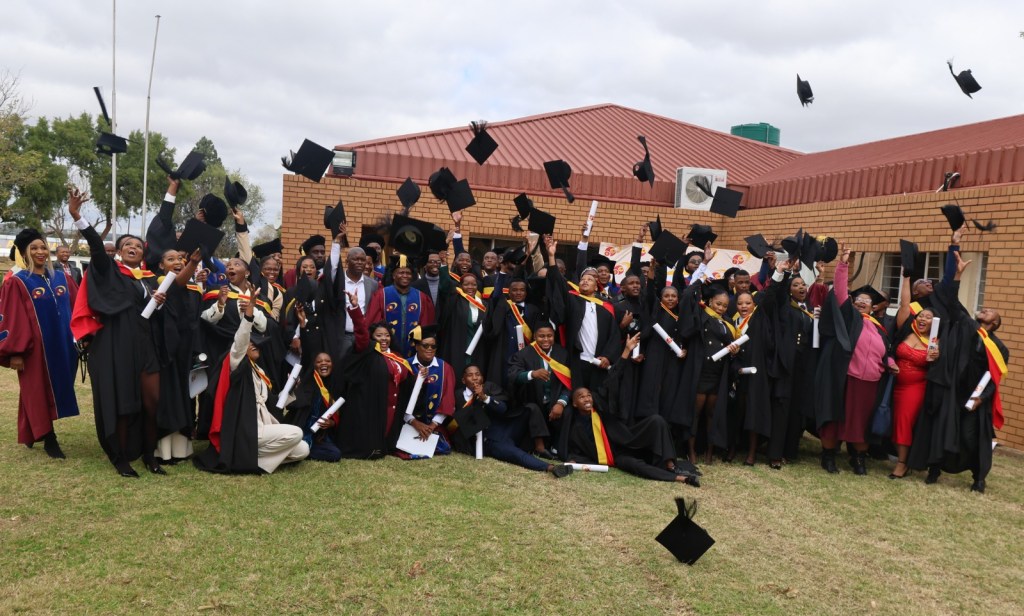
8 June 2026 – The North West Department of Agriculture and Rural Development’s Taung Agricultural College (TAC), the only institution in the country offering a NQF Level 6 (Diploma in Agriculture Irrigation), celebrated a significant milestone on 5 June 2026, by conferring diplomas on 46 graduates from the 2025 academic cohort during its Winter Graduation Ceremony. Held during Youth Month and in commemoration of the 50th anniversary of the Soweto Uprising under the theme: “RESET@50: The Future Calls”, the ceremony marked the successful completion of an intensive academic and practical training programme aimed at producing highly skilled agricultural professionals capable of contributing meaningfully to the growth and sustainability of the sector.

Addressing the graduates, the North West MEC for Agriculture and Rural Development, Madoda Sambatha, challenged them to become innovators, entrepreneurs and job creators, highlighting the vast opportunities available within farming, agro-processing and agricultural services. Sambatha encouraged them not to limit themselves, but to be bold and fearless.

“Explore opportunities not only within our country, but beyond our borders. Exposure to new environments, technologies and markets will enrich your skills and broaden your horizons. Go out there and participate meaningfully in the development of our agricultural sector and contribute towards building a province that works for all.

“We further encouraged them to develop bankable business plans that can attract investment and unlock access to funding opportunities. We also urged them to take advantage of government support programmes and strategic partnerships aimed at empowering young people in agriculture,” he said.

Sambatha further emphasised that the agricultural sector presents immense opportunities for innovation and entrepreneurship and called on graduates to use their knowledge and skills to establish enterprises that create jobs, strengthen food security and stimulate economic growth. He added that TAC reaffirmed its commitment to producing the next generation of agricultural leaders and entrepreneurs.

“The institution remains dedicated to advancing sustainable agriculture, enhancing food security and contributing to economic development through quality agricultural education and training.

“The graduation ceremony stands as a testament to the College’s continued role in developing competent and industry-ready graduates equipped to respond to the evolving needs and challenges of the agricultural sector,” said Sambatha.

Speaking to the overall achiever, Aobakwe Molatowagae (22) from Cokonyane village in Taung said: “Life is going to pull

us in opposite directions, but we all share the same vision. We all want to become well-established farmers in the future. Let us continue to thrive and work hard to ensure that the vision we share today becomes a reality.”

taungdailynews@gmail.com

Child protection is a shared responsibility


Picture: The Northern Cape MEC for Social Development, Women, Youth and Persons with Disabilities, Mase Manopole

By BAKANG MOKOTO

8 June 2026 – The Northern Cape MEC for Social Development, Women, Youth and Persons with Disabilities, Mase Manopole led the provincial Child Protection Week programme in Victoria West, Ubuntu Local Municipality, under the theme: “Working Together in Ending Violence Against Children.” The event, supported by Ubuntu Local Municipality mayor, Sheryl Jantjies and local councillors, brought together government departments, SAPS, community leaders, faith-based organisations, civil society organisations, parents, caregivers and children to strengthen efforts to protect children from abuse, neglect, exploitation and violence.

Manopole said key stakeholders delivered messages of support, highlighting the importance of collaboration in safeguarding children. She further said SAPS underscored the role of law enforcement in combating child abuse, Legal Aid South Africa outlined available legal support services, while Child Ambassador Olothando Brys encouraged young people to make informed choices and remain focused on their education and future aspirations.

“Child protection is a shared responsibility. Children are the heart of our nation. Protecting them requires families, communities and the government to work together to create safe homes, schools and communities.

“We also raised concern over child abuse, sexual violence and teenage pregnancy in the province, noting that 396 child abuse cases were reported in the Northern Cape during the 2025/26 financial year, highlighting the need for stronger prevention and early intervention programmes,” added Manopole.

She said the Child Protection Week programme forms part of the department’s ongoing efforts to strengthen child protection services, family preservation programmes and community-based interventions addressing challenges such as Gender-Based Violence (GBV), substance abuse, family violence and teenage pregnancy.

She said the department also promoted awareness of reporting mechanisms and support services available to children and families, while encouraging communities to speak out against abuse and support child safety. Manopole called on parents, caregivers and community members to remain vigilant and to take children seriously when they report abuse or unsafe situations.

“Together, we can end violence against children and build a safer future for every child in the Northern Cape. In support of vulnerable families, we handed over 100 fleece blankets to parents and caregivers and distributed dignity packs to children during the programme.

“The initiative forms part of the department’s ongoing commitment to improving the wellbeing of children and families, while ensuring that vulnerable members of the community receive much-needed support and care during the winter season,” she said.

Manopole said the department extends its appreciation to all stakeholders, including SAPS, the Departments of Health, Education and Justice, municipalities, NGOs, faith-based organisations and community structures for their continued commitment to protecting children’s rights and wellbeing. She said as Child Protection Week continues, communities across the Northern Cape are encouraged to participate in awareness programmes, report abuse and help create safe, nurturing environments where every child can thrive.

taungdailynews@gmail.com

Government to relocate refugee reception centres closer to borders


8 June 2026- President Cyril Ramaphosa says government will undertake a phased relocation of refugee reception centres to border posts, starting with the Tshwane centre this year.

“Many other countries have refugee reception centres close to the place where refugees enter the country seeking asylum or refuge,” the President said.

Addressing the nation on Sunday, President Ramaphosa said moving refugee reception centres closer to the country’s borders is intended to ensure asylum applications are processed more efficiently, securely and fairly.

“This will enable government to determine protection needs at the point of entry to ensure that those who genuinely require protection receive assistance as quickly as possible,” he said.

The President said a key part of government’s response to migration challenges is strengthening the immigration system by stamping out corruption and deploying cutting-edge technology.

“We are continuing the crackdown on corruption and inefficiencies in the Department of Home Affairs. We must recognise that illegal immigration is often enabled by corruption.

“Officials who sell documents, facilitate unlawful entry or abuse public office for personal gain betray the trust of the South African people. We will pursue these cases relentlessly.

“Those responsible are facing dismissal, criminal prosecution and the full consequences of the law,” he said.

President Ramaphosa reiterated that migration is a global reality and that South Africa must be prepared to embrace it.

“South Africa is a better country for migration. And we can become better still. But that means our laws need to be strengthened and more effectively enforced.

“It means that we must end illegal immigration and deal with the social, economic and security challenges to which it contributes.

“We must not allow ourselves to turn against foreign nationals or each other. We must all respect the Constitution, uphold the basic human rights of all people and consistently uphold the law of the land.

“We reject the notion that we must tolerate illegal immigration. We can protect our borders while protecting human dignity,” the President said.

He expressed confidence that South Africa can overcome the challenge of illegal immigration, just as it has overcome division, conflict and injustice in the past.

“South Africa has overcome far greater challenges than this. We will overcome this challenge too,” he said. – SAnews.gov.za

taungdailynews@gmail.com

The degree and the broken promise of mobility


Picture: The Chief Director of the NWU Business School, Prof Joseph Sekhampu/Supplied 

By OBAKENG MAJE

8 June 2026 – South Africa’s higher education system continues to expand at a time when the economy into which it feeds remains largely unchanged. Universities are expected to serve as engines of social mobility, offering individuals a path out of poverty and into the middle class.

However, the Chief Director of the NWU Business School, Prof Joseph Sekhampu said this expectation depends on an economy capable of absorbing and productively deploying those skills. Sekhampu said that assumption is becoming increasingly difficult to maintain.

“Degrees continue to accumulate faster than the demand for high-skilled labour. The tension reflects a deeper misalignment between human capital formation and the structure of the economy. A degree functions not only as a qualification but also as a signal of future economic position.

“Students pursue higher education in part because it promises access to occupations, incomes, and social status associated with middle-class life. The value of that signal depends not only on what graduates know, but also on whether the economy continues to generate enough opportunities for those expectations to be realised,” he said.

Sekhampu further said human capital theory assumes that investment in education leads to higher productivity and growth, provided that labour markets are responsive. He added that in South Africa, however, the structure of growth has remained narrow.

“Over the past two decades, economic activity has been concentrated in capital-intensive sectors, protected industries, and segments of the public sector. While specialised and globally connected sectors continue to absorb skilled graduates, they do so at a scale far below overall graduate output.

“The challenge is not simply the number of jobs available, but the absence of broad labour absorption across the economy. Universities operate within incentives shaped largely by the broader economy,” said Sekhampu.

He said the result is a system that successfully produces graduates, but within an economy that has not expanded the sectors capable of absorbing and rewarding those skills. Sekhampu said the way success is measured reinforces this pattern.

“Funding models and institutional rankings emphasise enrolment growth, graduation rates, and research output. These metrics provide an internal view of performance but reveal little about the external outcomes facing graduates.

“Graduate unemployment is frequently framed as a problem of skill mismatches rather than a labour market unable to expand at the required pace. Skills mismatches undoubtedly exist, particularly in specialised technical occupations,” he said.

Sekhampu said, yet, mismatches alone cannot explain persistent graduate unemployment in an economy where overall labour absorption remains weak and the creation of professional opportunities has lagged educational expansion. He said better matching cannot solve a shortage of opportunities when the vacancies themselves remain scarce.

“For many students, a degree represents entry into a different social and economic position. When that expectation is not realised, the result is not simply unemployment, but a form of deferred mobility.

“Graduates adapt through further study, informal work, entrepreneurship, or migration, but these responses do not resolve the underlying constraint,” said Sekhampu.

He said higher education increasingly plays a positional function within the labour market. Sekhampu said Degrees help individuals compete for a limited number of professional and managerial positions, but do not necessarily increase the number of such positions available.

“As credential acquisition expands, graduates often require higher levels of qualification to secure outcomes that previous generations achieved with fewer credentials. Therefore, the challenge is not simply graduate unemployment.

“It is the possibility that educational expansion is beginning to outpace the economy’s capacity to reproduce middle-class opportunities. None of this implies that South Africa produces too many graduates,” he said.

Sekhampu said by international standards, participation in higher education remains relatively low and expanding access remains essential. He said the issue is not educational expansion itself, but the growing gap between the pace of educational expansion and the pace at which the economy generates productive opportunities for those graduates.

“Policy responses have focused on improving access and strengthening the transition from school to university. These remain important, but they do not address the central constraint.

“The problem lies beyond the educational system itself. It lies in an economy that has struggled to generate enough opportunities for meaningful inclusion. Even where reforms are pursued, their effects are likely to be gradual relative to the scale of the current imbalance,” said Sekhampu.

He said a degree remains one of the strongest predictors of job success in South Africa. Sekhampu said the concern is not that degrees have lost value but that they are becoming less reliable as guarantees of upward mobility than many students and families assume.

“Universities can continue to expand enrolment, qualifications, and aspirations, but signals only retain their power when the economy can still honour them.

“Every society needs a credible answer to a simple question: how do we get ahead? For decades, education has been one of South Africa’s most important answers. Not because it guaranteed success, but because it made success appear attainable through effort and achievement,” he said.

Sekhampu said the challenge is not merely graduate unemployment. He said this is what happens when the connection between achievement and advancement becomes increasingly uncertain.

taungdailynews@gmail.com

Disruption to AVBOB’s Digital Systems


By KEDIBONE MOLAETSI

8 June 2026 – AVBOB said it can confirm that the recent disruption to certain of its digital platforms and services is the result of an incident involving external malicious actors. AVBOB said the matter is being treated with the utmost seriousness and its technical teams, together with specialist partners are working around the clock to restore functionality.

AVBOB General Manager: Corporate Affairs, Adriaan Bester said while investigations are still underway to determine the full nature and extent of the incident, including whether any personal information may have been impacted, they can confirm that steady progress has already been made. Bester said work continues at a rapid pace to restore functionality as quickly and safely as possible.

“We wish to assure our policyholders, partners and stakeholders that we are actively managing the situation and prioritising the continuity of essential services. While some systems and branch services remain affected, all AVBOB branches nationwide remain operational and available to assist with payments, claims registration and funeral arrangements through manual procedures.

“Clients who may experience delays in making payments during this period will not be negatively affected. Policyholders will not be prejudiced as a result of this temporary disruption. In the interim, clients who experience technical difficulties accessing AVBOB’s digital platforms may pay their premiums online using the following secure link: https://payat.io/qr/11745,” he said.

Bester further said policyholders should use their policy numbers as reference. He added that they also urge everybody to make sure not to use any other link to make payments.

“Always take great care to ensure that any payment link is real since these links can be changed by fraudsters. Clients who need to lodge new claims may do so directly via email at: myclaim@avbob.co.za.

“We sincerely apologise for the inconvenience caused and thank our clients and partners for their patience and understanding. We are committed to restoring all systems as soon as possible and returning to normal operations,” concluded Bester.

taungdailynews@gmail.com