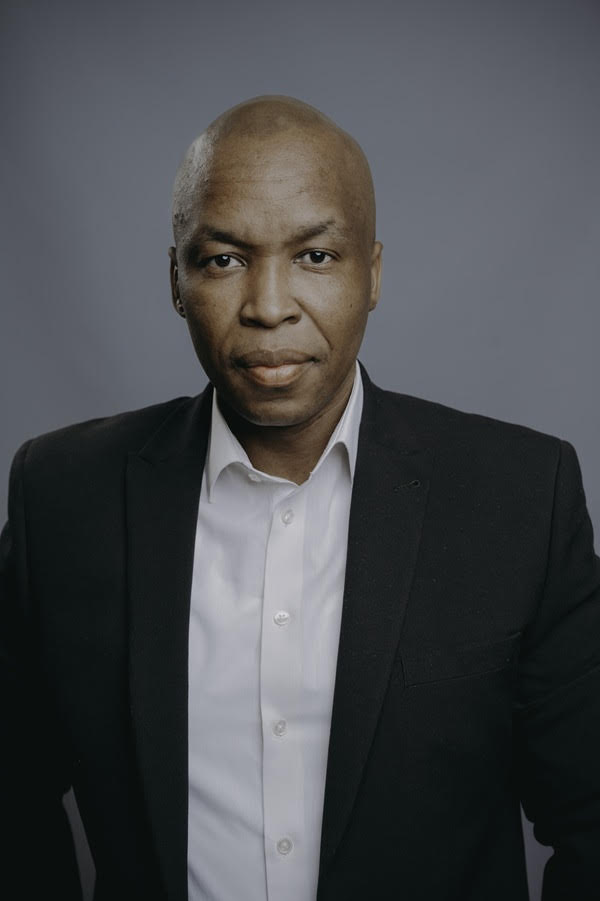
Picture: The Chief Director of the NWU Business School, Prof Joseph Sekhampu/Supplied
By OBAKENG MAJE
8 June 2026 – South Africa’s higher education system continues to expand at a time when the economy into which it feeds remains largely unchanged. Universities are expected to serve as engines of social mobility, offering individuals a path out of poverty and into the middle class.
However, the Chief Director of the NWU Business School, Prof Joseph Sekhampu said this expectation depends on an economy capable of absorbing and productively deploying those skills. Sekhampu said that assumption is becoming increasingly difficult to maintain.

“Degrees continue to accumulate faster than the demand for high-skilled labour. The tension reflects a deeper misalignment between human capital formation and the structure of the economy. A degree functions not only as a qualification but also as a signal of future economic position.
“Students pursue higher education in part because it promises access to occupations, incomes, and social status associated with middle-class life. The value of that signal depends not only on what graduates know, but also on whether the economy continues to generate enough opportunities for those expectations to be realised,” he said.
Sekhampu further said human capital theory assumes that investment in education leads to higher productivity and growth, provided that labour markets are responsive. He added that in South Africa, however, the structure of growth has remained narrow.
“Over the past two decades, economic activity has been concentrated in capital-intensive sectors, protected industries, and segments of the public sector. While specialised and globally connected sectors continue to absorb skilled graduates, they do so at a scale far below overall graduate output.
“The challenge is not simply the number of jobs available, but the absence of broad labour absorption across the economy. Universities operate within incentives shaped largely by the broader economy,” said Sekhampu.
He said the result is a system that successfully produces graduates, but within an economy that has not expanded the sectors capable of absorbing and rewarding those skills. Sekhampu said the way success is measured reinforces this pattern.
“Funding models and institutional rankings emphasise enrolment growth, graduation rates, and research output. These metrics provide an internal view of performance but reveal little about the external outcomes facing graduates.
“Graduate unemployment is frequently framed as a problem of skill mismatches rather than a labour market unable to expand at the required pace. Skills mismatches undoubtedly exist, particularly in specialised technical occupations,” he said.
Sekhampu said, yet, mismatches alone cannot explain persistent graduate unemployment in an economy where overall labour absorption remains weak and the creation of professional opportunities has lagged educational expansion. He said better matching cannot solve a shortage of opportunities when the vacancies themselves remain scarce.
“For many students, a degree represents entry into a different social and economic position. When that expectation is not realised, the result is not simply unemployment, but a form of deferred mobility.
“Graduates adapt through further study, informal work, entrepreneurship, or migration, but these responses do not resolve the underlying constraint,” said Sekhampu.
He said higher education increasingly plays a positional function within the labour market. Sekhampu said Degrees help individuals compete for a limited number of professional and managerial positions, but do not necessarily increase the number of such positions available.
“As credential acquisition expands, graduates often require higher levels of qualification to secure outcomes that previous generations achieved with fewer credentials. Therefore, the challenge is not simply graduate unemployment.
“It is the possibility that educational expansion is beginning to outpace the economy’s capacity to reproduce middle-class opportunities. None of this implies that South Africa produces too many graduates,” he said.
Sekhampu said by international standards, participation in higher education remains relatively low and expanding access remains essential. He said the issue is not educational expansion itself, but the growing gap between the pace of educational expansion and the pace at which the economy generates productive opportunities for those graduates.
“Policy responses have focused on improving access and strengthening the transition from school to university. These remain important, but they do not address the central constraint.
“The problem lies beyond the educational system itself. It lies in an economy that has struggled to generate enough opportunities for meaningful inclusion. Even where reforms are pursued, their effects are likely to be gradual relative to the scale of the current imbalance,” said Sekhampu.
He said a degree remains one of the strongest predictors of job success in South Africa. Sekhampu said the concern is not that degrees have lost value but that they are becoming less reliable as guarantees of upward mobility than many students and families assume.
“Universities can continue to expand enrolment, qualifications, and aspirations, but signals only retain their power when the economy can still honour them.
“Every society needs a credible answer to a simple question: how do we get ahead? For decades, education has been one of South Africa’s most important answers. Not because it guaranteed success, but because it made success appear attainable through effort and achievement,” he said.
Sekhampu said the challenge is not merely graduate unemployment. He said this is what happens when the connection between achievement and advancement becomes increasingly uncertain.

