22 Seetebosigo 2026 – Monna wa dingwaga di le 36 wa kwa Motseng wa kwa Majaneng, gaufi le Taung o tlhotse a bonwe molato wa polao ke kgotlhatshekele ya sedika ya Taung. Go begwa fa Motseothata Nelson Seoleseng a ne a tshwarwa morago ga go tlhaba tsala ya gagwe, Mosimanegape Adam van Wyk (31) ka thiba.
Tiragalo e, e diragetse ka ngwaga wa 2024. Go begwa fa Seoleseng ga mmogo le moswi, ba ne ba le mmogo, mme ba ile ba ya kwa gabo molatofadiwa ko ba fitlhetseng morwa rragwe molatofadiwa ana le lekgarebe la gagwe.
Go begwa fa go ile ga runya kgakgauthano ya mafoko ma gareng ga molatofadiwa le monnawe. Sebakwa sa kgakgauthano ke gore, molatofadiwa one a botsa monnawe gore goreng a tlisa lekgarebe kwa gagabo.
“Ene ya re fa e ya matsogong, tsala ya molatofadiwa, van Wyk, one a leka go tsiriganya. Fela go begwa fa molatofadiwa a ne a mo tsogela kgatlhanong, mme a mo tsatsanka ka thipa. Go ya ka dipego, moswi one a rwalelwa kwa bookelong jwa sedika jwa Taung, fela one a balelelwa le badimo mo letsatsing le le latelang.”
Go begwa fa kgetsi ya polao ene ya bulwa, mme mmelaelwa one a tshwarwa.
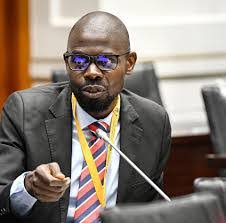
Picture: The Chairperson of the Impeachment Committee on Section 89 Enquiry, Makashule Gana
By OBAKENG MAJE
22 June 2026 – The Chairperson of the Impeachment Committee on Section 89 Enquiry, Makashule Gana, today filed an affidavit opposing the urgent application brought by the Republic of South Africa (RSA) president, Cyril Ramaphosa to interdict the committee from carrying out its work. Gana said the matter is scheduled to be heard in the Western Cape High Court on 15 and 16 July 2026.
“The committee will continue with its work and will meet on 24 June 2026, to consider its draft terms of reference and the process for appointing evidence leaders,” he said.
Meanwhile, the National Assembly (NA) speaker, Thoko Didiza has resolved to file a notice to abide by an explanatory affidavit alongside the Impeachment Committee’s opposition papers. Didiza said the purpose of the explanatory affidavit is to assist the court with aspects it must consider to make its final determination, including the stringent constitutional obligations on the NA to proceed with and finalise the Section 89 proceedings.
She further said the content of the explanatory affidavit is believed to be consistent not only with the stance adopted by the Impeachment Committee, but also with the actions of the Speaker since the Constitutional Court judgment. Didiza added that in the past weeks, the President’s legal team had approached the Speaker’s Office with a proposal to halt the commencement of the work of the Impeachment Committee until the matter has been disposed of in the Western Cape High Court.
“This request was not acceded to, because doing so would have been in contempt of the court, and in terms of the Rules of the National Assembly, the matter is in the hands of the Impeachment Committee, which should not be interfered with.
“Pursuant thereto, the President has now filed for an urgent interdict to halt the committee’s work pending the finalisation of the Review Application. Such an interdict application was also served on Gana,” she said.
Didiza said the committee has met to consider its response to the application and concluded that it will oppose the application as a committee and that it will also approach the Speaker to support its position. Subsequently, she was approached by Gana, with the request to oppose the President’s application.
“Some political parties in Parliament have also approached me with their own views about the matter. I, having considered all the views and processes, concluded that it will be important to file a notice to abide by an explanatory affidavit to complement the committee’s opposition papers.
“Most importantly, to explain to the court what parliament has done to comply with the judgment of the Constitutional Court. Given the content of the explanatory affidavit, I believe that the stance adopted is not only necessary, but is entirely consistent with the respective roles and responsibilities of the assembly versus those of the Impeachment Committee,” said Didiza.
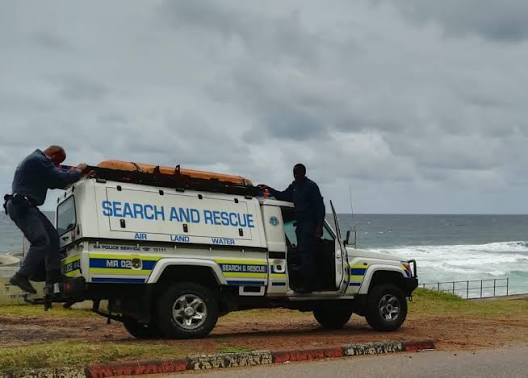
22 June 2026 – The Provincial Search and Rescue Unit allegedly resumed the search for the missing person believed to have drowned in the Vaal River on 18 June 2026 in Douglas. The Northern Cape police spokesperson, Warrant Officer Molefi Shemane said efforts to locate the missing person on 21 June 2026, in the Vaal River, Douglas did not yield any positive results.
22 June 2026 – The excellent investigative work by Detective Constable Vellile Zwelibanzi of Kuruman Family Violence, Child Protection and Sexual Offences Unit, ensured that justice was served for the then victim (7) who was nearly raped by a man (63) on 16 January 2024. This came after the accused invited the victim to his house to assist him with the washing of the dishes.
The Northern Cape police spokesperson, Lieutenant Colonel Thabo Litabe said while she was busy washing the dishes, the accused took her to his bedroom, where he undressed and tried to rape her. Litabe said his attempts failed and the victim started to cry.
“Soon after, he stopped, told the victim to get dressed and not to tell anyone. The matter was only reported to the police on 28 January 2026, after her mother became suspicious.
“A case of attempted rape was reported at Kuruman Police Station and it was assigned to Zwelibanzi who delivered a meticulous investigation. The accused was found guilty of attempted rape and sentenced to ten years imprisonment by the Kuruman Regional Court,” he said.
Litabe further said his name will be registered in the National Register of Sexual Offenders and he was declared unfit to possess a firearm.
Meanwhile, the acting John Taolo Gaetsewe District Police Commissioner, Brigadier Kenneth Baloyi, welcomed the sentence and praised Zwelibanzi for his diligence and dedication in investigating the case.
22 June 2026 – The police in the Northern Cape continue to intensify operations aimed at combating the illegal trade in drugs and other criminal activities across the province. The police said members attached to the ZFM Highway Patrol A Shift and A Shift Border Police conducted a Vehicle Check Point (VCP) operation on 21 June 2026, at approximately 8:15pm on the N10 national road between Upington and Groblershoop during which a white Toyota Tazz was stopped for inspection.
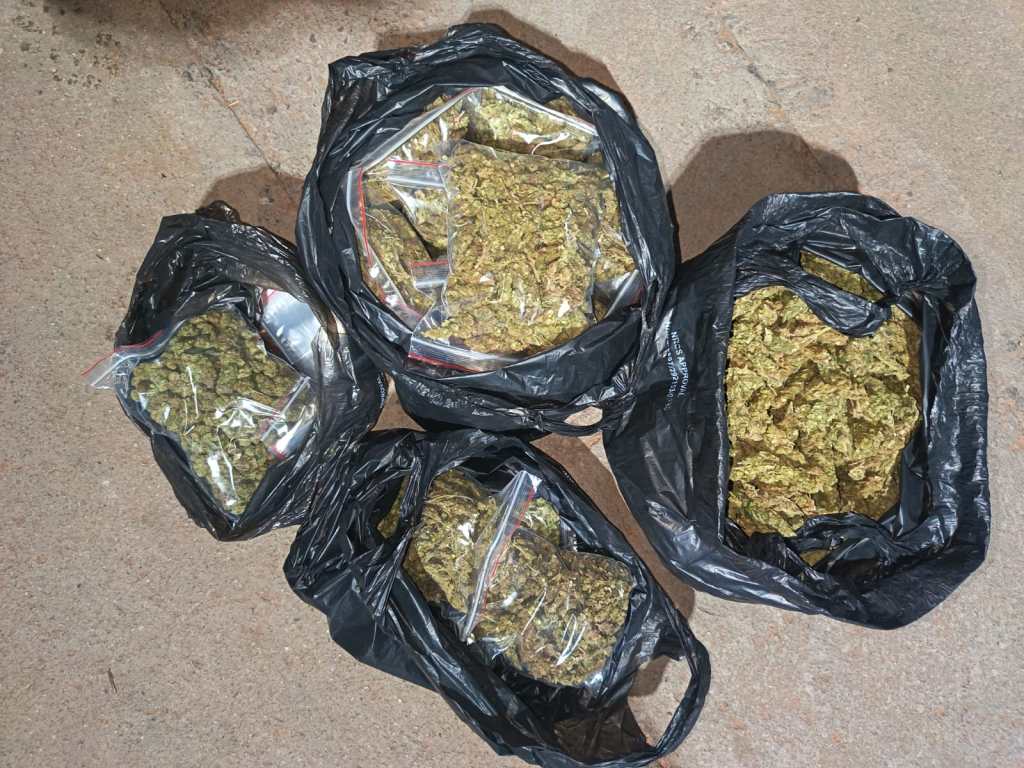
The Northern Cape police spokesperson, Brigadier Mashay Gamieldien said during the search of the vehicle, the police discovered dagga concealed inside the vehicle. Gamieldien said the dagga was weighed and found to have an approximate weight of 2.3 kilograms, with an estimated street value of approximately R55 725.
“Two occupants aged 32 and 39 who are foreign nationals, were arrested and detained. They are facing charges of dealing in dagga. A cash amount of R7 450 suspected to be linked to the illegal drug trade, was also confiscated by police.
“The suspects will appear in the Upington court in due course,” she said.
Meanwhile, the ZFM District Police Commissioner, Major General Monica Sebili, commended the police involved for their vigilance and commitment in disrupting the illegal movement and distribution of drugs. Sebili said drug-related crimes remain a priority for the police and these successful interventions demonstrate the importance of intelligence-driven operations, visibility and proactive policing in ensuring safer communities.
“SAPS Northern Cape urges members of the public to continue reporting suspected criminal activities to the police. Information can be shared through the SAPS Crime Stop number 08600 10111 or via the MySAPS App,” she said.
22 June 2026 – Three suspects aged 38, 48 and 16 were arrested for public violence. This comes after they allegedly attempted to prevent a voting station from opening.
The North West police spokesperson, Colonel Adele Myburgh said the suspects are expected to appear in court soon. Myburgh said the Provincial Joint Operational and Intelligence Structure (PROVJOINTS) has commended all role players and community members for their diligence and cooperation during day one of the voter registration weekend in the North West.
Screenshot
“The South African Police Service (SAPS), working closely with other government departments represented within PROVJOINTS, remains fully mobilised and continues to support the Independent Electoral Commission (IEC) in creating a safe and secure environment.
“This enables community members to exercise their democratic right to register to vote freely and without fear or intimidation. Only one election-related incident was reported in the Klipgat Informal Settlement, near Klerkskraal, where police arrested two suspects, as well as a minor,” she said.
Myburgh further said high-visibility policing, intelligence-led operations, public order policing deployments and rapid response capabilities remain in place and continue to address any incidents that may arise.
Meanwhile, the acting North West Police Commissioner, Major General (Dr) Ryno Naidoo, warned that any acts of violence, intimidation, public disorder, malicious damage to property, road blockades, or interference with critical infrastructure will be dealt with decisively and in accordance with the law. Naidoo added that day one of the voter registration weekend in the province proceeded without any major or significant security breaches.
“We attribute this success to the effective command and management structures, as well as the commitment, dedication and support of all PROVJOINTS departments, the IEC, communities, and civil society across the province,” he said.
22 June 2026 – The Republic of South Africa (RSA) president, Cyril Ramaphosa said a little over four years have passed since South Africa emerged from the state of disaster that had been declared in response to the COVID-19 pandemic. Ramaphosa said it is easy to forget just how deeply the pandemic affected every aspect of their lives.
He further said for many, it is a distant memory. Ramaphosa said the waves of infections, hospital wards filling at alarming rates, the lockdown and the various restrictions on gatherings, travel and commerce.
“We sometimes forget that more than 100 000 South Africans died from COVID and that we lost around 2 million jobs. As we set about rebuilding our economy and society in the wake of the pandemic, our concerns moved on to other matters. At this time, as we focus on tackling unemployment and poverty, crime and corruption, pandemics seem far from our minds.
“Yet, the recent outbreak of Ebola in the Democratic Republic of the Congo (DRC) and Uganda, serves as a stark reminder that we should not let down our guard. More than that, it reminds us that we must be better prepared for health emergencies in our country, on our continent and across the world,” he said.
Screenshot
Ramaphosa said following the COVID pandemic, South Africa was appointed the African Union Champion on Pandemic Prevention, Preparedness and Response. He said since then, they have been working with the Africa Centres for Disease Control and Prevention (CDC) and other partners to strengthen Africa’s health security.
“The Ebola outbreak reminds us that when a dangerous disease breaks out anywhere on our continent, it does not stay in one place. It can easily cross borders, affect communities and disrupt economies.
“These diseases cost both lives and jobs. Health security is therefore not only about hospitals and medicines. It is also about our economy, our development and the safety of our continent as a whole. We learned this the hard way during COVID-19. In those early days, Africa stood at the back of the queue. Vaccines and treatments went first to wealthier countries, while our people waited. We cannot allow that to happen again,” said Ramaphosa.
He said while they appreciate the help of international partners, Africa cannot keep depending on others to supply them during a health emergency. Ramaphosa said they must be able to protect themselves.
“That is why we have been working towards stronger health systems at home. Every country needs a proper public health institute. It needs centres ready to manage emergencies, well-supported community health workers and the ability to track new diseases early.
“Importantly, we must make our own medicines, tests and vaccines here on the continent. We are working to strengthen the African Medicines Agency and to set up shared systems for buying supplies, so that African producers have steady customers and African countries can get what they need when an emergency strikes,” he said.
Ramphosa said they need to set aside money for emergencies. He said African leaders have agreed to create an African Epidemic Fund.
“It is encouraging that African countries are already contributing money towards tackling the current Ebola outbreak. South Africa has pledged $13.5 million to the Africa CDC to treat and limit the spread of Ebola. As a continent, we are taking responsibility for ourselves and not waiting for others.
“Africa needs to be part of writing the global rules on fighting pandemics. We need to stand together and make sure our people are treated fairly. We continue to call for a fair global agreement on pandemics, built on equal partnership rather than charity. I have been heartened by how our continent has come together to respond to the Ebola outbreak,” said Ramaphosa.
He said the Africa CDC has led with skill and speed. Ramaphosa said African leaders have developed common approaches.
“Business leaders, development partners and donors are stepping forward to help. This shows that we have the people, the knowledge and the leadership to succeed. But we must not wait for the next outbreak or pandemic to get us to act.
“We must do the hard work now to secure the health of the people of our continent. The effort we put in today will spare us far greater suffering and cost tomorrow. We must act with urgency to achieve the health security that is so vital for the growth and development of our country and our continent,” he said.
Ramaphosa said health security saves lives, protects jobs and helps to safeguard the future.