17 November 2026 – The reopened inquest into the disappearance of former anti-apartheid activist, Boiki Tlhapi has been postponed by the North West High Court sitting in Mahikeng to 21 May 2027. Tlhapi was 26 years -old when he disappeared in 1986 after being arrested while travelling from Potchefstroom to attend the funeral of a fellow activist.
The National Prosecuting Authority (NPA) regional spokesperson in North West, Lindiwe Mabasa said he reportedly disappeared shortly after his arrest and detention. Mabasa says an inquest conducted in 1995 was unable to establish whether Tlhapi had died or determine the circumstances surrounding his disappearance.
“Following the reopening of the inquest docket, three persons of interest, Ignatius Venter, George Mbathu and Itumeleng Moses Matiti, have appeared before the High Court in Mahikeng in connection with the proceedings.
“The NPA remains committed to supporting judicial processes aimed at uncovering the truth in unresolved matters arising from South Africa’s past. These processes are intended to advance accountability and assist affected families in obtaining answers within the framework of the law,” she said.
Mabasa further said the postponement and reaffirmed the authority’s commitment to supporting efforts to establish the truth surrounding unresolved cases from the apartheid era.
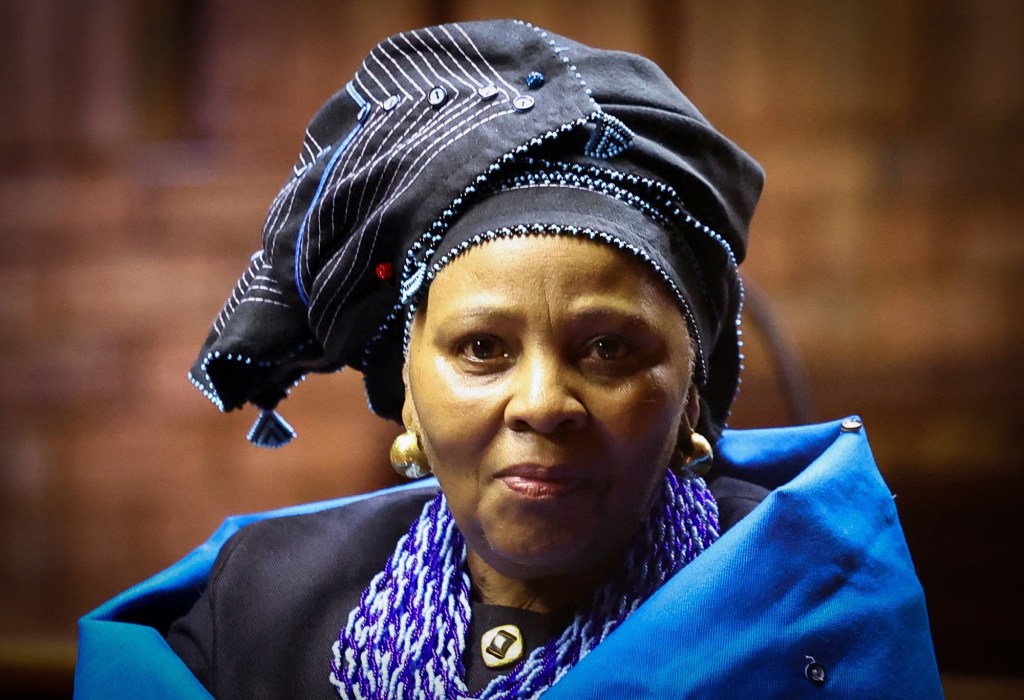
Picture: Former Minister of Defence and Military Veterans, Nosiviwe Mapisa-Nqakula
By REGINALD KANYANE
17 November 2026 – The corruption case against former Minister of Defence and Military Veterans, Nosiviwe Mapisa-Nqakula has been postponed to 23 November 2026, for closing arguments in the Gauteng High Court in Pretoria.
The Investigating Directorate Against Corruption (IDAC) spokesperson, Henry Mamothame said the postponement follows the defence’s decision to close its case after calling its fourth witness, who was Mapisa-Nqakula’s former personal assistant. Mamothame said Mapisa-Nqakula is facing 12 counts of corruption and one count of money laundering.
“She is accused of soliciting approximately R4.5 million from a service provider, of which R2.1 million was allegedly received in cash. The case will resume on 23 November 2026, when the parties are expected to present their closing arguments.
17 November 2026 – The Pretoria Magistrate’s Court postponed the case against Vusimuzi “Cat” Matlala and 15 others to 4 March 2027, to await the outcome of representations filed by Matlala and other accused, and for the state to amend the indictment before the matter is transferred to the high court for trial. The IDAC Senior Prosecutor further placed it on record that the Case Review Panel confirmed that this matter was properly authorised and that it falls within the IDAC mandate.
The Investigating Directorate Against Corruption (IDAC) spokesperson, Henry Mamothame said the accused face charges of corruption arising from the alleged irregular awarding of a contract valued at approximately R228 million to Medicare 24 Tshwane District, a company owned by Vusimuzi “Cat” Matlala.
Picture: Greater Taung Local Municipality mayoral candidate, Itumeleng Maribe, municipal chief whip candidate, Olebogeng Ipeleng and municipal speaker candidate, Keorapetse Batsile
By OBAKENG MAJE
17 November 2026 – The African National Congress (ANC) Regional Task Team (RTT) in the Dr Ruth Segomotsi Mompati District is racing against time to conclude its interviews for municipal leadership positions as the party prepares to establish its governing teams across all five local municipalities. The interviews focus on the municipal leadership triumvirate, commonly referred to as the municipal “troika”, comprising the mayor (or executive mayor), speaker and chief whip.
According to a highly placed source, the ANC’s Regional Task Team has already completed interviews for Kagisano-Molopo and Greater Taung Local Municipalities, which were conducted on Monday. The remaining interviews for Mamusa, Lekwa-Teemane and Naledi Local Municipalities are scheduled to take place on 17 November 2026.
In Greater Taung Local Municipality (GTLM), Itumeleng Maribe is reportedly expected to emerge as the next mayor, while Keorapetse Patricia Batsile is tipped for the position of speaker. Olebogeng Ipeleng is also expected to be considered for the chief whip position. However, the anticipated appointments are yet to be formally confirmed through the relevant party and municipal processes.
“As the ANC concludes its municipal leadership interviews in the Dr Ruth Segomotsi Mompati District, attention will turn to the final selection of candidates and the constitution of municipal leadership structures ahead of the inaugural council meetings.”
The inaugural council meeting of Greater Taung Local Municipality, which was initially scheduled for 19 November 2026 at Manthe Multi-Purpose Centre, has been postponed to 25 November 2026. The ANC secured an outright majority in the municipality after winning 24 of the 47 council seats, placing it in a position to govern without relying on coalition partners.
Meanwhile, the ANC Provincial Task Team (PTT) in the North West is reportedly holding discussions on possible coalition arrangements with other political parties in municipalities, where no party secured an outright majority.
At national level, the ANC National Executive Committee (NEC) has established a National Negotiations Team, led by party Secretary-General Fikile Mbalula, to oversee coalition negotiations across the country. The party has indicated that all coalition negotiations will be centralised under the authority of this team, which will conduct engagements with other political formations in accordance with its mandate.
ANC national spokesperson Mahlengi Bhengu said the party’s Coalition Framework would guide the negotiations, with the objective of promoting stable, transparent and accountable governance, advancing transformation, combating corruption and improving service delivery for communities. Bhengu said the National Negotiations Team comprised Mbalula, ANC National Chairperson Gwede Mantashe, First Deputy Secretary-General Nomvula Mokonyane, Second Deputy Secretary-General Maropene Ramokgopa, Treasurer-General Gwen Ramokgopa and Parks Tau.
“The broader team also includes David Makhura, Ronald Lamola, Zuko Godlimpi, Febe Potgieter, Nkenke Kekana, Mdumiseni Ntuli, Mdu Manana, Dickson Masemola, Enoch Godongwana, Sbongile Besani, Dumisani Magagula, Richard Mkhungo, Chris Malemetja, Tsakani Shiviti, Nokuthula Nqaba, Snuki Zikalala, Thami Ntenteni, Andries Nel, Matthew Parks and Mahlengi Bhengu.
“The team would provide centralised leadership and direction to the party’s coalition engagements, ensuring that negotiations were aligned with the ANC’s national framework and governance priorities,” she said.
17 Ngwanatsele 2026 – Sepodisi sa Taung se batlisisa kgetsi ya go kgothosa lefelo la kgwebo. Se, se tla morago ga gore banna ba le barataro ba go begwang fa ba ne ba tshotse dithunya, ba ile ba itatlhela ka lefelo le le rekisang nnotagi la Kamo Amo kwa motseng wa Ranstad, gaufi le Taung ka letsatsi la Tshipi.
Go begwa fa banna ba, ba ile ba thuntsa dikolo di le mmalwa pele ga ba ka itatlhela ka lefelo le, le go tshwara poo. Go begwa fa go ne go tshamekiwa kgaisano ya snooker kwa lefelong leo ka lone letsatsi leo.
Sebueledi sa sepodisi mo sedikeng sa Dr Ruth Segomotsi Mompati, Warrant Officer Tryphosa van Rooyen are go begwa fa mongongoregi mo kgetsing e, yo o neng a le mo teng ga lefelo le la go rekisa nnotagi ka nako eo, o ile a utlwa modumo wa sethunya kwa ntle, mme a ya go tlhodimela.
“Go begwa fa a ile a bona batho ba ba neng ba tlile go itisa kwa lefelong leo ba tshaba. Go begwa fa banna ba le bararo ba ba neng ba rwele dithiba-sefatlhego (balaclavas), ba ile ba itatlhela ka lefelo leo.
Go begwa fa ba ile ba tshwara mongongoregi poo, mme ba tsaya madi a seatleng.
“Morago ga moo, go begwa fa ba ile ba tshaba. Kgetsi ya go tshwara lefelo la kgwebo poo e butswe. Ga gona ope o tshwerweng go fitlha ga jaana,” ga rialo Van Rooyen.
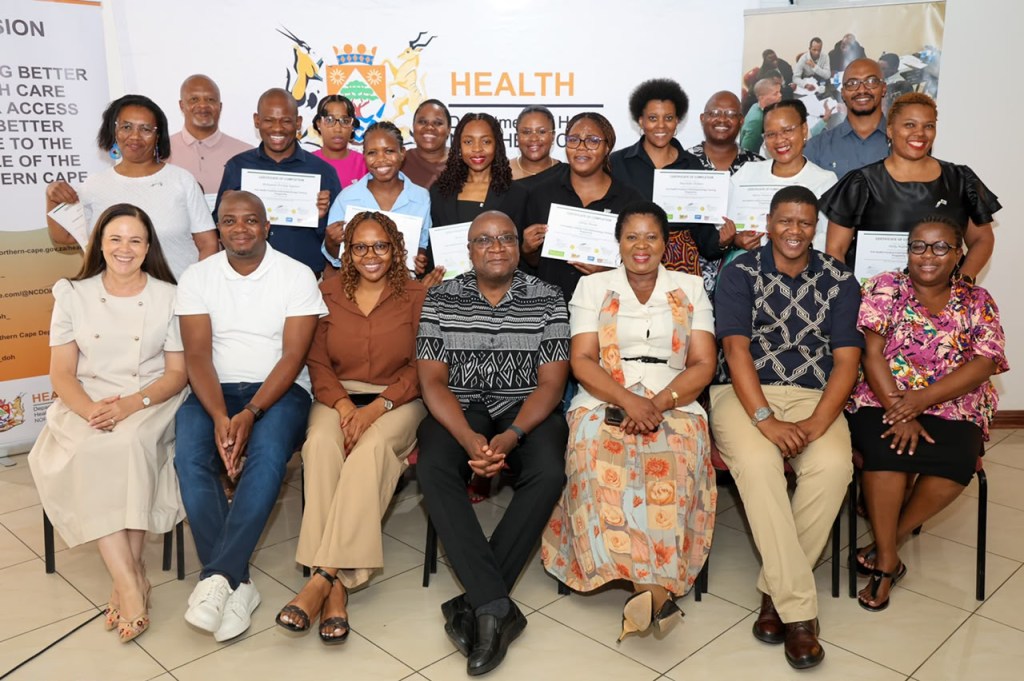
Picture: Northern Cape Health professionals complete FETP/Supplied
By BAKANG MOKOTO
17 November 2026 – The Northern Cape Department of Health celebrated a significant milestone in strengthening public health capacity through the successful implementation and completion of the Field Epidemiology Training Programme (FETP) Frontline tier on 12 November 2026. This very first FETP-Frontline training in the Northern Cape province was launched in August 2026, in collaboration with the South African Field Epidemiology Training Program (SAFETP) of the National Institute for Communicable Diseases (NICD).
The Northern Cape MEC for Health, Nontobeko Vilakazi said FETP-Frontline is a 3-months training that aims to strengthen the use and quality of surveillance data, and outbreak preparedness and response capacity at local level of the public health system. Vilakazi said as part of the training, participants learn epidemiological concepts during classroom sessions, and conduct surveillance data analysis, problem analysis, and case or outbreak investigations during the field intervals.
“Subsequently, participants present reports of their field activities during scientific seminars at the end of the training period. The cohort comprised 14 professionals, including Environmental Health Practitioners, Health Promoters, EPI Programme Managers, and Monitoring and Evaluation personnel from the Department, who have now graduated across all districts in the province.
“The Northern Cape Cohort 1 Scientific Seminar was successfully held on 11-12 November 2026 in Kimberley, bringing together the trainees in the province, facilitators and public health professionals to showcase field epidemiology work conducted during the training programme,” she said.
Vilakazi further said the seminar provided participants with an opportunity to present the findings of their surveillance analyses, outbreak investigations and case investigations conducted across the districts of the Northern Cape Province. She added that participants demonstrated the practical application of epidemiological methods through presentations on a wide range of public health topics, including measles, congenital syphilis, Group A Streptococcus infection, Streptococcus pneumonia, cryptococcal meningitis, salmonella, hepatitis B, healthcare risk waste surveillance, and food safety monitoring.
“These presentations highlighted the importance of disease surveillance, timely case investigation, outbreak detection, and evidence-based public health action in protecting the health of communities across the province. The seminar serves as an important platform for knowledge sharing, peer learning, and constructive scientific discussion.
“Participants demonstrated their growing competencies in data analysis, interpretation of findings, and communication of public health evidence. The presentations reflected the commitment of the trainees to strengthening disease surveillance and response systems within the Northern Cape. The seminar culminated in a certificate award ceremony to formally recognise the participants’ successful completion of the FETP Frontline Epidemiology Training Programme,” said Vilakazi.
She said the training programme forms part of the department’s broader strategy to, among others, increase capacity at district level to implement effective disease surveillance as an early warning system and ensure evidence-based planning. Vilakazi said to improve response to suspected or confirmed disease outbreaks and put preventative measures in place to mitigate spread at community level, strengthen collaboration between Department of Health and Municipality Environmental Health Services in the province.
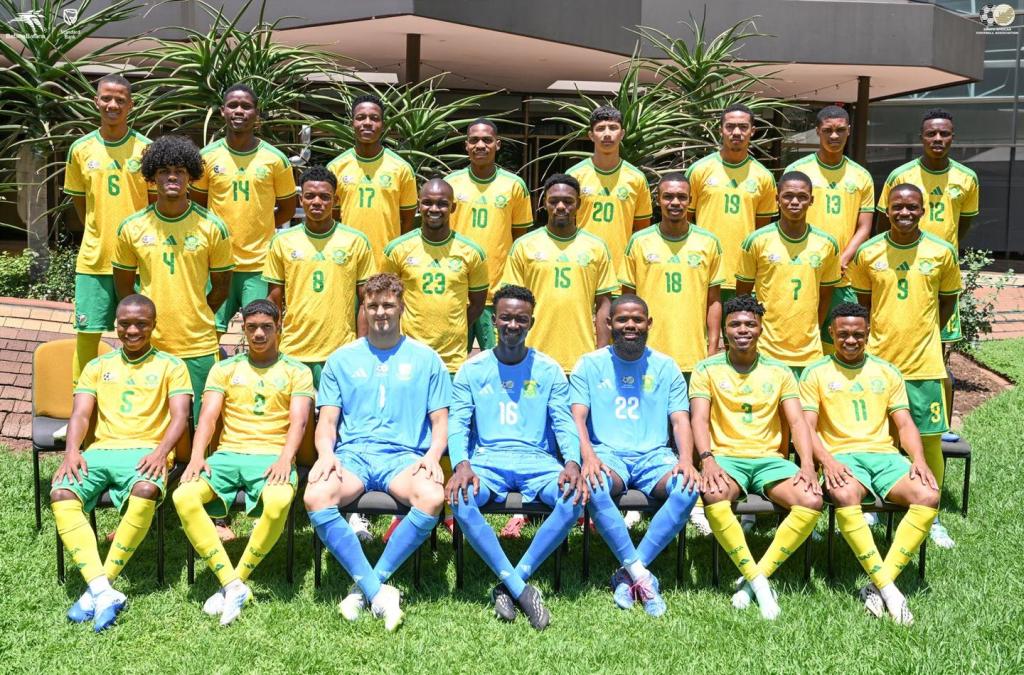
Picture:South Africa’s Under-23 players prepare for their crucial encounter against Madagascar. Picture: Supplied
By KEDIBONE MOLAETSI
17 November 2026 – South Africa’s Under-23 Men’s National Team head coach, Raymond Mdaka, has challenged his players to dig deep and deliver a determined performance when they take on Madagascar in the second leg of their second-round 2028 Los Angeles Olympic Games qualifiers on Tuesday night. The two nations will lock horns at Lucas Moripe Stadium in Atteridgeville, with kick-off scheduled for 8pm.
South Africa head into the decisive encounter holding a slender 1-0 advantage following their victory in the first leg, which was played at the same venue on 14 November 2026. Second-half substitute Quwan Plaatjies proved to be the difference-maker, scoring the crucial goal that handed Bafana Bafana’s youngsters an advantage heading into the return fixture.
However, Mdaka is under no illusion that his team have already secured qualification, warning his players against complacency despite having the advantage. The coach believes Madagascar will be equally determined to overturn the deficit, making Tuesday night’s encounter a demanding test of character, discipline and tactical awareness.
“People might think we are in a much better position because we won the first leg, but I don’t see it that way. You always have to consider the advantage that a single goal gives you. From Madagascar’s perspective, they are also thinking about how best they can score and turn things around.
“That creates another level of pressure because we now have to perform at our best and do everything possible to ensure that we do not concede. Yes, the goal we scored puts us one step ahead, but we still need to dig deep and get the job done,” he said.
Mdaka further said the second-leg encounter promises to be a closely contested affair, with both sides fully aware of what is at stake. He added that the away-goal rule will apply should the teams finish level on aggregate.
“However, there will be no extra time, with a penalty shootout set to determine the winner, if the aggregate scores remain level after regulation time. The winner of this tie will progress to the third round of the qualifiers, where they will face either Rwanda or Cameroon.
“Cameroon currently holds a commanding 3-0 advantage over Rwanda following their first-leg victory, with the two nations also scheduled to meet again on Tuesday evening. The third round of the qualifiers is scheduled for March next year,” said Mdaka.
Meanwhile, the successful teams will advance to the CAF Under-23 Africa Cup of Nations, which will serve as the continental qualifying tournament to determine Africa’s two representatives at the 2028 Olympic Games in Los Angeles, United States. For Mdaka and his charges, the immediate priority is clear, overcome Madagascar, protect their advantage and keep South Africa’s Olympic dream alive.
Picture: Delegates at the inaugural meeting of the Joint Agreement Governance Council/Supplied
By REGINALD KANYANE
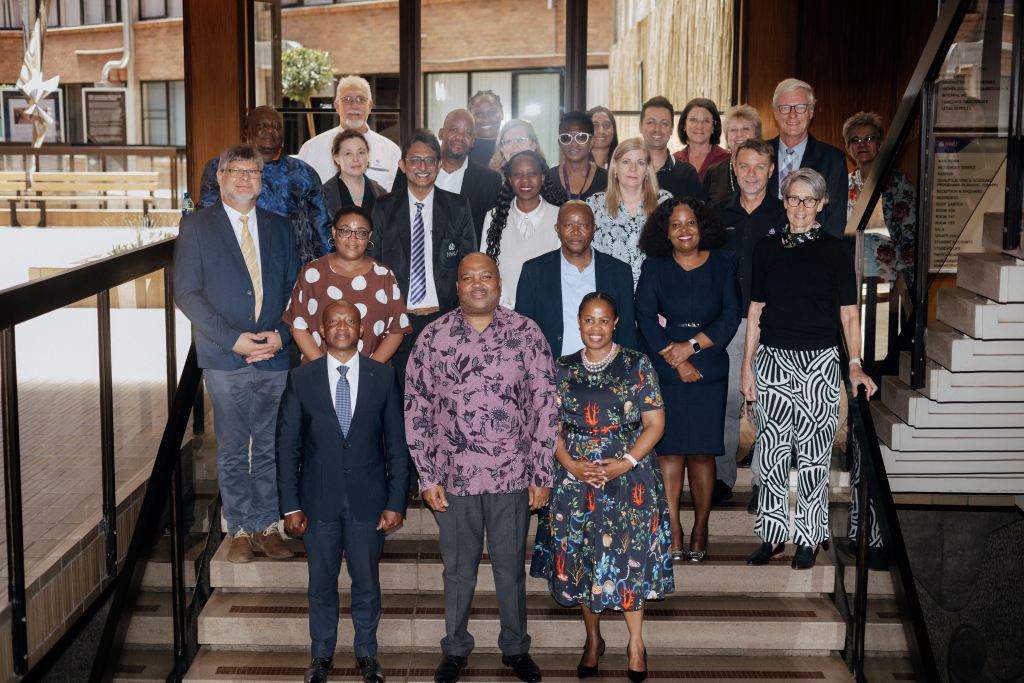
17 November 2026 – The bilateral agreement between the North West University (NWU) and the North West Department of Health, moved into full implementation with the inaugural meeting of the Joint Agreement Governance Council (JAGC), advancing their partnership to develop the NWU’s Desmond Tutu School of Medicine. The meeting was held on 16 November 2026 and chaired by the North West University (NWU) principal and vice chancellor, Prof Bismark Tyobeka.
“It brought together university and provincial health representatives to constitute the council and establish supporting governance structures to coordinate medical education and clinical training in the province.
“This is a historic moment and the culmination of years of hard work between us as partners. It is testimony to the fact that, if we do things properly in all aspects of governance, changes in leadership should not affect the foundations we have built,” he said.
Tyobeka further said the council gave practical effect to the bilateral Memorandum of Agreement (MoA) signed in 2025, providing a joint governance structure through which the NWU and the department could coordinate their responsibilities in developing the medical school. He added that there are supporting structures including a Health Platform Committee, with subcommittees covering district and distributed training platforms and tertiary and psychiatric hospital platforms.
“Technical advisory work covered human resources, infrastructure, information technology and finance. Together, these structures provided a framework for coordinating medical education and healthcare delivery, ensuring equitable access to training facilities and advancing transparency, accountability and ethical conduct.
“A separate trilateral agreement between the NWU, the department and the University of the Witwatersrand (Wits) is also being finalised. Once signed, it will bring Wits into the framework of cooperation, with its role focused largely on postgraduate medical training,” said Tyobeka.
The Chief Director and Head of the Desmond Tutu School of Medicine, Prof Binu Luke outlined progress towards welcoming the first cohort of students in January 2028.
“Since we started this process in 2023, we have achieved our planned milestones each year. In 2026, we started appointing the staff who will teach our students in 2028. The programme had received Council on Higher Education accreditation, with a Health Professions Council of South Africa accreditation visit scheduled for March 2027.
“The school planned an initial intake of 80 students in 2028, subject to the necessary regulatory approvals. The school’s ambitions extended beyond producing academically qualified graduates. We want a clinically competent general practitioner who is socially conscious and community-orientated, an ethical team player who can think critically and use state-of-the-art technology, including AI,” he said.
Luke said the school’s contribution to North West was central to its planning. He said they must be deliberate about its impact on the province and build that into their academic processes.
The school’s leadership and governance lead, Prof Beth Engelbrecht outlined how the bilateral agreement would support both medical education and provincial healthcare. Engelbrecht said the purpose is to develop fit-for-purpose health professionals, but also, through their partnership with the province, to improve health, improve the quality of care and strengthen the health system.
“The critical point here is partnership, underpinned by values such as integrity, trust and transparency. The JAGC was mandated to oversee the partnership, monitor compliance with the agreement and guide its implementation.
“Its responsibilities included determining access to provincial healthcare facilities for teaching, clinical training and research, developing funding models, and guiding recruitment and infrastructure matters,” she said.
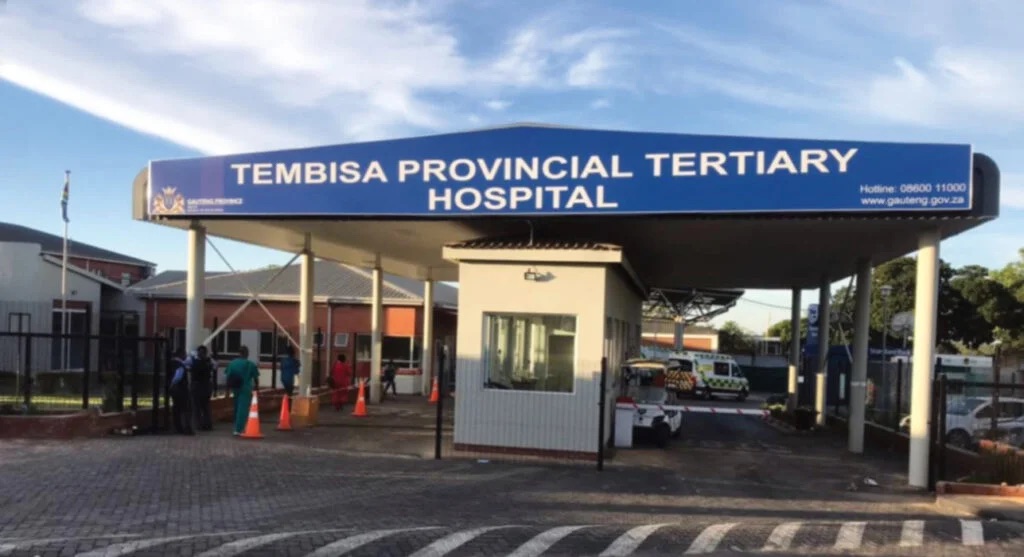
17 November 2026 – The Hawks’ Serious Corruption Investigation team has arrested two additional suspects in connection with the alleged R635 million Tembisa Hospital corruption scandal, bringing authorities closer to holding those implicated in the multimillion-rand procurement fraud investigation accountable. According to Hawks, the two suspects handed themselves over at the Tembisa Police Station on Tuesday morning, 17 November 2026, where they were subsequently processed for their appearance in court.
The Hawks spokesperson, Colonel Katlego Mogale said the arrests form part of ongoing efforts to investigate alleged tender fraud involving Tembisa Hospital’s procurement processes. Mogale said these allegations under investigation include fraud, corruption, forgery and uttering, contravention of the Public Finance Management Act (PFMA) and money laundering.
“It is alleged that certain hospital officials colluded with service providers to manipulate the Request for Quotations (RFQs) procurement system by deliberately splitting procurement transactions into smaller amounts to keep them below the R500 000 threshold, thereby avoiding the prescribed formal tender processes.
“The two suspects are expected to appear before the Palm Ridge Specialised Commercial Crimes Court, sitting at the Palm Ridge Magistrate’s Court, where they will face charges relating to fraud, corruption and money laundering,” he said.
Mogale further said the Hawks remain committed to pursuing all those implicated in the alleged corruption and ensuring that they are held accountable through due legal processes. She added that the investigation into the alleged corruption continues.
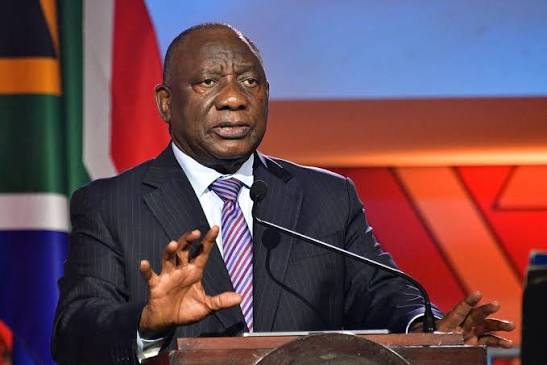
16 November 2026 – The Republic of South Africa (RSA) president, Cyril Ramaphosa said this week, he is leading a delegation of South Africans from government, business, universities and research institutions on a working visit to Silicon Valley in California. Ramaphosa said through this visit, they aim to gain insights into the global development of artificial intelligence (AI) and inform South Africa’s approach to the adoption of AI.
He further said this is vital as advances in AI are changing the way they interact and work in fundamental ways. Ramaphosa said countries that are early adopters of this technology are able to harness its benefits and those who do not will lag further behind.
“A report published by Microsoft’s AI Economy Institute earlier this year found that South Africa ranked 46th out of 147 economies surveyed globally for AI adoption. Another survey conducted by Google and Ipsos last year found that South Africans are adopting AI at rates above the global average and are using it for a variety of tasks including learning and career development.
“While these are welcome developments, we need to use the transformative potential of AI at scale so it benefits all South Africans. This working visit is an opportunity to hear from leading experts at the cutting edge of technology, economics, law and governance about the trajectory of AI, its potential uses and the risks that must be managed,” he said.
Ramaphosa said they want to identify the ways in which AI can be used to transform public services, from education to healthcare to the criminal justice system, to improve the efficiency of government and increase their impact. He said they also want to understand how AI can enable South African firms to improve their productivity and enhance their competitiveness and to generate the growth that will propel our economy forward.
“South Africa offers an opportunity for investors to secure a foothold in a new market with significant commercial opportunities. Just as Africa was a pioneer in the global mobile money revolution, the continent could be the cradle of the next generation of AI technologies. The experience with the mobile revolution showed the potential for African countries to ‘leapfrog’ older systems and adopt new ones.
“South Africa already accounts for the majority of the continent’s total data centre capacity. Beyond the AI applications themselves, there are significant infrastructure investment opportunities in data centres, fibre-optic networks, cloud and other digital infrastructure,” said Ramaphosa.
He said South Africa has world-class research and higher education institutions, a sophisticated financial sector, an enabling policy and regulatory environment, advanced hosting and network infrastructure, and increasing energy reliability. Ramaphosa said they have some of the world’s best renewable energy resources, including abundant solar and wind power that can be produced at a lower cost than almost anywhere else.
“These are real advantages that we must use to position our country to contribute to the great transformation that is now underway. The potential for generating substantial financial returns is significant for AI applications and solutions directed towards agriculture, energy, healthcare, logistics and transport, and key economic sectors.
“Investing in AI in Africa is not an act of charity. It is harnessing a commercial opportunity in one of the world’s largest markets that is ready to adopt these pioneering technologies,” he concluded.