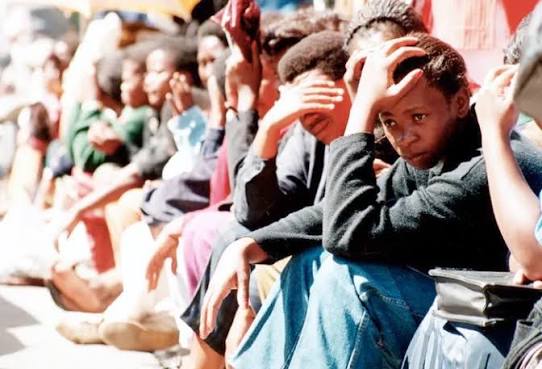
Picture: High rate of unemployment grapples SA/Generic
By REGINALD KANYANE
30 September 2026 – The Motor Industry Staff Association (MISA) has raised concern over South Africa’s unemployment crisis, warning that government austerity measures and rising interest rates are placing additional pressure on workers and businesses. In a statement, MISA said the country’s unemployment crisis had reached catastrophic levels and accused the state of deepening the problem rather than addressing it.
The association’s concerns follow the South African Reserve Bank’s decision to increase the repo rate by 25 basis points, from 7% to 7.25%, marking the second increase this year.
MISA CEO, Martlé Keyter said the combination of reduced public spending and higher borrowing costs was placing a double burden on workers. Keyter said government austerity and rising interest rates are a double blow to workers.
“One starves the economy of the investment that creates jobs, the other raises the cost of everything from a home loan to a car. MISA opposed measures that deepened poverty and called for public investment and job creation to be prioritised in economic policy.
“MISA said the latest repo rate increase could have direct consequences for the retail motor industry, as higher interest rates make vehicle financing more expensive, potentially reducing demand for vehicles and putting jobs at risk,” she said.
Keyter further said they have noted that dealerships, workshops and aftermarket businesses across the motor industry value chain employ more than 500 000 people. She added that increased borrowing costs would place additional pressure on households already struggling with vehicle repayments and other expenses.
“MISA called for economic policies that prioritise public investment, industrial development and employment creation to address the country’s unemployment crisis,” said Keyter.
Meanwhile, Independent Economist, Duma Gqubule criticised the country’s record on job creation. Gqubule said South Africa had created approximately two million jobs over the past 17 years, while the labour force continued to grow by between 600 000 and 700 000 people annually.
He argued that economic growth alone would not be sufficient to address unemployment, calling for stronger industrial policies and an expansion of public employment programmes.
“We need a 4 to 6% GDP growth rate just for the 600,000 who are joining the workforce. Even with a growth rate of 6%, we will still have high unemployment. So, we have to do more than just grow the economy faster.
“We need strong industrial policies to create labour-intensive sectors. We have to rapidly expand public employment programmes,” he said.
Gqubule also criticised austerity measures, arguing that cuts to infrastructure, healthcare and education spending undermine job creation and discourage private-sector investment. He further raised concerns about the cancellation of the Presidential Employment Stimulus, which he said had created more than two million work opportunities.
Picture: Tshepiso Jantjies addressing farmers and experts attending the packhouse launch/Supplied
By OBAKENG MAJE
30 September 2026 – The North West Department of Agriculture and Rural Development has reaffirmed its commitment to expanding agro-processing, creating jobs and strengthening farmer participation in the agricultural value chain with the launch of the Jantjies Boerdery Packhouse Project in Taung. The North West MEC for Agriculture and Rural Development, Madoda Sambatha, joined by the Deputy Minister of Agriculture, Nokuzola Capa, officially unveiled the value-adding packhouse at Jantjies Boerdery on Monday.
Sambatha said the project is aimed at strengthening lucerne production and processing in Taung and forms part of government’s broader efforts to support farmer-led enterprises that move beyond primary production and create greater value within the agricultural value chain. He said the investment should not be viewed as support for one individual enterprise, but as an intervention that will benefit the wider farming community in Taung.
“This investment is not only for Jantjies as an individual. Taung has one of the greatest concentrations of lucerne producers, which is why we are supporting lucerne aggregation. There are a number of lucerne farmers in the area, and our vision is to position Taung as a provincial lucerne hub.
“The development of the lucerne value chain has the potential to increase agricultural production and create employment opportunities in the municipality. The production of lucerne in Taung should help increase the capacity of the area to create jobs,” said Sambatha.
He further said the equipment provided to Jantjies is intended to assist not only this enterprise, but other farmers in and around Taung to produce and process lucerne. Sambatha added that the department has supported the initiative with lucerne harvesting machinery, processing and value-adding equipment, as well as packaging materials.
“The support is intended to increase production capacity, promote agro-processing and create opportunities for farmers to participate more meaningfully in the agricultural value chain. We encourage farmers to collaborate and make use of opportunities presented by agro-processing.
“The department is committed to assisting farmers with value-adding machinery to increase production capacity, create jobs and support the development of farmers. We encourage farmers to collaborate and ensure that agricultural products are processed and value is retained within our communities,” he said.
Sambatha said initiatives such as the lucerne aggregation project and Hemp Hub demonstrate the government’s commitment to supporting farmers beyond production by creating an enabling environment for value addition, enterprise development and participation in agricultural markets.
Meanwhile, Tshepiso Jantjies said Jantjies Boerdery is a farmer-led enterprise specialising in the production, harvesting, processing, packaging and distribution of lucerne products for the livestock feed market. Jantjies said the enterprise currently supplies markets beyond the North West and exports to Botswana, Namibia and Lesotho.
“We also have supply contracts with companies in other provinces. The business had worked for more than three years to establish the necessary systems and comply with requirements across the agricultural value chain.
“We plant, harvest, package and supply. I specialise in lucerne. It took us more than three years to get to where we are because there are a lot of compliance procedures that we had to meet to work across the entire value chain,” he said.
Jantjies said the government support with machinery has been instrumental in enabling the enterprise to move from primary production into value addition. He said as a lucerne agro-processor, it is important to comply with industry standards, including the machinery that you use.
“With the lucerne pellet mill, I can process the product into pellets. Had it not been for the department’s support with the machinery, I would not have been able to produce a product such as pellets. Compliance involves several aspects of the operation, including the packhouse facility and processing equipment.
“The enterprise currently employs local residents, while the new packhouse is expected to create additional opportunities for farmers to bring their lucerne to the facility for processing and value addition,” said Jantjies.
Jantjies also plays a role in developing emerging farmers through mentorship and regular masterclasses aimed at equipping smallholder farmers with practical knowledge on lucerne production and processing. He said through these interventions, farmers are supported with knowledge on how to plant and manage lucerne and process it into livestock feed products.
“The packhouse is expected to strengthen this support by creating a platform where local producers can access processing and value-adding opportunities without having to operate across the entire value chain individually.
“The initiative contributes to the department’s objectives of promoting rural industrialisation, job creation, farmer development, food security and inclusive economic growth,” said Jantjies.
30 September 2026 – In a bid to ensure that cases involving violence against women and children are not stalled, the Republic of South Africa (RSA) president, Cyril Ramaphosa announced a four-point recovery plan to ensure that cases are processed and that perpetrators are brought to book. Addressing the nation on Tuesday evening, Ramaphosa announced that he has directed the acting Minister of Police, Professor Firoz Cachalia and Justice and Constitutional Development Minister, Mmamoloko Kubayi to undertake a national case-recovery operation focused on unresolved murders, attempted murders, rapes and serious sexual offences involving women and children.
He further said individual recovery plans must be in place for priority cases as well as cases that have stalled. Ramaphosa added that within 60 days, this audit must identify the number and age of unresolved cases, cases awaiting forensic evidence, cases in which suspects have been identified but not arrested and cases in which investigative or prosecutorial action has been unreasonably delayed.
“Each plan must identify the outstanding action, the responsible official and the deadline for moving the case forward. I have also directed Cachalia, the acting National Police Commissioner, Lieutenant General Puleng Dimpane, and the relevant forensic authorities to present, within 60 days, a funded plan to reduce forensic backlogs and establish clear turnaround standards for priority Gender-Based Violence and Femicide (GBVF) cases.
“The plan must set out the size and age of the backlog, shortages of personnel and equipment, the resources required and the dates by which the backlog will be reduced,” he said.
Ramaphosa said priority forensic samples in cases involving the rape or murder of women and children must be ring-fenced for urgent processing. He said progress against the turnaround standards must be reported publicly every quarter.
“Every municipality must begin a women’s safety audit without delay. High-risk areas must be identified working with provincial governments and the police. Within 60 days, these audits must identify broken streetlights, overgrown public spaces, abandoned buildings, unsafe transport routes and facilities, poorly secured parks and other conditions that place women at risk.
“Within 90 days of completing the audit, the most urgent hazards must have been addressed or included in a funded implementation plan with clear completion dates,” said Ramaphosa.
He has also directed the Minister of Trade, Industry and Competition, Parks Tau, working with the Ministers of Health, Social Development, Police and Cooperative Governance, to submit to Cabinet within 60 days a coordinated legislative and enforcement package to reduce alcohol-related violence. Ramaphosa said alcohol does not cause Gender-Based Violence [GBV] and it can never excuse it.
“Responsibility always lies with the perpetrator. But harmful alcohol use is a significant aggravating factor in interpersonal violence, and it must be addressed as part of our wider prevention effort.
“Women should not have to live in fear because the government has failed to repair a light, clear a public space, process evidence or enforce a law. Every sphere of government must understand that the safety of women is part of its responsibility,” he said.
Ramaphosa said every sphere of government must understand that the safety of women is part of its responsibility. In addition, he said the Inter-Ministerial Committee and the National Council on Gender-Based Violence and Femicide will monitor these measures and issue consolidated public progress reports every quarter.
“The first consolidated report must be issued within 90 days, with public progress reports every quarter thereafter. The directives are not just a statement of good intentions. These establish responsibilities, deadlines and a duty to submit reports on a regular basis to the nation.
“The directives support the accelerated implementation of key pillars of the National Strategic Plan on Gender-Based Violence and Femicide, which continues to guide the work underway across all spheres of government and all parts of society,” said Ramaphosa.
He said they must prevent the violence before it starts because programmes, stronger laws, additional resources and more police officers will not, on their own, end violence against women. Ramaphosa said attitudes that women are inferior and the belief that a man has the right to control a woman, among others, are not helpful.
“It begins when a man refuses to accept the word no. We must confront the uncomfortable, devastating truth that the primary GBV hotspot is in the home and in interpersonal relationships. This as a national study by the South African Medical Research Council found that more than 60% of the women murdered in 2021 and 2022 were killed by an intimate partner.
“The prevention of violence against women must begin at home.
“It must begin with how we raise our sons, with what boys learn about girls, anger, rejection and consent, and with what they learn from watching the men around them,” he said.
Ramaphosa said the country has placed the burden of male violence on women. He said for too long, Gender-Based Violence has been treated as a women’s problem to solve.
“That must change and the freedom promised by the Constitution cannot be a freedom enjoyed fully by men and cautiously by women. It is time for good men to stop being silent men. We salute the many South African men who are already speaking out, including prominent figures such as Siya Kolisi and Temba Bavuma, who have used their public platforms to urge men to confront violence against women and to become better men.
“I have directed the Minister of Sport, Arts and Culture to strengthen the work of the Moral Regeneration Movement and to ensure that it contributes meaningfully to changing the attitudes, social norms and practices that enable violence against women,” said Ramaphosa.
He also acknowledged the work of faith-based organisations, community organisations, women’s and youth formations, educational institutions, traditional leaders and many other structures that confront gender-based violence every day.