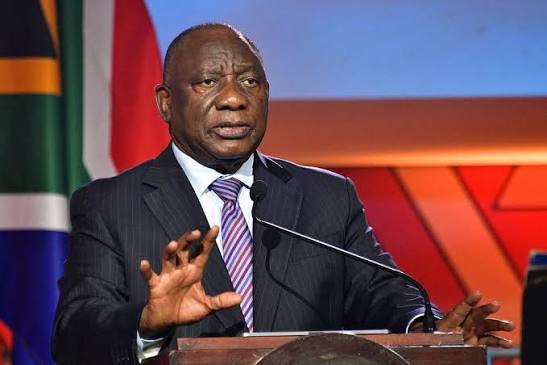
Picture: RSA president, Cyril Ramaphosa
By BAKANG MOKOTO
8 September 2026 – The Republic of South Africa (RSA) president, Cyril Ramaphosa said on Sunday, they held the South African Police Service National Commemoration Day, as they do every year, where they honour the police officers, who were killed in the line of duty in the past year. Ramaphosa said over the twelve months to March this year, twelve police officers lost their lives in the line of duty.
He further said although this is half as many deaths as the year before, even one death of a SAPS member is one too many. Ramaphosa added that each of these officers was a colleague, a friend and a member of a family.
“Their deaths remind us of the risks that thousands of police officers take every day so that the rest of us may be safer. We honour the bravery of these officers who put their lives on the line in the service of their country.
“As we consider the challenges facing our police today, it is worth remembering just how far we have come. For most people, the South African Police Service (SAPS) is the first they turn to when their safety is threatened, when there is an emergency or when they need to report a crime,” he said.
Ramaphosa said when the people call the police, often at a moment of great distress or danger, they expect that someone will answer. He said they expect that help will come.
“They expect that the law will protect them. This is an expectation that every South African has, regardless of where they live. The Constitution makes the SAPS responsible for law enforcement. Although the private security industry provides some complementary services, the responsibility for keeping the public safe ultimately rests with the state.
“Private security may protect those who can afford it, but public safety must be available to all. The SAPS remains at the fore of the work to keep our country safe. Beyond visible policing on our streets and in our communities, the SAPS conducts operations critical to our economy. This includes combating illegal mining through Operation Vala Umgodi and operations to dismantle syndicates involved in cable theft and infrastructure vandalism, smuggling and counterfeiting, human trafficking and other priority crimes,” said Ramaphosa.
He said much of this work happens away from public view. Ramaphosa said every day, police officers investigate crimes, track down suspects, gather evidence, patrol the communities and confront dangerous criminals.
“Our men and women in uniform do so at a great cost to their personal safety. We often take for granted just how far we have come when it comes to the transformation of law enforcement in this country. The old South African Police was about control and brute force.
“It was dedicated to maintaining the apartheid order while suppressing any resistance or protest. For millions of South Africans, the police were not people to whom they could turn for protection. They were instruments of an oppressive state,” said Ramaphosa.
Following the democratic breakthrough, Ramaphosa said they began the hard task of building a new police service that was aligned with constitutional values and human rights and that was accountable to the people it is mandated to serve. He said this required much more than changing the name of the police force.
“It required changing the very purpose of policing. We had to build a police service that no longer existed to protect the state from the people, but to protect the people and uphold their rights. Today, the work of the SAPS is subject to the oversight of a parliamentary portfolio committee, and the Independent Police Investigative Directorate was established to look into allegations of police misconduct.
“This accountability is an essential feature of democratic policing. Those who are entrusted with enforcing the law must themselves be subject to the law,” said Ramaphosa.
He said the re-orientation of the SAPS to service and accountability has been thrown into sharp relief as a number of apartheid-era crimes are under scrutiny, including Steve Biko’s death in police custody in 1977 and the case of the Cradock Four, who were murdered in 1985. Ramaphosa said despite being offered amnesty by the Truth and Reconciliation Commission in return for full disclosure, a number of apartheid-era police chose dishonesty and misrepresentation of the facts surrounding the deaths of the people they killed.

