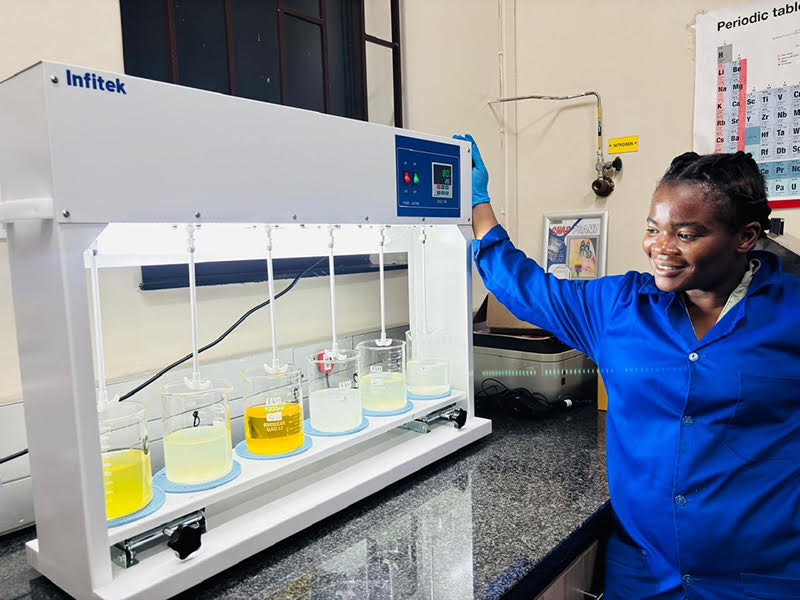
Picture: Dr Murendeni Ravele in the laboratory/Supplied
By STAFF REPORTER
27 October 2026 – What if the peel from a grapefruit could help clean polluted water? Research by Dr Murendeni Ravele, a researcher in the subject group Chemistry on the Mahikeng Campus from the North West University (NWU) said this shows that this common fruit waste could offer a cheaper, greener alternative to conventional methods for removing harmful substances from wastewater. Ravele said water pollution is a major concern in South Africa, as the recent water-linked diarrhoea outbreak in Tshwane and the recent identification of endocrine disrupting substances in tap water demonstrate.
She further said as towns and industries grow, more waste enters rivers and other water sources. Ravele added that some of these pollutants are recalcitrant and are very difficult to remove through normal water treatment methods.
“Thereby necessitating the need for more efficient methods of remediation. In this context, – explored how grapefruit peels could help remove suspended solids, toxic metals and traces of pharmaceutical contaminants from polluted water. The results of her study could help improve water treatment while reducing the use of harmful chemicals.
“The developed and tested two materials, coagulants from grapefruit peel extract and copper oxide (CuO) nanoparticles. The coagulant derived from grapefruit peel extract promoted the agglomeration of suspended particles in the water, facilitating their removal from water. The CuO nanoparticles absorb visible light from the sun to generate reactive radicals that mineralised the harmful substances,” she said.
Ravele further said the laboratory experiments showed that the grapefruit-based coagulant removed more than 97% of the turbidity from wastewater, while the CuO nanoparticles. She added that 98,5% of a highly toxic form of chromium into a less harmful form.
“Chromium is a metal used in some industrial processes and can pose serious health and environmental risks. The material also broke down 92% of the traces of ibuprofen, a common painkiller that can enter wastewater through human waste and has been categorized as one of the contaminants of emerging concern.
“The results of this study are promising because they show that materials often thrown away as waste could play an important role in treating polluted water and reduce our reliance on conventional chemicals. This contributes to waste valorisation and a circular economy,” said Ravele.
She said although she tested the two methods separately, the study suggests that they could complement each other. Ravele said one could remove turbidity and other suspensions, while the other could target pharmaceutical substances that remain in the water.
“However, further research is needed to determine how well they would work together in real wastewater treatment systems. The research highlights the value of turning agricultural waste into useful products. It also offers hope for developing cleaner, more affordable and environmentally friendly water treatment methods.

