By OBAKENG MAJE
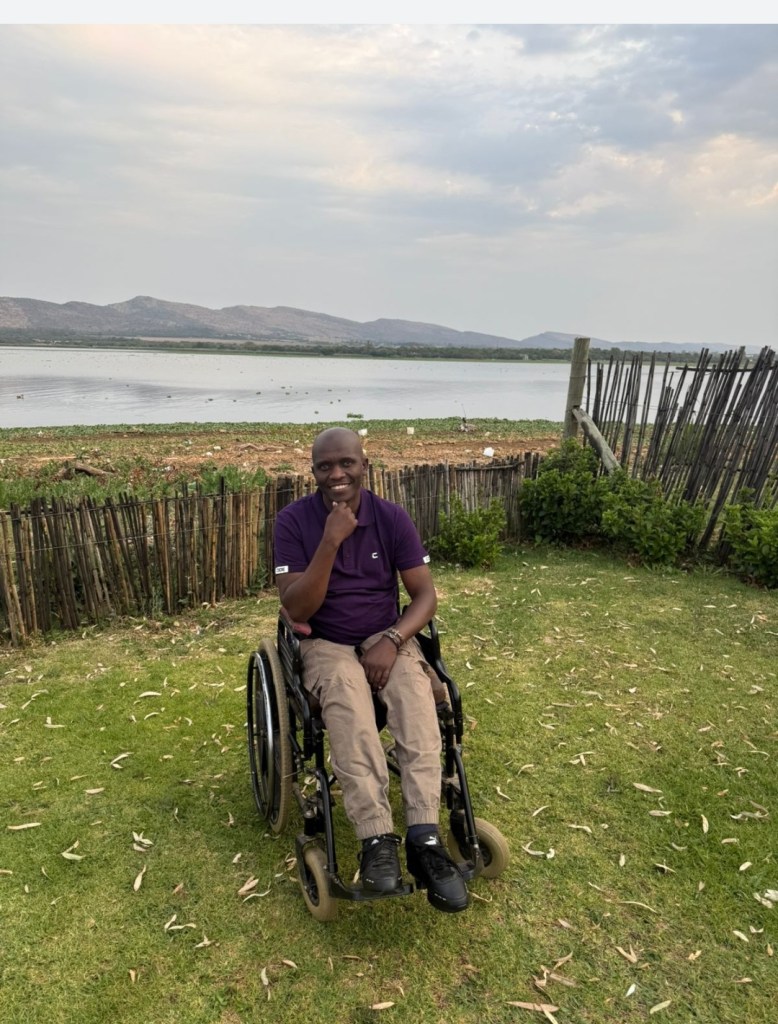
15 November 2026 – As the world observes the World Day of Remembrance for Road Traffic Victims, Ernest Nkabinde (46) is still coming to terms with the devastating reality that he may never walk again. Nkabinde’s life changed forever following a horrific car accident in 2012, which left him paralysed with a spinal cord injury and dependent on a wheelchair for mobility.
On 30 June 2012, Nkabinde was filled with excitement as he prepared for his upcoming wedding. He was driving home after delivering wedding invitations in Ga-Khunwana, a village near Delareyville in the North West, accompanied by his sister.
However, what began as an ordinary journey would turn into a life-changing tragedy. As they travelled from a smooth tarred road onto a gravel road, Nkabinde lost control of the vehicle.
The car overturned, leaving him unconscious. Fortunately, his sister, who was seated in the front passenger seat, escaped without injuries.
Nkabinde was rushed to hospital, where he remained unconscious until the following day. When he regained consciousness, he was confronted by excruciating pain and a devastating diagnosis.
Although the accident left no visible cuts or bruises on his body, the impact was far more serious. He had sustained a spinal cord injury that left him unable to move his legs.
More than a decade later, Nkabinde continues to live with the physical, emotional and social consequences of the accident.
“My mobility and independence have been affected forever. I will never walk or stand again, and I can no longer drive an ordinary vehicle. However, I can drive a specially modified car, but my driver’s licence needs to be converted to accommodate this.
“I can no longer cook because of my injuries. I have to bathe while seated on a chair under the shower or use a makeshift bathing tub, which I find more comfortable. I can no longer run, use public transport such as buses independently, or access buildings that have stairs but no lifts. I also cannot swim, something I used to enjoy tremendously,” he said.
Nkabinde further said he was passionate about soccer, but he has since had to give up playing the beautiful game. He added that even everyday activities, such as shopping for groceries, have become challenging, as he requires someone to accompany him to the shopping mall for assistance.
“Beyond the physical challenges, the accident also took a heavy emotional toll on my personal life. My relationship with my fiancée ended just months after the collision, as she struggled to cope with the challenges brought about by my disability.
“Despite these painful experiences, I refused to surrender to despair. I count myself fortunate to have continued working as a pastor after the accident. I chose to be patient with myself and to ask for help whenever I need it. Meeting people who had been living with disabilities and using wheelchairs for many years, as well as undergoing a month-long rehabilitation programme at Witrand Hospital in Potchefstroom, gave me the strength and inspiration to keep moving forward,” said Nkabinde.
He said he praises the support he received from healthcare professionals during his rehabilitation, particularly the psychologist, physiotherapist and social worker, who helped prepare him for the life-changing reality of living with a disability. Nkabinde said through rehabilitation, he acquired essential skills that enabled him to adapt to his new circumstances and regain some independence.
“I also acknowledge the important role played by the QuadPara Association of South Africa (QASA), a leading non-profit organisation representing people living with spinal cord injuries, including quadriplegics and paraplegics. As a member of QASA, I received much-needed support and assistance.
“QASA strives to develop products, programmes and services that build the capacity of its members while creating opportunities for their meaningful integration into society. One of its important initiatives is the Road Safety Early Intervention and Prevention Programme, which promotes responsible behaviour among all road users,” he said.
For Nkabinde, his story is more than a personal account of survival. It is a reminder that a single moment on the road can change lives forever.
As motorists travel during the festive season and beyond, buckle up, stay focused and make responsible decisions behind the wheel. A few seconds of carelessness can have lifelong consequences.
Meanwhile, QASA continues to roll out its road safety awareness campaigns at schools and petrol stations along national routes, particularly during peak holiday periods. The initiative aims to reduce motor vehicle accidents and prevent life-changing injuries by encouraging motorists to take responsibility for their actions on the road.
As part of the campaign, motorists are encouraged to sign a Safe Driving Pledge, committing themselves to wearing seatbelts, avoiding cell phone use while driving and practising responsible road behaviour. The campaign is driven by two powerful messages: “Buckle Up, We Don’t Want New Members” and “No Texting While Driving”.
Picture: Car crash survivor Ernest Nkabinde/Supplied

