Repeat child sex offender jailed for raping a boy


By REGINALD KANYANE

12 November 2026 – A repeated child sex offender (32) was sentenced to 20 years imprisonment by the Springbok Regional Court for raping a minor boy. The National Prosecuting Authority (NPA) in Northern Cape said Ryan Bekeur’s conviction is particularly concerning given his previous conviction for sexual assault on 6 September 2023.

The NPA regional spokesperson in Northern Cape, Mojalefa Senokoatsane said in that matter, Bekeur was sentenced to five years imprisonment, wholly suspended for five years on condition that he was not convicted of sexual assault during the period of suspension. Senokoatsane said the conviction arose from an incident in which he sexually assaulted a minor by touching the child’s private parts.

“The present offence was committed on 7 February 2026, in Vaalwater, near Springbok, where Bekeur and the victim lived in the same neighbourhood. The victim knew Bekeur by his nickname, Jallo. On the day of the incident, Bekeur lured the boy to a tree near a river, where he sexually assaulted and raped him.

“The incident was interrupted by a passerby who noticed what was happening and shouted at Bekeur and the victim. The child subsequently ran home and disclosed the incident to his cousin, who encouraged him to report the matter. He was taken for a medical examination and the findings recorded in the J88 medical report were consistent with the reported sexual assault,” he said.

Senokoatsane further said the Springbok Thuthuzela Care Centre played an important role in ensuring that the child received the necessary support following the incident. He added that through its victim-centred approach, the centre facilitated access to essential services, including medical care, psychosocial support and guidance throughout the criminal justice process.

“This intervention helped ensure that the child was treated with dignity, his rights were protected, and he received appropriate support following the traumatic experience. Bekeur was arrested on 21 February 2026 and remained in custody until the finalisation of the case.

“He pleaded guilty to rape and admitted that he was fully aware of his actions, that his conduct was unlawful and punishable by law, and that he understood the prescribed minimum sentence applicable to the offence. In determining an appropriate sentence, the court considered the prescribed minimum sentence of life imprisonment but found that substantial and compelling circumstances existed to justify a deviation,” said Senokoatsane.

He said the court considered, among other factors, Bekeur’s personal circumstances, the seriousness of the offence and the interests of the community and concluded that 20 years imprisonment was a just and appropriate sentence. Senokoatsane said in addition to the custodial sentence, the court declared Bekeur unfit to possess a firearm in terms of section 103 of the Firearms Control Act 60 of 2000.

“The court further declared him unfit to work with children and ordered that his particulars be entered into the National Register for Sex Offenders in terms of section 50 of the Criminal Law (Sexual Offences and Related Matters) Amendment Act 32 of 2007.

“The NPA regards sexual offences against children as among the most serious crimes because of the vulnerability of young victims and the profound and lasting harm caused by sexual abuse. Bekeur’s previous conviction for a sexual offence involving a minor makes the circumstances of this case particularly disturbing,” he said.

Senokoatsane said the sentence sends a strong message that those who prey on children will face serious consequences. He said the additional orders imposed by the court are equally important in protecting children by restricting Bekeur’s access to environments in which he could pose a further risk.

“The NPA commends regional court prosecutor Basil Kock and all role players involved in securing the conviction and sentence. The NPA remains resolute in its commitment to vigorously prosecute sexual offences against children, hold perpetrators accountable and safeguard the rights and dignity of victims without fear, favour or prejudice,” concluded Senokoatsane.


taungdailynews@gmail.com

‘Smith allegiance switch should not be turned into political weapon’


Picture: Iconic swimmer, Tatjana Smith

By OBAKENG MAJE

12 November 2026 – Iconic swimmer Tatjana Smith’s switch of allegiance to the Netherlands has sent a shockwave across the globe. Smith made an announcement that she will compete for the Netherlands in future.

The Minister of Sport, Arts and Culture, Gayton McKenzie wished her every success. McKenzie said Smith told him about her decision before she made it public.

“I would like to thank her for that courtesy, which says a great deal about her character. It is regrettable that some people have used a deeply personal decision by one of South Africa’s most loved athletes to attack the Minister. Tatjana’s choice belongs to her and it should not be turned into a political weapon.

“The department has twice honoured Smith at the South African Sport Awards, including with prize money. That recognition reflected the pride the whole country feels in what she has done for South Africa. The public needs to understand how sport is run in South Africa,” he said.

McKenzie further said national federations are deliberately independent of government. He added that they are governed by their own boards and answer to their international bodies.

“Where the department funds a federation, the federation must account for that money – but the department does not run federations, and it cannot take on all of their costs. That includes the significant cost of competing internationally. The people who lead federations are responsible for running their affairs sustainably and for attracting the partners and sponsors who can pay for these costs.

“SA Rugby does not ask the department to pay for the Springboks to play overseas, even though it needs billions of rands each year to run their sport. That is the standard every federation should aim for. The department is aware of the problems at Swimming South Africa, including concerns athletes have raised,” said McKenzie.

He said these problems are being dealt with through a reform process that is under way and includes oversight from World Aquatics. The Department will keep monitoring that process closely. McKenzie said Smith retired after becoming South Africa’s most decorated Olympian.

“The country was delighted to see her return to the pool, but South Africa does not own her. She is her own person, and she deserves only success and happiness. Nothing can erase what Tatjana has achieved for South Africa.

“Every medal, every record and every anthem she gave us belongs to our history forever. We now have to share her with the Netherlands, but I have no doubt that her love for South Africa is as strong as ever. I believe she still has a great role to play in our country in the future. We wish her only the very best, much love and even more success,” he said.

taungdailynews@gmail.com

A man sentenced to life imprisonment for kidnapping and rape


By OBAKENG MAJE

12 November 2026 – A man (48) was sentenced life imprisonment by the Kimberley Sexual Offences Court for kidnapping and raping his former partner (31) in the presence of their eight-month-old child. The accused and the victim had previously been involved in a romantic relationship characterised by violence.

The National Prosecuting Authority (NPA) regional spokesperson in Northern Cape, Mojalefa Senokoatsane said following the breakdown of the relationship, the victim obtained a protection order, prohibiting the accused from assaulting her or entering her mother’s residence, where she was staying. Senokoatsane said the protection order followed earlier incidents involving the accused and the victim.

“On 24 January 2024, the accused went to the victim’s mother’s residence and forcibly removed their eight-month-old child in an attempt to compel the victim to come to him. The victim sought police assistance after he violated the protection order by taking the child from the prohibited premises.

“The police subsequently located, arrested him and the child was safely recovered. Despite being released on bail, the accused continued his unlawful conduct. On 20 July 2024, he pursued the victim to a friend’s residence, where she was with their child,” he said.

Senokoatsane said armed with an object believed to be a panga and concealed in a towel, he forcibly removed the victim and the child and took them to the victim’s mother’s residence. He said it was there that he raped the victim in the presence of their infant child.

“The victim reported the incident to the police, resulting in the accused’s arrest. During the trial, the state presented medical and forensic evidence in support of the rape charge, while the testimony of the victim’s mother supported the kidnapping charge.

“The court accepted the evidence presented by the state as credible and sufficient to sustain the convictions. In aggravation of sentence, the state presented Victim Impact Statements, compiled with the assistance of Court Preparation Officer (CPO), Lindo Sikhakhane, detailing the physical, emotional and psychological impact of the offences on the victim,” said Senokoatsane.

In determining an appropriate sentence, he said the court considered the seriousness of the offences, the accused’s previous convictions for violent crimes and the impact of his actions on the victim. Senokoatsane said the court found no substantial and compelling circumstances justifying a departure from the prescribed minimum sentence and consequently imposed life imprisonment for rape.

“The NPA regards this case as a stark demonstration of the devastating consequences of gender-based violence and intimate-partner violence, particularly where an abusive former partner uses intimidation, a child and physical violence as instruments of control.

“The commission of the rape in the presence of an eight-month-old child further aggravates the cruelty and seriousness of the crime. Protection orders are an important mechanism for safeguarding victims of domestic violence and must be respected.,” he said.

Senokoatsane said the NPA will continue to vigorously prosecute those who violate the rights, dignity and bodily integrity of women and children. He said the NPA welcomes the life sentence as an important measure of accountability and remains committed to prosecuting perpetrators of sexual and domestic violence without fear, favour or prejudice.

“Victims of abuse must be able to seek protection and justice without facing continued intimidation, retaliation or further victimisation. The identity of the accused is being withheld to protect the identity of the victim. The court imposed life imprisonment for rape, together with an additional seven years imprisonment for contravening Section 138 of the Children’s Act 38 of 2005,” concluded Senokoatsane.

taungdailynews@gmail.com

Communities urged to make use of Rapid Response Team amid service delivery challenges


Picture: North West MEC for COGHSTA, Oageng Molapisi

By BAKANG MOKOTO

12 November 2026 – The North West MEC for Cooperative Governance, Human Settlements and Traditional Affairs (COGHSTA), Oageng Molapisi is reminding communities of the availability and mandate of its existing four-member Rapid Response Team (RRT), which is tasked with responding to community grievances and coordinating interventions on service delivery-related matters across the province. Molapisi said this forms part of the department’s continued effort to strengthen municipal governance, address service delivery challenges and rebuild public confidence in government.

He further said the team will be responsible for engaging directly with communities experiencing dissatisfaction with the delivery of government services. Molapisi added that it will provide a platform for residents to raise their concerns, ensure that grievances are properly documented and facilitate engagements with relevant government departments, municipalities and other institutions to secure appropriate interventions.

“The Rapid Response Team forms part of the department’s proactive approach to strengthening government responsiveness and ensuring that community concerns are addressed before they escalate into disruptive protests. The Rapid Response Team provides an important link between communities and government.

“We want residents to know that there are officials specifically mandated to engage with them, listen to their concerns and facilitate engagements with the relevant institutions responsible for addressing service delivery challenges. The government cannot afford to wait until communities resort to protests before taking action,” he said.

Molapisi said they must be proactive, engage communities, understand their frustrations and ensure that their concerns are directed to the appropriate institutions for attention and resolution. He said the team will also intervene in service delivery-related matters requiring urgent attention by working closely with relevant stakeholders and institutions to ensure that community concerns receive the necessary consideration and follow-through.

“Through this initiative, we seek to identify unresolved service delivery challenges, facilitate appropriate interventions and prevent the escalation of community dissatisfaction into protests, which sometimes result in violence and the destruction of public infrastructure.

“The appointment of the four officials extends the department’s rapid response capacity across all four districts of the North West province, with each official designated to coordinate engagements and facilitate interventions within their respective areas. The department is encouraging communities to make use of the Rapid Response Team as an accessible channel for raising service delivery-related grievances and seeking assistance,” said Molapisi.

He emphasised that the initiative comes at a critical time as municipalities prepare for a new term of local government, highlighting the importance of strengthening relations between government and communities through effective communication, meaningful public participation and responsive governance. Molapisi said as they approach a new term of local government, they must ensure that communities remain at the centre of our service delivery efforts.

“Effective communication, meaningful public participation and timely responses to community grievances are critical to maintaining stability, unlocking service delivery bottlenecks and restoring public confidence in government.

“The department further wishes to inform communities that the current contractual period of the four Rapid Response Team members is scheduled to conclude on 31 March 2027,” he said.

Contact Details of Rapid Response Team

Bojanala District: Mr Walter Sehurutshe – 082 741 0650

Ngaka Modiri Molema District: Mr Justice Makolomakwe – 083 447 0608

Dr Kenneth Kaunda District: Mr Papi Matsepe – 082 286 4389

Dr Ruth Segomotsi Mompati District: Ms Motlalepule Matshwe – 071 776 7249

taungdailynews@gmail.com

SA continues to fall behind in the race to create jobs


By STAFF REPORTER

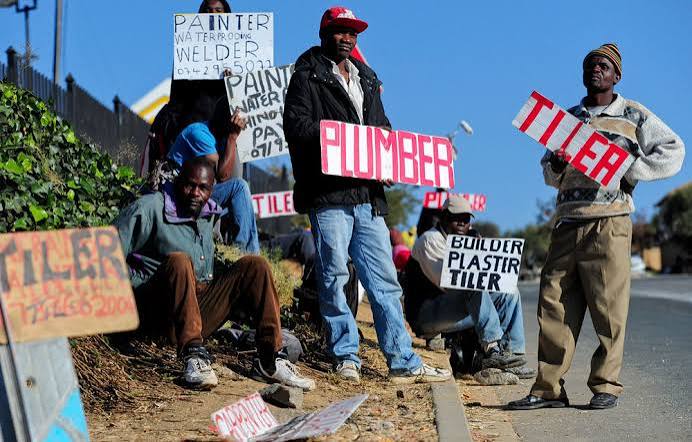
12 November 2026 – South Africa’s employment crisis is deepening, with the economy struggling to create jobs at a pace that matches the growing number of people entering the labour market. Despite adding 101 000 jobs in the third quarter of 2026, the country recorded a further increase in unemployment, highlighting the widening gap between employment opportunities and the number of people seeking work.

Statistics South Africa reported on Tuesday that the number of unemployed people increased by 97 000 to 8.6 million, pushing the official unemployment rate from 33.6% to 33.7%. Although the addition of 101 000 jobs may initially appear encouraging, the figures reveal a more concerning reality.

NWU Business School’s Chief Director, Prof Joseph Sekhampu said South Africa is not creating employment opportunities quickly enough to absorb its growing labour force. Sekhampu said the labour force expanded by 198 000 people or 0.8%, during the quarter, while employment grew by only 0.6%.

“To prevent the unemployment rate from increasing, the economy needed to create approximately 131 000 jobs. Instead, it fell short by about 30 000. In effect, the economy is working hard simply to maintain its position, yet continues to lose ground in the race to provide employment.

“While the latest figures could be viewed as a disappointing quarterly performance, a longer-term assessment shows that the problem is deeply entrenched. An analysis of annual employment averages indicates that employment growth has lagged behind labour force growth in 14 of the 17 full years since Statistics South Africa introduced its quarterly labour force survey series in 2008,” he said.

Sekhampu further said a comparison of corresponding quarters across the same period produces a similar picture, with employment growth falling behind in 55 of 71 comparisons. He added that the few exceptions do not necessarily indicate a meaningful recovery.

“In 2018 and 2025, job creation broadly kept pace with the number of people entering the labour market, allowing the economy to maintain its position rather than make substantial progress. In 2020, the labour force contracted more rapidly than employment as the COVID-19 pandemic discouraged many people from actively seeking work.

“The first three quarters of 2026 have, however, returned to the familiar pattern of employment growth failing to match the expansion of the labour force. The cumulative impact is particularly concerning. Since the beginning of the quarterly series in early 2008, South Africa’s labour force has expanded by approximately 35%, while employment has grown by only 17%,” said Sekhampu.

He said this means that job creation has occurred at roughly half the pace of growth in the number of people looking for work. Sekhampu said consequently, the number of unemployed people has nearly doubled, increasing from 4.4 million to 8.6 million.

“Rather than narrowing, the employment gap continues to widen, placing additional pressure on households, communities and the broader economy. Another important indicator is the proportion of working-age adults who are employed. In 2008, this figure averaged approximately 46%. South Africa has not returned to that level since early 2009, with the employment-to-population ratio now standing at 39.7%.

“Had the country maintained its 2008 employment ratio, more than 2.5 million additional people would be working today. Although not everyone outside employment is actively seeking a job, this comparison illustrates the significant ground the economy has lost over the years. The latest employment figures also reveal uneven trends across different sectors, with some areas recording substantial gains while others continue to shed jobs,” he said.

Sekhampu said formal-sector employment increased by 268 000 during the third quarter, with finance and business services contributing 111 000 additional jobs. He said this sector includes outsourced services such as cleaning and security, which have become important sources of employment.

“However, the informal sector recorded a decline of 98 000 jobs, while employment in private households fell by a further 68000. These losses are particularly significant because informal and household employment often provide essential income for vulnerable families.

“Domestic workers and gardeners, for example, frequently support entire households through their earnings, despite having limited employment security and fewer workplace protections. The contrasting performance of these sectors highlights the uneven nature of South Africa’s labour market, where employment gains are increasingly concentrated in more formalised areas while less protected workers bear a disproportionate share of the losses,” said Sekhampu.

taungdailynews@gmail.com

The nuclear renaissance is gaining momentum, but major challenges could derail progress


By STAFF REPORTER

12 November 2026 – The world is witnessing a renewed interest in nuclear energy as countries increasingly recognise its potential to strengthen energy security, drive industrial development and support the transition to cleaner energy. However, while the global nuclear renaissance presents significant opportunities, its success will depend on how effectively governments address the financial, institutional, technical and political challenges that could stand in the way of implementation.

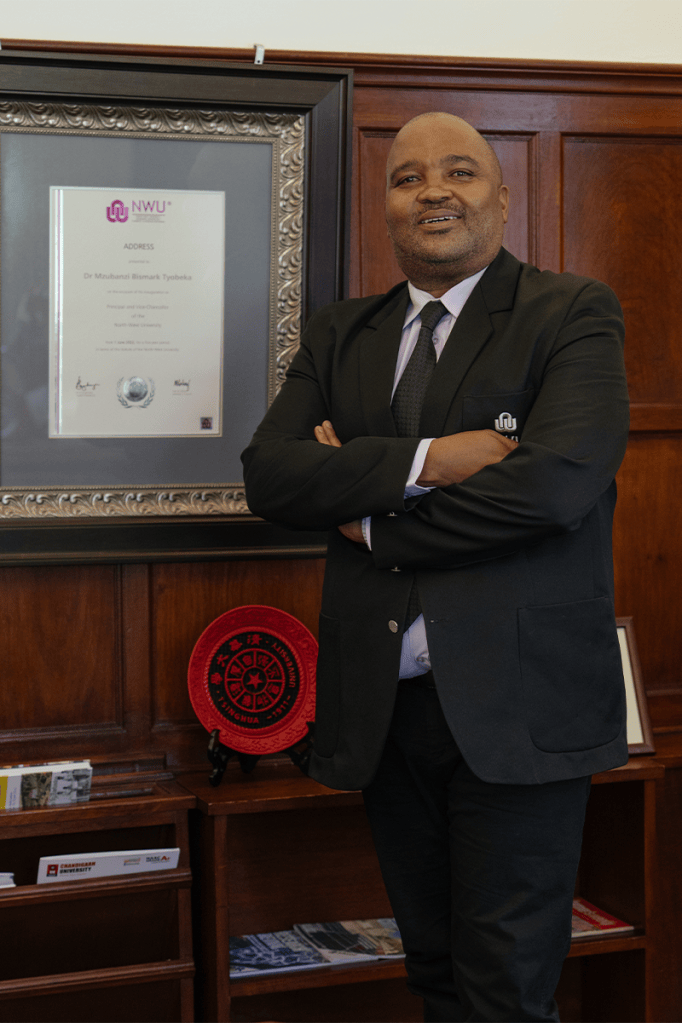
The North West University (NWU) principal and vice chancellor, Prof Bismark Tyobeka said participation in a side event on nuclear power in Africa at the International Atomic Energy Agency (IAEA) General Conference in Vienna, followed by the International Ministerial Conference on Nuclear Power hosted by the Republic of Korea in Incheon from 27 to 29 October 2026, reinforced his conviction that nuclear energy is once again becoming a major feature of national development strategies. Tyobeka said across these international engagements, discussions increasingly focused on energy security, industrialisation, decarbonisation and the human capital required to deliver sustainable nuclear programmes.

“This momentum is evident in several countries. Poland is advancing preparations for its first nuclear power station, Kazakhstan has selected Rosatom to lead the consortium for its first plant, while Viet Nam is rebuilding the institutional foundations of its revived nuclear programme.

“Egypt and Türkiye already have nuclear reactors under construction. Although these countries are at different stages of development, their efforts demonstrate a growing determination to incorporate nuclear energy into their long-term economic and energy strategies. Africa is also positioning itself to participate in this emerging nuclear landscape,” he said.

Tyobeka further said the Russia-Africa Summit held in Moscow in late October 2026, hosted by President Vladimir Putin, highlighted growing interest in nuclear cooperation between Russia and several African countries. He added that Ghana’s Foreign Minister subsequently announced cooperation with Russia towards developing a 2000-megawatt nuclear power plant.

“Rosatom also reported discussions on large nuclear power plants with Uganda, Ghana, Ethiopia and Egypt, as well as floating nuclear power plants with Egypt, Tanzania, Togo and Namibia. Rwanda, meanwhile, signed a memorandum of understanding aimed at assessing and developing its nuclear infrastructure, building on cooperation involving a small nuclear power plant and a nuclear science and technology centre.

“These developments are encouraging, but it is important to distinguish between political announcements, exploratory discussions, infrastructure agreements and fully financed construction projects. An agreement to explore nuclear cooperation does not automatically translate into electricity generation,” said Tyobeka.

He said the real challenge lies in turning political ambition into operational power stations capable of delivering reliable and affordable electricity. Tyobeka said South Africa has also reaffirmed its commitment to expanding its nuclear energy capacity.

Tyobeka said the country’s Integrated Resource Plan 2025 provides for an additional 5 200 megawatts of nuclear generation capacity by 2039.

“I support nuclear expansion, but I believe we must be equally honest about the obstacles that could undermine its success. The first major challenge is securing affordable and sustainable financing. Nuclear power projects require substantial capital investment long before they begin generating revenue.

“Construction delays increase financing costs, while foreign-currency borrowing exposes projects to exchange-rate fluctuations. A construction quotation that initially appears competitive can therefore result in electricity tariffs that consumers and businesses cannot afford,” he said.

taungdailynews@gmail.com

Man arrested for selling unlicensed firearm, silencer


Picture: An unlicensed hunting rifle, a silencer and a microscope/Supplied

By BAKANG MOKOTO

12 November 2026 – A man (41) briefly appeared before the Upington Magistrate’s Court following his arrest for allegedly selling an unlicensed hunting rifle, a silencer and a microscope valued at approximately R68 500. The arrest followed a disruptive operation conducted by the Upington-based Serious Organised Crime Investigation team of the Directorate for Priority Crime Investigation (Hawks), working together with members of the South African Police Service (SAPS) Public Order Policing.

According to the Hawks spokesperson in Northern Cape, Lieutenant Colonel Tebogo Thebe, the operation was launched after investigators received a tip-off about a man allegedly looking for a buyer for an unlicensed hunting rifle, together with a microscope and a silencer. Thebe said upon receiving the information, the team immediately operationalised it and deployed an unconventional investigative approach to track down and apprehend the suspect.

“The operation resulted in the successful arrest of the alleged seller after he had sold the firearm and the accompanying items, valued at approximately R68 500. Jean-Pierre Solomons was arrested and charged with contravening the Firearms Control Act 60 of 2000, relating to the possession and sale of unlicensed firearms.

“Solomons briefly appeared before the Upington Magistrate’s Court on 11 November 2026. The matter was postponed to 18 November 2026, for a bail application and the accused remains in custody. The Hawks have reiterated their commitment to combating the illegal possession and trade of firearms, warning that the unlawful circulation of weapons poses a serious threat to public safety and community security,” he said.

taungdailynews@gmail.com

EFF MPL in North West, Justice Dabampe back in court


By OBAKENG MAJE

12 November 2026 – North West Member of the Provincial Legislature (MPL) and Economic Freedom Fighters (EFF) Deputy Provincial Secretary, Justice Dabampe, who was arrested and charged with contravening the Electoral Act and intimidation, will be back in Christiana Magistrate’s Court today. This follows an incident at a voting station in Utlwanang Township, Christiana.

The incident reportedly occurred on 2 November 2026, when Dabampe allegedly entered the voting station accompanied by a group of people who were taking photographs and recording videos of him while he was casting his vote.

The North West police spokesperson, Colonel Adele Myburgh confirmed that police are investigating a case of contravention of the Electoral Act and intimidation following a complaint reported at the voting station.

Myburgh said a female presiding officer(39), who was on duty at the voting station, alleged that approximately 10 to 15 people arrived, some of whom were wearing T-shirts bearing the regalia of a political party.

“One of the individuals was reportedly carrying a camera, while others were recording a male who had arrived to cast his vote. The presiding officer questioned whether the individuals had the necessary accreditation to take photographs and videos at the voting station.

“In response, the male, who was accompanying the individual with the camera, allegedly stated that he was his photographer. He further threatened to destroy ballot papers inside the voting station if he was not allowed to cast his vote,” Myburgh said.

She added that IEC officials eventually allowed the man to cast his vote while videos were being recorded.

A case of contravention of the Electoral Act 73 of 1998 and intimidation was subsequently opened for investigation.

“A 29-year-old male suspect was arrested and briefly appeared before the Christiana Magistrates’ Court. He was granted bail of R500, and the case was postponed to 12 November 2026. Investigations are ongoing.

“The police urge members of the public and political party supporters to adhere to the Electoral Code of Conduct and allow the electoral process to unfold in a free and fair manner,” Myburgh said.

Meanwhile, IEC North West Provincial Electoral Commissioner Bonolo Modise confirmed that the commission was aware of the incident.

Modise explained that anyone entering a voting station must conduct themselves in accordance with the presiding officer’s instructions and obtain permission before undertaking any activity inside the voting station.

“You cannot simply walk into a voting station and do as you please. People should remember that the voting station is under the authority of the presiding officer.

“The presiding officer requested Dabampe to refrain from taking photographs or recording himself, but he refused to comply. As a result, the presiding officer requested assistance from police officers who were on duty at the time,” Modise said.

taungdailynews@gmail.com

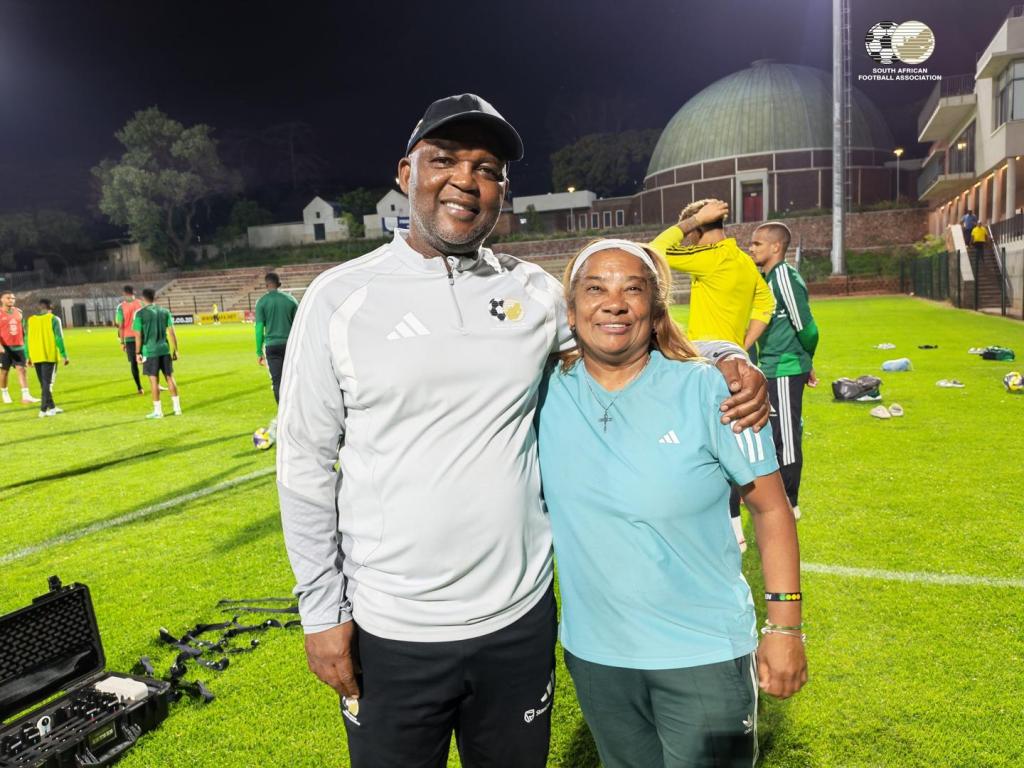
Banyana coach Dr Ellis drops by to visit Bafana


Picture: Banyana Banyana coach, Dr Desiree Ellis/Supplied

By BAKANG MOKOTO

12 November 2026 – Banyana Banyana coach Dr Desiree Ellis dropped by to visit Bafana Bafana during training at Milpark Stadium at Wits University, Johannesburg on Wednesday night. Bafana Bafana face Kenya in a 2027 Africa Cup of Nations qualifier at Orlando Amstel Arena on Friday night and Ellis attended MD-2 training session to support coach Pitso Mosimane and the South African senior men’s national team.

“We are here to support Bafana Bafana ahead of this important AFCON qualifier. It has been a great start to the qualifiers after the games against Guinea and Eritrea, and we will be at Orlando on Friday night to cheer for the team.

“We are also preparing for a challenge as Banyana Banyana take part in the upcoming 2027 FIFA Women’s World Cup Play-offs in Morocco in a few weeks’ time. The mini tournament will take place from 28 November to 5 December 2026,” she said.

Meanwhile, the World Cup play-off preliminary tournament will be played at the Mohammed VI Football Complex in Rabat. Tickets are on sale for Bafana Bafana’s AFCON qualifier on Friday and they are available at R100 for adults and R40 for kids 5-12 years old.

To purchase children’s tickets, please select at least one adult ticket first. Kids’ tickets cannot be purchased separately.

Gates Open: 15:00 pm.

taungdailynews@gmail.com

SA’s gender gap begins before the first payslip


Picture: Senior lecturer at the North West University (NWU) Business School, Dr Lungile Ntsizwane

By KEDIBONE MOLAETSI

12 November 2026 – The senior lecturer at the North West University (NWU) Business School, Dr Lungile Ntsizwane said the women’s unemployment stood at 37.5% in the second quarter of 2026, compared with 29.9% for men. Ntsizwane said a job may exist without being equally accessible to every person capable of doing it.

She further said only slightly more than one in three working-age South African women has a job. Ntsizwane added that a g ender-transformation agenda that begins at the workplace door begins too late.

“As Women’s Month draws to a close, South Africa’s attention has once again focused on women who have attained positions of economic power. We count those serving on boards, examine representation in senior management, compare earnings and ask why leadership remains unequal.

“These are necessary questions, but labour-market figures released by Statistics South Africa earlier this month draw attention to a much larger group of women who are less visible in the transformation debate: those who have not entered sustained employment at all,” she said.

Ntsizwane said in the second quarter of 2026, about 4.7 million women were unemployed in South Africa, compared with roughly 3.8 million men, leaving women with an unemployment rate of 37.5%, against 29.9% for men. She said more revealing is how few working-age women are employed at all.

“Only about 7.1 million of South Africa’s roughly 20.7 million working-age women had jobs, meaning that little more than one in three was employed. Among South Africans aged 15 to 24, 36.4% were neither employed nor in education or training, with the rate of those not in employment, education or training (NEET) remaining higher among young women than among young men.

“The gap is not simply a feature of one difficult quarter. Stats SA’s Quarterly Labour Force Survey has repeatedly recorded lower employment absorption and higher unemployment among women than among men,” said Ntsizwane.

She said this suggests that the disadvantage is embedded more deeply in the way South Africa’s labour market incorporates workers and cannot be explained by a temporary downturn alone. Ntsizwane said these figures cannot, by themselves, tell us why women experience the labour market differently.

“South Africa’s shortage of employment plainly affects men as well as women, and not every woman without a job should be regarded as someone involuntarily excluded from work. The deeper point is that an important aspect of South Africa’s gender inequality is already visible before wages, promotions and board appointments become relevant.

“The pay gap measures inequality among people who have already crossed one of the country’s most difficult economic boundaries: securing sustained employment. Much of our transformation architecture begins measuring inequality only once people have entered institutions,” she said.

Ntsizwane said they examine whom companies employ, what they earn, who advances into management and who reaches positions of ownership and authority. She said, however, these measures capture a population that has already passed through a powerful selection process.

“This matters particularly because women are not a small demographic constituency seeking representation within the economy. They constitute just over half of South Africa’s population, yet their incorporation into employment remains markedly weaker than that of men.

“To appear in a pay-gap statistic, a woman must first have had the education, time, mobility and opportunity required to secure employment. The conditions shaping that access are distributed unevenly. Unpaid care responsibilities, education, geography, transport, occupational patterns, safety and the general shortage of jobs can all affect whether employment is practically accessible,” said Ntsizwane.

She said labour-force data cannot isolate the contribution of each factor, but they reveal the cumulative outcome: women remain substantially less likely than men to be incorporated into employment. Ntsizwane said a job can therefore exist without being equally accessible to everyone capable of doing it.

“Employment may require an expensive commute, fixed working hours and the ability to work late, while households still depend on someone to care for children or elderly relatives and perform the daily work that keeps families functioning.

“Where these responsibilities fall disproportionately on women, apparently gender-neutral labour-market arrangements can produce gendered outcomes without an employer explicitly deciding to discriminate,” she said.

Ntsizwane said these private arrangements form part of the employment challenge. She said labour markets do not encounter workers as individuals carrying only qualifications and skills.

“They encounter people whose capacity to participate has already been shaped by households, transport systems, settlement patterns and social expectations. By the time similarly qualified candidates appear before an employer, inequality may already have affected who had the time, mobility and resources to reach that point.

“None of this makes the inequalities women encounter after entering employment any less important. Pay discrimination, occupational segregation and unequal opportunities for promotion remain consequential,” said Ntsizwane.

taungdailynews@gmail.com