By STAFF REPORTER
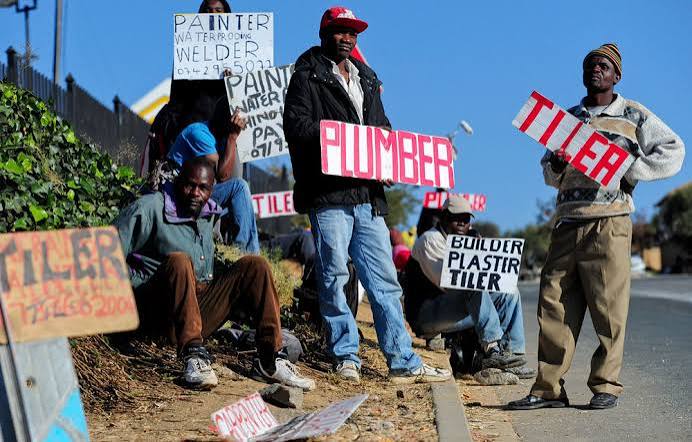
12 November 2026 – South Africa’s employment crisis is deepening, with the economy struggling to create jobs at a pace that matches the growing number of people entering the labour market. Despite adding 101 000 jobs in the third quarter of 2026, the country recorded a further increase in unemployment, highlighting the widening gap between employment opportunities and the number of people seeking work.
Statistics South Africa reported on Tuesday that the number of unemployed people increased by 97 000 to 8.6 million, pushing the official unemployment rate from 33.6% to 33.7%. Although the addition of 101 000 jobs may initially appear encouraging, the figures reveal a more concerning reality.
NWU Business School’s Chief Director, Prof Joseph Sekhampu said South Africa is not creating employment opportunities quickly enough to absorb its growing labour force. Sekhampu said the labour force expanded by 198 000 people or 0.8%, during the quarter, while employment grew by only 0.6%.
“To prevent the unemployment rate from increasing, the economy needed to create approximately 131 000 jobs. Instead, it fell short by about 30 000. In effect, the economy is working hard simply to maintain its position, yet continues to lose ground in the race to provide employment.
“While the latest figures could be viewed as a disappointing quarterly performance, a longer-term assessment shows that the problem is deeply entrenched. An analysis of annual employment averages indicates that employment growth has lagged behind labour force growth in 14 of the 17 full years since Statistics South Africa introduced its quarterly labour force survey series in 2008,” he said.
Sekhampu further said a comparison of corresponding quarters across the same period produces a similar picture, with employment growth falling behind in 55 of 71 comparisons. He added that the few exceptions do not necessarily indicate a meaningful recovery.
“In 2018 and 2025, job creation broadly kept pace with the number of people entering the labour market, allowing the economy to maintain its position rather than make substantial progress. In 2020, the labour force contracted more rapidly than employment as the COVID-19 pandemic discouraged many people from actively seeking work.
“The first three quarters of 2026 have, however, returned to the familiar pattern of employment growth failing to match the expansion of the labour force. The cumulative impact is particularly concerning. Since the beginning of the quarterly series in early 2008, South Africa’s labour force has expanded by approximately 35%, while employment has grown by only 17%,” said Sekhampu.
He said this means that job creation has occurred at roughly half the pace of growth in the number of people looking for work. Sekhampu said consequently, the number of unemployed people has nearly doubled, increasing from 4.4 million to 8.6 million.
“Rather than narrowing, the employment gap continues to widen, placing additional pressure on households, communities and the broader economy. Another important indicator is the proportion of working-age adults who are employed. In 2008, this figure averaged approximately 46%. South Africa has not returned to that level since early 2009, with the employment-to-population ratio now standing at 39.7%.
“Had the country maintained its 2008 employment ratio, more than 2.5 million additional people would be working today. Although not everyone outside employment is actively seeking a job, this comparison illustrates the significant ground the economy has lost over the years. The latest employment figures also reveal uneven trends across different sectors, with some areas recording substantial gains while others continue to shed jobs,” he said.
Sekhampu said formal-sector employment increased by 268 000 during the third quarter, with finance and business services contributing 111 000 additional jobs. He said this sector includes outsourced services such as cleaning and security, which have become important sources of employment.
“However, the informal sector recorded a decline of 98 000 jobs, while employment in private households fell by a further 68000. These losses are particularly significant because informal and household employment often provide essential income for vulnerable families.
“Domestic workers and gardeners, for example, frequently support entire households through their earnings, despite having limited employment security and fewer workplace protections. The contrasting performance of these sectors highlights the uneven nature of South Africa’s labour market, where employment gains are increasingly concentrated in more formalised areas while less protected workers bear a disproportionate share of the losses,” said Sekhampu.

