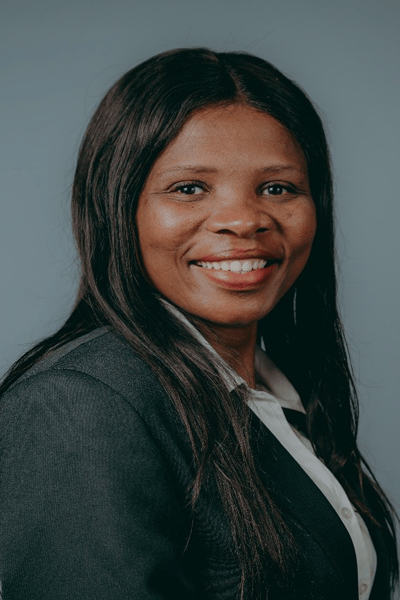
Picture: Senior lecturer at the North West University (NWU) Business School, Dr Lungile Ntsizwane
By KEDIBONE MOLAETSI
12 November 2026 – The senior lecturer at the North West University (NWU) Business School, Dr Lungile Ntsizwane said the women’s unemployment stood at 37.5% in the second quarter of 2026, compared with 29.9% for men. Ntsizwane said a job may exist without being equally accessible to every person capable of doing it.
She further said only slightly more than one in three working-age South African women has a job. Ntsizwane added that a g ender-transformation agenda that begins at the workplace door begins too late.
“As Women’s Month draws to a close, South Africa’s attention has once again focused on women who have attained positions of economic power. We count those serving on boards, examine representation in senior management, compare earnings and ask why leadership remains unequal.
“These are necessary questions, but labour-market figures released by Statistics South Africa earlier this month draw attention to a much larger group of women who are less visible in the transformation debate: those who have not entered sustained employment at all,” she said.
Ntsizwane said in the second quarter of 2026, about 4.7 million women were unemployed in South Africa, compared with roughly 3.8 million men, leaving women with an unemployment rate of 37.5%, against 29.9% for men. She said more revealing is how few working-age women are employed at all.
“Only about 7.1 million of South Africa’s roughly 20.7 million working-age women had jobs, meaning that little more than one in three was employed. Among South Africans aged 15 to 24, 36.4% were neither employed nor in education or training, with the rate of those not in employment, education or training (NEET) remaining higher among young women than among young men.
“The gap is not simply a feature of one difficult quarter. Stats SA’s Quarterly Labour Force Survey has repeatedly recorded lower employment absorption and higher unemployment among women than among men,” said Ntsizwane.
She said this suggests that the disadvantage is embedded more deeply in the way South Africa’s labour market incorporates workers and cannot be explained by a temporary downturn alone. Ntsizwane said these figures cannot, by themselves, tell us why women experience the labour market differently.
“South Africa’s shortage of employment plainly affects men as well as women, and not every woman without a job should be regarded as someone involuntarily excluded from work. The deeper point is that an important aspect of South Africa’s gender inequality is already visible before wages, promotions and board appointments become relevant.
“The pay gap measures inequality among people who have already crossed one of the country’s most difficult economic boundaries: securing sustained employment. Much of our transformation architecture begins measuring inequality only once people have entered institutions,” she said.
Ntsizwane said they examine whom companies employ, what they earn, who advances into management and who reaches positions of ownership and authority. She said, however, these measures capture a population that has already passed through a powerful selection process.
“This matters particularly because women are not a small demographic constituency seeking representation within the economy. They constitute just over half of South Africa’s population, yet their incorporation into employment remains markedly weaker than that of men.
“To appear in a pay-gap statistic, a woman must first have had the education, time, mobility and opportunity required to secure employment. The conditions shaping that access are distributed unevenly. Unpaid care responsibilities, education, geography, transport, occupational patterns, safety and the general shortage of jobs can all affect whether employment is practically accessible,” said Ntsizwane.
She said labour-force data cannot isolate the contribution of each factor, but they reveal the cumulative outcome: women remain substantially less likely than men to be incorporated into employment. Ntsizwane said a job can therefore exist without being equally accessible to everyone capable of doing it.
“Employment may require an expensive commute, fixed working hours and the ability to work late, while households still depend on someone to care for children or elderly relatives and perform the daily work that keeps families functioning.
“Where these responsibilities fall disproportionately on women, apparently gender-neutral labour-market arrangements can produce gendered outcomes without an employer explicitly deciding to discriminate,” she said.
Ntsizwane said these private arrangements form part of the employment challenge. She said labour markets do not encounter workers as individuals carrying only qualifications and skills.
“They encounter people whose capacity to participate has already been shaped by households, transport systems, settlement patterns and social expectations. By the time similarly qualified candidates appear before an employer, inequality may already have affected who had the time, mobility and resources to reach that point.
“None of this makes the inequalities women encounter after entering employment any less important. Pay discrimination, occupational segregation and unequal opportunities for promotion remain consequential,” said Ntsizwane.

