Debt sustainability is the key to development


By OBAKENG MAJE

8 July 2025- The Republic of South Africa (RSA) president, Cyril Ramaphosa said last week, the world came together at the 4th Financing for Development Conference in Sevilla, Spain, to agree on a set of actions to advance development over the next decade. Ramaphosa said this year’s conference took place at a moment of great consequence for humanity.

He further said they face more daunting challenges than at any other time, from the growing devastation caused by climate change to persistent levels of poverty in many parts of the world. Ramaphosa added that, to confront these challenges, they need to mobilise funding to tackle climate change, reduce poverty and build infrastructure that enables sustainable and inclusive economic growth.

“It is estimated that the world needs an extra $4 trillion dollars a year to meet the UN Sustainable Development Goals by 2030, a gap which can only be closed through more affordable, long-term sustainable financing. A major contributor to this financing gap is the growing debt burden faced by many developing economies, particularly those in Africa. Around 3.4 billion people now live in countries that are spending more on interest payments to creditors than on health and education.

“As the Jubilee Commission appointed by the late Pope Francis notes, while few countries have defaulted on their debt, they are defaulting on their people, their environment and their future. Debt can be a tool for development, if it is affordable and spent efficiently on infrastructure and other investments that support growth. However, a succession of external shocks – including the COVID-19 pandemic, the destabilising effect of various conflicts around the world and tightening financing conditions – has caused the cost of debt to rise rapidly for many developing economies,” he said.

Ramaphosa said at the inception of our G20 Presidency, they appointed an Africa Expert Panel led by Trevor Manuel, their former Minister of Finance, to develop recommendations that the G20 can take forward. He said they did so because they are convinced that Africa’s development must remain front and centre this year and into the future.

“We have since been focusing on practical solutions to achieve debt sustainability, such as improving the G20 Common Framework for debt treatments to enable timely and adequate debt restructuring. We are also working to expand the use of innovative mechanisms to alleviate the debt burden in times of crisis, such as climate resilient debt clauses, which automatically paused debt payments when a country faces a climate disaster.

“Going forward, a key priority is to ensure that more support is available to countries facing financial liquidity challenges, with interventions taking place early enough and providing enough relief to avoid a crisis. We have shown that this is possible through previous efforts spearheaded by the G20, such as the Debt Service Suspension Initiative, which created fiscal space for low-income countries during the COVID-19 pandemic,” said Ramaphosa.

He said there is no shortage of solutions to address the debt burden. What we need is the political will to translate proposals into action and to do so at a scale that matches the size of the challenge. Ramaphosa said countries committed in Sevilla to “take concrete actions to enhance fiscal space, address debt challenges of developing countries and lower the cost of capital”.

“This commitment was reinforced by the Rio de Janeiro Declaration adopted at the BRICS Leaders’ Summit in recent days, which recognised the need to “address in an effective, comprehensive and systematic manner the debt vulnerabilities of both low and middle income countries. The world cannot stand by and watch as rising debt service costs crowd out development for a generation or more.

“For this reason, South Africa is committed to working together with all countries to confront the debt challenge in a manner that is effective, sustainable and just,” he said.
taungdailynews@gmail.com

‘We need to stand up for the human rights of all people’


By BAKANG MOKOTO

24 March 2025- The Republic of South Africa (RSA) president, Cyril Ramaphosa said last week, they observed Human Rights Day, a day that honours the 69 unarmed protestors who were killed by the apartheid police in Sharpeville on 21 March 1960. Ramaphosa said since the advent of democracy, they have strived to build a society that recognises the injustices of the past, while advancing reconciliation and national unity.

He further said that is why as a country, they have chosen 21 March as an occasion to recommit themselves to the advancement of human rights for all. Ramaphosa added that, at the dawn of democracy, they chose the path of reconciliation and nation-building.

“The people of this country supported the adoption of a Constitution and a Bill of Rights that guarantees the human dignity of all regardless of their race, gender, culture, religion ethnic or social origin, age, disability, language or birth.

“South Africans should be proud of the fact that the majority of them continue to believe in democracy, human rights and the rule of law as universal values. Since the dawn of democracy, South Africans have been able to exercise their rights freely and many know that they can approach our independent courts and the institutions supporting democracy if their rights are infringed or violated,” he said.

Ramaphosa said they can be proud that South Africans are confident they have a voice and a say in how their country is run, demonstrated by the fact that they have held successive free and fair elections since 1994. He said in South Africa today, all citizens, African, white, Indian and coloured, male and female, enjoy equal rights and freedoms that the state is obliged to uphold, protect and advance.

“In South Africa today, there are constitutional protections guaranteed to all racial, cultural and linguistic groups, including their right to enjoy their culture and to use their language. As South Africans, we should therefore reject the politics of divisiveness that is emerging in many parts of the world.

“In particular, we should challenge the completely false narrative that our country is a place in which people of a certain race or culture are being targeted for persecution. We should not allow events beyond our shores to divide us or turn us against each other,” said Ramaphosa.

He said since the end of apartheid, the country has been recognised globally for upholding human rights. Ramaphosa said the free flow of ideas and opinions are vital to democracy and to having a vibrant society.

“Even those with the most offensive views should know that in democratic South Africa, and unlike many other parts of the world, our Constitution guarantees the right to freedom of expression, as long as it does not include incitement to violence or advocacy of racial and other hatred.

“Reflecting on the perilous state of human rights in many parts of the world today, including the resurgence of racism, South Africa’s path of reconciliation and nation-building becomes all the more important,” he said.  

Ramaphosa said as the United Nations Secretary-General António Guterres has observed, “a toxic legacy of historic enslavement, colonialism and discrimination” continues to infect many parts of the world. He said since they attained our freedom, South Africans have been steadfast in their solidarity with people everywhere who are facing persecution, discrimination and the violation of their rights.

“Human rights are universal and indivisible. As South Africa we stand in solidarity with all those whose right to lead lives of dignity are being undermined by conflict and war. The UN human rights system must be strengthened so that the enjoyment of human rights is no longer the preserve of some.

“As a country we will continue to repeat our call for a renewed global human rights movement so that the rights and dignity of all people should be upheld. As we reflect on the state of human rights in South Africa during this month, let us be proud of our achievements as a country,” said Ramaphosa.

He said at the same time, he said they should recommit themselves to working together to ensure the human rights culture is upheld and strengthened.

taungdailynews@gmail.com

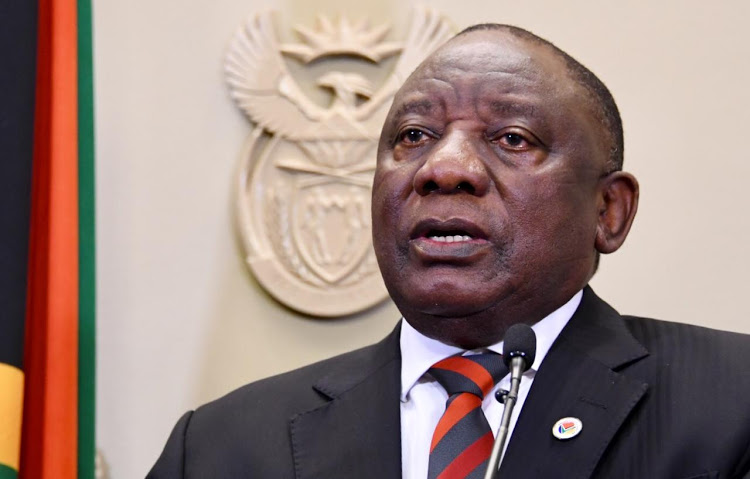
Picture: RSA president, Cyril Ramaphosa