By OBAKENG MAJE
30 October 2026 – The North West Provincial Treasury has intensified efforts to address unauthorised, irregular, fruitless and wasteful expenditure (UIFWE) in municipalities, as part of measures to strengthen financial management, improve accountability and protect public resources.
The initiative is being undertaken in collaboration with the Department of Cooperative Governance and Traditional Affairs (COGTA), the South African Local Government Association (SALGA) and municipalities across the province.
The engagements are aimed at assessing municipal progress in addressing historical UIFWE balances, identifying outstanding compliance challenges and implementing corrective measures to improve financial governance.
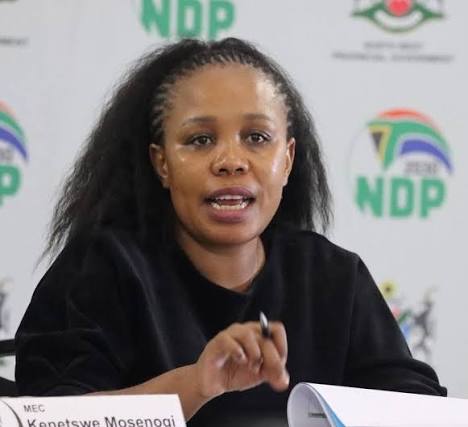
North West MEC for Finance, Kenetswe Mosenogi, said municipalities must demonstrate tangible progress in addressing UIFWE and ensure that public funds are managed responsibly.
“Municipalities must move beyond reporting UIFWE balances to implementing tangible systems that prevent irregularities, recover losses where applicable and hold those responsible accountable. The focus must be on measurable progress, supported by evidence and effective oversight,” said Mosenogi.
The engagements require municipalities to provide verifiable evidence of progress in addressing UIFWE balances, ensure that expenditure write-offs are lawful and properly supported, strengthen consequence management and demonstrate effective oversight by Municipal Public Accounts Committees (MPACs) and municipal councils.
The initiative comes amid National Treasury interventions involving the withholding of municipal equitable-share transfers.
Section 216(2) of the Constitution provides for the stopping of transfers to an organ of state in circumstances involving a serious or persistent material breach of measures established to ensure transparency and expenditure control, subject to applicable constitutional and legislative requirements.
The provincial engagements are intended to help municipalities address outstanding financial management weaknesses and implement corrective measures ahead of the December 2026 equitable-share tranche.
Chief Director for Municipal Financial Management, Linda Nengovhela, highlighted the importance of establishing effective financial management systems to prevent recurring UIFWE and ensure that allegations of financial misconduct are properly investigated and addressed.
Nengovhela identified Greater Taung Local Municipality as an example of progress in addressing irregular expenditure, while acknowledging that further work is required to deal with fruitless and wasteful expenditure.
She also emphasised the importance of applying Section 32 of the Municipal Finance Management Act, where applicable, to ensure that unauthorised, irregular, fruitless and wasteful expenditure is investigated and dealt with in accordance with the law.
MPACs were urged to strengthen their oversight responsibilities by scrutinising municipal financial management, examining outstanding UIFWE matters and supporting accountability through appropriate council processes.
The engagements further highlighted the need for outgoing MPACs and relevant municipal structures to maintain credible records and ensure that outstanding matters are properly handed over to their successors. This is intended to safeguard continuity in financial oversight and consequence management.
Municipalities that fail to meet applicable financial management and compliance requirements may face further intervention, including the possible withholding of the December 2026 equitable-share tranche by National Treasury, subject to the relevant statutory processes.
The Provincial Treasury stressed that equitable-share allocations are an important source of funding for municipalities, enabling them to provide essential services to communities.
It said effective financial management, timely corrective action and accountability were critical not only for compliance but also for protecting service delivery and ensuring that public resources benefit communities.

