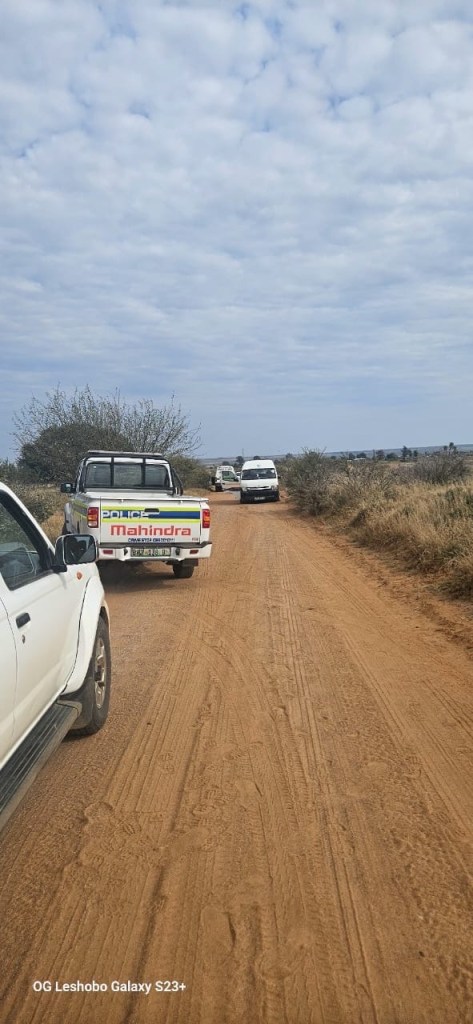
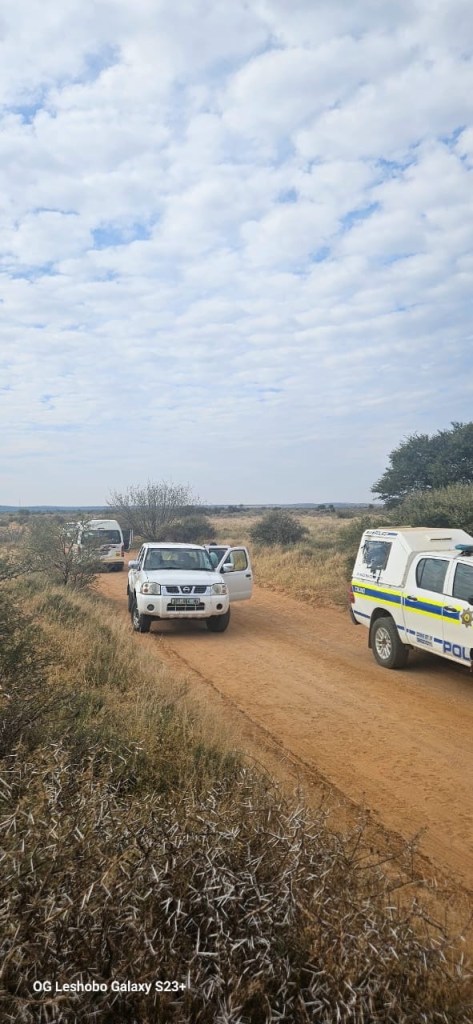
17 Mopitlwe 2025- Kgetsi ya polao kgatlhanong le lekawana la kwa motseng wa Lokgabeng, gaufi le Taung, e buseditswe morago ke kgotlhatshekelo ya Taung go fitlha 14 Motsheganong 2025. Simon Molale (22), yo a latofadiwang ka go tlhaba le go bolaya lekgarebe la gagwe, Tshepiso Medichane (21), o kwa ntlo-lefitshwana morago ga go ganelwa ka beile ke kgotlha-tshekelo ya Taung mo nakong e e fetileng.
Go begwa fa Molale a ne a tlhaba Medichane le go mo bolaya, mme one a tshaba kwa lefelong la tiragalo morago ga go bona batho.
Fela, go begwa fa ba lelapa la gagwe ba ne ba mo tshwara le go mo isa kwa seteisheneng sa sepodisi sa Taung di ura morago ga tiragalo e. Go begwa fa Molale a lekile go tsaya botshelo jwa gagwe pele ga ba lelapa la gagwe ba ka mo neela sepodisi ka motsi o.
Molale o ile a amogelwa kwa bookelo jwa selegae jwa Taung morago ga magatwe a gore o ile a itlhaba ka thipa.
Kgabagare, sebueledi sa sepodisi mo sedikeng sa Dr Ruth Segomotsi Mompati, Warrant Officer Tryphosa van Rooyen are Molale one a tshwarwa le go latofadiwa ka polao ya ga Medichane.
“Ke nnete molatofadiwa mo kgetsing e ya polao o tshwerwe. Molatofadiwa one a isiwa kwa seteisheneng sa sepodisi ke ba lelapa la gagwe.
“One a na le dikgobalo, mme o ile a amogelwa kwa bookelong jwa selegae. Molatofadiwa o lebagane le kgetsi ya polao, mme thipa e e dirisitsweng go bolaya moswi ene ya fitlhelwa kwa lefelong la tiragalo.”
Go fitlha ga jaana, bosekisi bo tlhalositse fa bo setse bo emetse dipholo tsa diteko tsa thipa e go begwang fa Molale a e dirisitse go bolaya Medichane, mme dipatlisiso mo kgetsing di a tswelela.
17 March 2025- • Hunters, especially international hunters, believe that they benefit local communities.
• International hunters spend up to four times more per visit than local hunters.
• International hunters perceive their impact to be greater than local hunters.
• The perspective of the local community is still missing.
The target is in his sights. In his mind, the buck’s meat is already processed. He pulls the trigger gently and the shot rings loudly, echoing across the South African bush. For the hunter, it was an exhilarating experience, one he shares with thousands of hunters every year. But what does hunting tourism really mean for the local communities that live alongside it?
A recent study by North-West University’s (NWU) Tourism Research in Economics, Environs and Society (TREES) research unit examines this controversial and often misunderstood industry from an unusual angle: through the eyes of the hunters themselves. This first-of-its-kind study was conducted by Prof Peet van der Merwe and Prof Elmarie Slabbert and published in the journal Development Southern Africa under the title The (ir)relevance of hunting tourism to rural communities: A hunter’s perspective.
The findings are provocative: hunters believe they are not just participating in a recreational activity, but actively shaping the economies, infrastructures, and social dynamics of South Africa’s rural communities. Whether or not local communities share this perception remains an open question.
Hunting tourism is big business in South Africa. Each year, thousands of international and local hunters descend on game farms and reserves, spending large sums of money on guides, lodging and permits. International hunters visiting South Africa’s shores are mainly from the United States and stay an average of ten nights per trip, compared to just three or four nights for their South African counterparts.
The difference in spending is stark, with foreign hunters investing up to four times more per visit. Their financial footprint extends beyond the confines of hunting lodges, spilling over into local communities in the form of employment, service contracts and donations. According to the study, nearly a third of international hunters donate meat from their kills to local communities, and a quarter contribute to schools and public projects.
But is this enough to call it a lifeline for rural South Africa?
The study’s authors argue that hunting tourism does not exist in a vacuum, but sits at the intersection of economic survival, conservation policy and cultural preservation. More than 30% of South Africa’s population lives in rural areas, where unemployment and poverty are widespread. Here, hunting tourism is a rare source of formal employment. Game farms and lodges create jobs for trackers, lodge staff, cooks, and artisans, providing opportunities where few alternatives exist.
Hunters see themselves as the driving force behind this development. Their presence, they argue, leads to improvements in infrastructure, better maintained roads and increased security in the areas where they hunt. They claim that crime decreases in hunting zones and that local pride in traditional cultural practices – such as sustainable wildlife management – flourishes under the influx of revenue. However, these claims remain largely untested from the perspective of the communities themselves.
For all its perceived benefits, hunting tourism is a polarising issue. Its critics argue that it prioritises short-term economic gain over long-term sustainability. Research outside South Africa, notably in Namibia and Botswana, has found that banning hunting tourism can lead to job losses and increased poaching as communities lose a legal means of profiting from wildlife. The South African study echoes these concerns: hunters overwhelmingly see themselves as allies in conservation, directly funding anti-poaching initiatives and wildlife management efforts. Yet conservationists remain divided over whether hunting and biodiversity conservation can truly coexist in the long run.
The NWU study categorised the impact of hunting tourism into three main factors: prosperity, empowerment and revitalisation. Economic benefits ranked highest, with hunters citing job creation, income generation and improved living standards as their top contributions. “Revitalisation”– the idea that hunting tourism physically transforms rural areas through development – came last. Even among the hunters surveyed, expectations of direct infrastructure improvements remained modest.
There was, however, a clear divide between foreign and domestic hunters. International visitors were far more likely to see themselves as key players in community development. They highlighted their financial contributions, their role in maintaining game farms and their support for local projects. South African hunters, while recognising the economic benefits, were less inclined to see their role as transformative. This may be because they are local hunters and do not fully recognise their contribution. It’s similar to people living by the coast not appreciating the ocean as much as people who visit the coast on holiday.
There is a simple reason for this. One of the findings of the study is that, although hunters are viewed as a collective, international hunters and local hunters have different perspectives on some of the impacts. The study showed that international hunting tourists perceive their impacts to be more significant than their domestic counterparts. Their spending may also influence their perceptions, as they spend three to four times more per hunt than domestic hunters. However, there are fewer international hunting tourists than local hunting tourists in South Africa; the impact of local hunting tourists is more important because they are more numerous. Local hunters should therefore be made more aware of their impact on communities. In simple terms, local hunters hunt more, which dilutes their own perceptions of their impact on local communities. They think less about the impact of their contributions.
The study suggests that South Africa’s hunting tourism model offers a potential blueprint for balancing conservation and rural development, but it also underscores how little is known about the actual on-the-ground effects. The voices missing from the conversation are those of local communities themselves. Do they see the same economic and social benefits as hunters? Are they benefiting equitably, or are the gains concentrated among landowners and tourism operators?
The study calls for further research, particularly from the perspective of those most affected. Until then, the debate about the place of hunting tourism in rural South Africa remains unresolved. But one thing is clear: for the hunters who return year after year, their impact is measured not just in the animals they hunt, but in the communities, they believe they are uplifting.
Picture: The Tourism representatives engage with tourists from China/Supplied
By KEDIBONE MOLAETSI
17 March 2025- The Deputy Minister of Tourism, Maggie Makhotso Sotyu said the Republic of South Africa and the People of Republic of China have a special bond that ties them together. Sotyu said the Chinese community’s history with South Africa dates back to the 1800s and is considered as an integral part of the society, and contributes significantly to the cultural and economic landscape.
She further said the prestige gathering they had is not only a reflection of the strong ties between Africa and China, but also a recognition of the vital role that women play in shaping industries, particularly in tourism. Sotyu added that the tourism sector remains a powerful driver of economic growth, job creation, and cultural exchange.
“However, for it to reach its full potential, we must ensure that women, who make up the majority of the tourism workforce, are given equal opportunities to lead, innovate, and thrive.
“In South Africa, we are committed to fostering gender equity within tourism, and I am proud to highlight several key initiatives that align with the vision of tourism,” she said.
Sotyu said Tourism is more than just showcasing landmarks. She said it is about storytelling, authenticity, and cultural exchange.
“Through our Cultural Immersion Programme for South African Tourist Guides, we are equipping our guides with skills and knowledge to create meaningful experiences for Chinese visitors, ensuring they gain a deeper understanding of our diverse heritage.
“This initiative strengthens our commitment to service excellence and ensures that tourists leave with not only beautiful memories but also a rich appreciation of our history and traditions,” said Sotyu.
She said it is important to inform the public that the implementation of the cultural Immersion programme for South African tourist guides and departmental officials in China took place in October 2024. Sotyu said given the growing significance of the Chinese Market to global tourism, her department identified Mandarin Language proficiency as a strategic opportunity for tourist guides.
“The department has taken steps to enhance the skills of South African tourist guides by implementing the Mandarin Language Programme. Since its inception, in 2019, to date, a number of guides have successfully passed the Hanyu Shuipin Kaoshi (HSK) exams at level 1 as part of phase1) and 2 as part of phase 2 respectively, reaching a proficiency that allows them to offer tours in Mandarin.
“A total of 22 tourist guides were recommended for phase 3 to visit China last October. I am sure that you would agree when I say this was a wonderful initiative that will ensure that South African tour guides can better meet the needs of Chinese tourists and provide them with memorable experiences,” she said.
Sotyu said to further encourage Chinese visitors to visit the shores, the South African government announced a ground-breaking Trusted Tour Operator Scheme which significantly eases the process and allows for a seamless visa application process for Chinese travellers and tour operators.
She said this scheme is truly a massive win for the tourism and business events sector.
“The Department of Tourism uses the new visa initiatives as enablers to grow tourism arrivals to South Africa which will in turn drive inclusive economic growth and job creation.
“It is also crucial to recognise the women in the tourism sector who face unique challenges, from access to funding and training to leadership opportunities. And it is for this reason that the Department of Tourism projects are designed to provide skills development, mentorship, and financial support to women entrepreneurs in the industry,” said Sotyu.
17 March 2025- A man (29) who killed Desmond Tutu (25), sentenced to 15 years imprisonment by the Klerksdorp Regional Court. It transpired during the trial that, Tutu was with his two friends on Sunday evening, 27 February 2022, at Kanana Township, in Orkney, when the accused, Papa Madule, emerged from the nearby tavern.
The North West police spokesperson, Brigadier Sabata Mokgwabone said Madule asked Tutu if he was a member of the SVK gang. Mokgwabone said although the victim replied that he was not, the accused stabbed him in the chest with a knife and then ran away.
“The police and paramedics were summoned to the scene, where the victim was declared dead. A case of murder was registered and taken by the Provincial Anti-Gang Unit for investigation, which resulted in Madule’s arrest on 3 March 2022.
“The accused was later granted R5000 bail. Following a series of court appearances, Madule was found guilty and sentenced to 15 years. The court further declared the accused unfit to possess a firearm in terms of Section 103 of the Firearms Control Act, 2000,” he said.
Meanwhile, the acting North West Police Commissioner, Major General Patrick Asaneng, commended the Investigating Officer, Warrant Officer Benett Tyukatha, and the state prosecutor, advocate Cassius Mona, for working together with other stakeholders to ensure that the accused was convicted. Asaneng further stated that the sentence will serve as a warning that gangsterism and related criminality will be dealt with effectively.
17 Mopitlwe 2025- Monna wa dingwaga di le 44 wa kwa motseng wa Mokassa 1, gaufi le Taung, o tlhokafetse. Se se tla morago ga gore setopo sa monna se bonwe fa thoko ga tsela-kgolo ya N18, kwa motseng wa Majaneng mo letsatsing la Tshipi.
Go begwa fa monna o, ane a na le dintho tsa go tlhabiwa mo tlhogong.
Go ya ka sebueledi sa sepodisi mo Bokone Bophirima, Brigadier Sabata Mokgwabone, sepodisi se tsweletse ka go batlana le ba losika ba moswi le go itse gore ke mang. Mokgwabone are leina la moswi le tla rebolwa morago ga dilo tseo tsotlhe.
“Sepodisi se boloditse dipatlisisi tsa go batlana le badiri ba tiro e, le gore e ka tswa e tlhotlhoeleditswe ke eng. Go fitlha ga jaana, ga gona ope o tshwerweng,” Mokgwabone wa tlhalosa.
14 Mopitlwe 2025- Monna (35) wa kwa motseng wa Modutung kwa Magogong, gaufi le Taung, o tla nama a letile kwa ntlo-lefitshwana morago ga gore kgotlhatshekelo ya Taung, e busetse morago kgetsi ya polao kgatlhanong le ene go fitlha ka 17 Mopitlwe 2025. Molatofadiwa, Thabiso Nkwane o ile a tshwarwa mabapi le polao ya ga mmagwe, Masego Irene Nkwane (56).
Go begwa fa go ile ga tsoga thefosano ya mafoko magareng ga moswi le mmelaelwa. Go ya ka dipego, mmelaelwa one a tsaya garawe le go kgenetha mmagwe ka yone.
Sebueledi sa sepodisi mono Bokone Bophirima, Brigadier Sabata Mokgwabone are, kegtsi e butswe, mme mmelaelwa o lebagane ke kgetsi ya polao.
Go begwa fa mmelaelwa a ne a lebotsa phokoje morago ga tiragalo. Sepodisi se ile sa mo tshwara ka Laboraro.
Kgabagare, baagi ba ikuela go puso go ka tlhoma seteishene sa sepodisi kwa motseng wa Magogong, gonne o fetogile kgapamadi.
Setshwantsho: Baithuti kwa sekolong se segolwane sa Maatla/Facebook
Ka OBAKENG MAJE
14 Mopitlwe 2025- Sekolo se segolwane sa Maatla kwa motsesetoropong wa Pudimoe, gaufi le Taung, se rotloetsa batsadi go direla baithuti dijo tse ba tla dijang kwa sekolong. Se, se tla morago ga dipego tsa gore madi a rekang dijo tse di fepang baithuti kwa sekolong (National School Nutrition Programme) a fedile.
Jaanong, bangwe ba batsadi ba baithuti ba ba sa batleng go itsiwe, ba latofatsa mogokgo ka go dirisa madi botlhatshwa. Batsadi ba, ba re mogokgo wa sekolo o tsaya dijo kwa lebenkeleng la batswakwa le le kwa dimmarakeng tsa Pudimoe (complex) ka sekoloto, mme a duele morago.
“Go na le magatwe a gore mogokgo o dirisana le batswakwa ba lebenkele leo. Jaanong, ke belaela a dirisitse madi botlhatshwa. Jaanong, baithuti ba ba tswang kwa malapeng a humanegileng ba tlile go dira jang?
“Ga gona se se botlhoko jaaka go ya sekolong o sa ja. Gape ere o fitlha kwa sekolong, o fitlhele dijo di seo. Baithuti ba le bantsi ba ikaegile ka sekema seo sa go ba neela dijo kwa sekolong. Re kopa lefapha le leke ka bojotlhe gore ba rarabolola mathata a,” motsadi wa tlhalosa.
Kgabagare, Lefapha la Thuto mono Bokone Bophirima, le kaile fa ele nnete gore go nnile le tiego mo go neelaneng ka thuso ya matlole go fepa baithuti.
Sebueledi sa Lefapha la Thuto mo Bokone Bophirima, Mphata Molokwane are: “Lefapha le tlhalositse fa madi a sekolo sa Maatla a setse a fedile, mme sekolo se sentse se emetse matlole. Jaaka lefapha, re akgola mogokgo wa sekolo ka mokgwa o a samaganeng le mathata a ka gone.
“Seo se bontshitse botlhale gore mogokgo a itsise batsadi ba baithuti go na le gore a didimale fela. Ke nnete go nnile le tiego ya go duelwa ga matlole kwa dikolong mabapi le go fepiwa ga baithuti.”
Molokwane are tiego eo, e tlhodilwe ke mathata a setegenike, mme seo se diragala thata fa go atimela bokhutlho jwa ngwaga wa ditshelete. Molokwane are dikolo tse dingwe di kgona go tswelela ka go neela baithuti dijo, fa tse dingwe di sa kgone.
“Mo mathateng otlhe a lebaganeng dikolo, batsadi ba tshwanetse gore ba itsisiwe,” Molokwane wa tlhalosa.
13 MARCH 2025- The police in Deben request the assistance of the public in tracing two persons of interest in solving a business robbery case that occurred in Deben on 18 April 2024. It is alleged that the business man (34), was robbed of his cell phone and an undisclosed amount of money by three unknown men.
The Northern Cape police spokesperson, Sergeant Molefi Shemane said the suspects pointed at him with a firearm and tied his hands with an electrical wire. Shemane said the two men of interest depicted in the identikits can assist the police with their investigation.
“Anyone with information who may know the whereabouts of the two men can contact Deben Detectives on 072 563 3233 or on 053 791 0003, during office hours or make use of SAPS Crime Stop number 08600 10111 or via the MySAPS App to send a tip-off.
“All information will be treated confidentially,” he said.
14 March 2025 – The Portfolio Committee on Planning, Monitoring and Evaluation has been briefed on public comments from the submissions received on the National State Enterprises Bill [B1-2024]. The committee stressed the importance of grounding the legislation in clearly defined policy frameworks and aligning the proposed regulatory system for state-owned enterprises (SOEs) with well-researched international best practices from countries facing similar challenges to those in South Africa.
The committee agreed on a comprehensive programme of engagement with stakeholders, which include
National Treasury, the Socio-Economic Impact Assessment Unit (Presidency) and with NEDLAC. The committee will use its oversight week visit programme to visit key SOEs, including South African Airways, Eskom, Denel, Transnet and the South African Post Office.
The Chairperson of Portfolio Committee, Teliswa Mngweba said the committee will use its planned oversight visit to SOEs from 24-28 March 2025, to gain a clearer understanding of the challenges these entities experience to ensure that the National State Enterprises Bill is realistic and creates the envisaged practical operational standards. Mngweba said, moreover, the committee will explore the feasibility of an international study tour to analyse best practices in SOE regulation in countries such as Singapore, Malaysia, China and Denmark, coordinating with the Office of the House Chairperson regarding this initiative.
“The committee will consider holding public hearings on the National State Enterprises Bill across all nine provinces and seek guidance on appropriate scheduling,” she said.
Picture: The suspects arrested during Operation Vula Umgodi/Supplied
By BAKANG MOKOTO
14 March 2025- Ten suspects were arrested for contravention of the Immigration Act, and other crimes during Operation Vala Umgodi. The police said Operation Vala Umgodi will continue undoubtedly to clamp down on illegal mining activities in the Namakwa and Frances Baard Districts of the Northern Cape.
The Northern Cape police spokesperson, Sergeant Timothy Sam said this was evident when the multi-disciplinary teams that included the Department of Home Affairs Immigration Services arrested the suspects for contravention of the Immigration Act, and other crimes during operations that commenced on 12 March 2025.
“The team’s actions and activities included visibility patrols, stop and searches and raids at specified addresses. The team in the Frances Baard District, pounced on a construction site in Kimberley and detained 6 undocumented immigrants and issued a fine of R2500 to the employer who employed undocumented persons.
“All the undocumented suspects were verified and processed for Court by the Department of Home Affairs Immigration Services. The team further arrested 2 more suspects aged 27 and 41 years, respectively for suspected stolen property,” said Sam.
He further said in the Namakwa District, the team received information about illegal dealing of drugs at two addresses in Port Nolloth, they operationalised the information and arrested the suspects aged 25 and 48, respectively for dealing in drugs. Sam added that numerous fines were issued for contravention of the Road Traffic Management Statutes, at various VCPs by the police.
“All arrested suspects are expected to appear soon in the Kimberley and Springbok Magistrate Courts respectively. The police, through Operation Vala Umgodi, will continue to stamp the authority of the state in clamping down on illegal mining and other related crimes.
“If you see something, say something. Report illegal mining to the SAPS Crime Stop 08600 10111,” he said.