Picture: The Municipal Manager of Mogalakwena Local Municipality, Morris Maluleke/Google
By KEDIBONE MOLAETSI
28 October 2026 – The Municipal Manager of Mogalakwena Local Municipality, Morris Maluleke (43) was denied bail by the Mokopane Magistrate’s Court in a R24 million fraud and corruption case. Maluleke appeared in court on 16 October 2026, for his formal bail application.
The National Prosecuting Authority (NPA) regional spokesperson in Limpopo, Mashudu Malabi said the application was opposed by the senior state advocates. Malabi said the state argued that Maluleke faces serious charges of fraud, corruption and money laundering.
“It further submitted that he may interfere with witnesses and ongoing investigations and that his release on bail would not be in the interests of justice at this stage. The court upheld the state’s submissions and denied Maluleke bail. He failed to discharge on a balance of probabilities, the onus to show that he should be admitted to bail.
“Maluleke was arrested on 7 October 2026, together with his company, Bona Cord Vulstasie, in connection with allegations of fraud, corruption and money laundering arising from a municipal fleet management contract. The state alleges that Maluleke initially approved a fleet contract valued at approximately R4 million and later authorised payments totalling R24 million, allegedly resulting in substantial financial loss to the municipality,” she said.
Malabi said the state further alleges that in December 2022, Maluleke irregularly awarded a R24 million fleet tender to Fleetmove (Pty) Ltd without following the prescribed Supply Chain Management processes. She added that although payments allegedly began in January 2023, services were only rendered between April and May 2023, after the municipality’s Legal Division threatened to terminate the contract.
“The investigation also uncovered allegations that payments totalling R230 000, which the state believes were kickbacks, were made into an account linked to Maluleke through a company of which he is the sole director. The matter has been postponed to 3 November 2026, for further investigation. Maluleke remains in custody.
“The NPA welcomes the court’s decision and remains committed to ensuring accountability for corruption and the misuse of public funds,” said Malabi.
28 October 2026 – An accused, Vusumzi Ntsondolo (50) was sentenced to life imprisonment by the Mossel Bay Regional Court for murder of his former girlfriend, Nwabisa Baliso (43), and 15 years imprisonment for murder of his friend, Luvuyo Mgwevelana (45) whom he stabbed 16 times. During the trial, Ntsondolo pleaded guilty in terms of section 112(2) of the Criminal Procedure Act 51 of 1977. In his plea explanation, Ntsondolo told the court that on the evening of 7 November 2025, he and Mgwevelana were drinking at a local tavern when Baliso arrived and called Mgwevelana outside.
The National Prosecuting Authority (NPA) regional spokesperson in Western Cape, Eric Ntabazalila said Ntsondolo attempted to follow them, but Baliso stopped him. Ntabazalila said Mgwevelana later returned and told Ntsondolo to leave Baliso alone, claiming that she was now his girlfriend.
“This resulted in an argument between the two men. Ntsondolo subsequently left the tavern and went home. The following morning, 8 November 2025, Mgwevelana arrived at Ntsondolo’s home after earlier sending him a voicenote inviting him to the tavern. An altercation ensued and Ntsondolo grabbed a knife from a table and stabbed Mgwevelana once in the chest, leaving him lying inside the house.
“Still armed with the knife, Ntsondolo then went looking for Baliso. He found her after asking her daughter (16) to call her. When Baliso returned with her daughter, she noticed blood on Ntsondolo’s shirt and asked him about it.
Ntsondolo then repeatedly stabbed Baliso in the presence of her daughter, despite the teenager’s attempts to intervene,” he said.
Ntabazalila further said Ntsondolo fled the scene while being pursued by community members and entered a colleague’s house, where he stabbed himself three times in the chest. He added that after leaving the house, community members caught up with him and assaulted him.
“Ntsondolo subsequently fled towards the local police station, flagged down a police vehicle and was taken to hospital. He was later arrested and charged with the two murders. In aggravation of sentence, state prosecutor, Makhi Cutshe, argued that there were no substantial and compelling circumstances justifying a departure from the prescribed minimum sentence.
“Cutshe argued that Ntsondolo’s conduct was not simply an impulsive act committed in the heat of the moment. After killing Mgwevelana, he did not stop or reconsider his actions. Instead, he armed himself with the knife, pursued Baliso and murdered her,” said Ntabazalila.
He said the prosecution submitted that this sequential course of violence demonstrated a deliberate intention to kill both victims. Ntabazalila said the state further argued that Baliso’s murder was a brutal manifestation of intimate-partner violence, male entitlement and an inability to accept the end of a relationship.
“The prosecution emphasised that former partners are not possessions and that romantic rejection can never justify violence. Particularly aggravating was the fact that Ntsondolo murdered Baliso in the presence of her daughter (16), who attempted to save her mother.
“The state argued that the psychological trauma inflicted on a child who witnessed her mother’s brutal murder significantly increased Ntsondolo’s moral blameworthiness. The court agreed with the prosecution’s submissions and imposed the life sentence,” he said.
Ntabazalila said the court also declared Ntsondolo unfit to possess a firearm and informed the victims’ families of their right to make representations to the Commissioner of Correctional Services should he be considered for parole, day parole or correctional supervision.
Meanwhile, the Western Cape Director of Public Prosecutions, Advocate Adrian Mopp, welcomed the sentence and commended the investigating and prosecution teams, as well as all role players who contributed to securing justice for the victims and their families. Mopp said this sentence sends an unequivocal message that women are not the property of their partners or former partners.
“The end of a relationship, jealousy or rejection can never justify violence. The NPA will continue to vigorously prosecute perpetrators of gender-based violence and femicide and advocate for sentences that reflect the seriousness of these crimes,” he said.
28 October 2026 – A man (31) was sentenced to life imprisonment by the Scottburgh Regional Court for killing his girlfriend (29) in Mandawe, on the KwaZulu-Natal south coast. The man was also convicted of unlawful possession of a firearm and ammunition following offences committed in March 2025.
According to National Prosecuting Authority (NPA) regional spokesperson in KwaZulu-Natal, Natasha Ramkisson-Kara, the accused and the deceased were in a relationship and had a child together. Ramkisson-Kara said On 30 March 2025, the accused went to the deceased’s cottage in Mandawe after she failed to answer his phone calls.
“When he found her, he accused her of communicating with strangers on her cellphone. The accused allegedly became angry and drew a firearm, prompting the deceased to scream. Her screams alerted neighbours, who warned him against committing any unlawful act.
“Despite their intervention, he shot her several times in the upper body. He then turned the firearm on himself and shot himself on the side of the head. He was taken to hospital, where he later recovered and was subsequently charged,” she said.
Ramkisson-Kara further said in court, the accused pleaded guilty to all charges in terms of Section 112 of the Criminal Procedure Act and was convicted accordingly. She added that during the sentencing proceedings, the state prosecutor, Thanusha Govender submitted the crime scene photo album, ballistic report and post-mortem report as evidence.
“Govender also presented a Victim Impact Statement compiled by the deceased’s mother, with assistance from Court Preparation Officer Nokukhanya Mkhize. In her statement, the deceased’s mother told the court that her daughter had been the family’s breadwinner and contributed financially towards various household expenses.
“She also described the trauma the murder had inflicted on the family. The court sentenced the accused to life imprisonment for murder, 15 years imprisonment for unlawful possession of a firearm and seven years imprisonment for unlawful possession of ammunition,” said Ramkisson-Kara.
She said the sentences were ordered to run concurrently, resulting in an effective sentence of life imprisonment. Ramkisson-Kara said he was also declared unfit to possess a firearm.
She said the NPA welcomed the sentence as an appropriate reflection of the seriousness of the crime. Ramkisson-Kara said the NPA reiterates that Gender-Based Violence and Femicide (GBVF) have no place in our society.
“Women have the right to safety and dignity, including within intimate relationships, and perpetrators who violate those rights must be held accountable. Combatting GBVF remained an organisational priority for the NPA.
“Working with our partners in the Justice, Crime Prevention and Security Cluster, we will continue to vigorously prosecute perpetrators of GBVF and ensure that victims and their families have access to justice,” she said.
28 October 2026 – The Office of the Director of Public Prosecutions (DPP) in Gauteng, has withdrawn the assault and extortion charges against Ismael Dawood after considering representations submitted on his behalf and reviewing the available evidence. The charges arose from an alleged incident in December 2023, when Dawood and the complainant allegedly met in Hillbrow, Johannesburg.
The National Prosecuting Authority (NPA) regional spokesperson in Gauteng, Magaboke Mohlatlole said it was alleged that Dawood assaulted the complainant and demanded money from him. Mohlatlole said the review included information that the complainant had allegedly involved other people in investment schemes that did not exist, leading to demands for repayment.
“The office found that the available evidence did not support the extortion charge and was insufficient to sustain the assault charge. The representations were therefore successful, and the charges have been withdrawn. The NPA remains committed to making prosecutorial decisions based on the evidence, the merits of each case and the applicable law.
“Every matter is assessed independently and objectively, in the interests of justice. The NPA reiterates its commitment to upholding the rule of law and carrying out its mandate without fear, favour or prejudice,” he said.
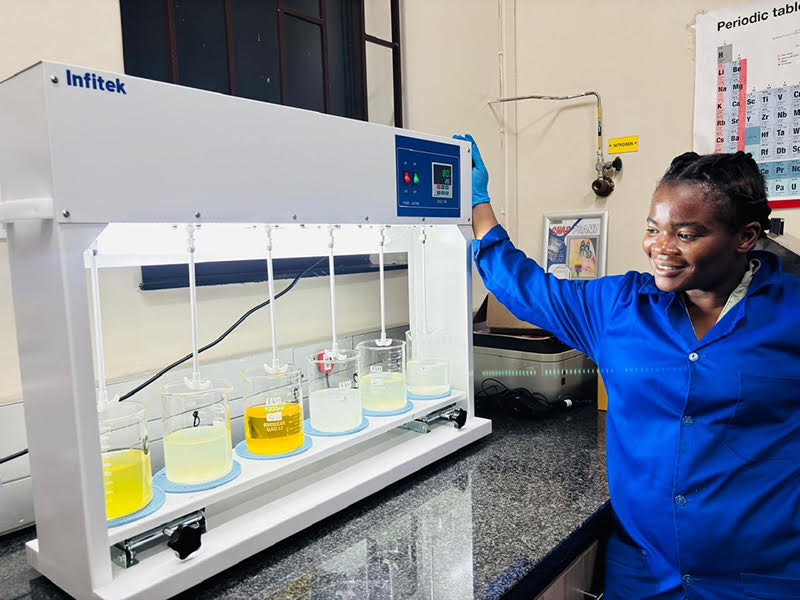
Picture: Dr Murendeni Ravele in the laboratory/Supplied
By STAFF REPORTER
27 October 2026 – What if the peel from a grapefruit could help clean polluted water? Research by Dr Murendeni Ravele, a researcher in the subject group Chemistry on the Mahikeng Campus from the North West University (NWU) said this shows that this common fruit waste could offer a cheaper, greener alternative to conventional methods for removing harmful substances from wastewater. Ravele said water pollution is a major concern in South Africa, as the recent water-linked diarrhoea outbreak in Tshwane and the recent identification of endocrine disrupting substances in tap water demonstrate.
She further said as towns and industries grow, more waste enters rivers and other water sources. Ravele added that some of these pollutants are recalcitrant and are very difficult to remove through normal water treatment methods.
“Thereby necessitating the need for more efficient methods of remediation. In this context, – explored how grapefruit peels could help remove suspended solids, toxic metals and traces of pharmaceutical contaminants from polluted water. The results of her study could help improve water treatment while reducing the use of harmful chemicals.
“The developed and tested two materials, coagulants from grapefruit peel extract and copper oxide (CuO) nanoparticles. The coagulant derived from grapefruit peel extract promoted the agglomeration of suspended particles in the water, facilitating their removal from water. The CuO nanoparticles absorb visible light from the sun to generate reactive radicals that mineralised the harmful substances,” she said.
Ravele further said the laboratory experiments showed that the grapefruit-based coagulant removed more than 97% of the turbidity from wastewater, while the CuO nanoparticles. She added that 98,5% of a highly toxic form of chromium into a less harmful form.
“Chromium is a metal used in some industrial processes and can pose serious health and environmental risks. The material also broke down 92% of the traces of ibuprofen, a common painkiller that can enter wastewater through human waste and has been categorized as one of the contaminants of emerging concern.
“The results of this study are promising because they show that materials often thrown away as waste could play an important role in treating polluted water and reduce our reliance on conventional chemicals. This contributes to waste valorisation and a circular economy,” said Ravele.
She said although she tested the two methods separately, the study suggests that they could complement each other. Ravele said one could remove turbidity and other suspensions, while the other could target pharmaceutical substances that remain in the water.
“However, further research is needed to determine how well they would work together in real wastewater treatment systems. The research highlights the value of turning agricultural waste into useful products. It also offers hope for developing cleaner, more affordable and environmentally friendly water treatment methods.
27 October 2026 – A man (49) has been sentenced to 10 years imprisonment after being convicted of rape and assault with intent to cause grievous bodily harm (GBH) against his girlfriend (29) in Niekerkshoop. The conviction and sentence were secured through the diligent investigative work of Detective Constable Boipolelo Criselda Polelo of the Pixley ka Seme District Family Violence, Child Protection and Sexual Offences (FCS) Unit.
The Northern Cape police spokesperson, Lieutenant Colonel Thabo Litabe said the incident occurred at the victim’s home on Monday, 30 March 2026. Litabe said the evidence presented in the Griekwastad Regional Court revealed that the accused, Floyd van Wyk, arrived at the woman’s home at approximately 7:45pm and accused her of selling her body to other men.
“He then slapped her in the face, undressed her and raped her before stabbing her in the hip with a knife. He also twisted her already broken leg. The police were alerted to the incident and a case of rape and assault with intent to cause grievous bodily harm was registered at the Niekerkshoop Police Station.
“The accused was arrested on the same day. Detective Constable Polelo was assigned to investigate the case. Her investigation ultimately led to the accused’s conviction and sentencing,” he said.
The acting Northern Cape Police Commissioner, Major General Luntu Ngubelanga, commended Polelo for her dedication and thorough investigative work, which ensured that the perpetrator was brought to justice. Ngubelanga said South African Police Service (SAPS) in the Northern Cape reaffirmed its commitment to intensifying efforts to combat gender-based violence and femicide (GBVF), in line with the organisation’s newly established Reset Agenda.
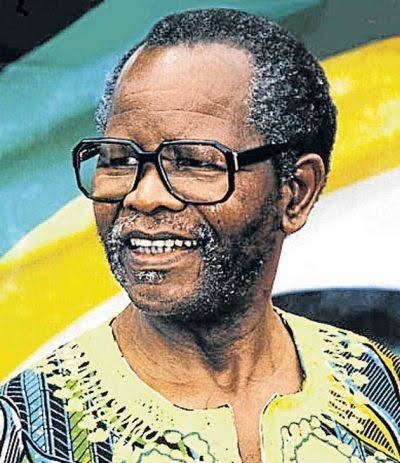
Picture: ANC former president, Reginald Oliver Tambo
By KEDIBONE MOLAETSI
27 October 2026 – The African National Congress Veterans’ League (ANCVL) has called on South Africans to uphold the legacy of former ANC president Oliver Reginald Kaizana Tambo by promoting ethical leadership, accountability, non-racialism and effective governance. In a media statement, the league said the principles championed by Tambo should translate into tangible improvements in the lives of ordinary South Africans, particularly amid persistent poverty, unemployment, inequality and social exclusion.
The statement, issued to commemorate the 109th anniversary of Tambo’s birth, described him as a revolutionary whose life was characterised by sacrifice, humility, integrity and an unwavering commitment to the freedom and dignity of all South Africans.
ANCVL president, Snuki Zikalala said Tambo had sustained the liberation movement during some of its most difficult years in exile and under apartheid oppression. Zikalala highlighted Tambo’s leadership during periods of low morale, internal divisions and military setbacks, noting that the Morogoro ANC Conference was convened to help steer the organisation away from the brink of collapse.
He also recalled Tambo’s international diplomatic efforts in the late 1980s to secure support for the Consensus Resolution, which helped establish a framework for negotiations towards a democratic South Africa.
“This is the mark of a true leader and shows what is possible when leadership prioritises the will of the people and trusts them. The league linked Tambo’s legacy to contemporary global political developments, expressing concern about the rise of authoritarian and right-wing governments, violence, exploitation and discrimination against vulnerable communities.
“It also highlighted the role of young people and student-led movements in challenging political establishments in different parts of the world,” said Zikalala.
With elections approaching in several countries, he expressed hope that opposition to exploitation, violence and discrimination against migrants, Palestinians, black people and LGBTIQ+ communities would gain momentum. Turning its attention to South Africa, Zikalala said the forthcoming local government elections would test whether voters believed the ANC continued to uphold Tambo’s legacy and his faith in the will of the people.
“Voting for the ANC should not simply be an endorsement of its liberation history, but should also reflect confidence in its ability to deliver effective governance and improve people’s lives.
“Thirty-two years into our democracy, we have made significant strides, but poverty, unemployment, inequality and social exclusion continue to undermine what freedom promised,” he said.
Zikalala warned that frustration over persistent socio-economic challenges had driven some people towards political parties promising quick solutions, while others had become disillusioned with voting and government. He also raised concern about attempts to blame migrants for the country’s challenges, arguing that complex social and economic problems required meaningful solutions rather than scapegoating.
“The ANC remains the political party most committed to the constitutional principles associated with Tambo and the protection of democratic processes and institutions. However, we stress that respect for Tambo’s legacy must be demonstrated through ethical leadership, accountability and a renewed commitment to serving the public.
“We call for leaders to acknowledge the complexity of the country’s challenges and avoid making unrealistic promises. We further reaffirm the importance of Tambo’s commitment to non-racialism, saying South Africa’s diversity should unite rather than divide its people,” said Zikalala.
He said at a time when social fragmentation and intolerance threaten their national cohesion, they must reaffirm their common humanity and embrace the values of Ubuntu, mutual respect and solidarity. Zikalala said although Tambo did not live to witness South Africa’s democratic breakthrough in 1994, the league said his contribution had helped lay the foundations for democracy.
“We call on South Africans to honour his legacy by defending democratic institutions, holding political leaders accountable and ensuring that the needs and aspirations of ordinary citizens remained central to governance.
“This responsibility extended to the more than 10 000 ANC candidates contesting positions across the country in the forthcoming local government elections,” he said.
Zikalala concluded by urging voters to support the ANC in the elections scheduled for 4 November 2026, presenting the vote as an opportunity to advance democratic governance and resist authoritarianism.
Picture: The Minister of Justice and Constitutional Development, Mmamoloko Kubayi
By REGINALD KANYANE
27 October 2026 – Government is strengthening its engagement with traditional leaders, community organisations and civil society to address illegal migration, reclaim hijacked state-owned buildings and improve the enforcement of immigration laws. This follows a meeting between the Inter-Ministerial Committee (IMC) on migration.
The Minister of Justice and Constitutional Development, Mmamoloko Kubayi said delegation included representatives of the Black Business Forum, Binca Nation, led by its president, Ngizwe Mchunu, and leaders of Hlangana Mzansi. Kubayi said the engagement comes amid several marches to Home Affairs offices by groups calling for stricter enforcement of immigration laws and action against undocumented migrants.
Briefing the media in Pretoria on Monday, Kubayi said the delegation had expressed its willingness to work with government to find practical solutions to illegal migration while supporting efforts to build a safe, secure, prosperous and united South Africa.
“The delegation expressed its support for the government’s efforts to build a safe, secure, prosperous and united country and to address illegal migration decisively. We welcome the community leaders’ commitment to nation-building and to finding solutions to illegal migration.
“The delegation had reaffirmed its respect for South African laws, the judiciary and court judgments, while committing to initiatives aimed at promoting stability and economic growth,” she said.
Kubayi further said the group also raised concerns about unemployment, particularly among young people and pledged to support government efforts to restore investor confidence and revitalise the tourism sector, especially in KwaZulu-Natal. She added that the delegation had clarified that its concerns were directed at illegal migration and undocumented migrants, rather than lawful immigration.
“They also reaffirmed that they are not opposed to immigration that is legal and migrants who respect South Africa’s laws and live amongst the South African people engaged in legal and productive activities. They made it clear that what they vehemently oppose is illegal migration and undocumented migrants.
“The reclaiming of hijacked and illegally occupied state-owned buildings was among the key issues discussed during the meeting. The delegation had expressed an interest in partnering with government to address the unlawful occupation of government buildings, which are allegedly being used for criminal activities, including drug dealing and human trafficking,” said Kubayi.
She said IMC has already engaged provincial and municipal leadership, including premiers, members of provincial executive councils, mayors, city managers, metropolitan police and senior South African Police Service officials, to develop a coordinated response. Kubayi sais they have identified hijacked government buildings by street in the eight metros [of the country] and appointed legal representatives to facilitate the removal of unlawful occupants.
“The government is also working with the private sector to repurpose abandoned and illegally occupied buildings. Government has also identified and profiled state-owned buildings across all metropolitan municipalities, with the next phase focusing on identifying such properties in secondary cities.
“A team of lawyers has been appointed to assist with the legal processes required to reclaim the buildings,” she said.
Kubayi said the delegation also expressed interest in participating in ongoing legal proceedings concerning migration and asylum seekers. She said these include the Scalabrini matter, in which the Constitutional Court delivered a judgment on the rights of asylum seekers, as well as proceedings in the Gauteng High Court concerning conflicting judgments on whether undocumented people who have applied for asylum may be detained.
“The IMC raised concerns about the contradictory Gauteng High Court judgments and requested that the matter be heard by a full bench. The matter is scheduled to be considered on 29 October 2026.
“We urge members of the public to exercise caution when sharing information about the Constitutional Court judgment, warning against the spread of unverified claims,” said Kubayi.
She also urge all citizens not to spread unverified information about the Constitutional Court Judgement. Kubayi said residents must ensure that they verify the sources of information about this judgment. Check that the information you get is from a credible source and that it is correct.
“Government’s response to migration would continue to be guided by the five-point plan announced by President Cyril Ramaphosa in June. The plan focuses on cracking down on violations of immigration laws, securing the country’s borders, strengthening the immigration system, closing gaps in migration laws and policies, and working with other African countries to manage migration.
“During the meeting, the delegation also raised concerns about migrant documentation, allegations that South African immigration officials were issuing illegal documents, and the role of law enforcement agencies in enforcing immigration laws,” she said.
Kubayi said the group further emphasised that calls for stricter enforcement of immigration laws should not automatically be interpreted as xenophobia. She said it expressed its willingness to work with government towards building a prosperous South Africa.
“The meeting concluded with an agreement that government would collaborate with the delegation and other interested parties, including traditional leaders, to address the concerns raised and strengthen cooperation in managing migration,” said Kubayi.
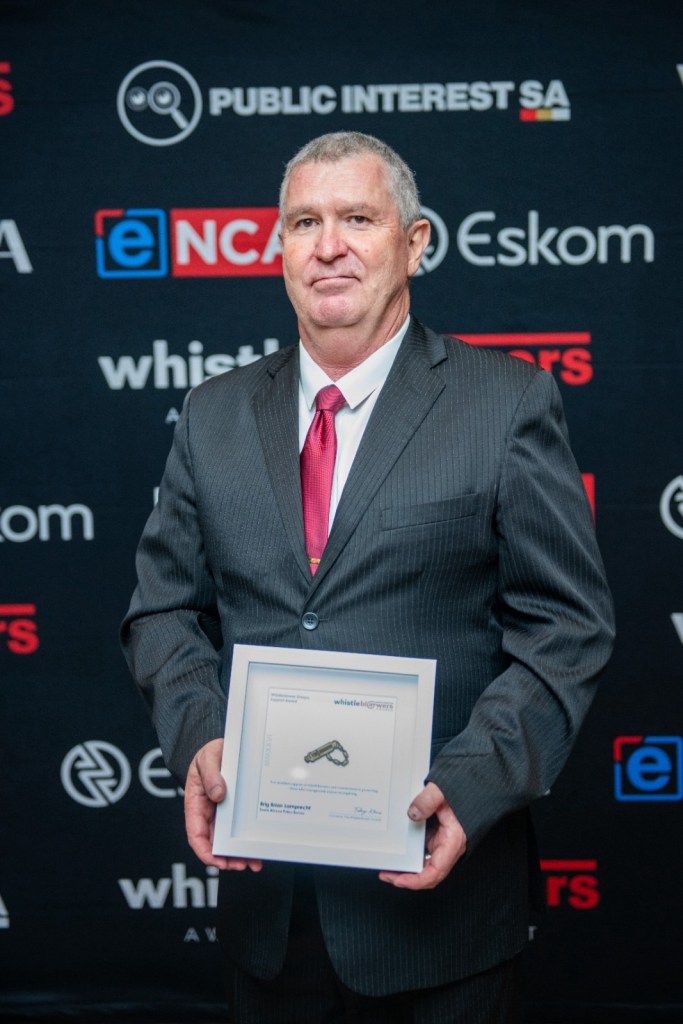
27 October 2026 – The National Police Commissioner, General Fannie Masemola has congratulated Brigadier Adriaan Jacobus “Attie” Lamprecht (59), on receiving the Whistleblower Sherpa Support Award at Public Interest South Africa’s 2026 Whistleblower Awards. Held under the theme: “Honouring Courage. Inspiring Integrity,” the awards ceremony recognised Lamprecht and nominees from various sectors for their courage, integrity and outstanding contributions to the people of South Africa.
With 42 years of service in the SAPS, Lamprecht currently oversees several sections at national level, including Crime Stop, Harmful and Occult Crimes, and the Bureau for Missing Persons, which he established in 1994. For more than 30 years, he has headed the internationally recognised Crime Stop Call Centre, which can be reached on 08600 10111.
Masemola said the service enables members of the public to report information about criminal activities anonymously. He said Crime Stoppers International has previously recognised South Africa for its exceptional handling of anonymous tip-offs from members of the public.
“Since its establishment 34 years ago, Crime Stop has maintained a strong track record of protecting the identities of informants who provide information through the platform.
“Over the years, information received through Crime Stop has contributed to thousands of arrests and the seizure of illicit goods and other criminal assets worth hundreds of millions of rand,” said Masemola.
He further said Lamprecht also serves as a director of Crime Stoppers International, a global organisation committed to strengthening anonymous crime-reporting systems and supporting crime-prevention initiatives. Masemola added that he holds a PhD in Sociology and previously managed the Witness Protection Programme when it was administered by the SAPS.
“His experience further underscores his longstanding commitment to protecting individuals who assist law enforcement agencies in the fight against crime.
“We commend Lamprecht for his decades of dedicated service and his significant contribution to strengthening public confidence in anonymous crime-reporting platforms,” he said.
Masemola said Lamprecht’s award is a testament to his unwavering commitment to protecting those who come forward with information to help fight crime. He said his work demonstrates the importance of safeguarding the identities of informants and ensuring that members of the public can contribute to the fight against crime without fear.
“The SAPS congratulates him on this well-deserved honour,” said Masemola.
27 October 2026 – Magalies Water has warned bidders to remain vigilant following a recent tender scam in which unknown individuals allegedly impersonated the entity’s spokesperson, David Magae and implicated its General Manager for Project and Engineering Services, Sibongiseni Mbadamana in attempts to influence tender outcomes. The entity said the individuals were targeting bidders for a tender currently under consideration by Magalies Water’s Bid Committees.
According to Magalies Water, the scammers were using contact details, including the email address davidm@magalieswater.co.za and cellphone numbers 063 660 0464 and 064 968 1664, which do not belong to Magae or Mbadamana as alleged.
An assessment conducted by the entity’s Information and Communication Technology (ICT) department confirmed that the email had not originated from Magalies Water’s official email system. It was classified as a spoof email, meaning the sender had forged email details to impersonate an official Magalies Water account.
Magalies Water spokesperson David Magae said the incident was concerning, particularly because it was not the first time in recent months that the names of officials and members of the executive had allegedly been used for unlawful activities.
“This sustained campaign is aimed at tainting the reputation and image of Magalies Water. We urge bidders participating in both advertised and closed tenders to exercise caution and verify any suspicious communication purporting to come from the entity.
“Magalies Water conducts its financial affairs in strict compliance with the Public Finance Management Act (PFMA), read together with the National Treasury Regulations,” he said.
Magae further said bidders are encouraged to report suspicious activities, including those relating to tender administration, through the following channels: