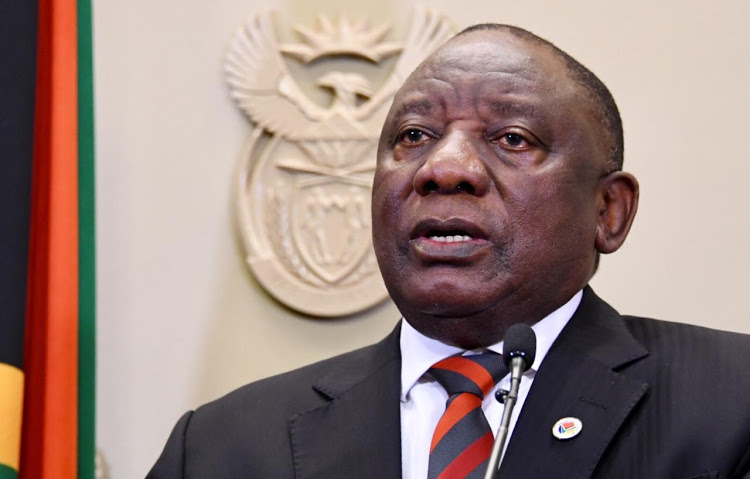
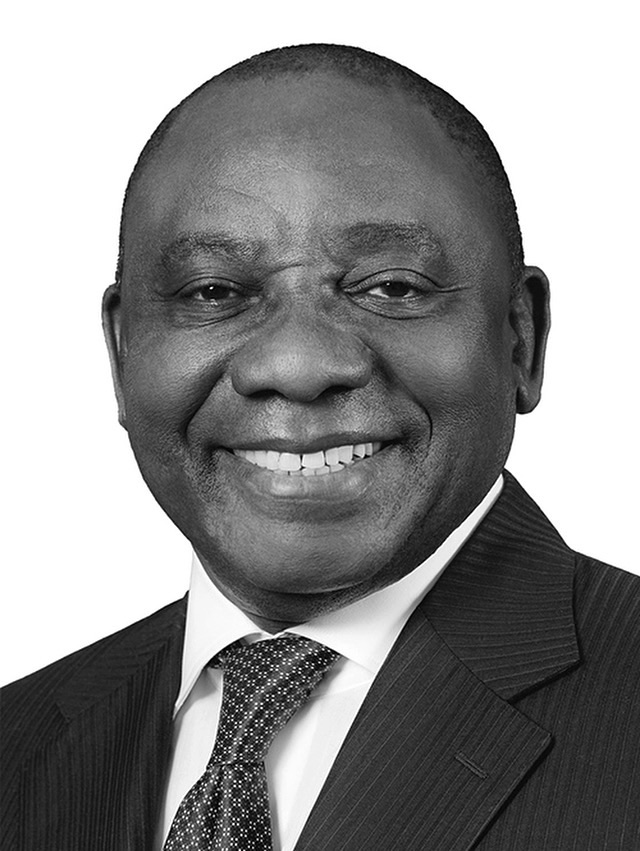
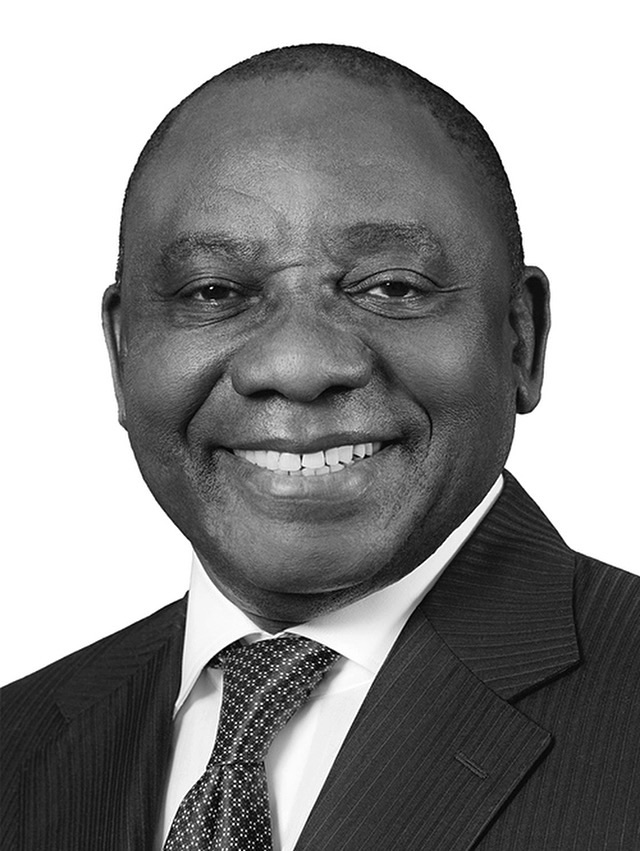
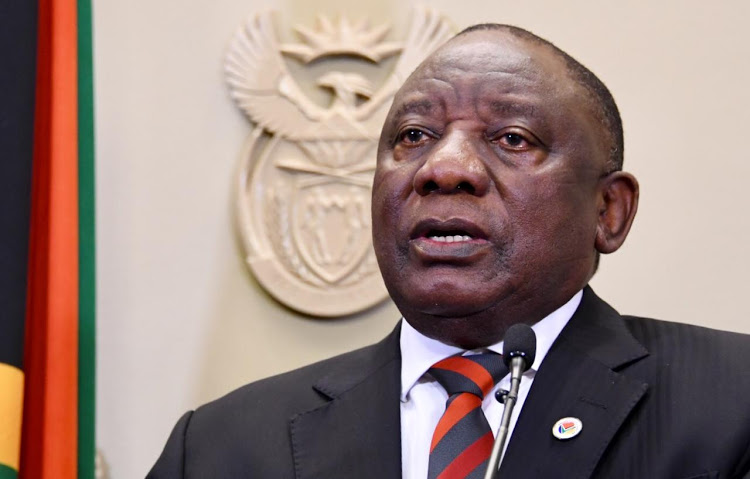
Picture: New Minister of Higher Education and Training, Buti Manamela
By BAKANG MOKOTO
21 July 2025- The Republic of South Africa (RSA) president, Cyril Ramaphosa has in terms of Section 91 (2) appointed Buti Manamela as the new Minister of Higher Education and Training. Ramaphosa said Manamela was until this appointment, serving as Deputy Minister of Higher Education and Training, a role he held from the 7th administration.
“Consequently, I have in terms of Section 93 (b), appointed Dr Nomusa Dube-Ncube as the Deputy Minister of Higher Education and Training. Dube’s long government leadership experience includes serving as KwaZulu-Natal MEC for Cooperative Governance and Traditional affairs and Premier of the Province of KwaZulu-Natal.
“Section 93 (b) empowers the President to appoint no more than two Deputy Ministers from outside the Assembly,” he said.
Meanwhile, the former Minister of Higher Education and Training, Dr Nobuhle Nkabane said she would like to take this opportunity to sincerely thank Ramaphosa for entrusting her with responsibility to serve as Minister of Higher Education and Training. Nkabane said it has been a privilege to lead this important portfolio.
“I am grateful to the sector and the people of South Africa for their support and for allowing me to serve in this capacity. I remain committed to the service of our people and the advancement of our country’s development,” she said.
21 July 2025- The Republic of South Africa (RSA) president, Cyril Ramaphosa has signed Proclamation 270 of 2025, amending Proclamation 30 of 2019 to expand the Special Investigating Unit’s (SIU) probe into the North West Development Corporation (NWDC). The amendment specifically authorises the SIU to investigate contracts awarded to Tokiso Security Services CC to provide security services to the NWDC and other provincial government entities.
The SIU spokesperson, Kaizer Kganyago said the original proclamation had empowered the SIU to investigate maladministration related to the establishment of Tokiso Security Services as a subsidiary of the NWDC. Kganyago said the new amendment extends this mandate to examine all contracts, where Tokiso Security Services CC was appointed to render security services to the NWDC, provincial departments, public entities and government business enterprises in the North West.
“The expansion of the investigation scope will allow the SIU to determine whether the security service contracts were awarded appropriately and if any irregularities, maladministration, or financial losses to the state occurred during the procurement process.
“The SIU will investigate whether proper procedures were followed in appointing Tokiso Security Services CC and whether any officials, employees, or service providers acted improperly. Additionally, the amendment extends the investigation period to include conduct up to the date of the proclamation’s publication on 18 July 2025,” he said.
Kganyago further said the original Proclamation (R.30 of 2019) also authorised the SIU to investigate irregularities in contracts associated with the NWDC, including the Youth Enterprise Combo implemented by MVEST Protecting the public interest and assets through prevention measures and systemic investigations to eradicate fraud, maladministration, and corruption. He added the trust, security services provided by Naphtronics (Pty) Ltd and the purchase of the Christiana Hotel and Game Farm.
“Beyond investigating maladministration, corruption, and fraud, the SIU is committed to identifying systemic failures and recommending measures to prevent future losses. In line with the Special Investigating Units and Special Tribunals Act 74 of 1996 (SIU Act), the SIU will refer any evidence of criminal conduct uncovered during its investigation to the National Prosecuting Authority (NPA) for further action.
“Under the SIU Act, the SIU is also authorised to initiate a civil action in the High Court or a Special Tribunal in its name to address any wrongdoing identified during its investigation resulting from acts of corruption, fraud, or maladministration,” said Kganyago.
21 July 2025- The Republic of South Africa (RSA) president, Cyril Ramaphosa said they are making steady progress on economic reform. Ramaphosa said last week, they released a progress report on Operation Vulindlela, a government-wide initiative to accelerate progress on economic reform.
He further said this report shows that the economic reform programme is making steady progress, opening the way to more rapid, inclusive and sustainable growth and job creation. Ramaphoisa added that they established Operation Vulindlela in the 6th administration to remove the binding constraints that have long held back the economy’s growth such as an unreliable energy supply, inefficient rail and ports, high data costs, and a visa system that had deterred investors and tourists.
“We have made significant progress since then in clearing these obstacles with a clear view to enhance economic growth. The reduction in load shedding over the past year was supported by the reforms that we introduced to unlock private investment in electricity generation, while reforms in the telecommunications sector have brought down the cost of mobile data.
“We have reduced the turnaround times for approval processes for water use licences and energy projects, made great progress in clearing the visa application backlog, and expanding the eVisa scheme. In April 2025, we commenced the next phase of Operation Vulindlela to build on these successes and initiate a second wave of reform,” he said.
Ramaphosa said they are moving quickly towards a competitive electricity market, which will introduce greater competition in electricity generation and reduce the chances of experiencing load shedding again. He said the reform underway in the energy sector will introduce greater choice for consumers and drive down costs.
“As part of this process, work is underway to establish an independent Transmission System Operator within the next five years, in line with the Electricity Regulation Act. We have also made significant progress towards enabling greater investment in our transmission network, including from the private sector, with regulations to govern these investments.
“In April, the Rail Infrastructure Manager was established as a separate operating division of Transnet with its own management and reporting structure. It has made capacity available across the freight rail network to private train operating companies and has received 98 requests for access to date,” said Ramaphosa.
He said a revised Network Statement will soon be published and capacity allocated in response to these requests, marking the start of open competition in freight rail. Ramaphosa said a Private Sector Participation Unit has been established within the Development Bank of Southern Africa to facilitate and fast-track private sector participation in logistics.
“A request for information for private sector participation projects in the rail system and ports has received a strong response from the market, and will enable us to mobilise new investment to modernise and expand our logistics infrastructure.
“The reform of our visa system is making it much easier for people to visit South Africa and bring much-needed skills and investment while enhancing border security through the Border Management Authority, which we established in the Sixth Administration as part of the reform process. An Electronic Travel Authorisation system has been developed by the Department of Home Affairs and is being prepared to go live in September 2025,” he said.
Ramaphosa said as part of Operation Vulindlela Phase II, they are also reforming the local government system to ensure that basic services such as water and electricity – which are essential for economic growth – are delivered efficiently and reliably. He said several metros have submitted plans for the turnaround of their water and electricity utilities that outline a clear pathway for the ring-fencing of water and electricity services.
“Progress against these action plans will enable these municipalities to access a new performance-based incentive from the National Treasury to drive much greater investment in water and electricity infrastructure. All of these reforms are designed to boost economic growth and create jobs for South Africans.
The claims by some opposition parties that these reforms represent a form of privatisation are baseless and misguided.
“The measures we are taking are common sense reforms that will preserve public ownership of key infrastructure while introducing greater competition, dynamism and investment. A number of our peer countries introduced similar reforms, which have powered their economies to higher levels of growth,” said Ramaphosa.
He said even as the world faces difficult economic headwinds, our economic reform agenda will create the conditions for higher growth and investment, while renewing our infrastructure for generations to come.
14 July 2025- The Republic of South Africa (RSA) president, Cyril Ramaphosa has launched a Commission of Inquiry to probe explosive allegations levelled against Minister of Police, Senzo Mchunu, National Prosecuting Authority (NPA), Judiciary and some of Members of Parliament (MPs). This came after the KwaZulu-Natal Police Commissioner, Lieutenant General Nhlanhla Mkhwanazi alleged that some politicians and prosecutors are in bed with criminals.
Ramphosa further said the matter raised concerns the security of the country, the integrity of the law enforcement agencies and the safety of the people. He added that Mkhwanazi alleged that there is an existence and operation of a sophisticated criminal syndicate that has infiltrated law enforcement and intelligence structures in South Africa.
“Mkhwanazi alleged that Mhcunu interfered with sensitive police investigations and colluded with business people, including a murder accused, to disband the Political Killings Task Team based in KwaZulu-Natal.
“Mkhwanazi also said that a police investigation by the task team in Gauteng unmasked a syndicate controlled by a drug cartel, which involves politicians, law enforcement officials from the SAPS, metro police and correctional services, prosecutors and the judiciary, as well as business people,” said Ramaphosa.
He said the allegations made in this media briefing raise serious concerns around the constitution, the rule of law and national security. Ramaphosa said these allegations, if proven true, threaten to undermine the confidence of South Africans in the ability of the South African Police Service to protect them and to effectively fight crime and corruption.
“South Africans are concerned about corruption and the rise of criminality in our country, which manifests itself in the killing of innocent people, Gender-Based Violence (GBV), gang violence, kidnappings, construction mafia criminality and many others.
“As we intensify the fight against crime, it is vital that we safeguard the integrity and credibility of the police and other law enforcement agencies. These allegations therefore call for an urgent and comprehensive investigation. To address these allegations and the implications of these allegations, I am establishing a judicial commission of inquiry chaired by Acting Deputy Chief Justice Mbuyiseli Madlanga,” he said.
Ramaphosa said Madlanga will be assisted by Advocate Sesi Baloyi SC and Advocate Sandile Khumalo SC. He said the Commission will investigate allegations relating to the infiltration of law enforcement, intelligence and associated institutions within the criminal justice system by criminal syndicates.
“Among the allegations that the Commission may investigate are the facilitation of organised crime, suppression or manipulation of investigations, inducement into criminal actions by law enforcement leadership, commission of any other criminal offences and intimidation, victimisation or targeted removal of whistle-blowers or officials resisting criminal influence.
“The Commission will investigate the role of current or former senior officials in certain institutions who may have aided or abetted the alleged criminal activity, failed to act on credible intelligence or internal warnings, or benefited financially or politically from a syndicate’s operations,” said Ramaphosa.
He said these institutions are the South African Police Service, National Prosecuting Authority, State Security Agency, the Judiciary and Magistracy, and the metropolitan police departments of Johannesburg, Ekurhuleni and Tshwane. Ramahosa said the Commission will also investigate whether any members of the National Executive responsible for the criminal justice system, were complicit, aided and abetted, or participated in the acts mentioned above.
“The Commission will be asked to report on the effectiveness or failure of oversight mechanisms, and the adequacy of current legislation, policies and institutional arrangements in preventing such infiltration.
“It will make findings and recommendations for criminal prosecutions, disciplinary actions and institutional reform. Once established, the Commission shall consider prima facie evidence relating to the involvement of individuals currently employed within law enforcement or intelligence agencies,” he said.
Ramaphosa said where appropriate, the Commission must make recommendations on the employment status of such officials, including whether they should be suspended pending the outcome of further investigations. He said the Commission will have the power to refer matters for immediate criminal investigation and urgent decisions on prosecution, taking into account the nature of the allegations and evidence the Commission will uncover.
“It is critical that these matters be attended to with the necessary urgency and thoroughness. The Commission is expected to complete its work and submit a final report to the President. Interim reports are expected after 3 and 6 months respectively.
“The final report of the Commission will be sent to the Speaker of the National Assembly and the Chief Justice. Madlanga is retiring from the Constitutional Court at the end of July 2025, after years of distinguished service, and will therefore be able to give his full time and attention to the work of this commission,” said Ramaphosa.
He said in order for the Commission to execute its functions effectively, he has decided to put the Minister of Police, Senzo Mchunu on a leave of absence with immediate effect. Ramaphosa said Mchunu has undertaken to give his full cooperation to the Commission to enable it to do its work.
“I have decided to appoint Professor Firoz Cachalia as acting Minister of Police. Cachalia is currently a professor of law at the University of the Witwatersrand and is the chairperson of the National Anti-Corruption Advisory Council.
“He previously served as an MEC of Community Safety in Gauteng. I am appointing Cachalia in terms of Section 91(3)(c) of the Constitution, which empowers the President to select no more than two Ministers from outside the National Assembly,” said Ramaphosa.
He said Cachalia will be retiring from his current position at the University of Witwatersrand at the end of July. Ramaphosa said he will appoint an acting Minister from within the Cabinet until Cachalia takes up his post at the beginning of August.
“This Commission is being established against the backdrop of significant progress in rebuilding and strengthening our country’s law enforcement agencies and security services. In recent years, the South African Police Service, the Special Investigating Unit, the Asset Forfeiture Unit and other bodies have been making important inroads in the fight against organised crime and corruption.
“It is essential that we maintain this momentum and that we intensify this work. We will ensure that the SAPS and other law enforcement agencies continue to function without hindrance as the commission undertakes its work,” he said.
Ramaphosa calls on all members of the law enforcement agencies and security services to remain steadfast in upholding the rule of law and adhering to their code of conduct. He calls on all South Africans to support the commission in its work and, where appropriate, to provide any information or assistance the commission may require.
“In establishing this Commission of Inquiry, we are affirming our commitment to the rule of law, to transparency and accountability, and to building a South Africa in which all people are safe and secure,” said Ramaphosa.
Picture: The late Deputy Preisdent, David Mabuza/Twitter
By OBAKENG MAJE
13 July 2025- The Republic of South Africa (RSA) president, Cyril Ramaphosa said the late Deputy President, David Dabede Mabuza made a huge contribution on the journey to a democratic South Africa in many ways. Ramaphosa said Mabuza was a servant of the people and that for which he will be best known and forever remembered for.
He further said DD as he Mabuza was fondly known, was a revered leader not only in his home province of Mpumalanga but throughout the country as well. Ramaphosa added that DD served as the country’s Deputy President, as Premier of Mpumalanga and as the Deputy President of his movement, the African National Congress (ANC).
“When he served as a Member of Parliament (MP) and as the Leader of Government Business, he proved to be a renowned political strategist, always deftly navigating the very difficult balance amongst parliamentary parties. In all his roles, he was often described as strategic, enigmatic and fiercely loyal to the cause of stability and unity.
“Yet despite his stature, he was forever humble. His own humble beginnings infused him with a mission to uplift our people. He was most happy when he was among the people. He never isolated himself from them. He never lost the common touch,” he said.
Ramaphosa said since the news came of his passing, they have seen throngs of ordinary citizens, traditional leaders and political leaders from across the spectrum flocking to DD’s home in Barberton to pay their respects. He said such was his popularity and his ability to unite the people of this province.
“Mabuza was not a man for standing on podiums and giving long speeches. He was not a man for the pomp and ceremony of high office. He preferred to be on the ground with the masses of our people, listening to their concerns and working to improve their lives. Over the past days, we have heard from a number of young citizens of Mpumalanga who have described him as a father of the community, who helped bring development to many rural parts of Mpumalanga.
“He was a man of sharp intellect, deep pragmatism and quiet resolve. To some, he was the “cat with nine lives” — resilient in the face of political storms. But to many in his home province and beyond, he was a source of support, a provider of opportunities, and a champion for rural development and education,” said Ramaphosa.
He said Mabuza’s political activism began from a very young age. Ramaphosa said his former principal recalls how he was still in primary school when he first got involved in politics, first through the Black Consciousness Movement and later as a unionist.
“Mabuza loved education. When he finished high school, he chose to enter the teaching profession. We have heard outpourings of love from those he encouraged to study. There are probably some of his former high school learners among us today, people who still called him Sir and Meneer because they clung to his passion for education long after he left the classroom.
“Mpumalanga has so many more boarding schools in rural areas because DD wanted to eradicate the barrier to education for farm children. True to his calling, the legacy that our former Deputy President leaves us is that of being quick to respond to matters of service delivery,” he said.
Ramaphosa said today in Mpumalanga Province, there are families who now live in decent homes because during door-to-door campaigns, DD intervened on the spot and at some point, dug into his own pockets to meet their needs. He said those houses were not built after years of follow-up meetings.
“They were erected within months because he was not one to make empty promises. I had the privilege of serving alongside DD for five years in government, and during this time I came to know him as a person who understood the responsibility that he had been given. He was dependable, reliable and an excellent deputy.
“As Leader of Government Business in Parliament he worked to ensure that the will of the people was reflected in the laws of the land and in the programmes of the state. In all his responsibilities as Deputy President, from land reform to HIV and AIDS, from anti-poverty initiatives to addressing the needs of veterans, Mabuza could always be relied on,” said Ramaphosa.
10 July 2025- The Republic of South Africa (RSA) president, Cyril Ramaphosa said he will on Sunday address the nation on developments arising from a public statement by KwaZulu-Natal Police Commissioner Lieutenant General Nhlanhla Mkhwanazi that details allegations against senior political and South African Police Service leadership.
Ramaphosa spokesperson, Vincent Magwenya said Ramaphosa was attending a BRICS summit in Brazil on 6 July 2025, when Mkhwanazi outlined numerous allegations at a media briefing. Magwenya said he undertook to attend to this development on his return from Brazil, in view of the implications for national security.
“Ramaphosa has been seized with this matter in recent days and will, following various consultations, take the nation into confidence at 7pm on 13 July 2025. The President’s message will be broadcast and streamed on various platforms,” he said.
8 July 2025- The Republic of South Africa (RSA) president, Cyril Ramaphosa said last week, the world came together at the 4th Financing for Development Conference in Sevilla, Spain, to agree on a set of actions to advance development over the next decade. Ramaphosa said this year’s conference took place at a moment of great consequence for humanity.
He further said they face more daunting challenges than at any other time, from the growing devastation caused by climate change to persistent levels of poverty in many parts of the world. Ramaphosa added that, to confront these challenges, they need to mobilise funding to tackle climate change, reduce poverty and build infrastructure that enables sustainable and inclusive economic growth.
“It is estimated that the world needs an extra $4 trillion dollars a year to meet the UN Sustainable Development Goals by 2030, a gap which can only be closed through more affordable, long-term sustainable financing. A major contributor to this financing gap is the growing debt burden faced by many developing economies, particularly those in Africa. Around 3.4 billion people now live in countries that are spending more on interest payments to creditors than on health and education.
“As the Jubilee Commission appointed by the late Pope Francis notes, while few countries have defaulted on their debt, they are defaulting on their people, their environment and their future. Debt can be a tool for development, if it is affordable and spent efficiently on infrastructure and other investments that support growth. However, a succession of external shocks – including the COVID-19 pandemic, the destabilising effect of various conflicts around the world and tightening financing conditions – has caused the cost of debt to rise rapidly for many developing economies,” he said.
Ramaphosa said at the inception of our G20 Presidency, they appointed an Africa Expert Panel led by Trevor Manuel, their former Minister of Finance, to develop recommendations that the G20 can take forward. He said they did so because they are convinced that Africa’s development must remain front and centre this year and into the future.
“We have since been focusing on practical solutions to achieve debt sustainability, such as improving the G20 Common Framework for debt treatments to enable timely and adequate debt restructuring. We are also working to expand the use of innovative mechanisms to alleviate the debt burden in times of crisis, such as climate resilient debt clauses, which automatically paused debt payments when a country faces a climate disaster.
“Going forward, a key priority is to ensure that more support is available to countries facing financial liquidity challenges, with interventions taking place early enough and providing enough relief to avoid a crisis. We have shown that this is possible through previous efforts spearheaded by the G20, such as the Debt Service Suspension Initiative, which created fiscal space for low-income countries during the COVID-19 pandemic,” said Ramaphosa.
He said there is no shortage of solutions to address the debt burden. What we need is the political will to translate proposals into action and to do so at a scale that matches the size of the challenge. Ramaphosa said countries committed in Sevilla to “take concrete actions to enhance fiscal space, address debt challenges of developing countries and lower the cost of capital”.
“This commitment was reinforced by the Rio de Janeiro Declaration adopted at the BRICS Leaders’ Summit in recent days, which recognised the need to “address in an effective, comprehensive and systematic manner the debt vulnerabilities of both low and middle income countries. The world cannot stand by and watch as rising debt service costs crowd out development for a generation or more.
“For this reason, South Africa is committed to working together with all countries to confront the debt challenge in a manner that is effective, sustainable and just,” he said.
26 June 2025- The Republic of South Africa (RSA) president, Cyril Ramaphosa has removed Andrew Whitfield from his position as the Deputy Minister of the Department of Trade, Industry and Competition (dtic). Ramaphosa thanked Whitfield for the time he served in the Government of National Unity (GNU).
According to the Presidency, his removal was in accordance with Section 93(1) of the Constitution of the Republic of South Africa, 1996. The Presidency has not indicated any intention to conduct a wholesale Cabinet reshuffle.
However, the Democratic Alliance (DA) said it has issued a 48-hour ultimatum to Ramaphosa after ‘unjust’ firing of Whitfield.
The DA leader, John Steenhuisen who is also a Member of Parliament (MP) said, yesterday, Ramaphosa put South Africa’s future at stake. Steenhuisen said shortly before cabinet met yesterday, he informed him that, he intends to remove Whitfield as Deputy Minister of Trade, Industry and Competition.
“I requested 24-hours to speak to Whitfield and my party. However, before I could even do so, just three hours later, Whitfield received a letter informing him of his removal. The apparent reason for this sudden and ill-considered decision is that Whitfield did not obtain permission to travel abroad earlier this year.
“But, the facts contradict even this flimsy reasoning. In fact, on 12 February 2025, Whitfield had written to the President requesting permission to travel to the United States, as required by the Ministerial Handbook,” he said.
Steenhuisen further said, ten days later, he had still not received any response from the presidency, and departed on the trip. He added that Whitfield subsequently wrote to the President to apologise if it caused offence.
“Again, he received no response. Then yesterday, months after the incident and without a further word on it, the President unilaterally removed a DA Deputy Minister without even giving his largest coalition partner the courtesy of discussing the issue.
“According to the President’s spokesperson, this move is also not part of a broader reshuffle. There is no other conclusion to be drawn than that this is a calculated political assault on the second-largest party in the governing coalition,” said Steenhuisen.
He said to make matters even worse, this drastic unilateral action appears to be the product of a flagrant double standard. Steenhuisen alleged that, while a DA Deputy Minister is removed for not getting a response to seeking permission to travel, Thembi Simelane remains in cabinet despite being implicated in the VBS looting.
“Nobuhle Nkabane remains in cabinet, despite apparently misleading Parliament over an attempt to deploy corrupt cadres to SETA boards. Serial underperformers, as well as people implicated in state capture, continue to sit around the cabinet table.
“Instead of being summarily fired, Simelane was merely asked to submit a “report” on the allegations against her to the President and moved to another portfolio. In the past, even Ministers who had serious Public Protector findings were merely admonished or had their pay docked,” he said.
Steenhuisen alleged that David Mahlobo is implicated in the most serious corruption by the state capture commission, yet he continues in the position as Deputy Minister of Water and Sanitation. He said yet a DA Deputy Minister is dismissed with the flimsiest of excuses.
“The people of South Africa are expected to accept that the likes of Simelane, Nkabane and Mahlobo are protected, while Andrew Whitfield is removed? But perhaps there is something even deeper at play here. Like all DA Ministers and Deputy Ministers, Andrew Whitfield was succeeding at his job.
“He had opposed an attempt to make suspect appointments, he was standing in the way of the looting that will follow from the Transformation Fund – and all of this in a department mired in corruption allegations involving the tender for the National Lottery,” said Steenhuisen.
He said given this flagrant double standard, one is left with no choice but to conclude that hardworking DA Members of the Executive are now being fired for fighting corruption, not for committing corruption. Steenhuisen said DA Ministers and Deputies are said to be good at their jobs, rather than being incompetent.
9 June 2025- The Republic of South Africa (RSA) president, Cyril Ramaphosa said this year marks the 70th anniversary of the Freedom Charter. Ramaphosa said they are reminded of its aspiration that the people shall share in the country’s wealth.
He further said the constitution reflects the promise they made to one another and to future generations to redress the injustices of the past and realise the full potential of the country. Ramaphosa added that, for this reason, they reaffirm that Broad-Based Black Economic Empowerment (BBBEE) is not just a policy choice but a constitutional imperative.
“In recent months, the world has entered what many now term a “poly-crisis” where global conflict, economic stagnation, mistrust in institutions and environmental degradation are challenging even the most resilient of nations. These are conditions affecting many countries and South Africa is no exception. It is now imperative that we use the lessons that we have learned over the past three decades to make our empowerment policies more meaningful.
“Now is not the time to abandon the measures that we have put in place to drive transformation. To the contrary, it is the time to move forward with greater purpose and raise our ambition. Since 1994 we have built a robust legislative framework to advance the transformation of our economy, anchored in the Broad-Based Black Economic Empowerment Act and the Employment Equity Act,” he said.
Ramphosa said the progress they have made is undeniable. He said they have seen real changes in ownership patterns, including more businesses owned by women.
“We have seen changes in management control, enterprise development and skills development. According to Statistics SA, between 2006 and 2023, black African households experienced real income growth of 46%, coloured households of 29% and Indian households of 19%. Despite this progress, the average income of white households is still nearly five times higher than that of black African households. This is the gulf we must close through deliberate and sustained efforts to expand opportunity.
“Transformation is not a favour. It is a necessity. The inequality of our past continues to shape the lives of millions of black South Africans. And yet many who continue to benefit from the legacy of exclusion continue to decry black economic empowerment and are even challenging it in our courts,” said Ramaphosa.
He said they must dispense with the false notion that they must make a choice between growth and transformation. Ramaphosa said economic growth without transformation entrenches exclusion and transformation without growth is unsustainable.
“We also need to challenge the notion that broad-based black economic empowerment is a cost to the economy. It is actually an investment in the economy. Our task is to ensure that we pursue both growth and transformation in concert, with more vigour and with greater effect. That is why we continue to strengthen initiatives like the Black Industrialists Programme, which is building successful, competitive, black-owned enterprises in manufacturing and other sectors.
“That is why we are establishing the Transformation Fund to support a new wave of emerging, innovative businesses that can create work opportunities for our people. We must open the levers of funding for black-owned businesses. There is a critical need for black-owned businesses to access funding on affordable terms,” he said.
Ramaphosa said, while much of this funding should come from the development finance institutions, it is the private banks that have the resources to make the greatest impact. He said they need to review their lending practices to unleash the potential of black business.
“Through mechanisms like the Public Procurement Act, we must ensure that businesses owned by women, young people and persons with disabilities enjoy expanding opportunities. We must ensure that transformation reaches into every sector, whether it is mining, construction, energy, IT or agriculture.
“The private sector should use their supply chains far more deliberately to empower many more black-owned businesses, not just to improve their BBBEE scorecard, but to grow and diversify their supplier base. As we develop our infrastructure, grow new industries like green hydrogen and electric vehicles, and drive localisation and reindustrialisation, we will continue to ensure that transformation is our guiding principle,” said Ramphosa.
He said the transformation they seek is not about ticking boxes. Ramaphosa said it is about building a resilient, just economy for generations to come.
“I call on all South Africans and in particular the private sector, to recommit to economic transformation. Let us move forward with greater urgency, unity and ambition, to build a South Africa where all can truly share in the country’s wealth,” he said.
2 June 2025- The Republic of South Africa (RSA) president, Cyril Ramaphosa said today marks the ‘first day at school’ for about 200 000 young people at over 20 000 schools nationwide. Ramaphosa said this time, however, they are not arriving at school as learners, but as working adults.
He further said they are participants in the 5th phase of the Basic Education Employment Initiative, the largest youth employment programme in South Africa’s history. Ramaphosa added that after a year’s pause, the initiative returns to townships, villages, inner cities, farms and special needs schools, bringing hope, energy and incomes to places where opportunities are too often out of reach.
“The initiative is a flagship programme of the Presidential Employment Stimulus, which has, since its inception in 2020, supported the delivery of jobs and livelihood opportunities in our country. The Basic Education Employment Initiative is implemented by the Department of Basic Education and by provincial education departments.
“It is now funded by the UIF Labour Activation Programme and national government. This programme is designed to develop the work skills that employers say they need, such as time management, task management, teamwork, problem solving, IT, admin and much more,” he said.
Ramaphosa said in the process, participants undertake roles aligned to school priorities to ensure these young people add real value, enhancing the learning environment for learners and strengthening learning outcomes. He said the Basic Education Employment Initiative offers opportunities for young people at all skills levels.
“Graduates are prioritised for work in the classroom, where their tasks allow teachers to spend more time on teaching and lesson preparation. Curriculum Assistants support maths, science and technology. Reading Champions promote literacy and a culture of reading. Lab and Workshop Assistants support technical subjects. Others support IT and school administration.
“They also tackle essential maintenance, such as fixing doors, painting peeling walls, maintaining school vegetable gardens and playgrounds. Care and Support Assistants work with School Support Teams to identify and support children at risk. Still others spark life into sports, art and music, activities that inspire learners, uncover their talents and build pride in communities,” said Ramaphosa.
He said, together, these roles provide real work experience to young people and vital support to our education system. Ramaphosa said the best possible advice to the young people starting at schools this week comes from a former participant in the programme.
“In 2023, Sibongile Joni was a Curriculum Assistant at Emsengeni Primary School in the Eastern Cape. She has since been employed in an NGO called Masinyusane. She has this advice for participants now starting in the programme: “Be reliable: your consistency builds trust. Be willing to learn, ask questions, accept feedback and grow daily.
“Take initiative: if something needs to be done, do it without waiting to be told. Treat every task as important, no matter how small, because excellence in the small things builds your reputation. Always be professional: your attitude, respect and conduct matter,” he said.
Ramaphosa urges those employed to build strong relationships with staff and learners. He said people open doors for those they trust and enjoy working with.
“Lastly, make the most of the training offered, they equip you with the skills you’ll need for your next step. She says this journey has taught her that growth doesn’t come overnight. She says: “Start strong. Stay consistent. You’re building your future today.”
“Every participant has their own hopes and dreams for their future beyond this programme. Whether they pursue a career in education, undertake further studies, search for a job or embrace self-employment, they won’t be starting from scratch,” said Ramaphosa.
He said from this programme, they will carry invaluable skills and experience. Ramaphosa said, yet, in a tough labour market, they will each need to tackle their next chapter with creativity and initiative.
“As a society, we cannot leave young people to navigate the transition into work alone. Together, we need to step up to assist them. These young people will leave the school environment having shown up, contributed and made a difference.
“They will have worked in high-pressure environments with limited resources and will understand deadlines and responsibility. To employers, we say: give them their next opportunity, mentor their enthusiasm, help take their potential to the next level,” he said.
Ramaphosa said they also need to reach those young people who want to be entrepreneurs. He said they need to find new ways to support those who want to create their own jobs and local value, to connect them to finance, training, markets and networks.
“Today, we celebrate this cohort of young people beginning meaningful work, many for the first time. But let us also not forget those who applied for these posts but who weren’t selected. Through the Presidential Employment Stimulus, we have demonstrated the government’s capacity to address the youth unemployment problem.
“Through this programme, we have been able to give young people work experience and a pathway to formal employment or even further education. We do believe that this will have a much longer term benefit for the employability of young people. This is but one initiative that seeks to address the youth unemployment challenge,” said Ramaphosa.
He said they still have much more to do to address the plight of young people. Ramaphosa said these young people are showing them what they are capable of.
“It is up to all of us in society to give them the opportunities they need to thrive,” he said.