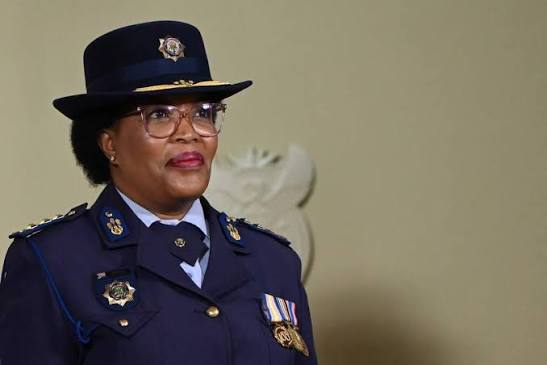
Picture: Acting National Police Commissioner, Lieutenant General Puleng Dimpane
By BAKANG MOKOTO
3 October 2026 – The acting National Police Commissioner, Lieutenant General Puleng Dimpane has called on police members to remain courageous, professional and committed to protecting communities while prioritising their own safety and wellbeing. Dimpane was speaking during the SAPS National Prayer Day held at St Albans Cathedral in Pretoria on Wednesday under the theme of reflection, renewal and prayer for the Service, its members, their families and the country.
The annual prayer day provided an opportunity for SAPS members and faith-based organisations to reflect on the challenges facing the country, including violent crime, Gender-Based Violence and Femicide (GBVF) and the risks faced by police officers in the execution of their duties.
She further said the country was confronting serious and violent crime, noting that two separate mass-shooting incidents had claimed 27 lives in a single night in recent days. Dimpane added that these are not simply crime statistics.
“Behind every number is a human life, behind every victim is a family, a community and a future that has been irrevocably altered. The incidents highlighted the urgency of the policing mandate, particularly in addressing illegal firearms, organised criminality and violence.
“Our communities must know that the police will pursue those who commit these crimes, that investigations will be prioritised, that evidence will be followed wherever it leads, and that perpetrators will be brought before the courts,” said Dimpane.
She also addressed the recent discovery of the bodies of women in Ekurhuleni, saying the cases had been prioritised and that a multidisciplinary specialised team had been established to investigate them. Dimpane said the police had an obligation to investigate such cases with urgency and professionalism while treating victims, survivors and their families with dignity and compassion.
“The Republic of South Africa (RSA) president, Cyril Ramaphosa’s recent national address on GBVF, says the measures announced by the government must be translated into concrete operational action within SAPS. For the SAPS, these are not matters that can remain at the level of policy discussion or institutional intention. They must be translated into operational action, accountability and measurable results.
“The police must recover stalled investigations, close investigative gaps, accelerate the processing of evidence, strengthen case management and improve collaboration with the National Prosecuting Authority (NPA) and other partners,” she said.
The prayer day also coincided with Police Safety Month, with Dimpane emphasising the need to protect police officers who are entrusted with protecting society. She said there is a fundamental principle that must guide them.
“Those entrusted with protecting society must themselves be protected. The police safety was both an organisational and leadership responsibility, requiring members to be properly equipped, supported and operationally prepared.
“There are physical and emotional pressures faced by police officers who encounter violence, trauma, loss and human suffering in the course of their duties. So, we urge SAPS leadership to create an environment where members can seek assistance when dealing with trauma and emotional burdens,” she said.
Dimpane said they must recognise that burden and create an environment in which asking for assistance is understood not as weakness, but as an expression of professional responsibility. The acting National Police Commissioner also remembered police officers who had died in the line of duty.
“Twelve names had been added to the Remembrance Wall at the National Commemoration Day held at the Union Buildings earlier in September. SAPS had a collective responsibility to reduce avoidable risks and ensure that members were protected while performing their duties.
“We call on commanders to lead with wisdom, humility, integrity and courage, while encouraging police members to support one another. Let us strengthen the culture of operational safety across the Service. Let us ensure that members affected by trauma receive the support they need,” concluded Dimpane.

