12 May 2026 – The police have confirmed an accident involving the official vehicle of the Minister of Health, Dr Aaron Motsoaledi, occurred on the N1 near Bela-Bela, Limpopo on Saturday. The police said the state vehicle was at the time driven by a member from the Protection Security Services (PSS).
The national police spokesperson, Brigadier Athlenda Mathe said a preliminary investigation suggests that a woman was attempting to cross the road with her two children, one of whom was strapped to her back. Mathe said the trio was attempting to get to the other side of the road to attend to an earlier incident in which the woman’s husband was allegedly struck by a vehicle driven by an off-duty police officer and died at the scene.
“It is further alleged that while crossing the road, the woman and her children were involved in a collision with the Minister’s official vehicle. Tragically, the mother and baby succumbed to their injuries.
“In line with standard protocol, the Minister’s close protector and the driver immediately stopped at the scene together with the Minister and remained there until police and emergency medical services arrived,” she said.
Mathe further said the statements were subsequently obtained from those present at the scene. She added that two separate cases of culpable homicide are under investigation and the circumstances surrounding both accidents form part of ongoing police investigations.
“The SAPS extends its deepest condolences to the bereaved family during this difficult time. IPID has taken over investigations as both drivers are SAPS members,” said Mathe.
South African officials worked with speed to detect, contain and respond to the case of Hantavirus detected in the country.
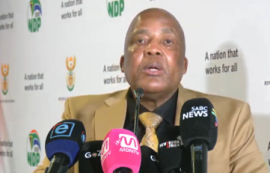
This according to Health Minister, Dr Aaron Motsoaledi, who briefed Parliament’s Portfolio Committee on Health on Wednesday morning.
The Minister’s update followed the confirmation of Hantavirus in a critically ill British national in South Africa, and in a woman who collapsed at OR Tambo International Airport. She later died in South Africa. Her husband, a third patient, passed away in St Helena.
The three were passengers aboard the cruise ship MV Hondius, which was sailing from Argentina to the Canary Islands via Cape Verde.
Motsoaledi explained that contact tracing continues, with 62 people already identified.
“The lady who arrived at OR Tambo flew in from St Helena… we needed to know the people who were there at the airport before she collapsed (sic). The third contact traces are healthcare workers in Kempton Park where the lady went.
“The fourth contact traces relate to the gentleman in a hospital in Sandton (and the ambulance crew). He was airlifted directly and didn’t come by commercial flight.
“The total number of people who were traced and who could have come in contact with them were 62. [Some] 42 of them have already been traced and they are being observed. The work is ongoing,” Motsoaledi said.
The World Health Organisation (WHO) is also conducting contact tracing internationally.
Addressing questions on how one of the patients had been allowed to come into OR Tambo International Airport, the Minister explained that the woman had not presented herself as ill to airline staff in St Helena, making it difficult to flag her in advance.
“On a routine basis, air staff are in touch with countries to report any person who might be sick in the aircraft to warn them…
“In this case, there was no warning coming in because even the staff did not pick up anything. When she arrived at the airport, she came in just like any traveller, not as a sick person. When people arrive, especially from international destinations, we have a temperature measuring [machine] but it does not mean that every human being who is sick [has a high] temperature.
“This lady went through the scan. It did not record anything from temperature (sic). It cannot be said that South Africa’s safety mechanisms were so lax that they just allowed people in without screening,” Motsoaledi said.
The other patient currently in hospital was medically evacuated from Ascension Island to a South African private health facility in Sandton.
Hantavirus
There are 38 strains of Hantavirus. The Andes strain, which is predominant in South America, is the strain which was the cause of the infection detected in the patients who died in South Africa.
“Person-to-person contact is very rare and it has happened under specific conditions, namely: there must be very close person-to-person contact for transmission to occur from one human to another. Not surprising [is] that the first persons who died are husband and wife.
“It happens to be the only strain out of the 38 that is known to cause human-to-human transmission. But… such transmission is very rare and only happens due to very close contact,” Motsoaledi told the committee.
The Minister explained that Hantavirus is a zoonotic disease transmitted from wild animals to humans and is endemic to the Americas.
“Whether South African rats carry this… as far as I know, I have never been told of any presence of Hantavirus on the African continent.
“From the information I have, South African rats do not carry Hantavirus because it’s a virus that is found in the Americas… Europe [and]… India,” he said.
South African response
At the same briefing, infectious diseases expert at the National Institute of Communicable Diseases (NICD), Professor Lucille Blumberg, told the committee that South African authorities had confirmed detection of the virus “within 24 hours of alert” from international colleagues about concerns about the cruise ship.
“On a ship, it’s not unusual for elderly people to travel… and deaths do occur. The first three cases are elder persons, all of whom have comorbidities. [A colleague] alerted me to patient 3, who was admitted to a hospital in Johannesburg as a pneumonia patient… Within 12 hours, we had an international call and we had a number of players discussing this. It is quite a remarkable effort to make that diagnosis of a most unusual pathogen in a most unusual setting in such a short time.
“As a country, we’ve done extremely well. Patients don’t come and say, ‘I’m part of [this]’ and it does take a bit of time to get all the facts. Within 24 hours, we knew what we were dealing with and we had a large amount of information,” Blumberg said.
Furthermore, contacts were identified and contact tracing began.
“All the names of people who were involved – at OR Tambo, those at the hospital close to the airport and all of those who either transported or admitted the patient – were put on a list and contact monitoring was started.
“It was started even before we knew what we were dealing with. That is in progress and is really working quite well. The incubation period is quite long… and they will have to be monitored. We will go back and identify who is a high risk and decide what we are going to do, and maybe intensify monitoring on those people,” Blumberg explained.
Collaboration with experts in other countries is also underway.
“We have had a number of consultations with counterparts in South America, who have a lot experience of Hantavirus. There’s been lab consultations. The international community have come together to support…in an extraordinary way and all of this has been coordinated through the WHO.
“This is quite an extraordinary response to what was an unknown, unusual virus in an unusual setting,” she said. – SAnews.gov.za
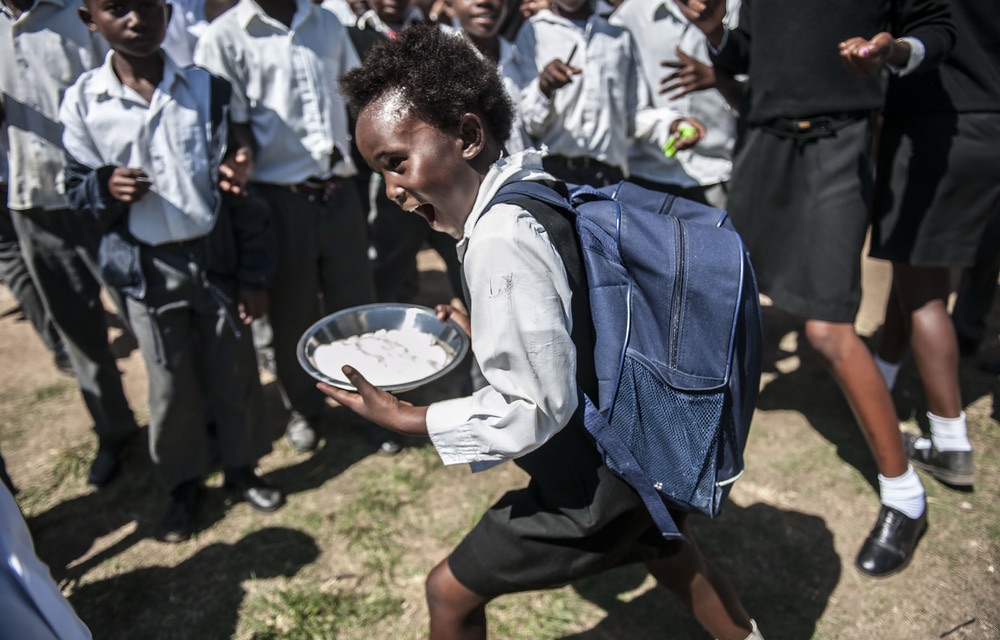
Picture: Child malnutrition continues to rise/Generic
By AGISANANG SCUFF
10 December 2025- The Democratic Alliance (DA) is calling for urgent national intervention as newly released parliamentary replies confirm that child malnutrition in South Africa continues to claim hundreds of young lives each year. In answer to a written parliamentary question by the DA [RNW6755], the Minister of Health, Dr Aaron Motsoaledi, revealed that between May and September 2025, 92 and 206 children under 5 years died in public hospitals with moderate and severe acute malnutrition as an underlying condition, respectively.
The DA Spokesperson on Health and Member of Parliament (MP), Michele Clarke said during the same period, 1776 and 2944 children under 5 years-old were admitted to public hospitals with MAM and SAM. Clarke said these numbers follow earlier findings that revealed that between January and April 2025, 155 children under the age of five died in public hospitals with MAM and SAM as an underlying condition and 4 759 children were admitted to public hospitals with moderate or severe acute malnutrition.
“Another PQ [RNW6979] revealed that 19 186 and 5 810 children under 5 years received treatment for MAM and SAM, respectively at public health clinics, while 30 390 children under 5 years (new cases) received food supplementation.
“These numbers highlight a system overwhelmed by preventable hunger and poor early childhood nutrition. To address this crisis, the DA is finalising the Feed the Nation Private Members’ Bill, which aims to bolster the fight against malnutrition by making it easier for supermarkets and consumers to donate unsold edible food to distribution organisations and creating processes for this to be done,” she said.
Clarke further said the Bill proposes clear processes to ensure food safety, accountability and efficient delivery, allowing edible food that would otherwise be discarded to reach families in need. She added that no child in South Africa should die of hunger.
“Malnutrition is both preventable and treatable, and its persistence reflects a failure of governance, coordination, and political will. The DA will continue to fight for the adoption of practical, life-saving reforms and for the protection of every child’s right to nutrition, dignity, and survival,” said Clarke.
12 July 2025- The Portfolio Committee on Health on Friday announced that it would consult Parliament’s legal advisors to draft recommendations for legislative amendments to improve transparency and accountability in medical schemes. This decision follows a meeting with the Minister of Health, Dr Aaron Motsoaledi.
The Chairperson of the Committee, Dr Sibongiseni Dhlomo said they have received a briefing on a report detailing systematic discrimination against black healthcare providers by medical schemes in South Africa. Dhlomo said the report, which was presented by the independent Section 59 panel, has raised concerns regarding the treatment of Black practitioners in the healthcare system.
“During the briefing, committee members posed questions about the implications of the report’s findings. Some members expressed concern over the disproportionate allegations of fraud, waste and abuse directed towards Black practitioners compared to their non-black counterparts.
“Others asked what the Council of Medical Schemes is doing to address the backlog of complaints. The complaints include troubling delays in responding to systemic issues reported since 2019. Some members of the committee emphasised the need for accountability and sought further information on the punitive measures against medical schemes found guilty of discriminatory practices,” he said.
Dhlomo further said they enquired about the department’s intentions to acknowledge the harm inflicted upon Black practitioners. He added that the committee made several recommendations to address the findings of the report.
“Among them was to establish an early warning system within medical schemes to alert healthcare providers to potential issues related to Section 59 of the Medical Schemes Act. The committee believes this approach will protect honest practitioners from unwarranted scrutiny and will ensure timely corrective actions to mitigate financial losses.
“The committee also called for greater transparency about the algorithms and software used by medical schemes to monitor claims. The committee also stressed the need for these systems to be fair and unbiased. Members agreed that robust legal frameworks are essential to empower the Department of Health and the Council for Medical Schemes to take decisive action against discrimination,” said Dhlomo.
He said some members also highlighted the importance of creating a legislative environment conducive to genuine accountability and change. Dhlomo said the committee resolved to consult with legal advisors about possible legislative amendments to improve transparency and accountability.
“It also stressed the need for a comprehensive strategy to address the backlog of complaints with the Council for Medical Schemes. The committee also highlighted the value of collaboration with the Health Professions Council of South Africa (HPCSA) is crucial to fostering accountability among practitioners and enhancing the overall integrity of the healthcare profession.
“The committee also highlighted that engaging stakeholders, including medical schemes and practitioners, in constructive dialogue will be vital to address the report’s findings and implement necessary reforms,” he said.
9 June 2025- The Democratic Alliance (DA) in North West said it has formally written to the Minister of Health, Dr Aaron Motsoaledi, demanding a full investigation and immediate intervention regarding the state of healthcare services at Bophelong Hospital in Mahikeng. This comes after allegations that there is a health crisis at the hospital.
The DA councillor in Tswaing Local Municipality, Kagiso Magwejane said patients were allegedly left unattended for over a month. Magwejane said these patients have been admitted for extended periods.
“Some for over a month without receiving the critical surgical procedures urgently required. Patients admitted with fractures are being subjected to repeated surgical postponements without proper consultation or reasonable explanation.
“In one instance, surgery was postponed five consecutive times, with the latest cancellation occurring on 23 May 2025. Like many others, patients have to fast from 10pm the previous night in preparation for the procedure, only to be informed on the morning of the surgery about the cancellation due to a shortage of available nurses for the theatre,” he said.
Magwejane further said this is not an isolated case as several patients have shared similar ordeals. He added that some have been discharged without being operated on and told they will only be called back once the theatre becomes available—an alarming practice that poses a serious risk to their health and recovery.
“This situation is not only emotionally distressing, but also medically dangerous. Patients are suffering unnecessarily, while their conditions worsen.
“It is clear that Bophelong Hospital is struggling with severe staff shortages, poor planning, and a breakdown of internal systems. This points to a broader crisis in our provincial healthcare system—one that is failing the very people it is meant to serve,” said Magwejane.
He said they were calling for urgent action. Magwejane said they will also engage with Hendriette Huyssteen, the DA’s Provincial Spokesperson on Health, to urgently conduct an oversight visit to Bophelong Hospital.
“Our communities deserve better. The health and dignity of our people cannot be compromised any longer,” he said.
Meanwhile, the North West Department of Health spokesperson, Tshegofatso Mothibedi who admitted that there is a shortage of nurses at the hospital said, the department is finalizing the process to recruit nurses to stabilise the operating theatre by 30 June 2025. Mothibedi said they will increase theatre operational time and number of operating theatres over weekends.
“Yes, some surgeries have been postponed multiple times over the past month due to shortage of staff. Not all surgeries could be performed hence some postponement.
“This is due to the retirements as well as resignations for greener pastures and unexpected sick leaves,” he said.
Mothibedi said an average of 45 operations scheduled for April and May 2025, were cancelled. He said if operations are not an emergency, the waiting time is plus minus 6 weeks.
“Recruitment of nursing staff and increasing theatre times to manage the backlog. It is not standard procedure for patients to be released without being operated on, however, emergency cases are prioritized within the hospital.
“Those found not to be of emergency by nature would be discharged following stabilization and will be booked for an elective surgery. Those that need emergency operations that cannot be done internally are referred to other hospitals within the province,” said Mothibedi.