Banyana Banyana’s Portia Modise nominated for CAF Women Footballer of the Year


Image

BY Obakeng Maje

Banyana Banyana midfielder Portia Modise is among three of Africa’s women football stars nominated in the CAF African Footballer of the Year category, as a part of the Glo – CAF Awards.


The awards’ winners will be announced in Accra on Thursday, 20 December 2012.


Modise, who has scored 73 goals in her 102 appearances for the Sasol-sponsored Banyana Banyana, played a key role during the national team’s campaign to the final of the CAF African Women Championship 2012, held in Equatorial Guinea last month.


“I am delighted that my performances have been recognised in what has been one of Banyana Banyana’s busiest and most successful years in the national team’s history, and must thank Safa, Sasol, my team-mates and all persons who have supported and encouraged me,” said Modise.


The Palace Super Falcons (Sasol League Gauteng) player will contest the title along with 15-year-old Nigerian goal-scoring sensation Chinwendu Ihezuo, who scored 6 goals during the FIFA U-17 women’s World Cup this year, and Equatorial Guinea playmaker Genoveva Anoman, who scored 6 goals to help her country clinch the CAF African Women Championship title.


Africa Cup of Nations champions Zambia are in the running in the National Team of the Year category along with Cape Verde (highest placed ever CAF and FIFA rankings of 10 and 51 respectively achieved in 2012), Central African Republic (qualified for the 2013 Africa Cup of Nations eliminating record-holders Egypt in the qualifiers) and Cote d’ Ivoire (2012 Africa Cup of Nations finalists and the highest placed African team on the FIFA world rankings).


The Women’s National Team of the Year award will be decided between Equatorial Guinea (2012 CAF African Women Championship winners) and the Ghana U-17 side (bronze medalists at the FIFA U-17 Women’s World Cup bronze medalists knocking out tournament favourites Japan en route to the semi-finals).


The Coach of the Year finalists are Zambian mentor Herve Renard (who led Zambia to the 2012 Africa Cup of Nations title), Al-Ahly coach Hossam El Bady (who plotted his team’s path to a record 7th CAF Champions League title), Esperance boss Nabil Maaloul (who took his club to the CAF Champions League final) and AC Leopards, Tunisia coach Nasreddine Nabi (who led his charges to the first CAF Confederation Cup trophy).


The Most Promising Talent section of the awards, will be a battle between Egyptian U-23 star Mohamed Salah (who scored in three of his team’s four matches at the London Olympics), Senegalese striker Moussa Monate (who scored in all four of his country’s matches at the London Olympics) and Kenyan midfielder Victor Wanyama (who scored a sensational goal to help Celtic beat Spanish Giants Barcelona in the UEFA Champions League).


The club of the Year category is also expected to be closely contested with Egyptian giants Al Ahly, Esperance (Turkey), AC Leopards (Congo) and Mali’s Djoliba (CAF Confederation Cup finalists) nominated.   



North West ANC want ousted mayor reinstated


Image

Johannesburg – The ANC in the North West wants ousted Potchefstroom mayor Maphetle Maphetle reinstated.


“We are doing everything in our power to make this happen,” ANC provincial spokesman Kenny Morolong said on Monday.


“Our ANC provincial executive committee has committed itself to the reinstatement of comrade Maphetle as the mayor of Tlokwe local municipality.”


He said a meeting was held after DA councillor Annette Combrinck replaced Maphetle last week.


“A meeting was convened with all ANC councillors committing to reinstate him which, inter alia, has been exhibited through a petition to the speaker of the city council.”


The petition called for a special meeting and was signed by ANC councillors in the area.


Morolong said the party had asked lawyers to examine the processes related to the council resolution which led to the mayor’s removal last week.


“The ANC in the province will thoroughly investigate this setback, which is tantamount to a counter-revolution. And action will, indeed, be taken against those responsible for bringing such shame and embarrassment to our movement.”


Maphetle was voted out on Wednesday, and Combrinck was immediately voted in. An ANC-driven motion of no-confidence in Maphetle was accepted, with 37 votes in favour and 13 against. Combrinck became the first DA mayor in the province by defeating ANC candidate Lucky Tsagae by 20 votes to 19. Several ANC members tabled a notice of a motion of no confidence in Combrinck shortly after she won the vote.


The national ANC said it would lodge a formal complaint with the Broadcasting Complaints Commission after it was apparently reported that ANC spokesman Jackson Mthembu attended the council meeting where Maphetle was ousted.


On Sunday, DA leader Helen Zille said the ruling party’s infighting had caused serious division within the movement. She said the ANC was so divided it could not even agree on a mayoral candidate.


SA Communist Party in the province said it did not consider Combrinck as Tlokwe’s mayor.


“In our view… the elections… were flawed in that the DA candidate in question… was not part of council meeting nor did she formally accept nomination through acceptable means,” the SACP said in a statement. – Sapa

NWest rolls out mentorship programme for graduates with disabilities  


Image

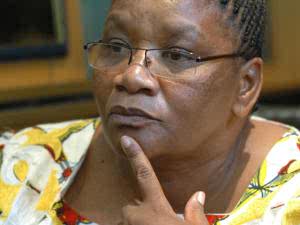
A hundred graduates with disabilities are to be placed in all departments within the North West Provincial Administration, government entities and municipalities In an effort to contribute towards achievement of employment equity targets for employment of persons with disabilities Premier Thandi Modise declared  on Wednesday.


Premier Modise said that the objective of the disabilities internship programme is to provide unemployed graduates with disabilities from universities, FET Colleges as well as those who have obtained any Sector Education and Training Authority (SETA) qualification with work experience, mentorship and coaching for a period of 12 months to increase their employability and absorption into the open labour market.


“The programme is in line with government’s transformational imperatives and will contribute towards achievement of employment equity targets in relation to the employment of persons with disabilities,” highlighted Modise. 


 The disabilities internship programme is to be implemented by the Services Sector Education and Training Authority (SSETA) in partnership with the Disabled People South Africa and the provincial government.


In addition to funding a stipend of R3000 per month and a transport allowance of R500, SSETA will procure assistive devices required in line with reasonable accommodation needs. The devises will be owned by the participating graduate learners at the end of the 12 month Internship programme.


SSETA will also provide disability sensitive training and sign language interpretation workshop for mentors and coaches appointed by the host employer prior the rollout of the programme


Image

Malema slams Lamola


Image

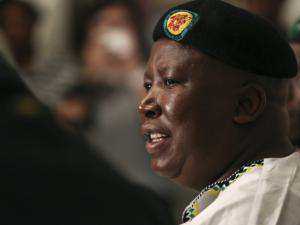
Johannesburg – Former ANC Youth League president Julius Malema has gone on the offensive against Ronald Lamola, describing his former deputy as a “traitor” and “sellout” who has crawled back to President Jacob Zuma.

In an exclusive interview with The Star on Tuesday, Malema said his former ANCYL deputy was negotiating with Zuma and ANC secretary-general Gwede Mantashe to switch allegiance in exchange for a chance to take over as league president after Mangaung.


Describing Lamola as a “small boy”, Malema has vowed that his former deputy would never lead the youth league because of “his selling-out tendencies”.


He said he had never needed Lamola in his life and was shocked when he saw him at his first court appearance for money-laundering in Polokwane in September.


In an indirect swipe at Lamola, who is in charge of the league, Malema said the league was currently disorganised, did not know whether it was coming or going, and that people communicated its decisions as if they were not committed.


He added that Zuma had paralysed the ANCYL.

Image

The axed youth leader accused Lamola and others of having asked Zuma and Mantashe to expel suspended ANCYL secretary Sindiso Magaqa, who is due to return in April, because they see him as a threat to their ambitions.

For more details go to http://www.iol.co.za


Pampierstad to get an angelic treat from Gospel Moguls


Image

Pampierstad to get an angelic treat from gospel Power Houses


Image

BY Obakeng Maje

Pampierstad- Northern Cape province will be buzzing with much more fun this weekend when one of finest gospel groups touring the place.

The Glory Boys gospel group featuring many more gospel artists and others from various genre.

“We will be performing live and presenting soulful music to our fellowers” Mawise Gasebake said. 

“We chose Kgomotso High school because I want to show message of support to the people of Kgomotso village and sorrounding areas” He added.

Mawise matriculated at Kgomotso High School and went on to embark on new adventures.

At its most basic level, gospel music is sacred music. It is a unique phenomenon of Africans which had its earliest iterations toward the end of the nineteenth century.

“Gospel is folk music which suggests that it and its secular counterparts are greatly influenced by each other” Mawise said with that angelic voice.

Just as much of the contemporary gospel music of today sounds like R & B and Hip-Hop, so did most of the early gospel music sound like the Blues.

Gospel, meaning “good news,” derived its name from it close connection with the gospels (books in the New Testament).

As we look at the common themes in the gospels of St. Matthew, St. Mark, St. Luke, and St. John, we find many references to God’s goodness and mercy

A Graspan-born artist said the gospel music will be combined with tradition.

One of the world renowned comedians Kenke originally from Botswana will also be part of the lineup. 

Kenke affectionately remembered (from tswana comedy featuring Radijo) will grace the event with other traditional groups.

“Tickets are available and are selling fast like hot cakes,so please make sure you get yours and come and experience one of hottest festivals in Mzansi” Mawise added.

Tickets are already available and you can contact Mawise Gasebake on 0721261954/0834202745 or Thabiso Masione Kgwenyape on 0781983744.

Image

In order to reach the widest possible audience, there are no “style” restrictions on gospel music; only the thematic content remains constant.

Coming out of an oral tradition, gospel music typically utilizes a great deal of repetition.

This is a carryover from the time when many post-Reconstruction blacks were unable to read. The repetition of the words allowed those who could not read the opportunity to participate in worship.

Gospel music over the centuries has ministered to the downtrodden and disenfranchised. To sing about a God who comes in the nick of time to deliver his people from uncomfortable circumstances is a consistent theme, which has been at the core of gospel music.

This music has been enjoyed for many decades and it continues to grow in its variety and sound.


Gospel music has a history which can be traced to the 18th century. During this time, hymns were lined and repeated in a call and response fashion and the Negro spirituals and work songs came on the scene. Because the enslaved Africans attended their masters’ worship services, the seventeenth century influences on Negro spirituals and work songs were traditional hymns the enslaved Africans heard in worship.

Worship services served several purposes; not only were they a means by which the Africans could be monitored, but they also served as a reinforcement of the slavery indoctrination.

Quite often readings were from St. Paul where made to being good servants and loving, obeying, and trusting one’s master. At this time it was also illegal for more than a handful of blacks to congregate without supervision.

This meant that the blacks were not free to worship on their own they had to attend worship services with their master.

At these services they would grow closer in their understanding of Christian doctrine and role that music played in that experience.

The worship music (hymns) of the whites masters became the backdrop for the music the enslaved Africans would use at their eventual worship meetings.


The unlawfulness of the blacks congregating did not keep them from secretly holding “campground” meetings. These meetings were typically held at a distance from the main house to assure discretion and avoid possible punishment. It was during these such meetings that “newer” renditions of traditional hymns were developed. It is often wondered how such creativity and beauty could have come out of such a dismal time. As we listen to gospel music today with its sometimes downtrodden themes, it continues to be curious how such beauty and richness can emanate from troubled times.


In the tradition of the black church, call and response in singing and in speaking has been and continues to be a foundation on which the gospel is delivered. Through this participatory delivery system beliefs are reinforced. There is an expectation that when there is agreement with either the spoken word or song because of either its content or its contexts that verbal affirmation will be given. Those who are witnessing, speaking, or singing are encouraged by the responses and those who are about to experience issues are empowered to be victorious.


Gospel music can stir many different emotions. The audience for this spiritually moving idiom continues to grow as do the types of venues where it can be heard. No longer bound to the walls of the American church, gospel music captures the creative and spiritual imaginations of increasing numbers of international audiences. For gospel singers and listeners, making a joyful noise unto the Lord is what the music is about and it invites the participation of all to come together, honor the past, look forward to the future, and through song, renew our faith.


Shooting suspect: I’ll tell my story in court


Image

 Pretoria – An Algerian man is fighting for his life after he was shot four times from behind, at close range, during a business meeting at Parrots restaurant in Menlyn shopping mall.


The alleged shooter, also from Algeria, was arrested moments later by Parrots management and a member of the public who followed him to the exit. “I will tell my story in court,” the alleged shooter said as he was handed over to mall security.


Parrots manager Wayne Koning said the incident happened at about 2pm. Shoppers scattered as the sound of gunfire echoed through the mall. “The restaurant was half full when an unknown man casually walked in and opened fire on one of our customers,” he said.

For more details go to http://www.iol.co.za

SABC bans Zuma ad before being aired


Image

Johannesburg – The animated advertisement begins with the words “Dinner time at Nkandla” appearing over an image of a mansion.


The next frame is indoors. A woman, seated at one end of an extremely long dining room table lined by children and several other women on both sides, says in isiZulu: “Oh Zuzulicious, we’re having fish and chips from Shabba today.”


The huge family is enjoying a dinner of fish and chips.


An animated President Jacob Zuma responds: “Eat up honey bunch, there is a lot of good food here. It’s from the Fish and Chip Company. There are many of you in this house, at only R25 even Pravin will approve this.”


The ad was supposed to be aired on SABC on Monday night until February, but was pulled just two hours before it was scheduled to be flighted for the first time.


Paul Warner, the creative director at MetropolitanRepublic Group, the agency that produced the ad, said the SABC had told the group that the commercial was banned because it was “degrading to the president”.


“They said our bosses have made the decision not to flight it,” he said.


Warner, who said there was nothing degrading about the ad, did not understand how it could be pulled on the basis of being offensive without anyone having complained about it.


“I’ve been doing this for a long time and I’ve never had an ad be banned before it was even aired,” he said.


Warner said the agency had submitted the commercial to the SABC more than two weeks ago and was not given a chance to react to it being pulled at the last minute.


Carlo Gonzaga, the chief executive of Taste Holdings, under which the Fish and Chip Company falls, said it was “astounding” that the SABC would take a unilateral decision about the ad on behalf of the public. “I think it’s presumptuous.”


Gonzaga said the company had already paid R1.5 million in media bookings for the commercial.


There was nothing offensive about the ad, he stressed, and if anything, it was encouraging the public – as the government had been doing – to tighten belts.


“It’s satire to say even the president must tighten his belt because of the tough economic times.”


SABC spokesman Kaizer Kganyago said he was not aware of the ad or any SABC officials issuing instructions for a commercial not to be aired.


This is not the first time the national broadcaster has interfered in content involving the president.


The SABC’s head of news, Jimi Matthews, has forbidden news staff from referring to Zuma’s private Nkandla property as a “homestead” or “compound”, and has banned the use of “Nkandlagate” or “Zumaville” in the public broadcaster’s reporting.


The instructions were issued to news editors almost a month ago in an e-mail that The Star has seen.


Editorial staff were instructed “with immediate effect” that Zuma’s “Nkandla home should be referred to as the president’s, or Mr Zuma’s, Nkandla residence”, and not a “compound” or “homestead” or “any other such term”.

For more details go to http://www.iol.co.za

Violence against women transcends class and race-Premier Modise


Image

BY Staff Reporter

Violence against women and girls transcends race and class and should be confronted and defeated wherever it raises its ugly head, North West Premier Thandi Modise said on International Day for the elimination of violence against women on Sunday.


In commending Ina Bonette for the courage to confront in court those who had allegedly violated her and calling for united action for a 365 days campaign for no violence against women and children, Premier Modise called on women and girls to speak out against physical or sexual abuse wherever they experience it, be it in their homes, workplaces, schools, streets and communities to end the culture of impunity.


“Perpetrators of violence against women should be exposed irrespective of who they are. Women must fight the sense of fear and shame that punishes them as victims who have already endured crime and now face stigma. Perpetrators should be the ones who feel disgraced, not their victims. We implore our courts to restore the dignity of our women with stiffer sentences and equally appeal to victims not to withdraw cases against perpetrators” Modise.She called on communities to challenge the culture of discrimination that allows violence against women to continue and for real men to support the 16 Days of activism for no violence against women and children campaign.

Follow us on Twitter@Taung_DailyNews


NWest planning for improved service delivery   


Image

Staff Reporter

Stakeholders in the North West Province have been afforded another opportunity to contribute towards strengthening of the capacity of the state to develop and implement its long term plan during the Provincial Roundtable Table Discussion to be held in Rustenburg on Wednesday.


The theme of the engagements hosted by the Planning Commission in the Office of the Premier in partnership with the Development Bank of Southern Africa and the Statistics South Africa is: “Fragile states and Dilemma for long term planning –Case study of South Africa.”


“Development is about improving quality of life…about equity and justice. It entails a growing economy in which redistribution is a critical element. The role of the state is to ensure democracy and popular participation. A strong state should have intellectual resources to plan, monitor and stimulate high growth. ” stresses Premier Thandi Modise


Modise added that the state should mobilise and deploy capital into sectors unattractive to private industry in order to address the challenges of poverty, high unemployment, and HIV/AIDS and play an important role in promoting democracy, justice and a human rights culture,.


South Africa as a Developmental State, the State of Administration, Census 2011 and its implication for the North West Province are research topics to be covered by Researchers, Local Economic Development practitioners, Integrated Development Planning officers from Provincial government departments, municipalities and other institutions, University lecturers and traditional leaders expected to attend the round table.

Follow us on twitter@Taung_DailyNews