SA’s Investment Prospects Buoyed by Economic Recovery


Picture: RSA president, Cyril Ramaphosa

By REGINALD KANYANE

30 March 2026 – The Republic of South Africa (RSA) president, Cyril Ramaphosa said this week, they will be welcoming delegates from more than 50 countries to the 6th South Africa Investment Conference (SAIC) in Sandton, Gauteng. Ramaphosa said since its inception in 2018, the SAIC has grown to become a premier global forum for showcasing the attractiveness of investment opportunities in our country to domestic and international investors.

He further said investment conferences play a key role in attracting foreign direct investment (FDI) as high-profile platforms that connect international investors with local opportunities. Ramaphosa added that they also facilitate strong partnerships by bringing together governments, business, banks and development finance institutions.

“As investors look to destinations that have demonstrated resilience in the face of increasingly volatile global financial conditions, South Africa presents a favourable proposition. We are Africa’s largest economy with a diversified industrial base.

“Since we began our first R1.2 trillion investment mobilization drive in 2018, we have secured investment pledges in mining, healthcare, automotive, food and beverage and others, reflecting the sophistication of our economy,” he said.

Ramaphosa said South Africa is also the leading destination for renewable energy investment on the continent, with these investments making up a considerable share of the total pledges made at previous conferences. He said they have a sound policy and regulatory environment, offering certainty to investors at a time when they are just one of many emerging markets across the globe vying for capital.

“We are also a gateway for businesses looking to set up or expand their operations in Africa. Through this conference, as well as the five preceding ones, we will be seeking to build even greater confidence in our country as an investment destination, and to demonstrate our commitment to structural reform, policy certainty and policy execution.

“The green shoots of economic recovery we are experiencing further bolster our position. The macroeconomic outlook has improved. We experienced four consecutive quarters of growth by the end of 2025, national debt has stabilized and more jobs are being created,” said Ramaphosa.

He said last year, their sovereign rating was upgraded for the first time in 17 years and they were removed from the Financial Action Task Force grey list. Ramaphosa said the structural reform agenda being driven through Operation Vulindlela has unlocked progress in electricity, freight logistics, water, telecommunications, and the visa system.

“We have brought load-shedding to an end and are creating a new, competitive electricity market that will ensure energy security and attract investment. The country’s logistics sector is being rapidly modernised, and we are enabling private investment in port and rail operations.

“Among the projects for which we have initiated a Private Sector Participation (PSP) process are the Ngqura Manganese Export Corridor in the Eastern Cape and the Richards Bay Dry Bulk Terminal in KwaZulu-Natal,” he said.

Ramaphosa said last year, they also signed a 25–year concession for the Durban Container Terminal Pier 2, representing R11 billion in private investment. He said a system for third-party access to the freight rail network is in place and 41 freight rail slots have been allocated to private companies.

“We have implemented reforms to the visa regime to attract new skills and promote tourism. These include operationalising the Remote Work Visa, introducing a Trusted Employer Scheme to support major investors, and piloting an Electronic Travel Authorisation system.

“By showcasing the progress and durability of the reform agenda, our goal is to grow the pool of inward investment from businesses and countries that will ultimately be a bridge to new markets, technologies and networks for South Africa,” said Ramaphosa.

taungdailynews@gmail.com

Picture: RSA president, Cyril Ramaphosa

Operation Paseka on course


By KEDIBONE MOLAETSI

30 March 2026 – The police in Bojanala Sub-District 1 conducted a successful Operation Paseka on 28 March 2026, targeting drunk and driving, public disorder and crime prevention in the Cyferskuil and Klipgat policing areas. The police said the operation, which was executed between 2pm and 10pm, resulted in the arrest of seven suspects for drunken driving.

The North West police spokesperson, Colonel Anne Magakoe said in addition, three suspects were charged for drinking liquor in public, while one suspect was charged for public indecency. Magakoe said during the operation, police also searched 35 vehicles and 50 individuals, while intensifying patrols in identified crime hotspot areas.

“The police remain committed to intensifying operations aimed at ensuring safer communities, particularly through the removal of intoxicated drivers from the roads,” she said.

taungdailynews@gmail.com

Police in Bojanala continue to crack the whip on crime


By BAKANG MOKOTO

30 March 2026- The police in Bojanala District continues to record strong operational successes following coordinated crime-fighting operations conducted between 22 and 29 March 2026, across Rustenburg, Koster, Boitekong, Phokeng, Tlhabane, Dwarsberg and Swartruggens policing areas. The police said operations resulted in multiple arrests for serious and priority crimes, including murder (3), unlawful possession of a firearm and ammunition (1), assault GBH (1), bribery (1), and sexual offences (13).

The North West police spokesperson, Colonel Anne Magakoe said the police also recorded 12 arrests for drug-related crimes, 10 for drunken driving, 15 for liquor-related offences, 19 for contravention of the Immigration Act, 28 for public drinking, 3 for public indecency, 11 theft-related crimes and 1 for possession of suspected stolen property. Magakoe said 2 suspects were nabbed for trespassing, 1 possession of housebreaking implements, 2 for contravention of the Road Traffic Act (1), and offences in terms of the Animal Identification Act.

“In addition, roadblock operations contributed to the overall success, with 371 vehicles stopped, 39 warrants of arrest executed, three vehicles impounded, and traffic fines to the value of R36 850 issued,” she said.

Meanwhile, the acting North West Police Commissioner, Major General (Dr) Ryno Naidoo, commended the police for their dedication and commitment in removing criminals and enforcing the law. Nadioo said the police remain committed to intensifying operations to ensure safer communities across the province.

“The public is encouraged to report crime via the SAPS Crime Stop number 08600 10111 or the MySAPS App,” he said.

taungdailynews@gmail.com

Foot and Mouth Disease crisis deepens in Gauteng


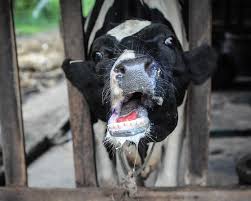
Picture: A cow affected by foot and mouth disease/Generic

By STAFF REPORTER

30 March 2026 – The Democratic Alliance (DA) said as Foot and Mouth Disease (FMD) continues to spread across Gauteng, farmers are losing their livestock, which is affecting food security. The DA is calling on Gauteng Premier Panyaza Lesufi and MEC for Agriculture and Rural Development, Vuyiswa Ramokgopa, to empower provincial mayors to establish local FMD command structures aligned with provincial efforts.

DA Gauteng Shadow MEC for Agriculture and Member of Provincial Legislature (MPL) in Gauteng, Bronwynn Engelbrecht said Local Government should actively support roadblocks and livestock movement enforcement. Engelbrecht said the municipal property should be monitored and controlled.

“We call on Lesufi’s government to engage directly with farmers and affected communities and participate in a coordinated, province-wide response strategy. While farmers face uncertainty, rising losses and mounting pressure, those entrusted with local governance are not adequately empowered and involved in containing FMD, which is deeply concerning.

“In stark contrast, District Mayors in the DA-led Western Cape are playing a central and decisive role in combating FMD. Clear strategies have been rolled out to monitor and regulate livestock movement,” she said.

Engelbrecht further said mayors are working alongside law enforcement to enforce biosecurity measures and also participating in joint operational command structures such as the war room established by the Western Cape Government. She added that as part of the Premier’s Coordinating Forum, Western Cape Local Government leaders can provide continuous feedback across all spheres of government and engage directly with farmers and communities to raise awareness.

“This coordinated approach ensures that no level of government operates in isolation and that accountability is maintained at every level.

“Unfortunately for Gauteng residents and farmers, there is no evidence of local government coordinating livestock movement control, no visible municipal enforcement of biosecurity measures, no structured local government participation in a joint command centre and no consistent communication with affected farming communities,” said Engelbrecht.

She said this is alarming given that communal and peri-urban grazing areas account for a significant portion of outbreaks, placing direct responsibility on municipalities to act. Engelbrecht said municipalities are not bystanders in this crisis.

“Under the Animal Diseases Act, they have a clear duty to prevent the spread of controlled diseases, particularly on municipal land and communal land.

“As Lesufi’s lack of direction and leadership, Gauteng’s mayors have not been able to exercise oversight, reinforce compliance, nor take visible responsibility for protecting local agricultural systems,” she said.

Engelbrecht said without active involvement of municipalities, Gauteng’s response remains disjointed, reactive, and ineffective. She said this undermines enforcement, weakens communication and allows the disease to continue spreading unchecked.

“The DA-led Western Cape has demonstrated that a coordinated approach is essential in fighting the spread of FMD. Gauteng must learn from the Western Cape to end this crisis.

“At a time when farmers are fighting to protect their livelihoods, and consumers face rising food insecurity, the cooperation between all spheres of government is not optional but essential,” said Engelbrecht.

taungdailynews@gmail.com