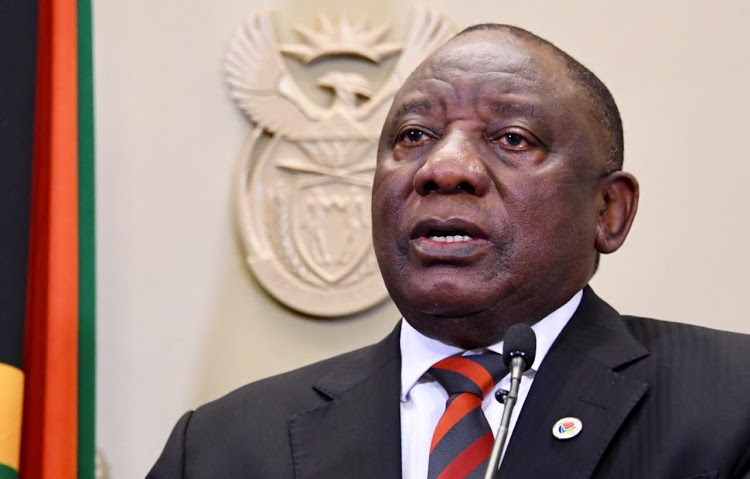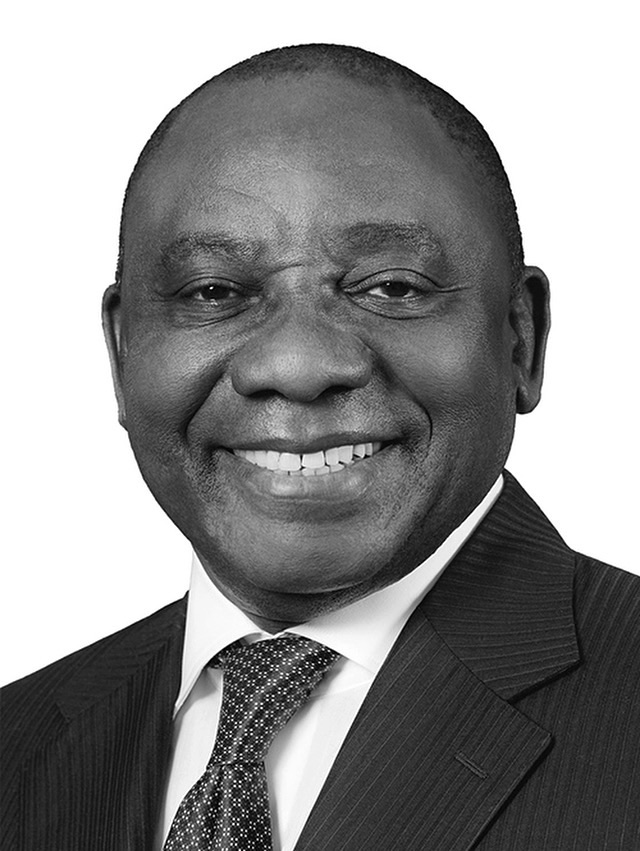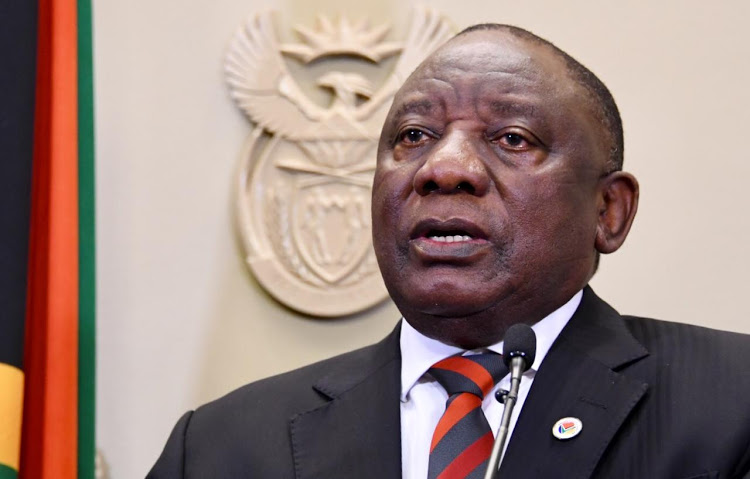
10 July 2025- The Republic of South Africa (RSA) president, Cyril Ramaphosa said he will on Sunday address the nation on developments arising from a public statement by KwaZulu-Natal Police Commissioner Lieutenant General Nhlanhla Mkhwanazi that details allegations against senior political and South African Police Service leadership.
Ramaphosa spokesperson, Vincent Magwenya said Ramaphosa was attending a BRICS summit in Brazil on 6 July 2025, when Mkhwanazi outlined numerous allegations at a media briefing. Magwenya said he undertook to attend to this development on his return from Brazil, in view of the implications for national security.
“Ramaphosa has been seized with this matter in recent days and will, following various consultations, take the nation into confidence at 7pm on 13 July 2025. The President’s message will be broadcast and streamed on various platforms,” he said.
8 July 2025- The Republic of South Africa (RSA) president, Cyril Ramaphosa said last week, the world came together at the 4th Financing for Development Conference in Sevilla, Spain, to agree on a set of actions to advance development over the next decade. Ramaphosa said this year’s conference took place at a moment of great consequence for humanity.
He further said they face more daunting challenges than at any other time, from the growing devastation caused by climate change to persistent levels of poverty in many parts of the world. Ramaphosa added that, to confront these challenges, they need to mobilise funding to tackle climate change, reduce poverty and build infrastructure that enables sustainable and inclusive economic growth.
“It is estimated that the world needs an extra $4 trillion dollars a year to meet the UN Sustainable Development Goals by 2030, a gap which can only be closed through more affordable, long-term sustainable financing. A major contributor to this financing gap is the growing debt burden faced by many developing economies, particularly those in Africa. Around 3.4 billion people now live in countries that are spending more on interest payments to creditors than on health and education.
“As the Jubilee Commission appointed by the late Pope Francis notes, while few countries have defaulted on their debt, they are defaulting on their people, their environment and their future. Debt can be a tool for development, if it is affordable and spent efficiently on infrastructure and other investments that support growth. However, a succession of external shocks – including the COVID-19 pandemic, the destabilising effect of various conflicts around the world and tightening financing conditions – has caused the cost of debt to rise rapidly for many developing economies,” he said.
Ramaphosa said at the inception of our G20 Presidency, they appointed an Africa Expert Panel led by Trevor Manuel, their former Minister of Finance, to develop recommendations that the G20 can take forward. He said they did so because they are convinced that Africa’s development must remain front and centre this year and into the future.
“We have since been focusing on practical solutions to achieve debt sustainability, such as improving the G20 Common Framework for debt treatments to enable timely and adequate debt restructuring. We are also working to expand the use of innovative mechanisms to alleviate the debt burden in times of crisis, such as climate resilient debt clauses, which automatically paused debt payments when a country faces a climate disaster.
“Going forward, a key priority is to ensure that more support is available to countries facing financial liquidity challenges, with interventions taking place early enough and providing enough relief to avoid a crisis. We have shown that this is possible through previous efforts spearheaded by the G20, such as the Debt Service Suspension Initiative, which created fiscal space for low-income countries during the COVID-19 pandemic,” said Ramaphosa.
He said there is no shortage of solutions to address the debt burden. What we need is the political will to translate proposals into action and to do so at a scale that matches the size of the challenge. Ramaphosa said countries committed in Sevilla to “take concrete actions to enhance fiscal space, address debt challenges of developing countries and lower the cost of capital”.
“This commitment was reinforced by the Rio de Janeiro Declaration adopted at the BRICS Leaders’ Summit in recent days, which recognised the need to “address in an effective, comprehensive and systematic manner the debt vulnerabilities of both low and middle income countries. The world cannot stand by and watch as rising debt service costs crowd out development for a generation or more.
“For this reason, South Africa is committed to working together with all countries to confront the debt challenge in a manner that is effective, sustainable and just,” he said.
26 June 2025- The Republic of South Africa (RSA) president, Cyril Ramaphosa has removed Andrew Whitfield from his position as the Deputy Minister of the Department of Trade, Industry and Competition (dtic). Ramaphosa thanked Whitfield for the time he served in the Government of National Unity (GNU).
According to the Presidency, his removal was in accordance with Section 93(1) of the Constitution of the Republic of South Africa, 1996. The Presidency has not indicated any intention to conduct a wholesale Cabinet reshuffle.
However, the Democratic Alliance (DA) said it has issued a 48-hour ultimatum to Ramaphosa after ‘unjust’ firing of Whitfield.
The DA leader, John Steenhuisen who is also a Member of Parliament (MP) said, yesterday, Ramaphosa put South Africa’s future at stake. Steenhuisen said shortly before cabinet met yesterday, he informed him that, he intends to remove Whitfield as Deputy Minister of Trade, Industry and Competition.
“I requested 24-hours to speak to Whitfield and my party. However, before I could even do so, just three hours later, Whitfield received a letter informing him of his removal. The apparent reason for this sudden and ill-considered decision is that Whitfield did not obtain permission to travel abroad earlier this year.
“But, the facts contradict even this flimsy reasoning. In fact, on 12 February 2025, Whitfield had written to the President requesting permission to travel to the United States, as required by the Ministerial Handbook,” he said.
Steenhuisen further said, ten days later, he had still not received any response from the presidency, and departed on the trip. He added that Whitfield subsequently wrote to the President to apologise if it caused offence.
“Again, he received no response. Then yesterday, months after the incident and without a further word on it, the President unilaterally removed a DA Deputy Minister without even giving his largest coalition partner the courtesy of discussing the issue.
“According to the President’s spokesperson, this move is also not part of a broader reshuffle. There is no other conclusion to be drawn than that this is a calculated political assault on the second-largest party in the governing coalition,” said Steenhuisen.
He said to make matters even worse, this drastic unilateral action appears to be the product of a flagrant double standard. Steenhuisen alleged that, while a DA Deputy Minister is removed for not getting a response to seeking permission to travel, Thembi Simelane remains in cabinet despite being implicated in the VBS looting.
“Nobuhle Nkabane remains in cabinet, despite apparently misleading Parliament over an attempt to deploy corrupt cadres to SETA boards. Serial underperformers, as well as people implicated in state capture, continue to sit around the cabinet table.
“Instead of being summarily fired, Simelane was merely asked to submit a “report” on the allegations against her to the President and moved to another portfolio. In the past, even Ministers who had serious Public Protector findings were merely admonished or had their pay docked,” he said.
Steenhuisen alleged that David Mahlobo is implicated in the most serious corruption by the state capture commission, yet he continues in the position as Deputy Minister of Water and Sanitation. He said yet a DA Deputy Minister is dismissed with the flimsiest of excuses.
“The people of South Africa are expected to accept that the likes of Simelane, Nkabane and Mahlobo are protected, while Andrew Whitfield is removed? But perhaps there is something even deeper at play here. Like all DA Ministers and Deputy Ministers, Andrew Whitfield was succeeding at his job.
“He had opposed an attempt to make suspect appointments, he was standing in the way of the looting that will follow from the Transformation Fund – and all of this in a department mired in corruption allegations involving the tender for the National Lottery,” said Steenhuisen.
He said given this flagrant double standard, one is left with no choice but to conclude that hardworking DA Members of the Executive are now being fired for fighting corruption, not for committing corruption. Steenhuisen said DA Ministers and Deputies are said to be good at their jobs, rather than being incompetent.
9 June 2025- The Republic of South Africa (RSA) president, Cyril Ramaphosa said this year marks the 70th anniversary of the Freedom Charter. Ramaphosa said they are reminded of its aspiration that the people shall share in the country’s wealth.
He further said the constitution reflects the promise they made to one another and to future generations to redress the injustices of the past and realise the full potential of the country. Ramaphosa added that, for this reason, they reaffirm that Broad-Based Black Economic Empowerment (BBBEE) is not just a policy choice but a constitutional imperative.
“In recent months, the world has entered what many now term a “poly-crisis” where global conflict, economic stagnation, mistrust in institutions and environmental degradation are challenging even the most resilient of nations. These are conditions affecting many countries and South Africa is no exception. It is now imperative that we use the lessons that we have learned over the past three decades to make our empowerment policies more meaningful.
“Now is not the time to abandon the measures that we have put in place to drive transformation. To the contrary, it is the time to move forward with greater purpose and raise our ambition. Since 1994 we have built a robust legislative framework to advance the transformation of our economy, anchored in the Broad-Based Black Economic Empowerment Act and the Employment Equity Act,” he said.
Ramphosa said the progress they have made is undeniable. He said they have seen real changes in ownership patterns, including more businesses owned by women.
“We have seen changes in management control, enterprise development and skills development. According to Statistics SA, between 2006 and 2023, black African households experienced real income growth of 46%, coloured households of 29% and Indian households of 19%. Despite this progress, the average income of white households is still nearly five times higher than that of black African households. This is the gulf we must close through deliberate and sustained efforts to expand opportunity.
“Transformation is not a favour. It is a necessity. The inequality of our past continues to shape the lives of millions of black South Africans. And yet many who continue to benefit from the legacy of exclusion continue to decry black economic empowerment and are even challenging it in our courts,” said Ramaphosa.
He said they must dispense with the false notion that they must make a choice between growth and transformation. Ramaphosa said economic growth without transformation entrenches exclusion and transformation without growth is unsustainable.
“We also need to challenge the notion that broad-based black economic empowerment is a cost to the economy. It is actually an investment in the economy. Our task is to ensure that we pursue both growth and transformation in concert, with more vigour and with greater effect. That is why we continue to strengthen initiatives like the Black Industrialists Programme, which is building successful, competitive, black-owned enterprises in manufacturing and other sectors.
“That is why we are establishing the Transformation Fund to support a new wave of emerging, innovative businesses that can create work opportunities for our people. We must open the levers of funding for black-owned businesses. There is a critical need for black-owned businesses to access funding on affordable terms,” he said.
Ramaphosa said, while much of this funding should come from the development finance institutions, it is the private banks that have the resources to make the greatest impact. He said they need to review their lending practices to unleash the potential of black business.
“Through mechanisms like the Public Procurement Act, we must ensure that businesses owned by women, young people and persons with disabilities enjoy expanding opportunities. We must ensure that transformation reaches into every sector, whether it is mining, construction, energy, IT or agriculture.
“The private sector should use their supply chains far more deliberately to empower many more black-owned businesses, not just to improve their BBBEE scorecard, but to grow and diversify their supplier base. As we develop our infrastructure, grow new industries like green hydrogen and electric vehicles, and drive localisation and reindustrialisation, we will continue to ensure that transformation is our guiding principle,” said Ramphosa.
He said the transformation they seek is not about ticking boxes. Ramaphosa said it is about building a resilient, just economy for generations to come.
“I call on all South Africans and in particular the private sector, to recommit to economic transformation. Let us move forward with greater urgency, unity and ambition, to build a South Africa where all can truly share in the country’s wealth,” he said.
2 June 2025- The Republic of South Africa (RSA) president, Cyril Ramaphosa said today marks the ‘first day at school’ for about 200 000 young people at over 20 000 schools nationwide. Ramaphosa said this time, however, they are not arriving at school as learners, but as working adults.
He further said they are participants in the 5th phase of the Basic Education Employment Initiative, the largest youth employment programme in South Africa’s history. Ramaphosa added that after a year’s pause, the initiative returns to townships, villages, inner cities, farms and special needs schools, bringing hope, energy and incomes to places where opportunities are too often out of reach.
“The initiative is a flagship programme of the Presidential Employment Stimulus, which has, since its inception in 2020, supported the delivery of jobs and livelihood opportunities in our country. The Basic Education Employment Initiative is implemented by the Department of Basic Education and by provincial education departments.
“It is now funded by the UIF Labour Activation Programme and national government. This programme is designed to develop the work skills that employers say they need, such as time management, task management, teamwork, problem solving, IT, admin and much more,” he said.
Ramaphosa said in the process, participants undertake roles aligned to school priorities to ensure these young people add real value, enhancing the learning environment for learners and strengthening learning outcomes. He said the Basic Education Employment Initiative offers opportunities for young people at all skills levels.
“Graduates are prioritised for work in the classroom, where their tasks allow teachers to spend more time on teaching and lesson preparation. Curriculum Assistants support maths, science and technology. Reading Champions promote literacy and a culture of reading. Lab and Workshop Assistants support technical subjects. Others support IT and school administration.
“They also tackle essential maintenance, such as fixing doors, painting peeling walls, maintaining school vegetable gardens and playgrounds. Care and Support Assistants work with School Support Teams to identify and support children at risk. Still others spark life into sports, art and music, activities that inspire learners, uncover their talents and build pride in communities,” said Ramaphosa.
He said, together, these roles provide real work experience to young people and vital support to our education system. Ramaphosa said the best possible advice to the young people starting at schools this week comes from a former participant in the programme.
“In 2023, Sibongile Joni was a Curriculum Assistant at Emsengeni Primary School in the Eastern Cape. She has since been employed in an NGO called Masinyusane. She has this advice for participants now starting in the programme: “Be reliable: your consistency builds trust. Be willing to learn, ask questions, accept feedback and grow daily.
“Take initiative: if something needs to be done, do it without waiting to be told. Treat every task as important, no matter how small, because excellence in the small things builds your reputation. Always be professional: your attitude, respect and conduct matter,” he said.
Ramaphosa urges those employed to build strong relationships with staff and learners. He said people open doors for those they trust and enjoy working with.
“Lastly, make the most of the training offered, they equip you with the skills you’ll need for your next step. She says this journey has taught her that growth doesn’t come overnight. She says: “Start strong. Stay consistent. You’re building your future today.”
“Every participant has their own hopes and dreams for their future beyond this programme. Whether they pursue a career in education, undertake further studies, search for a job or embrace self-employment, they won’t be starting from scratch,” said Ramaphosa.
He said from this programme, they will carry invaluable skills and experience. Ramaphosa said, yet, in a tough labour market, they will each need to tackle their next chapter with creativity and initiative.
“As a society, we cannot leave young people to navigate the transition into work alone. Together, we need to step up to assist them. These young people will leave the school environment having shown up, contributed and made a difference.
“They will have worked in high-pressure environments with limited resources and will understand deadlines and responsibility. To employers, we say: give them their next opportunity, mentor their enthusiasm, help take their potential to the next level,” he said.
Ramaphosa said they also need to reach those young people who want to be entrepreneurs. He said they need to find new ways to support those who want to create their own jobs and local value, to connect them to finance, training, markets and networks.
“Today, we celebrate this cohort of young people beginning meaningful work, many for the first time. But let us also not forget those who applied for these posts but who weren’t selected. Through the Presidential Employment Stimulus, we have demonstrated the government’s capacity to address the youth unemployment problem.
“Through this programme, we have been able to give young people work experience and a pathway to formal employment or even further education. We do believe that this will have a much longer term benefit for the employability of young people. This is but one initiative that seeks to address the youth unemployment challenge,” said Ramaphosa.
He said they still have much more to do to address the plight of young people. Ramaphosa said these young people are showing them what they are capable of.
“It is up to all of us in society to give them the opportunities they need to thrive,” he said.
26 May 2025 – The Republic of South Africa (RSA) president, Cyril Ramaphosa will have an oral question-and-answer session with the Members of Parliament (MPs) at the National Assembly (NA). Oral question sessions with the President are scheduled at least once a quarter during Parliament’s annual programme.
The National Parliament spokesperson, Moloto Mothapo said these sessions are one of the mechanisms parliament uses to hold the executive to account as stipulated in Section 92(2) of the Constitution, which states that members of the executive are accountable collectively and individually to parliament for exercising powers and performing their functions.
Mothapo said for the full list of questions to the President, individuals can click on the following hyperlink:
“The sitting will take place at Good Hope Chamber and Virtual platforms on 27 May 2025, at 2pm. On the same day at 2pm, the National Council of Provinces (NCOP) hybrid plenary will hold a debate on Africa Day.
“The day marks the founding of the Organisation of African Unity (now called the African Union) on 25 May 1963. The African Union’s primary objectives are to achieve greater unity and solidarity among African nations, defend their sovereignty and territorial integrity and accelerate political and socio-economic integration,” he said.
Mothapo said the sitting will take place at NCOP Chamber and Virtual platforms on Tuesday and 2pm.
25 May 2025- The Republic of South Africa (RSA) president, Cyril Ramaphosa said across the world, countries are having to grapple with their past as they confront the challenges of today. Ramaphosa said the past that countries deal with is often about atrocities that were committed against sections of their people.
He further said dealing with the memory of past atrocities is one of the most difficult and delicate tasks a nation can undertake. Ramaphosa added that this can be a cathartic process, but is vital if a country is committed to enhance national healing, cohesion and unity.
“The way a country remembers its painful past can shape the character of its democracy, the legitimacy of its institutions and the resilience of its people. As a country, we have had to contend with our past in the interests of social cohesion and nation-building.
“We have advanced policies of restitution and redress to both acknowledge and correct the historical injustice of apartheid. We remain equally committed to restoring the dignity of apartheid’s countless victims and to bringing closure to their families,” he said.
Ramaphosa said over the past weekend, they reburied the remains of Advocate Duma Nokwe, a hero of the anti-apartheid struggle and former Secretary-General of the African National Congress, who died in exile in Zambia in 1978. He said Nokwe was the first black advocate to be admitted to the Johannesburg Bar, and both a defendant and a member of the defence team in the treason trial of 1956.
“In recognition of his contribution to the legal fraternity, we conferred him the status of senior counsel posthumously. Duma Nokwe was one of 42 former liberation heroes and heroines who passed away in exile whose remains were repatriated from Zambia and Zimbabwe in September last year.
“We are grateful for the countries that gave our people shelter and support in exile and provided a resting place for those who died before they could return home,” he said.
Ramaphosa said many families in this country lost their loved ones to apartheid brutality and live with these scars. He said the apartheid regime even pursued activists that had fled the country and their whereabouts remain unknown.
“In 1994, we chose a path of national reconciliation. We established the Truth and Reconciliation Commission (TRC) to shed light on the atrocities committed during apartheid.
“Even as democratic South Africa attempted to unearth what happened and to hold those accountable to account, many apartheid-era security officials either refused to appear before the TRC or did not fully disclose their actions,” Ramaphosa said.
He said others resorted to delaying tactics and obstruction to evade trial. Ramaphosa said as they recently announced, he is in the process of establishing a judicial commission of inquiry to look into allegations of interference in the investigation and prosecution of apartheid-era crimes referred by TRC.
“As government we remain steadfast in our commitment to restoring the dignity of activists who died and were buried abroad, and to our country men and women who were subjected to indignities in foreign lands.
“This is being done within legal frameworks such as the National Heritage Resources Act. This framework facilitated the repatriation of Sara Baartman’s remains for burial in South Africa in 2002,” he said.
13 May 2025- The Republic of South Africa (RSA) president, Cyril Ramaphosa said they are deepening their trade and investment ties across Africa. Ramaphosa said this week he is attending the Africa CEO Forum in the Ivorian capital, Abidjan, where they are showcasing the country’s potential as a premier investment and trade destination.
He further said they are also supporting South African firms as they seek new opportunities on the continent. Ramaphosa added that this is an annual event that brings together almost 3,000 CEOs, heads of state and investors to explore potential business leads, partnerships and opportunities.
“South Africa’s high-level participation in this Forum underscores our commitment to play a leading role in Africa’s economic integration. The Africa CEO Forum takes place at a time of much disruption in the global economy, characterised by geopolitical tension, trade wars and conflicts that are causing instability in key shipping corridors.
“What this means is that South African businesses are actively exploring new market opportunities. South African investments in other African countries have a long history. These investments have grown and diversified from mining into sectors such as construction, IT and telecommunications, healthcare, financial services, retail and the green economy,” he said.
Ramaphosa said since the advent of democracy in 1994, their government has implemented several initiatives to promote trade and investment elsewhere on the continent, including partnerships and trade agreements. He said they are witnessing the benefits of these efforts.
“The latest trade statistics published by the SA Revenue Service point to increased exports to countries in the region, like Botswana, Eswatini, Lesotho and Namibia, as well as with the rest of Africa. We are determined to use the longstanding presence of South African companies on our continent to expand trade and investment with fellow African nations.
“The African Continental Free Trade Area (AfCFTA) is creating a more predictable and conducive environment for business to thrive across borders. Our businesses must seize this opportunity even as the process of harmonising regulations continues,” said Ramaphosa.
He said the upheavals in the global economy present an opportunity for strategic, Africa-focused trade and investment policy. Ramaphosa said South African business must be at the forefront of the transformation of African industry.
“As government, we are committed to provide the necessary supportive policy and regulatory frameworks. By equal measure we will be making the case for African firms to invest in South Africa.
“We have a diverse economy with highly developed industrial sectors. We have established industries in mining, agriculture, manufacturing, financial and professional services, IT and others,” he said.
Ramaphosa said South Africa is a leader in digital innovation on the continent and one of the leading incubators of tech start-ups. He said the World Intellectual Property Organisation ranks South Africa second among economies in sub-Saharan Africa in the Global Innovation Index.
“The structural reform process began under the sixth administration and continued under the Government of National Unity aims to position South Africa as a premier trade and investment destination.
“We are working to make our economy more competitive by reducing the cost of doing business, improving our infrastructure and investing in skills development. We are reforming our visa regime to attract skills and promote tourism in South Africa,” said Ramaphosa.
He said they are using our G20 Presidency to amplify the continent’s voice and focus global attention on Africa’s economic potential. Ramaphosa said they are prioritising inclusive global cooperation, a just and equitable economic recovery and promoting long-term environmental resilience.
“South Africa is greatly encouraged by a new wave of continental business expansion. We are forging ahead to deepen investment and trade with the rest of the continent in a manner that contributes to shared prosperity for all Africa’s people,” he said.
6 May 2025- The Republic of South Africa (RSA) president, Cyril Ramaphosa said they need to protect the rights of workers to build an inclusive economy. Ramaphosa said they have just observed Workers’ Day, which is commemorated across the world in honour of the struggles of workers for fair labour standards and conditions of work.
He further said since the advent of democracy in 1994, they have observed Workers’ Day also to acknowledge the historical role of workers and the labour movement in their broader struggle for freedom. Ramaphosa added that over the past 31 years, they have made considerable progress in improving their labour laws and protecting the rights of workers.
“We emerged from a past where black workers were deliberately denied their rights. For many years, black workers could not be organised into unions, through job reservation they were denied access to certain occupations and they often worked in unsafe and unhealthy conditions.
“Today, the rights of workers in South Africa are protected and enforced. The Constitution enshrines the rights of workers as it does the rights of every person who lives in South Africa. Since 1994, we have passed progressive laws to give effect to the rights of workers,” he said.
Ramaphosa said following extensive consultation with business, labour and civil society, in 2019, they introduced a National Minimum Wage, setting a wage below which no worker may be paid. He said studies have found that since its introduction the National Minimum Wage has led to a significant increase in hourly wages for workers, and has also played a role in reducing the gap between the highest and lowest paid workers.
“We have sought to break from our apartheid past where workers laboured under oppressive conditions to swell the profits of companies without receiving even the most basic benefits.
“This includes measures to advance worker ownership in companies. An increasing number of workers are part of worker share ownership programmes,” said Ramaphosa.
He said they have been deliberate in their efforts to protect the rights of women workers. Ramaphosa said the Employment Equity Act prohibits unfair discrimination on the basis of sex, gender, pregnancy and marital status.
“Female workers are guaranteed specific entitlements such as maternity and family responsibility leave, and we have laws that safeguard against sexual harassment and gender-based violence in the workplace.
“At a time of constrained economic growth and high unemployment, we have seen calls from some people, including political parties, for our country’s labour laws to be ‘relaxed’ in response to the prevailing economic climate,” he said.
Ramaphosa said stimulating economic growth and job creation and retaining worker protections are not mutually exclusive. He said in fact, worker rights have been found to improve productivity and thereby enhance the growth of companies and the economy.
“They also help to distribute the benefits of growth more equally and improve economic stability. In addition, South Africa’s labour laws are part of our effort to overcome the structural inequality of apartheid.
“The latest report of the Employment Equity Commission shows how far we still have to go in ending the race-based disparities that exist in our economy. Despite Africans constituting the majority of the economically active population, the majority of top management positions in the private sector are still held by white males,” said Ramaphosa.
He said this trend is observed at senior management level in nearly every economic category. Ramaphosa said black South Africans are predominantly in the semi-skilled and unskilled categories.
“While there has been much improvement since the advent of employment equity legislation, it is clear that not enough has been done to change the racial composition of the ownership, control and management of our economy.
“Employment equity is not the only area where challenges remain. The International Labour Organisation has highlighted problems of compliance with labour laws in South Africa, as well as inadequate safeguards for workers in the burgeoning informal sector,” he said.
1 May 2025- The Republic of South Africa (RSA) president, Cyril Ramaphosa said he is in the process of establishing a judicial commission of inquiry to establish whether attempts were made to prevent the investigation or prosecution of apartheid-era crimes referred by the Truth and Reconciliation Commission (TRC) to the National Prosecuting Authority. This comes after the allegations of improper influence in delaying or hindering the investigation and prosecution of apartheid-era crimes have persisted from previous administrations.
Ramaphosa spokesperson, Vincent Magwenya said through this commission, Ramaphosa is determined that the true facts be established and the matter brought to finality. Magwenya said the establishment of the commission of inquiry is the outcome of settlement discussions in a court application brought by families of victims of apartheid-era crimes.
“Following discussions involving the Presidency, the families and other government bodies cited in the application, there was a joint agreement to establish the commission.
“This follows the Presidency’s statement in February 2025 in support of a commission that will look into the delays in the prosecution of these cases. While the parties have agreed to the establishment of the Commission of Inquiry, they were not able to reach a settlement on other matters in the application,” he said.
Magwenya further said these include the application for an order that declares the actions of various government entities unlawful and a violation of the applicants’ rights, as well as the payment of constitutional damages by the state. He added that, government has maintained that these outstanding matters would be most appropriately addressed through the Commission of Inquiry, and will therefore be included in the commission’s terms of reference.
“Ramaphosa continues to maintain that all affected families deserve closure and justice. A commission of inquiry with broad and comprehensive terms of reference is an opportunity to establish the truth and provide guidance on appropriate remedies.
“Ramaphosa appreciates the anguish and frustration of the families of victims, who have fought for so many years for justice. The president respects the decision of the families to continue to seek an order on the violation of their rights and constitutional damages through the courts,” said Magwenya.
He said the government will be seeking a stay of application on these outstanding matters pending the conclusion and outcomes of the Commission of Inquiry. Magwenya said the Presidency will shortly make an announcement on the head of the Commission of Inquiry, the time frames and the full terms of reference.