Ramaphosa grateful over successful G20 Leaders’ Summit


By AGISANANG SCUFF 

1 December 2025- The Republic of South Africa (RSA) president, Cyril Ramaphosa expressed his profound gratitude to all South Africans for ensuring and enabling the beloved country to host a series of successful G20 meetings throughout the year, ending with the G20 Leaders’ Summit. 

Ramaphosa who addressed the nation last night said when they launched their G20 Presidency a year ago, he said that this must be the People’s G20.

He further said it cannot belong just to the leaders, but to the millions of people who have a stake in the discussions and decisions of the G20. Ramaphosa added that this was the first time the G20 Summit was held on African soil.

“We are humbled to have been that one country on the African continent to host the summit and represent the 1.4 billion people who live on our continent. Participants of the G20 who attended from other countries experienced the friendship, hospitality and generosity that define our nation and our continent.

“Many visitors commented on the vibrancy, warmth and hospitality of our people. World leaders, diplomats, delegates and observers have been sharing their impressions online as well. This is what I would like to thank the people of South Africa for. For showing up for your country and standing by it. For showing, time and again that no matter what difficulties we may face, when it comes down to it, you remain proudly South African,” he said.

Rampahosa said over the past year, the country has hosted tens of thousands of delegates in more than 130 meetings in every part of the country from Gqeberha to George, Cape Town to eThekwini, Hoedspruit to Polokwane. He said they have also held meetings in other cities on the African continent and beyond their shores.

“Drawing from Brazil’s G20 Presidency last year, we convened the G20 Social Summit to advance the voice of civil society. The Social Summit, which was attended by more than 5000 people from around the world, was an exceptional celebration of the diversity and vibrancy of global civil society.

“I know some of you might have been inconvenienced by the influx of visitors to our country, road closures and other disruptions to your daily lives. We thank you for being patient and we apologise for any difficulties you experienced. We thank the many people from across the country who welcomed visitors to our cities, towns, airports, hotels, conference centres, restaurants and tourist sites,” said Ramaphosa.

He said they thank their security services personnel, who ensured that all G20 events took place without incident. Ramaphosa said they thank all the members of different social sectors who participated in the engagement groups and in other G20 activities throughout the year.

“We thank the business people who participated in the G20 business forums and the B20 for bringing together businesses from other countries. We thank the Presiding Officers and Members of Parliament, members of the Judiciary, academics and many others who organised G20 meetings. We also thank our media for keeping our people informed about the G20 processes that were unfolding all over the country.

“We thank our Premiers for having been such welcoming hosts. We thank our mayors, councillors and municipal workers that worked so hard to prepare our host cities for the arrival of our visitors, particularly in Johannesburg, which hosted the Leaders’ Summit. These cities showed what can be done when a concerted and coordinated effort is made to fix potholes and street lights, to clean up our streets and maintain our infrastructure,” he said.

Ramaphosa said this must continue past the G20 and must be expanded to areas of their towns and cities that have been neglected. He also thanked the Deputy President, Paul Mashatile, Ministers and Deputy Ministers, G20 Sherpas and government officials, who guided the deliberations with wisdom and purpose.

taungdailynews@gmail.com

Ramaphosa thanks people of SA for historic G20 Presidency


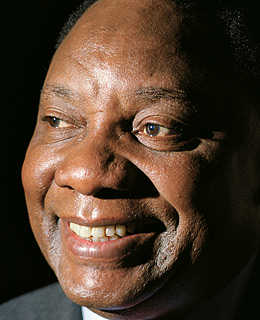
Picture: RSA president, Cyril Ramaphosa
By REGINALD KANYANE

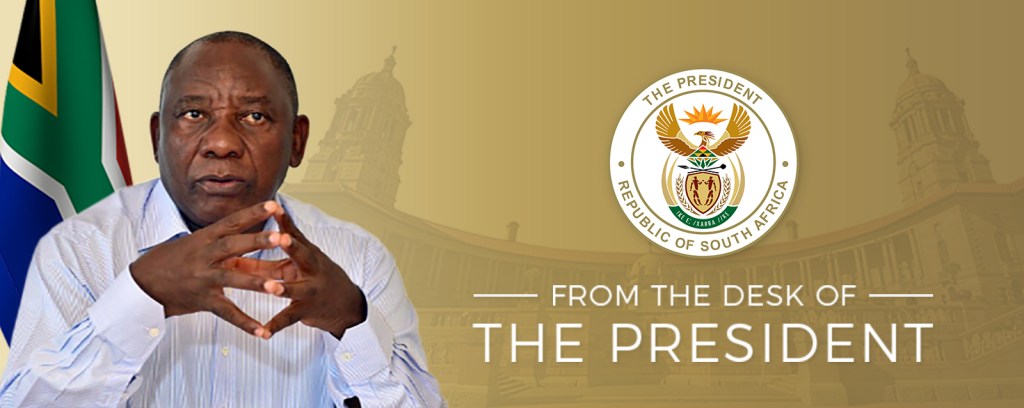
24 November 2025- The Republic of South Africa (RSA) president, Cyril Ramaphosa said over the past two days, the country hosted leaders from around the world for the G20 Leaders’ Summit in Johannesburg.  Ramaphosa said this is the first time that the G20 has been hosted on African soil.

He further said recognising the importance of this milestone they have placed Africa’s growth and development at the heart of the G20’s agenda. Ramaphosa added that the G20 matters for South Africa not only to cement their important role in international affairs, but also to support their own growth and create jobs for South Africans.

“We can only achieve these objectives in an environment of global stability, inclusive growth and a level playing field. Leading up to the G20 Leaders’ Summit, we hosted tens of thousands of delegates for more than 130 meetings in every part of our country, from Gqeberha to George, Cape Town to eThekwini, Hoedspruit to Polokwane.

“We welcomed visitors from around the world to see and enjoy the beauty of our natural landscapes, the warmth of our people’s hospitality and the sophistication of our economy. Our G20 Presidency has been rooted in the conviction that the world needs more solidarity, equality and sustainability,” he said.

Ramaphosa said while some have sought to create division and polarisation between nations, they have reinforced their shared humanity. He said they have fostered collaboration and goodwill.

“Above all, we have affirmed that our shared goals outweigh our differences. We have prioritised issues that are important for advancing more rapid and inclusive growth in our own country. We reached agreements that will benefit every South African.

“We secured a clear commitment from the international community to address the high levels of debt which divert spending by developing economies – including our own – on infrastructure, health and education. We placed this issue firmly on the agenda to increase investment on the continent and seize the unique opportunity that Africa presents,” said Ramaphosa.

He said the G20 leaders agreed on the need for increased global investment for climate action. Ramaphosa said this will be crucial for South Africa as they undertake a just energy transition to a low carbon economy in a manner that protects workers, businesses and communities.

“As the G20, we have agreed on the need for scaled up disaster prevention and post-disaster reconstruction to address the rising impact of extreme heat, floods, droughts and wildfires. We raised this issue because a few areas in our country, particularly the Eastern Cape and KwaZulu-Natal, frequently experience disasters.

“We have secured international agreement on a new approach to critical minerals so that they become a source of prosperity and sustainable development in the countries that produce them. This supports our own ambition to use our extensive endowment of minerals to become a leading global player, while ensuring that beneficiation takes place in South Africa and creates jobs in mining areas,” he said.

Ramphosa said this has been the People’s G20. He said it has given new prominence to engagement groups from across global society, bringing together sectors like business, labour, parliaments, scientists, think tanks, women, young people, start-ups, civil society, mayors and the media.

“We can be proud of what South Africa has achieved in hosting a successful G20 Presidency and guiding countries towards agreement on complex and important issues. This has been the historic effort to which all South Africans have contributed.

“We thank the many people who welcomed visitors to our country, and the security services who ensured that the G20 Leaders’ Summit and all G20 events took place without incident. We thank all the members of different social sectors who participated in the engagement groups and in other G20 activities throughout the year,” said Ramphosa.

He thanked all Premiers and mayors for having been such welcoming hosts. Ramphosa also thanked his Ministers and Deputy Ministers, G20 Sherpas and government officials who guided the deliberations with wisdom and purpose.

“Above all, we thank each and every South African for contributing to this success, and for showing the world the strength of our values, the generosity of our people and the power of what we can achieve when we work together. Many of the foreign leaders and delegates who came to our country recognised what our Ubuntu spirit is all about.

“The success of the G20 Leaders Summit, together with the improving performance of our economy and growing confidence in our reform programme, shows that South Africa is a country on the rise,” he said.

taungdailynews@gmail.com

World leaders must act now to tackle inequality


By REGINALD KANYANE  

10 November 2025- The Republic of South Africa (RSA) president, Cyril Ramaphiosa said when South Africa took over the Presidency of the G20 nearly a year ago, they identified ‘equality’ as one of the pillars of their term, alongside ‘solidarity’ and ‘sustainability’. Ramaphosa said they chose to focus on equality because it is essential to a more stable, prosperous and sustainable world. 

He further said if the G20 is going to live up to its mission to tackle pressing global economic and financial issues, then it needs to significantly and urgently reduce inequality. Ramaphosa added that Global wealth inequality is stark. 

“The world’s richest 10% account for more than half of total global income. These people account for a staggering 74% of total global wealth. The human cost of these inequalities is severe; one in four people globally face moderate or severe food insecurity. These huge disparities are unjust and consign billions of people to poverty. 

“Inequality is bad for everyone. It makes the world less stable, fuels conflict and undermines democracy. It stifles inclusive economic growth and prosperity. It is for this reason that I appointed an Extraordinary Committee of Independent Experts on Global Inequality as part of our G20 Presidency,” he said. 

Ramaphosa said the committee, chaired by Nobel Laureate and renowned economist Joseph Stiglitz, handed over its findings last week. He said the report examines the causes and consequences of inequality and makes important recommendations. 

“Given the importance of equality to sustaining global growth, to social and political stability and to the legitimacy of international economic governance, it is good that at South Africa’s instance this will be the first time the G20 will focus on this matter and consider an in-depth report of this nature. 

“As Stiglitz and his fellow experts note, the features of the international economy that perpetuate inequality “can be significantly affected by the decisions and actions of G20 governments”. They say that inequality is a policy choice. It is therefore critical that G20 leaders recognise the extent and urgency of the problem of inequality – and that they act accordingly,” said Ramaphosa. 

He said among the committee’s recommendations is the establishment of a permanent international body on inequality. Ramphosa said this would be modelled along the lines of the Intergovernmental Panel on Climate Change (IPCC), which has been vital to global efforts to measure and respond to the climate emergency. 

“In a similar way, the proposed International Panel on Inequality would bring focus to bear on inequality and measure, monitor and report on global and national trends in inequality among and within countries. 

“It would be mandated to advise governments, multilateral bodies and institutions and the G20 on effective policy responses. The report suggests policy levers that governments around the world can use to reduce inequality. It is noteworthy that South Africa already has a number of these policies in place,” he said. 

taungdailynews@gmail.com

‘Southeast Asia is closer now than ever before’


By OBAKENG MAJE

4 November 2025- The Republic of South Africa (RSA) president, Cyril Ramaphosa said they have just returned from a successful visit in Southeast Asia, where they visited Indonesia, Vietnam and Malaysia. Ramaphosa said South Africa has long-standing relations with all three countries.

He further said their ties to Indonesia and Malaysia go back more than 300 years, when the Dutch East India Company brought people from what were then known as the Dutch East Indies to South Africa as slaves. Ramaphosa added that together with political exiles, skilled artisans and religious scholars, these people formed what was to become the Cape Malay community.

“The descendants of these early arrivals remain an integral part of the South African people. Alongside Indonesia and Malaysia, Vietnam was a firm supporter of the struggle against apartheid. Vietnam’s struggle for independence and self-determination was an inspiration to many South African freedom fighters.

“As we recognise these strong historical ties, these visits have been firmly focused on the future. There is enormous potential for greater trade and investment between South Africa and each of these countries. The three countries we visited have a combined population of 380 million people and have recorded significant economic growth over many years. The combined value of trade between South Africa and these three countries in 2024 stood at R83 billion,” he said.

Ramaphosa said in the midst of global economic uncertainty, it has become more important than ever for South Africa to diversify its trade and investment relations. He said as they continue to expand trade with traditional partners, they see great value in strengthening links with other countries of the Global South.

“Already, South Africa exports many agricultural products to these countries. During our visits, we discussed how to expand the range and the quantity of agricultural products we supply these countries, ranging from beef to soybeans to fruit. Among other things, we agreed to look at some of the regulatory barriers to market access.

“Over time, each of these countries has expanded their advanced manufacturing capacity, with some taking the lead in semiconductors, batteries and electric vehicles. South Africa, with its substantial reserves of critical minerals, is well placed to supply the products that these industries need,” said Ramaphosa.

He said they are keen to develop partnerships with these countries to ensure that they add value to these minerals before exporting them. Ramaphosa said this is part of our ambition to move away from being an exporter of raw material to producing finished goods.

“In each country, we met with companies that were keen to invest in South Africa. Some of these companies already have a presence in our country. All of them recognised the great potential of our economy, our well-developed infrastructure, our world-class financial sector, our independent judiciary and stable institutions.

“A number of companies told us about their plans to build new manufacturing plants in South Africa to serve both our domestic market and markets in the Southern African region and on the African continent. They want to locate their operations in South Africa so that they can take advantage of the African Continental Free Trade Area,” he said.

Ramaphosa said while much of their visit focused on expanding trade and investment ties, they shared with all three countries a common approach to international matters. He said they are all firm advocates of multilateralism and international law, the reform of the United Nations and cooperation between the countries of the Global South.

“We therefore agreed to work together to promote peace and security, climate action and sustainable development. Our common approach was evident also at the 47th Summit of the Association of Southeast Asian Nations (ASEAN), which we attended at the invitation of Malaysian Prime Minister Anwar Ibrahim. The theme for the ASEAN summit, ‘Inclusivity and Sustainability’, mirrors the theme for our G20 Presidency, ‘Solidarity, Equality, Sustainability’.

“This underlines the alignment between our vision of the world and that of the countries of Southeast Asia. Although we are separated by the Indian Ocean, South Africa and Southeast Asia are closer now than we have been before. We share a determination to build a common future of development and inclusive growth from which all our people benefit,” said Ramaphosa.

taungdailynews@gmail.com

SA is serious about fighting financial crime and corruption


By OBAKENG MAJE

30 October 2025- The Republic of South Africa (RSA) president, Cyril Ramaphosa said the country’s exit from the Financial Action Task Force (FATF) grey list bodes well for the integrity and reputation of their financial system, for their status as an investment destination and for the economy as a whole. Ramaphosa said the FATF is a global body that aims to tackle global money laundering and terrorist financing.

He further said in 2023, South Africa was put on its ‘grey list’ for falling short of certain international standards. Ramaphosa added that just over two years since the FATF identified deficiencies that had rendered South Africa increasingly vulnerable to financial crimes, the dedication of a multidisciplinary team led by the National Treasury has culminated in our formal exit from the grey list.

“In its statement, FATF welcomed the ‘significant progress’ South Africa has made in improving its anti-money laundering and countering terrorism financing regime, and called for these improvements to be sustained.

“This milestone is a boost for South Africa’s international reputation and global standing. Grey listing results in a country being seen as risky for investors. The practical implications are that countries have greater difficulties obtaining credit and access to international financial services. There are reduced foreign direct investment and even capital outflows, and restrictions on cross-border transactions,” he said.

Ramaphosa said international investors seeking to do business in any country need assurance that its financial system is clean, transparent, robust and compliant with global standards. He said the perception of increased risk affects citizens and businesses financially.

“The cost of living and doing business can increase as a result of a weakened currency. As international borrowing becomes more expensive for businesses and governments, there is less fiscal space for social spending and tax pressures increase.

“Investor hesitancy leads to less foreign direct investment, which in turn impacts job creation and sustaining existing jobs. The impact of South Africa’s exit from the FATF grey list will reduce pressure on citizens, businesses and the government. Ultimately, the return of international financial confidence and a reduced risk perception will attract more foreign direct investment,” said Ramaphosa.

He said as the currency strengthens the cost of living for citizens and doing business will improve. Ramaphosa said the far-reaching regulatory and institutional reforms they have instituted as part of the FATF process are a clear demonstration of South Africa’s commitment to improving the business and investor climate, and to ongoing reform.

“The mandate of the Financial Intelligence Centre was expanded in 2022 when its founding legislation was strengthened to allow for more effective monitoring and detection of complex financial crime. Legislative amendments have been made to enable for more stringent reporting regulations around beneficial ownership.

“This is so we know who ultimately owns, controls and benefits from a company, not just those who are listed as shareholders on paper. These changes will make it much more difficult for individuals and syndicates to funnel the proceeds of their corrupt activities through complex webs of shell companies, trusts and companies owned by friends and relatives,” he said.

Ramaphosa said to close high-risk loopholes around terrorism financing, we have introduced regulatory amendments to enable the investigation and prosecution of such cases. He said they are committing more government spending to countering money-laundering and terrorism financing.

“The state capture era led to a near hollowing out of state capacity and the weakening of key institutions involved in upholding the integrity of our financial system. But we are steadily rebuilding them.

“Exiting the grey list demonstrates that our anti-money laundering system is beginning to act against corruption and other financial crimes. It lays the basis for further improvements. It is a signal of our collective determination to ensure that the malfeasance of the past is well behind us,” said Ramaphosa.

He said they will make sure that the FATF decision does not result in complacency but supports increased vigilance. Ramaphosa said much work remains to be done to reduce and prevent financial crimes, and ensure speedier investigations, prosecutions and convictions of those committing such crimes.

“With the necessary regulatory frameworks in place, our focus must now be on improving and strengthening implementation. We will also sustain enforcement within both public and private institutions and deepen international collaboration,” he said.

taungdailynews@gmail.com

‘Let’s work together to ensure no person goes hungry’


By KEDIBONE MOLAETSI

22 October 2025- The Republic of South Africa (RSA) president, Cyril Ramaphosa said last week, the 7th Social Justice Summit, organised by the Centre for Social Justice at Stellenbosch University, reflected on the country’s progress towards achieving food security as a key component of social justice. Ramaphosa said government, policy makers, academia and civil society organisations, discussed what they must do to ensure that no South African goes hungry and to chart a new course as countries of the world strive to achieve the 2030 Sustainable Development Goals (SDGs).

He further said the centre has developed the Musa Plan, which aims to use data-driven research and collaborative resource mobilisation to end poverty. Ramaphosa added that overcoming poverty and tackling the cost of living for South Africans is one of the strategic priorities of the Government of National Unity (GNU).

“Access to nutritious food directly affects the physical health and development of individuals and societies. Around 15 to 16 million people in South Africa have inadequate or severely inadequate access to food.

“South Africa is amongst 29 countries where the right to food and water is enshrined in the Constitution, and where citizens have resources in the legal system to ensure that this right is enforced. Our Constitution imposes a duty on the state to take reasonable legislative and other measures, within its available resources, to progressively realise this right,” he said.

Ramaphosa said since the advent of democracy in 1994, successive administrations have adopted a multifaceted approach to tackling hunger and food security. He said this has included legislative and policy reform, nutrition at primary healthcare level, and programmes that deliver nutrition directly to communities and institutions, such as the school feeding scheme.

“To further bolster food security, the provision of social grants, free basic services, free basic and tertiary education, and free primary healthcare have freed up money in households to buy food.

“In South Africa, the social wage accounts for approximately 60% of spending by the Government before interest payments. This is amongst the highest of upper-middle income countries. A 2021 World Bank report noted that South Africa’s system of programmes were effective, well-targeted and provided sizable benefits to the poorest households,” said Ramaphosa.

He said their social assistance system “effectively reduces poverty and inequality rates”. Ramaphosa said the School Nutrition Programme has been one of the most far-reaching and transformative policies implemented under democracy to address poverty.

“This programme provides nutrition to more than 9 million learners from poor households on a daily basis. The provision of meals at schools, with nutritious ingredients sourced from school and community food gardens, has had a positive impact on learner attendance, concentration and overall academic performance.

“The long-term impact of this programme is evident. Last year, learners from the poorest schools, 60% of schools, accounted for 67% of all bachelor passes achieved. Supporting communities to grow their own food has been an integral feature of the Government’s food security strategy,” he said.

Ramaphosa said provincial agricultural departments run programmes across the country to support school, household and community food gardens, and provide implements like seedlings, tools and training. He said despite a range of interventions by national and provincial governments, a large portion of South African households are food insecure.

“In a context of high unemployment and poverty and limited economic growth, many households across the country are finding it difficult to afford nutritious food. It is, therefore, necessary that together with measures to eradicate extreme food poverty, we have to also look at market factors that are making the cost of nutritious food increasingly out of reach.

“According to Statistics South Africa data, annual inflation for food and non-alcoholic beverages continues to rise. Last month, headline consumer inflation hit a 10-month high. Meat and vegetables are more expensive, putting household food budgets under pressure,” said Ramaphosa.

taungdailynews@gmail.com

EU investment supports inclusive and sustainable growth in SA


By AGISANANG SCUFF

14 October 2025- The Republic of South Africa (RSA) president, Cyril Ramaphosa said last week, they had the opportunity to attend the Global Gateway Forum in Brussels at the invitation of European Union (EU) Commission President Ursula von der Leyen. Ramaphosa said the forum showcases the EU’s investment initiatives in other regions of the world and is meant to advance its global relationships.

He further said South Africa’s attendance at the forum follows the South Africa-European Union Summit that was held in Cape Town in March to further advance political and economic ties between our country and EU member countries. Ramaphosa added that at the Summit in Cape Town, the EU announced an investment package of 4.7 billion Euros to support strategic projects in South Africa.

“Last week, the EU announced a further investment package that will bring the total investment value to 11.5 billion Euros, which is over R230 billion. This innovative partnership focuses on priorities that South Africa has set for itself as it strives to improve the lives of its people.

“These priorities include investment, the clean energy transition, skills and technology, connectivity and developing strategic industries. Importantly, the partnership will contribute to the work being done to create jobs,” he said.

Ramaphosa said the investment package covers areas such as critical minerals, e-battery development, green hydrogen, renewable energy and vaccines. He said this will lead to the creation of a number of jobs, skills development and transfer of technology.

“As we said in Brussels, these investments will support our effort to build the economy of the future in the South Africa of the present. They will help to accelerate South Africa’s ambitious transition to a low-carbon economy that is just and inclusive.

“The package aims to mobilise financing to invest in local processing and refining of minerals that are critical to the energy transition. It includes investments in projects to produce green hydrogen and derivatives that will set South Africa up as a world-leading producer for the local economy and for export,” said Ramaphosa.

He said the investments are also expected to accelerate large-scale solar and wind power projects, while boosting energy efficiency in industry, housing and public services. Ramaphosa said these measures will reduce reliance on coal, lower costs and improve energy security for households and businesses.

“As a country, we have always insisted that our energy transition must be just and inclusive, and that we must take deliberate measures to protect workers, communities and businesses that would be affected.

“That is why part of the investment package is dedicated to re-skill, train and provide entrepreneurship opportunities. It will also be used to expand access to clean water, waste management and energy efficient public services,” he said.

Ramaphosa said the investment package will also support the work that South Africa is undertaking to develop their rail, road and ports infrastructure, logistics and digital connectivity. He said these investments will also support the local manufacturing of pharmaceuticals through partnerships with regulatory authorities, as well as innovative research projects, training and capacity building on biotechnology and pharmaceutical infrastructure.

“This investment package is being announced against the backdrop of the progress we are making in addressing some of the critical impediments to inclusive economic growth.

“As our country, we have made immense progress in overcoming our energy supply constraints through the improved performance by Eskom and a massive investment in renewable energy generation,” said Ramaphosa.

He said they are improving efficiencies at their ports and opening their freight rail lines to private operators. Ramaphosa said they are undertaking a massive investment in infrastructure and streamlining regulations to improve the environment for investors.

“The progress we are making with our reforms is recognised and it’s making our country an investment destination. We are seen as the gateway into the African continent. The EU investment takes place in the context of a more volatile global environment.

“There is a significant realignment of trade and investment between countries. In addition, rapid advances in technology and the escalating climate crisis are contributing to greater uncertainty,” he said.

Ramaphosa said that is why South Africa is forging ahead with the work of building a resilient and sustainable economy that addresses the needs of the present, while positioning itself for the needs and challenges of the future.

taungdailynews@gmail.com

Picture: RSA president, Cyril Ramaphosa

Eskom’s progress shows the value of partnership


By BAKANG MOKOTO

8 October 2025- The Republic of South Africa (RSA) president, Cyril Ramaphosa said Eskom’s latest financial results, showing a return to profitability for the first time in eight years, are a testament to the value of staying the course and to the benefits of partnerships. Ramaphosa said when they announced the National Energy Action Plan in 2022, the national power utility’s losses stood at R12.3 billion and its debt had ballooned to over R300 billion.

He further said at the time, Eskom’s auditors noted that there was “material uncertainty relating to Eskom’s ability to continue.” Ramaphosa added that the relative improvement in Eskom’s financial position reflects the significant recovery in Eskom’s operational performance.

“Thanks to the collaboration between different Government departments, the stewardship of the National Electricity Crisis Committee (NECOM) and hard work by the leadership and staff of Eskom, Eskom is turning the corner. Eskom’s improved financial position will enable it to invest in critical infrastructure and maintenance under its Generation Recovery Plan that has been pursued with diligence.

“There are plans to invest more than R320 billion in expanding existing infrastructure. As the reliability of Eskom’s coal-fired plants has improved there has been less need to burn diesel, resulting in approximately R16 billion in savings on diesel costs. In the 2025 financial year, the country experienced load-shedding in just 13 days, down from 329 days the year before,” he said.

Ramaphosa said Eskom is to be congratulated on this achievement. He said, however, there are still serious challenges.

“Municipal debt arrears have grown by 27% since the previous financial year. That is why we continue to work with municipalities to come up with sustainable solutions that enable municipalities to settle their accounts with Eskom, as this is key to its financial viability.

“Even as Eskom continues along the path to recovery, we continue to pursue the other pillars of the Energy Action Plan with equal vigour. These are accelerating the procurement of new generation capacity, increasing private investment and pursuing structural reforms to transform the electricity sector,” said Ramaphosa.

He said in this regard, the Electricity Regulation Amendment Act that came into force in January is a step towards progressively opening up the sector and paves the way for a more competitive electricity market. Ramaphosa said the legislative amendments allows for the restructuring of Eskom into separate generation, transmission and distribution units, as well as for private sector investment and diversification that will ultimately benefit consumers.

“With grid expansion being central to getting more capacity, Eskom, in partnership with the private sector, has plans to build approximately 14 000 km of new transmission lines over the next decade.

“On the road to achieving energy security, social partners will continue to be key. The role played by these partners in NECOM and the Government Business Partnership has been invaluable. Two years since its inception, this collaborative model continues to yield results not only around energy but also in the other work-streams of transport and logistics, crime and corruption and youth unemployment,” he said.

Ramaphosa said the financial improvement at Eskom bears witness to the strength of these multi-sectoral partnerships, but also to the value of consistency and forging ahead with long-term goals, even in the face of strident criticism. He said the ongoing structural reform process represents exactly this consistency and resilience.

“We will continue along this recovery path across the economy to achieve our goal of inclusive economic growth that creates more jobs for our people,” said Ramphosa.

taungdailynews@gmail.com

A demand for immediate release of South Africans abducted by Israel


By OBAKENG MAJE

3 October 2025- The Republic of South Africa (RSA) president, Cyril Ramaphosa said interception of the Global Sumud Flotilla is another grave offence by Israel of global solidarity and sentiment that is aimed at relieving suffering in Gaza and advancing peace in the region. Ramaphosa said on behalf of the government and nation, he calls on Israel to immediately release the South Africans abducted in international waters, and to release other nationals, who have tried to reach Gaza with humanitarian aid.

He further said the interception of the flotilla in international waters is contrary to international law and violates the sovereignty of every nation whose flag was flown on the dozens of vessels in the flotilla. Ramaphosa added that this action also violates an International Court of Justice injunction that humanitarian aid must be allowed to flow unimpeded.

“South Africa calls on Israel to ensure that the life-saving cargo transported by this flotilla reaches the people of Gaza, as the flotilla represents solidarity with Gaza, not confrontation with Israel. South Africa supports the call by the United Nations High Commissioner for Human Rights for Israel to urgently lift the blockade on Gaza and allow the entry of life-saving material through all means possible.

“My thoughts are with all of the abductees and their families and it is my expectation that Israel will release the human rights activists as these abductions serve no purpose in the context of efforts to secure peace in the Middle East,” he said.

Meanwhile, the Forum for South Africa (FOSA) said it strongly condemns the unlawful abduction of South African citizens and other international activists by the Israeli regime after the interception of the Global Sumud Flotilla in international waters off Gaza. FOSA said the flotilla was a humanitarian mission, carrying food and medical supplies destined for Palestinians living under an illegal and brutal blockade.

The National Leader of Forum for South Africa, Tebogo Mashilompane said the Israeli navy’s violent interception and seizure is a direct violation of international law and basic human rights. Mashilompane said among those detained are South Africans who courageously stood up for justice and peace, including author and activist Zukiswa Wanner, who had warned in advance that she might be kidnapped by the occupying forces.

“Their only crime was solidarity with the oppressed people of Palestine. FOSA echoes the call by President Cyril Ramaphosa for the immediate release of all South Africans and other detained activists. We further demand that the South African government take urgent diplomatic and legal steps to secure their freedom.

“The United Nations and international community hold Israel accountable for its continued defiance of international law. Humanitarian missions are protected from illegal interference so that desperately needed aid reaches Gaza. South Africa knows from its own history that international solidarity is not a crime — it is a duty,” he said.

Mashilompane said just as the world stood with them in their darkest days of apartheid, today they stand firmly with the people of Palestine in their struggle for freedom, dignity, and peace. He said that Israel should free their activists, Palestine and end the blockade.

taungdailynews@gmail.com

‘Business ties with the United States are strong and expanding’


By AGISANANG SCUFF

29 September 2025- The Republic of South Africa (RSA) president, Cyril Ramaphosa said last week, he addressed a Trade and Investment Dialogue between South African and US businesses on the sidelines of the United Nations General Assembly in New York. Ramaphosa said this was one of a number of engagements they had with US companies, while in the city.

He further said some of these companies already have business operations in South Africa, while others are interested in investing. Ramaphosa added that all of the companies commended the reforms being undertaken by the government and the prospects for growth in the economy.

“As part of strengthening ties with the United States, we also used the opportunity to meet with members of the US Congress and Senate. Some of our ministers and officials also held meetings with representatives of the US administration.

“The Trade and Investment Dialogue was convened by the US Chamber of Commerce, the world’s largest business advocacy organisation with representation in more than 120 countries, including South Africa. A number of government officials and representatives from business and industry from both countries were present,” he said.

Ramaphosa said the optimistic, future-focused tone of this important engagement underscored how, beyond the headlines and debates around trade policy and political frictions, US and South African businesses are forging ahead. 

Addressing the dialogue, the President of the US-Africa Business Center of the US Chamber of Commerce Kendra Gaither said that there was “no economic relationship more foundational than the ties that the US and South Africa have”. She said it was a vital relationship that merits dedicated attention. 

Ramaphosa said as further testimony to the strength of this relationship, later this year, the US Chamber of Commerce will be sending a high-powered delegation, led by its CEO, to the B20 Summit, the official dialogue forum of the G20 for the global business community. He said commercial ties between South Africa and the US have proven to be both durable and resilient.

“There are more than 600 US companies in South Africa. Our country is the second-largest African destination for US exports. Both South African and US businesses can see the clear opportunities and commercial gains of investing in the other’s respective markets. 

“South Africa is positioning itself as an investment destination for critical minerals, with the digital transition and the global move towards net zero driving global demand. We also had the opportunity to engage with US industry around investment opportunities in agriculture, pharmaceuticals, healthcare, advanced manufacturing, technology and other key sectors,” said Ramaphosa.

He said they announced the establishment of the South Africa-United States Trade and Investment Forum, which will be inaugurated at next year’s South Africa Investment Conference as a vital bridge between the two countries. Ramaphosa said these engagements with business take place alongside discussions with the US administration around a reciprocal trade agreement.

“Our Department of Trade, Industry and Competition has been meeting with the US Trade Representative to finalise an agreement that benefits both our countries. We are also encouraged that the US Chamber of Commerce supports the reauthorisation of the African Growth and Opportunity Act (AGOA), describing it as “the cornerstone of US-Africa commerce”.

“Predictable, preferential access to the US market isn’t just vital to South Africa’s own exports, but also to US companies that depend on reliable imports. We are also prioritising the African Continental Free Trade Area as a vital tool for strengthening US-South Africa trade and investment,” he said.

Ramaphosa said as a country, they will continue to advocate for the principle of reciprocity in investment and trade relations with the US. He said as the presence of US companies on South African soil continues to grow, they want to expand the number of South African companies operating in the US market, thereby creating more jobs for Americans. 

“As the official talks around trade tariffs continue, we take to heart the words of the US Chamber of Commerce representative at the recent dialogue, that expanding commercial partnerships “happens one deal, one investment at time”. 

“Our engagements in the US show that South African and US businesses remain deeply connected and are committed to mutually beneficial partnerships well into the future,” said Ramaphosa. 

taungdailynews@gmail.com