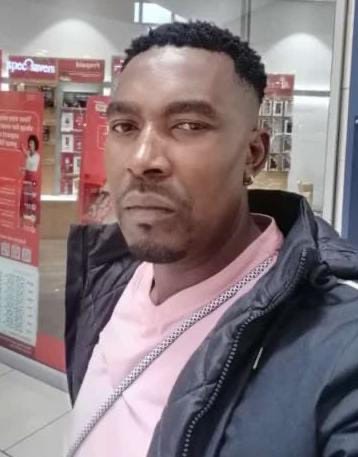
Picture: A person on interest, Letsekang Zwelifile/Supplied
By BAKANG MOKOTO
The police in Paballelo are investigating an alleged murder case and request the assistance of the public in tracing a person of interest known as Letsekang Zwelifile (42), who could assist with information regarding the case.
The Northern Cape police spokesperson, Lieutenant Col Sergio Kock said it is believed that the deceased, Botlabosele Elizabeth Mafeto (31), was found in her shanty with stab wounds in Paballelo Township, near Kimberley on 8 June 2024.
“No arrests have been effected as yet and police are searching for the alleged perpetrator.
“Anyone with information regarding the incident or the location of the person of interest can contact D/Const Andy Mona on 082 469 5824. All information will be treated confidentially,” he said.
A medical doctor (55) was found guilty of Contravention of the Tax Administration Act 28 of 2011 by the Kimberley Commercial Crime Courts. Fabian Royston Tun, who was operating as a Sole Proprietor trading’ F. R. Tun Practice’, failed to submit personal income tax returns from 2015 to 2022.
The Hawks spokesperson, Warrant Officer Nomthandazo Mnisi said during the said period, accused made taxable income that was not declared to the Commissioner of the South African Revenue Service (SARS).
“SARS suffered a potential loss exceeding R17 million. The accused was found guilty on 8 counts of failure to submit personal income tax and 42 counts of failure to submit value added tax returns,” she said.
Mnisi said the matter was postponed to 30 July 2024 for sentencing.
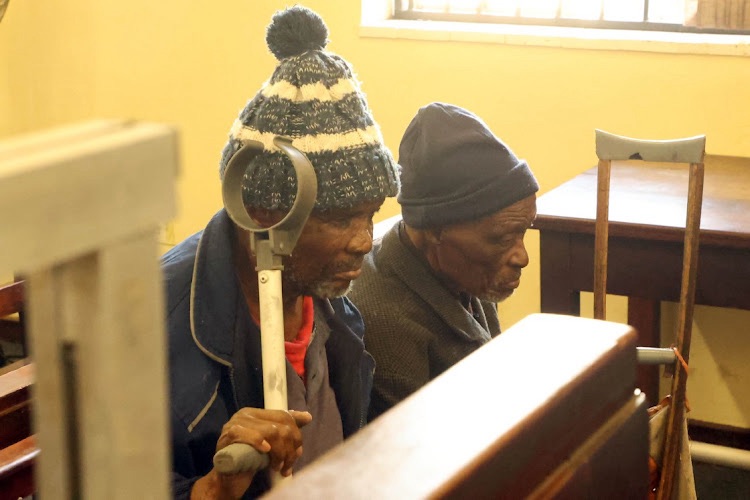
Picture: Two elderly men who were arrested for killing another elderly man, died in detention/Google
By BAKANG MOKOTO
One of the elderly accused, who was arrested for allegedly killing another elderly man (80) at an Old-Age Home in Brits, died while in detention. Daniel Madumo (92) and Jeremia Mmatli (75), were arrested for allegedly killing another elderly man, Thema Motsepe (80).
The North West police spokesperson, Lieutenant Col Amanda Funani said briefly appeared at Brits Magistrate’s Court on 7 June 2024 and was remanded in custody until 14 June 2024, for continuation of bail application.
“Motsepe and the accused persons were allegedly staying at an Old Age Home when a fight ensued between them. The fight ensued at around 4am on 30 May 2024. The victim was in the bathroom when he met Madumo and Mmatli, who were on their way to the bathroom.
“The victim allegedly bumped one of the accused, who allegedly retaliated by hitting him with his crutches. The accused’s companion apparently joined his friend and they both assaulted the victim,” she said.
Funani further said the owner of the Old Age Home was notified and the police were summoned. She added that the victim, who sustained head injuries, was transported to hospital by an ambulance, but was certified dead on arrival.
Meanwhile, the Department of Correctional Services spokesperson, Singabakho Nxumalo said Madumo and Mmatli, who were facing a murder case, died. Nxumalo said the accused were both admitted at Kgosi Mampuru II Correctional Centre on 3 June 2024.
“Madumo had to be transferred to an outside hospital on 22 June 2024 due to health complications and sadly passed away on 24 June 2024. Mmatli departed on 20 June 2024. With both accused now deceased, the court shall provide direction on what is to happen in the court case,” he said.
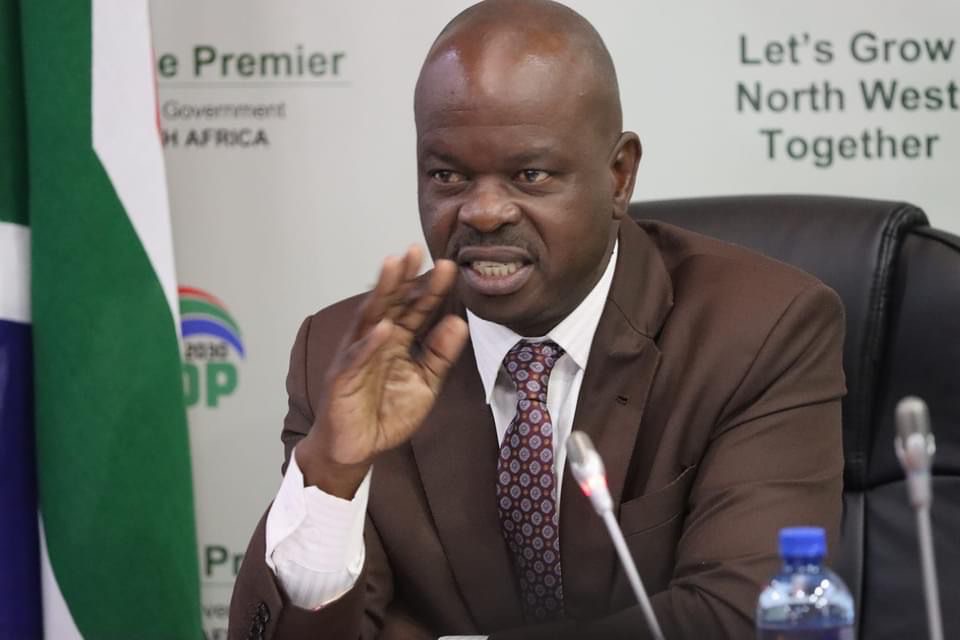
The North West Premier, Lazarus Mokgosi urged his Members of Executive Council (MECs) to familarise themselves with Public Finance Management Act, 1999 (PFMA; Act No. 1 of 1999), which is the primary public finance management law in South Africa.
Mokgosi said it delineates standards expenditure, accounting, and reporting for public entities and this will assist them to make informed decisions. He further said the PFMA is a piece of framework legislation and its implementation is governed by regulations and directives produced by the National Treasury.
“We need to adhere to this to make informed decisions. This will ensure a seamless take over and functioning of the provincial government. In order to do so, I want them to note that all these reports come from individual departments.
“Please, read them and understand all the acts. Our government is highly regulated and our instructions should be informed by legislation. All documents provide performance reports for all provincial departments, including immediate tasks that need their attention,” said Mokgosi.
He added that amongst the reports, there are 30-year Plan Review Report, Draft Reports for 2023/24, Annual Financial Reports (AFRs), Auditor-General Reports, and Progress Reports.
Mokgosi said they also have an Outstanding Reports of Public Service Commission (PSC), Outstanding Reports from SIU, the Hawks and Public Protector.
“They should read them because I am going to have one-on-one engagement with them regarding implementation processes. I would also like to make a special request that our office provide me with an oath that I have signed.
“I want to put it on a notice board in my office. This will remind me every time when I sign or utter words to remember what I have signed for. So, I hope all MECs will do that,” he said.
Mokgosi also urged his MECs to work diligently and with sincere gratitude. He said this marks the beginning of a new chapter as they usher the new EXCO of the 7th administration.
“This is a culmination of a broader consultative process with various stakeholders and in particular the governing party and its alliance partners.
“During these consultative meetings, we have all agreed that provisional services in our different municipalities and with our provincial government will be prioritized and expedited to address the high level of unemployment and poverty in our communities,” he said.
Mokgosi said the people of this province want a government that can work for them and find lasting solutions to various socio-economic challenges confronting them on a daily basis. He said this clarion call is further given impetus by President Cyril Ramaphosa’s remark during his inauguration.
“We should be a centered government, which focuses on a growing exclusive economy that will create job opportunities for all, in particular the marginalised and disenfranchised,” said Mokgosi.
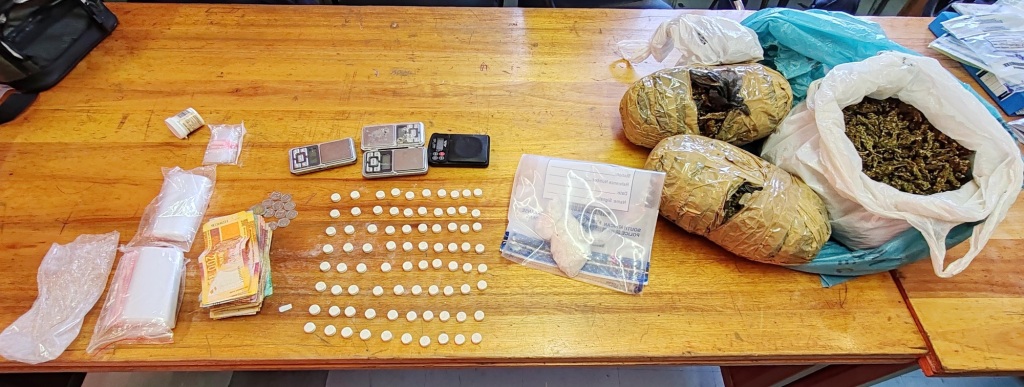
Two suspects aged 24 were arrested for dealing in drugs in Springbok. On 22 June 2024 at around 2:15 pm, the police allegedly received a tip-off regarding two suspects dealing in drugs.
The Northern Cape police spokesperson, Lieutenant Col Sergio Kock said the police followed up on information and searched the premises at 7de Laan in Carolusberg, near Springbok, where they confiscated dagga, Mandrax and Tik.
Kock said the Springbok Public Order Police and Visible Policing units, pounced on two unsuspecting drug dealers and seized drugs worth approximately R113 000.
“The police also confiscated an undisclosed amount of cash, alleged to be proceeds of the drug dealing. The two suspects are expected to appear in the Springbok Magistrate’s Court soon on charges of dealing in drugs.
“The police request that you participate in the RATE OUR SERVICE QR online survey and assist the police in improving our service to the public,” he said.
The Congress of South African Trade Union (COSATU) in the North West said it welcomes the newly-appointed Executive Council (EXCO) that was introduced by the North West Premier, Lazarus Mokgosi on Friday last week. COSATU alleged that the ANC in North West, went ahead to appoint and pronounce the EXCO without consulting its alliance partners.
COSATU provincial spokesperson, Kopano Konopi as the alliance, were called into a meeting in Hartbeespoort Dam on 18 June 2024, to be told about the criteria which is going to be used to appoint the EXCO. Konopi further said no names were presented to them that match the criteria.
“We were also told to meet at the ANC Headquarters in Johannesburg on 20 June 2024 at 12:00 to finalise the names, which match the criteria. We were shocked and surprised when the meeting was cancelled 20 minutes before it could commence.
“This happened while we were waiting outside for us to be called in. As COSATU, we view this conduct of the ANC leadership as disrespectful and abusive of the relation we have in the province,” he said.
Konopi added that COSATU calls on the ANC to convene an urgent political council to explain this kind of behaviour. He said they want to remind the ANC that they have been part of the consultation when it comes to political appointments since 2021, and the most recent one is when they participated in the appointment of the North West Premier.
South African Communist Party (SACP) provincial chairperson, Smuts Moatshe shared the same sentiments. Moatshe said even though they welcome the newly-appointed EXCO, they were not happy with how the process unfolded.
“We worked well with the party and agreed on who should ascend to the North West premiership position. What was a concerning factor being that, we could not complete the process of those who will be appointed as MECs.
“However, we welcome the names of those who were tasked with responsibilities to lead various portfolios. This really shows that the ANC is capable. We wish them well and the message of the residents is clear,” he said.
Moatshe said the residents in the province are not happy regarding the ‘snail pace’ of service delivery. He said they hope the provincial government will adhere to this clarion call.
“We have been working tirelessly with the current crop and came up with various strategies to address challenges faced by our people. We want the ANC to be wary even though we have won the province with an outright majority.
“This does not necessarily mean what happened in other provinces such as Gauteng and Northern Cape, might not happen to us in the future. We would have loved to see some individuals not being moved from their positions due to continuity,” said Matshe.
However, ANC provincial spokesperson, Tumelo Maruping refuted the allegations. Maruping said there was a proper consultation with its alliance partners before appointing new MECs.
“We welcome the newly-appointed EXCO and the fact of the matter is that all our alliance partners were consulted, including COSATU. Actually, consultations started long before the elections when we were compiling the list.
“After the elections, we continued with numerous consultations with all alliances. We have engaged them through the process to help the ruling party to arrive at its final determination,” he said.
Maruping said their last meeting was two days before the announcement of the newly-appointed EXCO, where they dealt with the criteria to be used. He said after that meeting, the ANC had a caucus amongst itself and used the same criteria to select those who fit the gages.
“Consultation does not necessarily mean, we must even get into the names. What is important is that criteria will include gender parity, experience and continuity, which reflects on the core.
A man (49) who was arrested for corruption and attempt of corruption to defeat the ends of justice, briefly appeared in Kuruman Magistrate’s Court. Otsile Shadrack Gaegoroge was arrested on 24 June 2024, as an additional suspect in the ongoing fraud and corruption case.
In 2021, the former captain attached to DPCI Serious Organised Crime Investigation, allegedly submitted and recommended an informer’s reward claim of R100 000. The Hawks spokesperson in Northern Cape, Warrant Officer Nomthandazo Mnisi said the police’s claim committee approved a payment of R80 000 to the benefit of the said police informer.
“It is further alleged that the accused failed to hand the full amount of R80 000 to the informer, but rather paid the informer an amount of R5000 and paid another R5000 to a police Sergeant, who is stationed at Kuruman Police Station. He then kept the rest of the money amounting to R70 000 for himself.
“The police Sergeant (42) is an accomplice and has been charged alongside the main accused. Gaegoroge who was initially a Section 204 witness, the prosecuting team charged him with corruption and defeating the course of justice or attempting to do so after noting changes on his initial statement,” she said.
Mnisi further said a probe by the Hawks Serious Corruption Investigation team revealed that the informer’s reward claim was fraudulent. She added that the so-called “informer” allegedly recruited by the Sergeant was also charged for defeating the ends of justice connected to the main charge.
“Gaegoroge, who is the fourth accused on this matter was released on R1000 bail and the case is postponed to 15 and 16 August 2024 for a decision,” said Mnisi.
Picture: The Northern Cape police conduct stop and search in various areas/Supplied
By OBAKENG MAJE
Eight undocumented persons Were arrested for Contravention of the Immigration Act. The suspects were nabbed during the multi-disciplinary operation known as Operation Phakisa that was executed in Port Nolloth, Kleinsee, Groenrivier, Alexander Bay and Hondeklipbay between 20 and 23 June 2024.
The Northern Cape police spokesperson, Lieutenant Col Sergio Kock said the operations focused on illegal activities in relation to marine related crimes by monitoring and ensuring strict compliance of the prescribed ranching, fishing and harvesting regulations, as well as addressing the proliferation of drugs, firearms and prevention of undocumented immigrants.
Kock said the operations were executed by teams from different departments and relevant stakeholders, including South African Revenue Service (SARS) Customs Unit, SAN Parks, the Department of Mineral and Resources and the Department of Agriculture Environmental Affairs Rural Development and Land Reform.
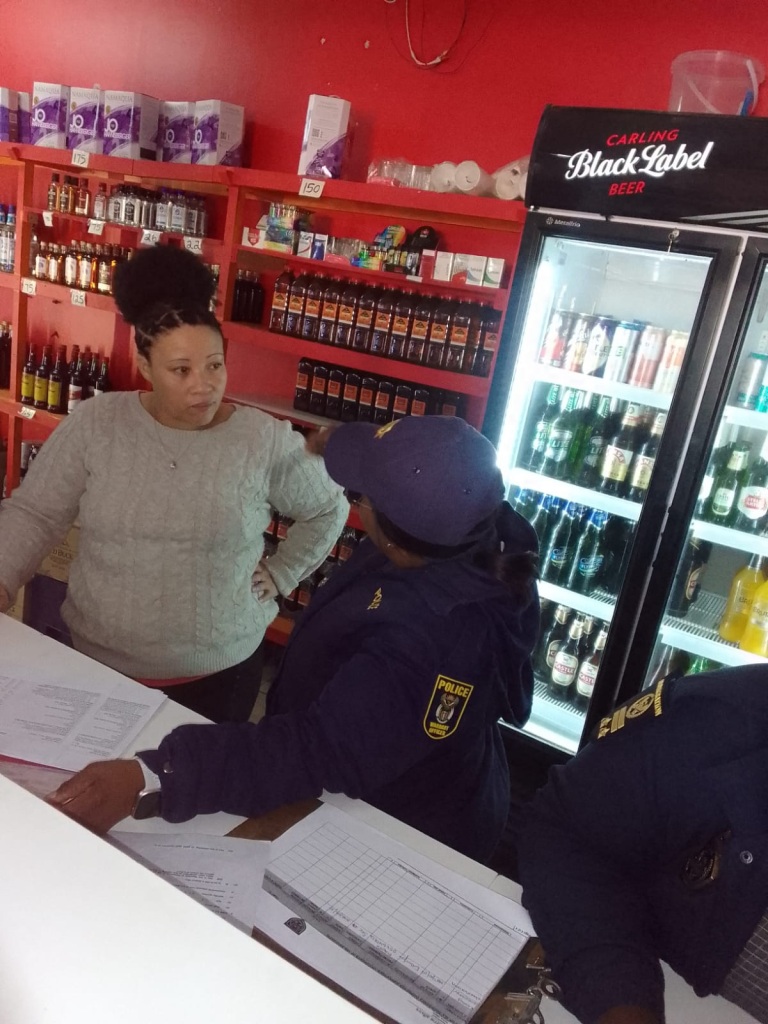
“Actions and activities executed during the commencement of the operations include, compliance inspections, vehicle check points (VCPs), stop and searches, foot and vehicle patrols, raids at identified houses for illegal drugs, firearms and other commodities smuggling.
“Four vehicle check points (VCPs) were conducted on the Port Nolloth/ Kleinzee and Port Nolloth/Alexander Bay roads during which vehicles and persons were stopped and searched. Numerous operational successes were achieved, including fishing permits that were inspected at harbours, camping sites and launching pads,” he said.
Kock said they were visited by the multi-disciplinary law enforcement officials for which fines to the value of R6000 were issued for the Contravention of the Marine Living Resources Act and also confiscated illicit cigarettes worth approximately R41 000.
Meanwhile, the Northern Cape Police Commissioner, Lieutenant General Koliswa Otola reiterated that the police in cooperation with all relevant stakeholders, will continue unabated to ensure that the sea environment and marine resources is protected and remains safe and secure.
Otola said the police will continue to ensure that they combat all illegal and unregulated activities along the coastal areas in the province.
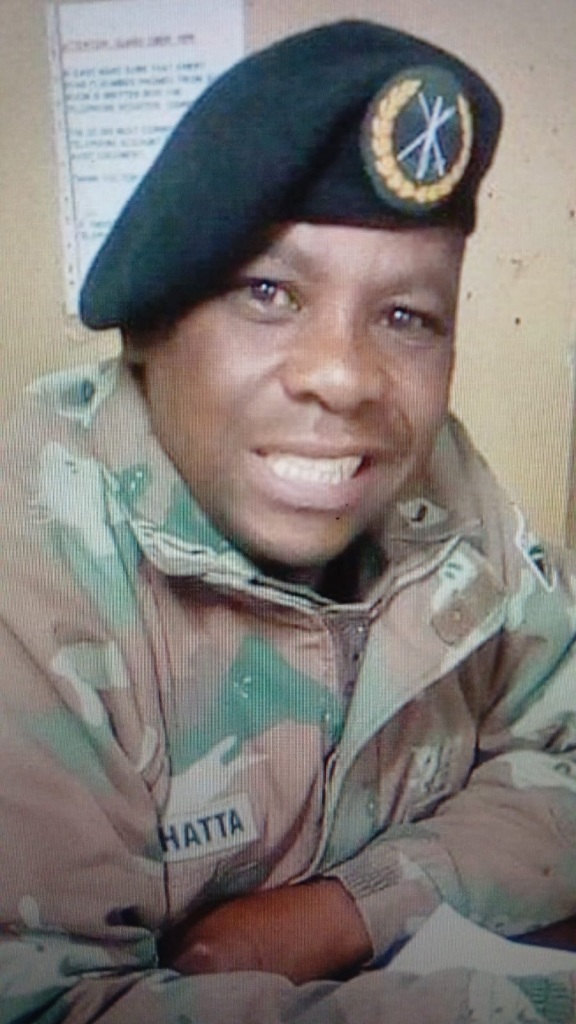
The police in Postmasburg request assistance in locating a missing soldier. The Northern Cape police spokesperson, Lieutenant Col Sergio Kock said Luntu Basil Hatta (53) was last seen on 2 June 2024 in the South African National Defence Force (SANDF) Base in Lohatlha, near Postmasburg at around 5am.
“He was apparently wearing blue jeans and a black jacket. Anyone with information can call D/Capt Hans Brendall on 082 495 0796. The investigation continues,” he said.
Picture: North West MEC for Education, Viola Motsumi/Supplied
By KEDIBONE MOLAETSI
The North West MEC for Education, Viola Motsumi had a consultative engagement acting Superintendent-General, Deputy Director-Generals and the four District Directors in Rustenburg. This comes after her re-appointment to the department.
Motsumi further said she had a special meeting to discuss amongst others, strengthening the administration and management roles of Deputy Director-Generals and District Directors – monitoring implementation of the targets in the Annual Performance Plan (APP) and related expenditure.
She added that they also discussed how to strengthen support to schools to enhance learner performance.
“I will be having a meet and greet session across the department with the sole objective of improving the results. I will also conduct accountability sessions wherein departmental managers will be held accountable based on their performance.
“This accountability session is meant to highlight the challenges faced by the management responsible for each unit within the department and to bring on the amicable solutions. As the department, we believe that this meeting will improve the performance of all learners from Grade R-12, when the year comes to an end,” said Motsumi.