11 February 2025- The police request the community members to assist them in locating the next-of-kin of a deceased. This comes after a man, who was staying in the veld in Olifantshoek road passed on.
According to the ZF Mgcawu District police spokesperson, Sergeant Omphile Masegela, the man who was only known as Danie, died of natural causes.
“We request the public to assist in tracing the family of the deceased. The inquest case is under investigation by the Upington Detective Branch. The body of the deceased was discovered on 4 November 2024.
“The man was only known as Danie and his surname is unknown. Information obtained so far is that his sister might be staying in Dakotaweg, but the sister’s name is also unknown,” he said.
Masegela further said all information that can help in concluding the cases can be directed to the Investigating Officer, Sergeant Bahedile Nkwadipo on 082 495 4615 or 054 337 3400.
Picture: a convicted murderer and rapist, Thabo Bester/Google
By KEDIBONE MOLAETSI
11 January 2025 – The Portfolio Committee on Correctional Services said it welcomed the briefing it received today from the Department of Correctional Services (DCS) on its action plan to comply with the remedial action contained in the Public Protector’s (PP’s) report on Thabo Bester’s escape from Mangaung Correctional Centre.
On 30 September 2024, the Public Protector issued a final report on investigations into allegations of improper conduct on the part of DCS functionaries relating to Thabo Bester’s escape from the Correctional Centre, as well as the allegations of undue delay and/or omission to intervene on the part of the former Deputy Minister of Correctional Services.
The Chairperson of the Committee, Kgomotso Ramolobeng said in the report, the National Commissioner was instructed to, within 90 calendar days from the date of receipt of the report, develop an appropriate DCS escape prevention strategy and guidelines for Mangaung Correctional Centre, indicating monitoring mechanisms, proper systems to be put in place or steps directing how the functionaries of the DCS and its contractors must effectively prevent and manage inmate escapes at all correctional facilities, including Mangaung.
Ramolobeng said the Deputy Minister of DCS, Lindiwe Ntshalintshali, who led the departmental delegation, told the committee that the department has complied with all the PP’s recommendations and done so within the stipulated deadlines.
“She said the department is happy to report within the timeframe recommended by the PP. In welcoming the escape prevention strategy and guidelines for the Mangaung Correctional Centre and in its engagement with the DCS, the committee told the department that budget shortfalls, which was highlighted as the main problem, may be a partial contributor to the escapes of inmates but the main problem is corruption, which must be exposed and prevented.
“The committee stressed the important role of whistle-blowers, especially among inmates, to prevent prison escapes. We applauded the DCS for keeping to the PP’s deadline,” she said.
Ramolobeng further said she also noted gaps in the strategies presented but said that these can be addressed over time. She added that they appreciate the refinement of the strategies.
“We also noted that the committee expects zero escapes when the department next comes before the committee to present the department’s quarterly report.
“We also call for the strategies to be implemented and consequence management applied for offenders. We call for zero tolerance of officials who participate in smuggling contraband and called for the department to collaborate with the Department of Justice and Constitutional Development,” said Ramolobeng.
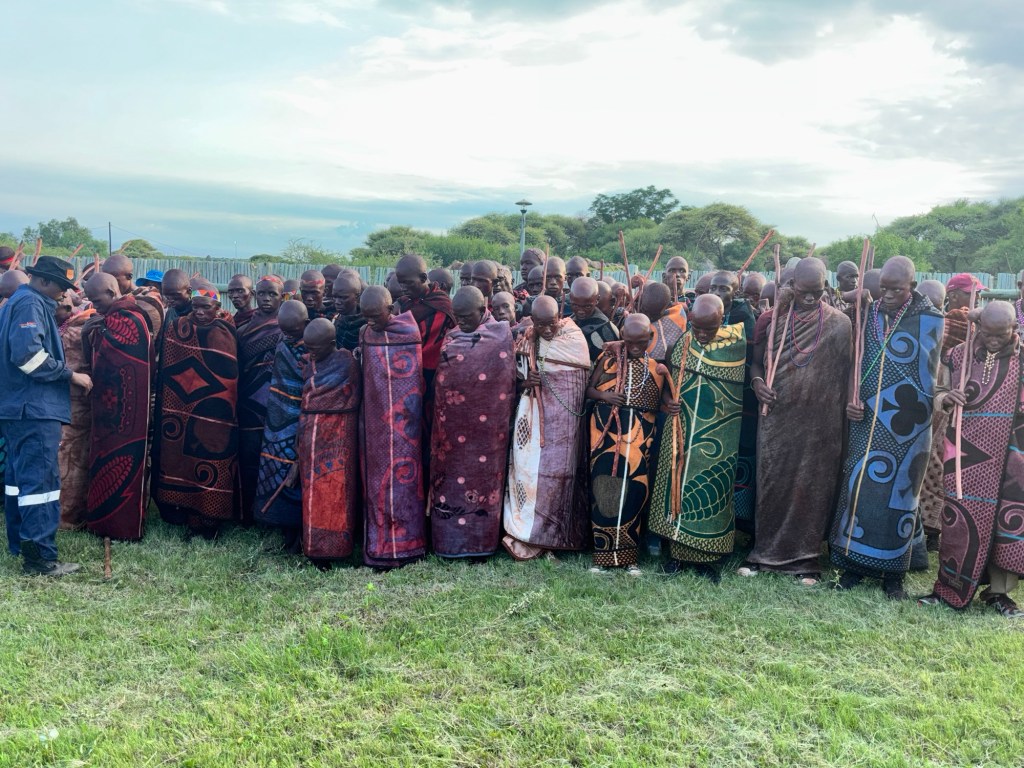
Picture: Initiates arriving at Baga-Maidi Tribal Authority offices
By BAKANG MOKOTO
11 February 2025 – The Portfolio Committee on Cooperative Governance and Traditional Affairs (COGTA) today received a report on the outcome of the summer initiation season and efforts to implement the committee’s recommendations. This follows the committee’s oversight visit to the Eastern Cape in December 2024, to assess initiation practices.
The committee visited some initiation sites and met with various stakeholders in the Oliver Tambo District. On Tuesday, the Department of COGTA and the Eastern Cape Provincial Initiation Coordination Committee briefed committee members.
The committee heard that the province recorded 29 initiate deaths, two (penile) amputations and 147 hospital admissions, among others. Seven deaths were recorded in the OR Tambo district.
Among the causes of death were dehydration and septicaemia, which committee Chairperson Dr Zweli Mkhize said are preventable. These deaths occurred at illegal initiation schools, but also at legal schools.
Several initiates also succumbed due to assault-related injuries. The committee heard from the Minister of COGTA, Mr Velinkosini Hlabisa, that between 2016 and 2024, 371 initiation-related deaths and 110 amputations were recorded.
The Chairperson said the numbers are “too ghastly”. Reflecting on the committee’s oversight visit in December, he said these initiated deaths remain “a matter of serious concern”.
“Our visit was an eye-opener. We were able to see the level of determination of various stakeholders in fighting the deaths of initiates. We could also see where the weaknesses arise.
“The committee noted that all stakeholders must come together to share observations and see where loose ends can be tightened to end such deaths,” said Mkhize.
He further said the custom is an age-old custom that has no reason to be a source of death. Mkhize added that they must get to a point where there are consequences for wrongdoing and negligence and ensure the custom is practiced safely.
“The committee noted that initiation is often devolved to families while amakhosi – due to amended legislation – often feel excluded. Also among the challenges the committee flagged was the lack of resources to properly monitor these initiation sites, which are often remote and inaccessible.
“We expect monitoring when there are no resources. One of the biggest problems is that we cannot reach everywhere. Monitoring will be difficult unless we make it a responsibility of traditional structures, but even for them, monitoring will be difficult without resources,” said Mkhize.
He said the long and short of it is that systems are beginning to be implemented and are taking root, but if this is not monitored, they will not know what is happening. Mkhize said among the suggestions offered by the committee was the need for a joint programme of information that must run throughout the year, irrespective of the initiation season.
“This will entail providing information to people all year, such as to drink water, promote medical screening and encourage hospitalisation in cases of complications to save the initiates from death or mutilation.
“Messages of safe initiation should be made fashionable to eliminate a sense of shame and taboo. These messages should target new initiates on all platforms such as local traditional court meetings, churches, sports and other traditional and social settings to integrate these messages into the daily lives of the youth,” he said.
Mkhize said the committee also noted that the issue of the amakhosi must be addressed as their participation is a big issue. He said they will need to look at amending the Act and ensure resources are available to ensure better monitoring at the local level and hold people responsible in their areas.
“We need to close that gap. The committee also stressed that the local population and traditional leaders must be at the forefront of driving this. In the end, we need more resources, one body to coordinate, and authority for traditional leaders so that we can have a way for communities to take responsibility and change behaviour.
“The committee noted that it is encouraging that all stakeholders – the committee, minister, department, and statutory structures – speak the same language and see the path towards a solution,” said Mkhize.
He said from there, they can work together and support the minister, the department, the province, and the House of Traditional Leaders in ending these mutilations.
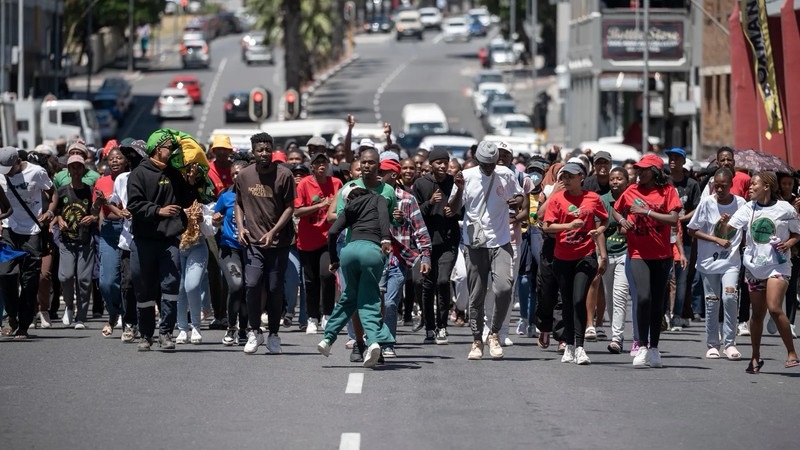
Picture: Students embarked on protests at Cape Peninsula University of Technology/Google
By KEDIBONE MOLAETSI
11 February 2025- The Chairperson of the Portfolio Committee on Higher Education, Tebogo Letsie, has expressed profound concern over the ongoing accommodation crisis at the Cape Peninsula University of Technology (CPUT) and the Nelson Mandela University (NMU). This crisis has left hundreds of students desperate and forced to sleep wherever they find shelter.
“The scenes at CPUT and NMU are deeply troubling, particularly following the committee’s recent oversight visits to institutions in North West and Gauteng Provinces to assess readiness for the 2025 academic year.
“While institutions assured the committee of their preparedness, the current crisis underscores the urgent need for greater scrutiny of these assurances. The systemic failure to address recurring student accommodation shortages reflects a broader institutional and governmental neglect of student welfare,” he said.
Letsie condemned the involvement of private security forces at CPUT, which resulted in violent clashes and injuries to students. He further said the use of excessive force is unacceptable.
“Security personnel must prioritise de-escalation and protection, not repression. Students advocating for their right to education deserve empathy, not violence,” added Letsie.
11 February 2025 – The Portfolio Committee on Mineral and Petroleum Resources said it has welcomed progress in establishing the South African National Petroleum Company (SANPC), which is set to begin operation on 1 April 2025.
The process to establish SANPC was set in motion by President Cyril Ramaphosa during his State of the Nation Address on 13 February 2020, when he announced the government’s intention to repurpose and rationalise state-owned enterprises to support the country’s growth and development.
The committee is pleased with the work done thus far, following Cabinet’s decision on 10 June 2020 to merge
PetroSA, iGas and Strategic Fuel Fund (SFF) into SANPC. The merger project is facilitated under the umbrella of the Central Energy Fund Group, a Schedule 2 state-owned diversified energy company reporting to the Department of Mineral and Petroleum Resources.
The Chairperson of the Committee, Mikateko Mahlaule, said that the committee is particularly pleased with the report that a memorandum of understanding to seamlessly transfer employees from PetroSA, iGas and SFF to SANPC has been signed with organised labour.
“We welcome this clarity because employees are the primary agents of change, whose buy-in plays a critical role in the success of any project. In October 2024, Cabinet approved submitting the South African National Petroleum Company Bill of 2024 to Parliament. “The Bill establishes SANPC, but until it is passed into law, the company will exist under the CEF mandate derived from the CEF Act 38 of 1977 and Ministerial directives,” he said.
Mahlaule further said, however, the committee is deeply concerned about the process of transferring assets from PetroSA, iGas and SFF to SANPC. He added that of most concern is the unbundling of assets into viable and non-viables.
“We discourage the ring-fencing of non-viable assets with the intention of leaving them behind for fixing, because, in our view, this goes against the spirit of the merger, which is to address mandated overlap and optimise resources.
“We also noted the concern that a second layer of responsibility will be added when non-viable assets are ring-fenced for fixing, because there must be a team of capable individuals appointed to fix such assets,” said Mahlaule.
11 February 2025- The police in Northern Cape said Gender Based Violence (GBV) at Higher Learning Institutions is a significant concern that affects many students, particularly women, LGBTQIA+ community and other marginalised groups. The police said the most common forms of GBV at colleges, includes serial assaults, harassment and sexual offences.
ZF Mgcawu District police spokesperson, Sergeant Omphile Masegela said institutions have a critical role in preventing GBVF, supporting survivors, and holding perpetrators accountable through partnership with the South African Police Service (SAPS) and other entities. Masegela said the police in Upington, is embarking on programmes with Upington TVET College, which started on 5 February 2025, where students were addressed on matters relating to GBVF, substance abuse and general conduct at the institution.
“The students were informed about prevention methods both from becoming a victim or an offender. The Forensic Social Worker attached to the Family Violence, Child Protection and Sexual Offences Unit in Upington, Captain Allaetitia de Radder, gave a brief explanation of the different forms of sexual offences they are dealing with and categories of victims and offenders in such cases.
Meanwhile, the Upington Station Commander, Brigadier Peet Coetzee, encouraged students to report any form of Gender Based Violence, to stay focused and safe. Coetzee pledged his commitment to create a safe learning space for students by continuous and frequent engagements, as well as high visibility at the campus.
11 February 2025- The North West Department of Health in the Dr Kenneth Kaunda District said it would like to encourage members of the community to visit their nearest health facility as soon as they experience any symptoms of any ailment. The department said early presentation of conditions helps health professionals to better manage, control and treat different illnesses before escalation to severe complications.
The Chief Director of Dr Kenneth Kaunda District Health Services, Philemon Maboe said, many diseases/ailments are better managed, if the patient seeks immediate attention in the wake of symptoms without any hesitation. Maboe further said diseases like Tuberculosis (TB) are better managed and treated earlier before escalating to difficulties and managing forms like multi-drug resistant (MDR)/extreme drug-resistant (XDR) TB.
“Many of the health complications that we treat at secondary and tertiary levels of care, are cases of late presentation that could have been managed at primary healthcare level had the patients come to us as soon as they experienced symptoms.
“The concern applies to patients of all categories from pregnant women, infants to the elderly. Communities in the district are encouraged to do regular health screenings and tests to mitigate against complications of late presentation should there be concerning signs that need immediate attention,” he said.
Picture: Spar Proteas players arrive in South Africa/Supplied
By REGINALD KANYANE
11 February 2025- The SPAR Proteas were greeted with a warm welcome from enthusiastic fans and the media at OR Tambo International Airport on Tuesday. The team returned from a month-long tour of Jamaica and England, where they recently participated in the Nations Cup.
Despite a valiant effort, the Proteas narrowly lost to hosts England, finishing with a score of 61-55 in a thrilling Nations Cup final in London on Sunday. They remained unbeaten in three matches prior to the final, overcoming their African competitors Malawi and Uganda, and achieving a remarkable win against the fourth-ranked English team, setting the stage for an electrifying final.
The Spar Proteas coach, Jenny van Dyk said after their experiences in Jamaica and England, is optimistic about building on those performances and lessons learned. Van Dyk said they were able to learn so much during the time away.
“We used absolutely every minute we could. We had so many video sessions. The team has just been so fantastic. We have enjoyed so much time together and you can see what we can get out of our unit when we spend time together.
“It’s a bunch of players with a lot of energy and leadership skills. We’ve set out our goals as a team, and all the players have bought into the vision, the culture, and the roles and responsibilities within our unit. We’re very clear on what we want to achieve in the next couple of months and years,” she said.
Proteas’ goal attack, Kamogelo Maseko, who was impressive throughout the tour, said the experience is one she would never trade for anything. Maseko said this was a different camp.
“The energy was incredible, everyone took accountability and we had open and honest conversations. This happened internally as a group outside of management.
“But I think, personally, we knew it was gonna be a challenge. We were clear that if we want to be the best in the world, we have to play against the best in the world. As a squad, we grew a lot at a quick rate,” she said.
Meanwhile, the Netball SA president, Cecilia Molokwane revealed that she shed a tear upon witnessing how the team held their own during a challenging moment in the Nations Cup final. Molokwane said the SPAR Proteas had to play for six minutes with one player down after centre Refiloe Nketsa was sent off the court for dangerous play.
“I want to thank the team and appreciate the leadership of Khanyisa [Chawane – team captain]. I saw her leadership when Fifi [Nketsa] was taken off court, not to come back and I said now we have a leader and a replacement for Bongiwe Msomi.
“I was so proud of her that I even cried. I cried because I felt we have a leader,” she said.
11 February 2025- The North West Premier, Lazarus Mokgosi said as the country marks the 70th anniversary of the adoption of the Freedom Charter, they need to remind themselves of the objectives they set for themselves in the National Development Plan (NDP).
Mokgosi said the objectives they set themselves include to build a more prosperous country that is progressively, eradicating poverty and inequality, to eliminate the effects of apartheid and colonial discrimination that has scarred the society, in order to lay the basis for greater social cohesion.
He further said this includes unity and opportunity. Mokgosi added that the North West is arguably the richest province in South Africa, yet has the highest unemployment rate in the country.
“Experts and academics call it the paradox of the plenty. Therefore, something drastic needs to be done to turn the tide against this socio-economic conundrum. We welcome the process for the review of the White Paper on Local Government.
“The North West Executive Council is the first to be consulted and will be submitting our proposals in due course. It is our wish that this process not be rushed, but allow for broad and extensive relook into our governance model and design,” he said.
Mokgosi said this will enable them to learn from the mistakes of local governance since its inception. He said the North West province supports the position adopted by SALGA that the funding model of local government be prioritised and run parallel with the white paper review process.
“We are also of the view that a broader conversation is needed to include overall public sector funding review, which includes equitable funding to provinces.
“A holistic funding review process should in our view include in-depth scrutiny of the Division of Revenue Model to determine whether its current form is assisting poor provinces to address the socio-economic needs of the people,” said Mokgosi.
He said North West is of the firm view that the current equitable share allocation model should be centred on addressing developmental challenges confronting provinces based on their needs and not the population. Mokgosi said this should be done without compromising the unitary nature of our fiscal framework.
“However, we are hard at work to improve the functionality and service delivery performance of our local municipalities through the Local Government Turnaround Strategy. We are collaborating with the National Treasury through mandatory interventions to assist municipalities with financial recovery plans, governance and skills audit.
“There is progress, but more still needs to be done to bring the state of local governance in the North West on par with the rest of the country. We have increased the tempo of the province’s Accelerated Service Delivery Programme (Thuntsha Lerole), now Reloaded to prioritise rural communities,” he said.
Mokgosi said this has given them the chance to strengthen and solidify their relations with the traditional leaders, by prioritising water, sanitation and road infrastructure projects in these communities. He said close to R450 million has been set aside to implement water and sanitation projects in villages such as Bodibe, Ramosadi, Signal Hill, Dinokana and Lobatla among others.
“A further R485 million has been committed for the construction of a pipeline from the Bloemhof Dam to Mamusa Local Municipality. This project, which is due to be completed in June 2025, will alleviate water provision challenges in Schweizer Reneke and surrounding towns.
“In November 2024, we handed over a R96 million bulk sewer and reticulation plant at Rekgaratlhile, near Stella in Naledi Local Municipality. Several more projects of a similar kind are being implemented in various parts of the province,” said Mokgosi.
He said North West is a province on the move. Mokgosi said they have laid the foundation for most of the ambitious plans for the future of the province.
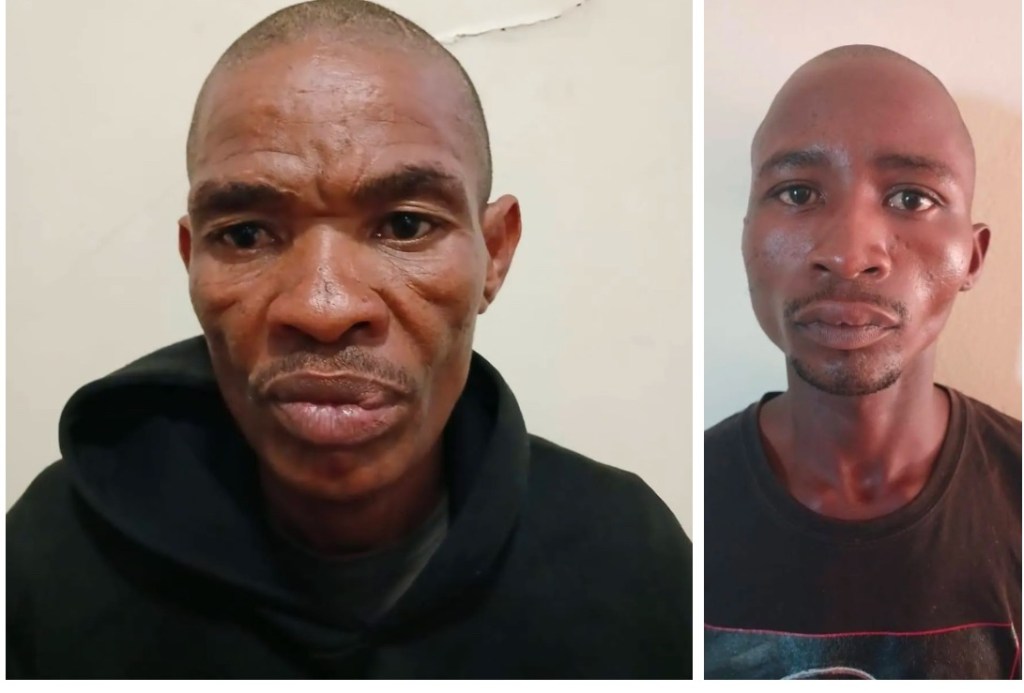
Setshwantsho: Banna ba le babedi ba ba latofadiwang ka polao/Morongwa News
Ka OBAKENG MAJE
11 Tlhakole 2025- Ditheetso tsa kopo ya beile mo kgetsing ya polao kgatlhanong le banna ba le babedi ba kwa motseng wa Matlhako 2, gaufi le Pudimoe, di buseditswe morago go fitlha di 18 Tlhakole 2025 ke kgotlhatshekelo ya Taung mo letsatsing la gompieno. Balatofadiwa, Phemelo Maine (40) ga mmogo le Okemetse Phatlhanyane (27), ba latofadiwa ka go bolaya Boingotlo Makaota (16).
Go begwa fa setopo sa ga Makaota, se bonwe kwa lebitleng le le seng boteng kwa nageng kwa motseng wa Matlhako 2. Go ya ka moagisani, one a utlwa segajaja sa lekgarebe mo bosigong jwa Labone kwa ntlung ya ga Maine.
Go begwa fa moagisani o, gape a tlhalositse fa a ne a bona Maine ga mmogo le ditsala tsa gagwe ba kgorometsa kereibaye e go bontshang fa ene e pegile sengwe mo teng mo mosong wa Labotlhano.
Sebueledi sa sepodisi mo Bokone Bophirima, Brigadier Sabata Mokgwabone are: “Sepodisi se ile sa tswa letsholo, mme seo se ile sa lebisa kwa go epololweng ga setopo sa ga Makaota.
“Go begwa fa setopo seo, sene se phuthetswe ka kobo, mme moswi one a supiwa ke ba lelapa la gagwe. Dipatlisiso di shupa fa setopo sa ga Makaota, se ne se na le dintho mo tlhogong, mo diropeng ga mmogo le mo maotong.”
Mokgwabone are dipatlisiso di ile tsa bolodiwa kwa lelapeng la ga Maine, mme diaparo tsa moswi di ile tsa fitlhelwa teng. Mokgwabone are, Maine o tshwerwe ka Lamatlhatso morago ga go ineele kwa sepodising.
“Monna o, o ile a isiwa kwa sepodisi ke morwa rragwe, mme one a tshwarwa. Sepodisi se ile sa botsolotsa Phatlhanyane o bonweng a tsamaya le Maine fa a ne a kgorometsa kereibaye, mme le ene o ile a lelelwa ke ditshipi,” Mokgwabone wa tlhalosa.
Mokomishinara wa Sepodisi wa nama o sa tshwere mo Bokone Bophirima, Major General Patrick Asaneng, o kgadile ka bogale tiragalo e. Asaneng are polao eo ya go tlhorontshiwa ga bong e kabo e efogilwe fa baagi ba ne ba le malala-a-laotswe.
Kgabagare, Maine o ile a ipona molato mabapi le ditatofatso tsotlhe kgatlhanong le ene, mme o solofetswe go ka nguna-nguna seo le mmueledi wa puso. Phatlhanyane ene o setse a inkeme fela ka gore a neelwe beile, mme kopo ya gagwe e ka rediwa fa kgetsi e boela kgotlhatshekelo.







 The Guardian