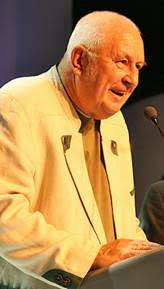
The Pan South African Language Board in the province has said the death of philanthropist Dietrich Masher was a huge blow but his life was worth celebrating.
Masher was born in 1937 and grew up in Bodenfelde village in Western Germany.
He studied theology at Heildelberg and Göttingen from 1957 until 1963.
He joined the Hermannsburg Mission of the Evangelical Lutheran Church where he learnt Tswana to the point of teaching the language.
Masher was buried in Jericho near Brits at the weekend.
The PanSouth African Language Board (Pan SALB) provincial spokesperson, William Manana said: “It is with great sadness to lose a person of Dietrich Masher’s calibre.”
Masher was a recipient of the PanSALB Multilingualism Award (2009-2010).
He came to the country and contributed towards the development of Tswana.
“We encourage people to learn from Masher’s life. He came all the way from Germany and defied all odds. He spoke the Tswana language fluently,” Manana said.
“Masher registered for a one-year language study, which was largely Setswana, at Witwatersrand University shortly after he arrived in the country.”
Since 1966, he worked in various places in the Tswana language area as a pastor.
In 1972, he was elected as a dean for a six-year period.
“In 1979, he was asked to train young missionary couples in Setswana. He had since then taught the course to many others, mostly to people from a foreign background.
“He conducted the studies at Wits, but had many innovations especially where Tswana was taught consistently as a tonal language.”
Manana pointed out that the positive reactions from Masher’s students led him to delve deeper into the issues of language use and policy in South Africa.
“Another important milestone for his interest in language policy was teaching a course in Hebrew in 1983 and 1984 through the medium of Tswana, which led to interests in other African languages like Oromo (the third largest language in Africa).
“A subsequent visit to Prof B Heine in Cologne was extremely instructive.
Reading the Perestroika in 1987 and other books on Leninist policy, especially G Simon’s important book, Nationalismus and Nationalitatenpolitik in der Sowetunion (Baden-
Baden: 1986) made a great impact on him.”
An initiative of language practice was spearheaded by pastors in Kgetlheng circuit.
The initiative was later joined by teachers to open up the discussion of language use, especially in education.
Bishop Marcus Ditlhale said: “We lost a warrior in Dietrich Masher. He never let any challenges stand in his way.
“He was born a German, but died as a South African. Masher dedicated his life to developing the African child.
“He was deployed at a Hermannsburg Mission. He worked over 40 years and administered in Tswana.”
He learned Tswana and spoke it with eloquence and precision. Masher was a researcher in issues of mother tongue education with European experience.
“He visited countries like Germany, Serbia and Ireland. He also played a pivotal role in influencing the Batswana and authorities to apply mother tongue education.
“He also served as an advisor in the office of the MEC for education on language in education in the province,” he said.
Masher was the first foreigner to serve on the Tswana National Language Board for over six years.
He was also a former director of the board of governors for the then Setswana Academy in the erstwhile Bophuthatswana.
-TDN
Follow us on Twitter@Taung_DailyNews or @IceT_
 The Guardian