Agriculture is a vital part of the growth story


By REGINALD KANYANE

10 March 2025- The Republic of South Africa (RSA) president, Cyril Ramaphosa said agriculture is one of the most important sectors in our economy. Ramaphosa said the goods and services produced across the agricultural value chain underpin our country’s food security and account for a significant portion of South Africa’s exports.

He further said, according to data from the Agbiz, last year South Africa’s agricultural exports reached a record $13.7 billion. Ramaphosa added that these agricultural exports are diverse, with 44% of these products exported to other African countries, 21% to Asia and the Middle East, 19% to the European Union and 6% to the Americas.

“The value and volume of the farming sector has more than doubled since the dawn of democracy in 1994. This is testimony to the ongoing efforts of both Government and industry to ensure that South Africa products access as many export markets as possible.

“Beyond the role of expanded export markets, agricultural economists have attributed the sector’s growth to the government’s embrace of science, allowing the private sector to register better seed cultivars and genetics to boost productivity,” he said.

Ramaphosa said the agricultural sector remains ripe for investment because of its recognised growth prospects. In addition, the revenue the state collects from agriculture enables the government to provide services that improve the lives of our citizens. He said the sector is a major source of employment.

“By the end of 2024 approximately 924,000 people worked directly in agriculture and over 200,000 worked elsewhere in the agriculture value chain. The health and growth of our farming sector is vital to supporting small towns and keeping rural South Africa vibrant.

“Given the critical role of agriculture in our national life, the government is working with all stakeholders to ensure the survival, sustainability and growth of this sector,” said Ramaphosa.

He said in collaboration with partners in the industry, they are undertaking growth-enhancing measures such as the sectoral master plans. Ramaphosa said the Poultry and Sugar Master Plans were the first steps, culminating in the Agriculture and Agro-processing Masterplan that was signed by organised agriculture and other partners in 2022.

“The Department of Agriculture has launched a blended finance instrument in collaboration with the Land Bank to help farmers who require capital to continue growing the sector.

“As this labour-intensive sector expands, more work opportunities will be created in the most vulnerable areas of the country, particularly rural areas. This in turn will support their economic rejuvenation,” he said.

Ramaphosa said agriculture, like other sectors, is affected by municipal service delivery challenges, and by the poor state of key infrastructure such as roads, rail and ports. He said this constrains the delivery of agricultural goods to markets.

“The structural reforms that started during the sixth administration are making progress towards addressing the port and rail challenges. Several road transport and bulk water infrastructure projects are underway that will boost the growth of agriculture.

“We cannot talk about sustainable agriculture in South Africa without addressing issues of equity and inclusion in farming and land ownership. Transformation remains a challenge in agriculture,” he said.

Ramaphosa said in his book, A Country of Two Agricultures, economist Wandile Sihlobo, notes that black farmers currently only account for around 10% of the commercial output in South Africa’s agriculture. He said their growth agenda must therefore have a bias towards the empowerment of black farmers.

“The inclusion of black farmers in commercial agriculture necessitates that land is made available to them. The ongoing land reform process and release of Government land will continue to benefit emerging farmers and ensure that they too add to the growth of South Africa’s farming economy.

“This is an effort that requires multi-sectoral collaboration. The Land Bank and other commercial financiers will need to collaborate by providing capital. Organised agriculture can come on board to deploy the necessary training,” said Ramaphosa.

He said the farming sector of South Africa is vital to their growth agenda. Ramaphosa said it has shown resilience in the past and will likely continue along this encouraging and promising path.

“It will therefore be critical that the sector embraces the onward march of transformation. It is in the interests of all South Africans that we have an agricultural sector that is representative and inclusive, that contributes to the growth of our economy and that produces the food our country needs,” he said.

taungdailynews@gmail.com

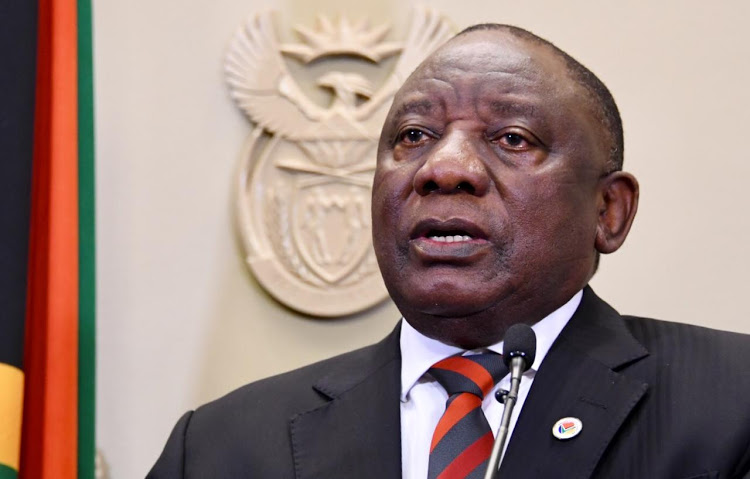
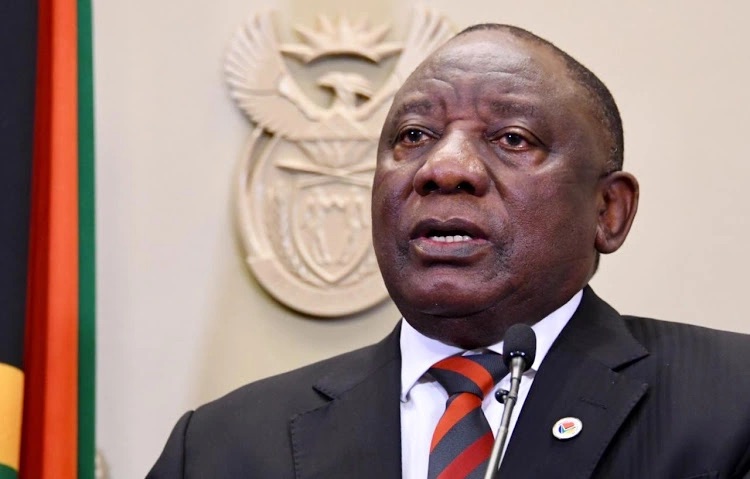
Picture: RSA president, Cyril Ramaphosa

Ramaphosa: “GNU parties may differ, but we pulling together”


By KEDIBONE MOLAETSI

28 February 2025- The Republic of South Africa (RSA) president, Cyril Ramaphosa said while Government of National Unity (GNU) parties may differ, they are all pulling in the same direction. Last week, the annual Budget Speech by the Minister of Finance was postponed for the first time in the democratic history. 

Ramaphosa said the cabinet decided to postpone the presentation of the budget to allow further discussion on areas of disagreement among parties in the GNU. He further said the budget will now be tabled in Parliament on 12 March 2025.

“The last-minute postponement was unfortunate. It gave rise to concern and uncertainty among South Africans, investors and the financial markets, who look to the Budget for important signals about the state and direction of our economy.

“The budget reflects government’s choices and priorities for the country’s development. Decisions on how to spend public funds have implications for every South African,” said Ramaphosa.

He added that, it is therefore essential that the concerns raised by different parties around the budget are properly addressed, in the interests of accountability, transparency and consensus-building. 

Ramaphosa said this is the first time that the budget is being presented by the GNU.

“It is understandable that this new arrangement would require a different approach in some respects. The process of forging agreement among the political parties in the GNU is still work in progress, but we are certainly getting there. Disagreements, contradictions and policy divergence are inherent in governments made up of several political parties. 

“It has been more than six months since the formation of the GNU. Despite disagreement between parties on a range of matters, the centre holds. It is a sign of a healthy and robust democracy that such differences may emerge from time to time and be ventilated in public. 

Such differences don’t mean that the GNU is in crisis. It means that democracy is working,” he said.

Ramaphosa said a GNU by definition infers consensus-building. He said no one party can impose its will.

“There needs to be thorough deliberation and meaningful engagement. 

The decision to postpone the Budget Speech and to continue discussions should engender public confidence in the GNU. It should reassure citizens that despite differences of opinion, we are pulling in the same direction. 

“As GNU partners, we will continue working for the South African people. As we have done in the past to overcome differences, we will once again find one another. The events of last week present us with an opportunity to raise the level of understanding among South Africans around the budget and what it means for them,” said Ramaphosa.

He said the considerable public interest around the Budget Speech, including from young people and on social media platforms, was greatly encouraging. Ramaphosa said it is their hope that this sparks a necessary national conversation on how they will fund the national priorities and the trade-offs that will need to be made. 

“The reality is that we strive to implement our national priorities in a context of slow growth, limited revenue, high unemployment and a large social wage. The state is simply not able to fund every priority and ambition. 

“The critical issue of the public purse must be a subject of discussion and debate not just among political parties, but among all South Africans who aspire to lead lives of dignity,” he said.

Ramaphosa said the social contract between government and the citizenry relies heavily on accountability and transparency. He said these have been features of our budgetary process since the advent of democracy. 

“The formation of the GNU was the result of the desire by the South African people that political parties work together to move the country forward. As we continue to do so, we are adapting and strengthening our existing frameworks for cooperation, partnership and building consensus. 

“We are learning, we are adjusting to new circumstances and we are moving forward,” said Ramaphosa.

taungdailynews@gmail.com

‘Many municipalities lack the technical skills’


By OBAKENG MAJE

7 February 2025- The Republic of South Africa (RSA) president, Cyril Ramaphosa said together, they have built durable institutions that support democracy, protect their fundamental rights and promote the well-being of South Africans. Ramphosa, who delivered State of the Nation Address (SONA) yesterday in Cape Town said they have built meaningful partnerships between government and business, labour, civil society and other social partners to drive growth and development.

He further said these stand as models of cooperation for the rest of the world. Ramaphosa added that South Africans are continuing to work together to confront the country’s challenges and build a nation that works for all.

“In the last week, we have adopted the Medium Term Development Plan, which sets out a clear and ambitious programme for the next five years. The actions contained in the Medium Term Development Plan will advance our three strategic priorities:

“Firstly, to drive inclusive growth and job creation. Secondly, to reduce poverty and tackle the high cost of living. Thirdly, to build a capable, ethical and developmental state,” he said.

Ramaphosa said their most urgent task is to grow the economy, so that they can create jobs, reduce poverty and improve the lives of all South Africans. He said to undertake this task, they need a government that works for the people.

“We need a state that is capable and competent, underpinned by a professional public service. South Africans want a state that treats all people with dignity, humility and respect. A state with leaders who are prepared to serve our people with complete dedication, and public servants who are ethical, skilled and properly qualified.

“To achieve these objectives, we are strengthening the role of the Public Service Commission (PSC) in the appointment of the key people who direct the affairs of our state such as Directors-General, Deputy Directors-General, Chief Executive Officers of SOEs and board members and other senior positions,” said Ramaphosa.

He said they will introduce a graduate recruitment scheme so that they may attract the best and the brightest into the public service. Ramaphosa said a capable state must start where people live and work.

“In many cities and towns across the country, roads are not maintained, water and electricity supply is often disrupted, refuse is not collected and sewage runs in the streets.

“In part, this has happened because many municipalities lack the technical skills and resources required to meet people’s needs. Many municipalities have not reinvested the revenue they earn from these services into the upkeep of infrastructure. Starting this year, we will work with our municipalities to establish professionally managed, ring-fenced utilities for water and electricity services to ensure that there is adequate investment and maintenance,” he said.

Ramaphosa said many of the challenges in municipalities arise from the design of the local government system. He said they will therefore undertake extensive consultation to develop an updated White Paper on Local Government to outline a modern and fit-for-purpose local government system.

“We will review the funding model for municipalities as many of them do not have a viable and sustainable revenue base. We will continue to work with traditional leaders in the implementation of local development programmes.

“We will expand our support to municipalities that require assistance, drawing on the lessons of the Presidential eThekwini Working Group. We are seeing great progress in eThekwini as we implement the district development model, which enables all key role players in government, business, labour and community-based organisations to work together,” said Ramaphosa.

taungdailynews@gmail.com

Partnership is key to South Africa’s growth and progress


By BAKANG MOKOTO

20 January 2025- The Republic of South Africa (RSA) president, Cyril Ramaphosa said as his administration took office last year, they made a commitment to reach out across society to find solutions to the challenges the country faces. Ramaphosa said since then, they have placed partnership at the centre of their work.

He further said while South Africa has a rich history of dialogue and cooperation, their experience of the COVID-19 pandemic underlined how important collaboration was in saving lives and livelihoods. Ramaphosa added that it showed the value of effective coordination across the state and with other sectors of society.

“One of the areas where partnerships within the state have had the greatest impact is in Operation Vulindlela. This initiative has brought together government departments and public institutions to undertake focused reforms in areas such as energy, logistics, telecommunications and water infrastructure.

“We also have structures like the President’s Coordinating Council, which brings together leaders from national, provincial and local governments to deal collectively with common challenges. In other areas, we have brought the different spheres of government together with other stakeholders,” he said.

Ramaphosa said last year, they established the Presidential eThekwini Working Group to support the metro in its efforts to restore business confidence and overcome service delivery challenges. He said, together, the working group has made progress on things such as water supply, tourism infrastructure and law enforcement.

“We have seen the value of partnership in our response to the electricity crisis. The progress we have made in reducing the severity of load shedding has been made possible by bringing together government departments, state-owned companies, business, labour and other social partners.

“The National Electricity Crisis Committee has played a crucial role in coordinating and focusing the efforts of these many different players. Another area that is benefiting from such partnerships is in rail and port operations,” said Ramaphosa.

He said these are beginning to stabilise and recover lost volumes as a result of efforts to support Transnet’s operational recovery. Ramaphosa said an important area of structured cooperation is the partnership between government and business to unlock impediments to inclusive growth.

“Though our respective roles and mandates may differ, we are aligned on the need to drive inclusive economic growth and job creation. Our areas of cooperation have extended beyond immediate economic issues.

“For example, the government came together with civil society partners on a national strategy to end gender-based violence and femicide. We have worked with various sectors through bodies like the South African National Aids Council and the Human Resource Development Council, using our collective resources and capabilities to promote development” he said.

Ramaphosa said this week, they will attend the annual meeting of the World Economic Forum in Davos, Switzerland, where they will be outlining South Africa’s priorities for its G20 Presidency. He said at the centre of our G20 agenda, is the promotion of cooperation among G20 and other countries on the most pressing issues facing the world.

“This cooperation should not only take place at a government-to-government level. It should involve all social formations. As in previous G20 presidencies, dialogue with civil society and other non-government institutions will be conducted through various engagement groups.

“These engagement groups cover sectors such as business, labour, civil society, parliamentary bodies and the judiciary. Following the approach of the Brazilian G20 Presidency in 2024, we will be convening a G20 Social Forum,” he said.

Ramaphosa said this will bring together representatives of engagement groups and other segments of civil society. He said one of the messages they will be taking to Davos is their ongoing commitment to partnerships in pursuit of inclusive growth and sustainable development.

“We will present our experiences of cooperation across society in South Africa and encourage greater emphasis on partnerships in international relations. In particular, we will make a call for global companies to partner with governments, entrepreneurs and stakeholders in emerging markets to pursue sustainable and inclusive growth.

“As we take our message of partnership and progress to Davos this week, we reaffirm our commitment to work with all social partners in pursuit of inclusive growth that benefits all South Africans and leaves no one behind,” said Ramaphosa.

taungdailynews@gmail.com

Former parliamentarian, the late Evelyn Lubidla afforded state funeral  


By BAKANG MOKOTO

10 January 2025- The Republic of South Africa (RSA) president, Cyril Ramaphosa has declared a special provincial official funeral category 2 for the late Nompumelelo Evelyn Lubidla. A special provincial official funeral category 2 is reserved for distinguished persons specifically designated by the president of RSA on request by the Northern Cape Premier, Dr Zamani Saul. 

Saul said Ramaphosa has also instructed that the National Flag fly at half-mast in the province on the day of the funeral as a mark of respect to the late Lubidla. He further said they have established a provincial funeral task team that includes members of the Lubidla family to ensure that the government affords Lubidla a dignified funeral. 

“I have also delegated the Northern Cape MEC for Health, Maruping Lekwene to officiate over the funeral. Lubidla served in parliament as a senator on the senate from 1994-1996 and on the National Council of Provinces (NCOP) from 1997-2004.

“She formed part of various committees during her term in parliament. These included the ‘Theme committee 4’, in parliament which was the parliamentary working committee charged with the important task of drafting Chapter 2 of our constitution,” added Saul.

He said on behalf of the Northern Cape Provincial Government, he sends his most heartfelt condolences to the bereaved family, the friends and loved ones of the late Lubidla. Saul said may her soul rest in peace.

“The proceedings will commence at 11 Pickering Road, Rhodesdene, Kimberley on Saturday, at 6am. The funeral service will then start at the St Cyprian’s Cathedral at 7am.

“Members of the public may also view the funeral live on the Northern Cape Government Facebook page,” he said.

taungdailynews@gmail.com

Ramaphosa says the country has made progress


By BAKANG MOKOTO

9 December 2024- The Republic of South Africa (RSA) president, Cyril Ramaphosa said the progress they have made this year gives them hope for the year ahead. Ramaphosa said the country is nearing the end of another year, marked by both triumphs and struggles. 

He further said they celebrated 30 years since the birth of the democratic nation. Ramaphosa added that they reflected on the considerable progress they have made in building a constitutional order anchored on freedom, equality and human rights for all. 

“We held our 7th successful, free and fair general elections since 1994. It was a landmark poll, with an unprecedented 70 political parties contesting.

“The election was a credit to the Independent Electoral Commission (IEC), which acquitted itself with distinction, the political parties who campaigned in a spirit of respect and tolerance, and to all South Africans who exercised their right to vote,” he said. 

Ramaphosa said democracy has evolved and matured. He said they have a Government of National Unity (GNU), composed of 10 political parties from across the political spectrum.

“They have agreed on three strategic priorities for this administration. The first strategic priority is to grow our economy and create jobs. The structural reforms initiated under the 6th administration, are continuing to create conditions for our economy to grow and to create jobs.

“The country has had over 250 days with no load-shedding. This is due to a combination of increased maintenance and generation recovery by Eskom, the addition of more capacity to the grid including from renewables, and the large-scale uptake of solar and battery energy solutions by households and businesses,” said Ramaphosa.

He said the work of the National Energy Crisis Committee continues. Ramaphosa said it is working to get more power onto the grid, to expand the electricity infrastructure, to diversify the market for the benefit of consumers, and to lay the groundwork for an energy-secure future.

“There has been a significant recovery of commuter rail, since theft and vandalism during the COVID-19 pandemic nearly destroyed the network. Stations have been refurbished, new state-of-the-art trains are on the tracks, and 31 out of 40 key passenger corridors are now operational,” he said.

Ramaphosa said there were 40 million commuter rail passengers in the last financial year, up from 15 million passengers the previous year. He said they are making progress in the recovery of freight rail and dealing with longstanding operational challenges in their ports.

“We are seeing improvements at the container terminals in Durban and Cape Town, as well as with infrastructure upgrades. While unemployment levels remain extremely high, more South Africans are finding jobs.

“The second strategic priority of this administration is to reduce poverty and tackle the high cost of living. Consumer inflation is at a four-year low, making essential goods like fuel and most food staples more affordable,” said Ramaphosa.

He said over the past twelve months, fuel prices have come down. Ramaphosa said around 60% of the national budget is dedicated towards the ‘social wage’.

“These are the measures that reduce poverty and directly improve people’s lives. In addition to the provision of grants to vulnerable groups and unemployed people, this social wage includes subsidised housing, free basic services, no-fee schools and school nutrition.

“Government has been able to sustain these measures even as public finances are under severe pressure. The third strategic priority of this administration is to strengthen the capacity of the state to deliver on its mandate,” said Ramaphosa.

He said their efforts to improve the capacity and capability of the state to deliver on basic services continue. Ramaphosa said they have experienced moments of great national pride this year.

“Our sportsmen and women made us proud, including at the Olympics and Paralympics. Our nation’s artists hoisted our flag high on the global stage, proving themselves to be among our most valuable exports.

“The momentum we have achieved this year was marred by tragedy. The deaths of a number of children from eating contaminated foodstuffs was a great sorrow and caused deep concern,” he said.

Ramaphosa said they have put a number of stringent measures in place to prevent such tragedies. He said while they are making progress, they have a long way to go.

“The pace of economic growth is still too slow and not enough jobs are being created. Families still struggle with the high cost of living.

“While there has been some improvement in the crime statistics and there have been breakthroughs in tackling crime syndicates, crime and violence is still widespread in many communities,” said Ramaphosa.

taungdailynews@!gmail.com

‘Situation in Middle East is of grave concern’


Picture: A trail of destruction in Gaza/Reuters

By KEDIBONE MOLAETSI  

7 October 2024- The Republic of South Africa (RSA) president, Cyril Ramaphosa said today marks one year since the start of an onslaught against the Palestinian people that has thus far claimed more than 43 000 lives.

Ramaphosa said in his weekly letter to the nation that, the violence that has been committed by Israel against Palestinians over many decades, intensified after an attack on Israel by Hamas and other Palestinian armed groups on 7 October 2023.

He further said South Africa has condemned the atrocities committed against civilians in Israel on 7 October 2023, as it has denounced the killing of civilians in any context. Ramaphosa added that the majority of those killed over the past year, are Palestinian civilians, largely women and children in the besieged Gaza Strip.

“It is alarming that more Palestinians are also being killed in the West Bank due to Israeli Defence Force military activities. More than 1000 Israelis were killed in the attacks of 7 October last year.

“Over 100 Israelis remain in captivity in Gaza. There are over 6000 Palestinians, who are languishing in Israeli jails. As South Africa, we have consistently called for a resolution to the conflict and the release of all the hostages abducted on 7 October 2023,” he said.

Ramaphosa said they have also called for the release of all the prisoners unlawfully detained in Israel. He said they cannot, but be moved by the plight of all the families who have loved ones in captivity.

“With negotiations to secure their release having once again stalled and Israel’s bombardment of Gaza continuing, the conflict shows no signs of abating.

“Amid efforts by the international community to secure a ceasefire, the situation has been worsened by strikes by Israel on Lebanon and by Iran on Israel,” said Ramaphosa.

He said Israel has vowed to retaliate against Iran and Iran has threatened to respond accordingly. Ramaphosa said the escalating situation in the Middle East is of grave concern.

“It threatens to plunge the region into a war in which civilians will inevitably bear the greatest and the cruellest brunt of this conflict. As the UN Secretary-General has said, each escalation after the next is leading the people of the Middle East over the cliff.

“We remain committed to the peaceful resolution to ending the occupation of Palestine, to upholding the tenets of international law and to advancing social justice. We once again call for an immediate ceasefire that will end the suffering of the people of Gaza and allow for humanitarian aid to reach those in need,” he said.

taungdailynews@gmail.com

Municipalities need to adopt best practice on implementation of projects


By KEDIBONE MOLAETSI

The Republic of South Africa (RSA) president, Cyril Ramaphosa said the rapid, sustainable and inclusive economic growth is a central priority of the Government of National Unity (GNU). Ramaphosa, who delivered his address during the inaugural conference on the role of municipalities in the country’s just energy transition said, a low-carbon, climate resilient development is central to achieving this inclusive growth.

He further said this presents the country with a challenge, but also an opportunity. Ramaphosa added that electricity generated from fossil fuels accounts for most of South Africa’s carbon emissions.

“Because industry is still mainly reliant on power produced by Eskom’s coal-fired power stations, our entire economy is carbon-intensive. As the world changes, our reliance on fossil fuels to industrialise poses a significant risk.

“It poses threats to our economy, society and environment, if we do not drive the energy transition in ways that are appropriate to national and local circumstances. Many of South Africa’s main trading partners are taking measures to achieve net zero within certain timeframes,” he said.

Ramaphosa said this has implications for South African goods and products entering these markets. He said it has implications for economic competitiveness.

“Just as we continue to oppose unilateral and coercive carbon adjustment measures by developed economies, we realise the need to reduce our reliance on carbon intensive energy production. We see the need to diversify our energy sources to grow our economy. There are great prospects ahead if the country takes advantage of the global energy transition to support economic growth, development and employment creation.

“As a signatory to the Paris Agreement, South Africa is committed to contributing its fair share to the global climate change effort. We must pursue this commitment in a manner that delivers just outcomes for those affected by the energy transition. We must pursue it in a way that contributes to inclusive economic growth, energy security and employment,” said Ramaphosa.

He said they must do so at a pace, scale and cost that is consistent with the country’s social and economic development path. According to Ramaphosa, Integrated Resource Plan sets out a viable energy mix over the medium and long term to achieve their decarbonisation objectives.

“We have a successful Renewable Energy Independent Power Producer Procurement Programme. This has attracted over R209 billion in investment and added much-needed capacity to our electricity grid.

“The regulatory changes we introduced in 2021 to increase the licensing threshold for generation projects has resulted in a pipeline of over 130 confirmed projects. This amounts to approximately 22 500 MW of capacity with an estimated investment value of R390 billion,” he said.

Ramaphosa said municipalities are central to the efforts to decarbonise the energy sector. He said municipalities own and operate approximately half of South Africa’s electricity distribution grid and facilitate universal access to electricity.

“One hundred and sixty five municipalities are electricity service providers. Through the Integrated National Electrification Programme grant, municipalities are responsible for addressing the electrification backlog.

“Municipalities therefore need to be in the driving seat when it comes to providing clean, affordable energy to communities, businesses and industry. One of the aims of this conference is to unlock the institutional arrangements required to drive the decarbonisation effort,” said Ramaphosa.

taungdailynews@gmail.com

Ramaphosa appoints Mandisa Maya as Chief Justice 


By REGINALD KANYANE 

The Republic of South Africa (RSA) president, Cyril Ramaphosa has in terms of Section 174(3) of the Constitution of the Republic of South Africa, 1996, appointed current Deputy Chief Justice Mandisa Maya as Chief Justice of the Republic of South Africa with effect from 1 September 2024. 

Maya’s appointment follows Ramaphosa’s consultation, in accordance with constitutional prescripts, with the Judicial Service Commission and the leaders of political parties represented in the National Assembly. In a letter addressed to Chief Justice Raymond Zondo on 22 February 2024, Ramaphosa informed the Judicial Service Commission of his intention to appoint Deputy Chief Justice Maya as the Chief Justice of the Republic upon the expiry of the term of office of Zondo on 31 August 2024. 

The President spokesperson, Vincent Magwenya said Ramaphosa invited the Judicial Service Commission to provide its views on the suitability of Maya to hold the office of Chief Justice. Magwenya further said discharging its consultative mandate set out in Section 174(3) of the Constitution, the Commission interviewed Maya on 21 May 2024, to ascertain her suitability to be appointed as Chief Justice of the Republic. 

“The Commission subsequently assured the President of Maya’s suitability to lead the judiciary in the country based on the interview, Maya’s qualifications and judicial record. 

“This includes her leadership qualities, her experience as a judge in various courts, her past leadership of the Supreme Court of Appeal and her role as Deputy Chief Justice in the period leading to her nomination by the President,” he said. 

Magwenya added that the Commissioners also advised that Maya’s appointment would be a significant milestone for the country as she would be the first woman in South Africa to be appointed Chief Justice. He said Ramaphosa appreciated the confidence expressed by the Judicial Service Commission and leaders of political parties in the suitability of the incoming Chief Justice, who can draw inspiration and support from the confidence expressed in her. 

taungdailynews@gmail.com

Judge Yvonne Mokgoro to be laid to rest on Thursday 


By BAKANG MOKOTO 

The Republic of South Africa (RSA) president, Cyril Ramaphosa has declared that the late retired Constitutional Judge, Justice Yvonne Mokgoro, will be honoured with a Special Official Funeral Category 1. Mokgoro, who was an esteemed Member of the Order of the Baobab, passed away on 9 May 2024 at the age of 73.

Ramaphosa spokesperson, Vincent Magwenya said in recognition of Mokgoro’s distinguished career and contribution to the nation, Ramaphosa has declared, in terms of Chapter 1.3.2(a) of the State, Official and Provincial Funeral Policy Manual, that the late justice be accorded a Special Official Funeral Category 1.

“The distinguishing features of a special official funeral in this category include ceremonial elements by the South African National Defence Force (SANDF). Ramaphosa has also declared that the national flag be flown at half-mast at all flag stations around the country from 19 May 2024, until the evening of the funeral on 23 May 2024.

“Further details of the funeral, which will be held in Johannesburg, will be made known in due course. Mokgoro was one of the first Justices to be appointed to the Constitutional Court when it was established in 1994. She was also the first black woman judge of the apex court,” he said.

Magwenya further said during Mokgoro’s legal career, she taught a number of law courses at universities in South Africa, the United States, the Netherlands and the United Kingdom. He added that she was a member of the International Women’s Association (Washington DC), the International Association of Women Judges, the International Federation of Women Lawyers and the South African Women Lawyers Association. 

“In 2006, she was selected as an icon of the history of Women Lawyers in South Africa,” said Magwenya.

Meanwhile, the National Prosecuting Authority (NPA) in the Northern Cape said Mokgoro’s partner, David Mmelesi might face charges of culpable homicide. This comes after she was horribly injured in a car accident near Warrenton in Northern Cape last year. 

This forced her to withdraw from any public engagement to focus on her recovery. However, she passed away recently and Mmelesi, who was allegedly the driver during a car crash, was charged for reckless and negligent driving. 

Mmelesi is currently out on warning.

The NPA spokesperson in Northern Cape, Mojalefa Senokoatsane said: “He is criminally charged and facing one count of reckless and negligent driving. There is a possibility of amending his charges to culpable homicide following the death of the judge. 

“The accused will be back in the Barkley West Magistrate’s Court on 30 May 2024. Mmelesi briefly appeared on a J175 and is currently on warning.”

taungdailynews@gmail.com