‘Business ties with the United States are strong and expanding’


By AGISANANG SCUFF

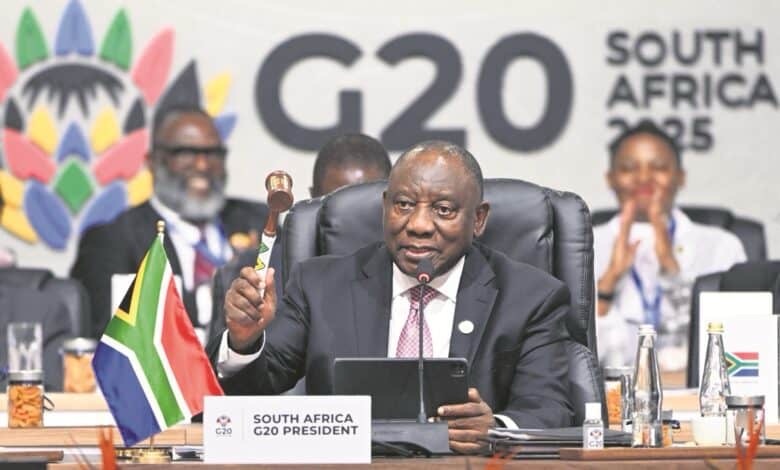
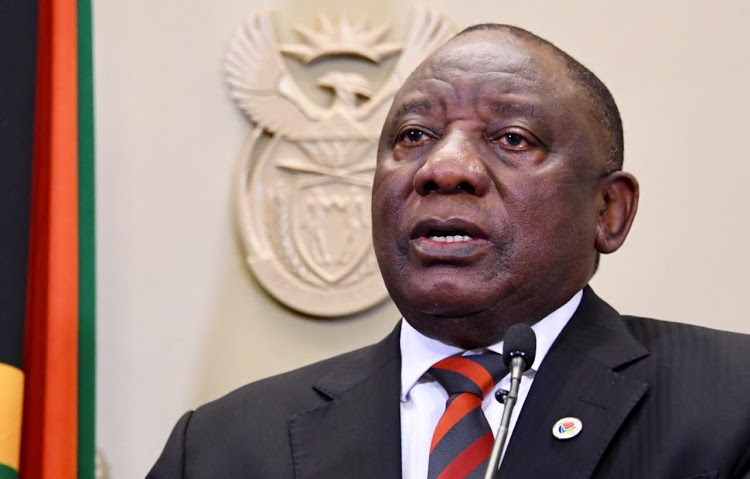
29 September 2025- The Republic of South Africa (RSA) president, Cyril Ramaphosa said last week, he addressed a Trade and Investment Dialogue between South African and US businesses on the sidelines of the United Nations General Assembly in New York. Ramaphosa said this was one of a number of engagements they had with US companies, while in the city.

He further said some of these companies already have business operations in South Africa, while others are interested in investing. Ramaphosa added that all of the companies commended the reforms being undertaken by the government and the prospects for growth in the economy.

“As part of strengthening ties with the United States, we also used the opportunity to meet with members of the US Congress and Senate. Some of our ministers and officials also held meetings with representatives of the US administration.

“The Trade and Investment Dialogue was convened by the US Chamber of Commerce, the world’s largest business advocacy organisation with representation in more than 120 countries, including South Africa. A number of government officials and representatives from business and industry from both countries were present,” he said.

Ramaphosa said the optimistic, future-focused tone of this important engagement underscored how, beyond the headlines and debates around trade policy and political frictions, US and South African businesses are forging ahead. 

Addressing the dialogue, the President of the US-Africa Business Center of the US Chamber of Commerce Kendra Gaither said that there was “no economic relationship more foundational than the ties that the US and South Africa have”. She said it was a vital relationship that merits dedicated attention. 

Ramaphosa said as further testimony to the strength of this relationship, later this year, the US Chamber of Commerce will be sending a high-powered delegation, led by its CEO, to the B20 Summit, the official dialogue forum of the G20 for the global business community. He said commercial ties between South Africa and the US have proven to be both durable and resilient.

“There are more than 600 US companies in South Africa. Our country is the second-largest African destination for US exports. Both South African and US businesses can see the clear opportunities and commercial gains of investing in the other’s respective markets. 

“South Africa is positioning itself as an investment destination for critical minerals, with the digital transition and the global move towards net zero driving global demand. We also had the opportunity to engage with US industry around investment opportunities in agriculture, pharmaceuticals, healthcare, advanced manufacturing, technology and other key sectors,” said Ramaphosa.

He said they announced the establishment of the South Africa-United States Trade and Investment Forum, which will be inaugurated at next year’s South Africa Investment Conference as a vital bridge between the two countries. Ramaphosa said these engagements with business take place alongside discussions with the US administration around a reciprocal trade agreement.

“Our Department of Trade, Industry and Competition has been meeting with the US Trade Representative to finalise an agreement that benefits both our countries. We are also encouraged that the US Chamber of Commerce supports the reauthorisation of the African Growth and Opportunity Act (AGOA), describing it as “the cornerstone of US-Africa commerce”.

“Predictable, preferential access to the US market isn’t just vital to South Africa’s own exports, but also to US companies that depend on reliable imports. We are also prioritising the African Continental Free Trade Area as a vital tool for strengthening US-South Africa trade and investment,” he said.

Ramaphosa said as a country, they will continue to advocate for the principle of reciprocity in investment and trade relations with the US. He said as the presence of US companies on South African soil continues to grow, they want to expand the number of South African companies operating in the US market, thereby creating more jobs for Americans. 

“As the official talks around trade tariffs continue, we take to heart the words of the US Chamber of Commerce representative at the recent dialogue, that expanding commercial partnerships “happens one deal, one investment at time”. 

“Our engagements in the US show that South African and US businesses remain deeply connected and are committed to mutually beneficial partnerships well into the future,” said Ramaphosa. 

taungdailynews@gmail.com

The UN is humanity‘s best chance at peace and development


By REGINALD KANYANE

23 September 2025- The Republic of South Africa (RSA) president, Cyril Ramaphosa said this week, he will be attending the 80th session of the United Nations General Assembly in New York. Ramaphosa said the event is taking place at a time when the global rules-based system is profoundly fragile.

He further said eighty years since the UN Charter committed countries of the world to work together to advance peace, promote development and uphold the rules of international justice and protect human rights, the UN is under increasing scrutiny. Ramphosa added that according to the UN’s own data, the number of global conflicts is at the highest levels since the end of the Second World War.

“Nearly half of the world’s 1.1 billion population who live in acute poverty are in countries wracked by violent conflict. Global health and pandemic response and preparedness is under serious threat following the withdrawal of global health financing and aid.

“Although last year was the warmest year on record, the global climate response is faltering. Current climate action and country ambition is failing to prevent global warming. As the UN General Assembly convenes this week under the theme: “Accelerating Global Progress Through Intergenerational Collaboration” the stakes have never been higher,” he said.

Ramaphosa said the UN is struggling to meet its mandate as contained in the UN Charter. He said it continues to be hampered by competing national interests that impede collective action.

“There is a lack of political will among member states to address many challenges, including the chronic underfunding of peacekeeping operations.

“But by far the most serious hindrance to the UN fulfilling its mandate is the structure and operation of the UN Security Council. Despite changes in global power relations over more than half a century, the decision making architecture that has enabled the five permanent members to have veto powers has not changed since the end of the Second World War,” said Ramaphosa.

He said these five permanent members effectively make decisions on behalf of more than 85% of the world’s population living in countries of the Global South. Ramaphosa said they continue to use their veto powers to effectively paralyse collective action and prevent timely responses to crises, even in the face of clear violations of international law.

“South Africa has been consistent in its calls for UN Security Council reform and for it to better reflect global realities. The current composition of the UN Security Council and its record of decisions seriously undermine the spirit of global cooperation and weaken the UN’s commitment to neutrality and its legitimacy.

“Efforts at reform, such as proposals to expand the permanent membership of the Security Council, improving regional representation, and restricting the use of the veto, have stalled and must be reinvigorated with urgency,” he said.

Ramaphosa said at a time of widespread poverty and underdevelopment, when human rights are under threat worldwide and where geopolitical tensions are creating instability across the globe, advancing multilateralism is more critical than ever. He said if the global, rules-based system is to have practical meaning, the UN must exercise its leadership role of global governance.

“The UN must actively enforce international law and human rights standards for all, and not the select few. The message South Africa takes to this year’s General Assembly is that if the organisation is to remain relevant and if the global, rules-based system is to endure, the UN must demonstrate in both word and deed that multilateralism is alive.

“Despite its many challenges, the UN remains humanity’s best chance at peace, security and sustainable development for all,” said Ramaphosa.

taungdailynews@gmail.com

Ramaphosa encourages North West to exploit public-private sector partnerships


By OBAKENG MAJE

15 September 2025- The Republic of South Africa (RSA) president, Cyril Ramaphosa has concluded a meeting of the national executive with the provincial executive council of the North West. Ramaphosa said the engagement was held under the theme: “A Nation that Works for All,” formed part of a series of engagements between him and provinces aimed at enhancing intergovernmental coordination and improving service delivery in line with the priorities of the 7th administration.

“In accordance with the constitutional imperative for deepening cooperative governance, the meeting affirmed close cooperation in ensuring the successful delivery of critical infrastructure such as the rebuilding of roads, provision of water infrastructure and energy availability for powering the province’s industrial ambitions.

“The meeting recognised the improvements that have been achieved in the governance of the province. The national executive pledged to work closely with the provincial government to ensure the resolution of challenges currently plaguing municipalities in the province,” he said.

Ramaphosa further welcomed the demonstrated level of developmental ambition by the province. He encouraged the province to exploit public-private sector partnerships in the furtherance of development in the province.

“Previous sessions between the national and provincial executives include meetings with the Executive Councils of Limpopo, Mpumalanga, KwaZulu-Natal, Gauteng, Eastern Cape and most recently, the Northern Cape.

“It is envisaged that the National Executive would have met with the leadership of the remaining two provinces, Free State and Western Cape, by the end of this financial year,” added Ramaphosa.

taungdailynews@gmail.com

The public service and the people need to work together


By REGINALD KANYANE

15 September 2025- The Republic of South Africa (RSA) president, Cyril Ramaphosa said once a year in September, South Africa marks Public Service Month, a time to focus on the essential contribution that the country’s 1.7 million public servants make to meeting the needs of the people. Ramaphosa said it is through public servants that the government provides healthcare, education, policing, social services and countless other essential functions that touch every South African’s life.

He further said when their public service operates at its best, it is a powerful instrument for social and economic development. Ramaphosa added that when it falters, it is often their most vulnerable citizens who bear the brunt.

“There are many dedicated public servants who work tirelessly in service of our nation. We thank them for the work they do to improve the lives of South Africans. But our public service faces significant challenges. These include skills gaps, outdated systems and processes, inconsistent service delivery and corruption.

“In many parts of the state, the values of Batho Pele – putting people first – have been eroded. That is why we are strengthening the professional foundations of our public service. Through the reforms underway we are working to attract the right skills, implement rigorous performance management and create career pathways that reward merit and excellence,” he said.

Ramaphosa said through the National School of Government we are investing in training and development. He said as they work to build a more professional, accountable and capable public service, they need to bring the public service closer to the people they serve.

“We must challenge the idea that public servants are providers and citizens are mere beneficiaries of goods and services. The National Dialogue, which was launched in August, provides an opportunity to change the relationship between public servants and the public.

“Over the next few months, South Africans will be meeting as communities across the country. They will be discussing the issues that most concern them and will together be forging a vision to take the country forward. These conversations will culminate in a National Convention next year, which will finalise a social compact that outlines clear actions and responsibilities for all sectors of society,” said Ramaphosa.

He said the thousands of public dialogues taking place across the country will also provide an opportunity for communities to address the immediate challenges that they face where they live. Ramaphosa said these challenges may include anything from electricity cuts to overcrowded schools, a lack of water provision to poorly maintained roads, or an increase in violent crime or drug use.

“Through the National Dialogue process, each community is encouraged to work with all relevant stakeholders – ward councillors, municipal officials, civic bodies, community organisations and provincial and national departments – on a common plan to address these challenges.

“By working together in an integrated way, drawing together resources from within and outside the state, these stakeholders can find ways to solve local problems. Public servants have a vital role to play in working towards solutions alongside and in cooperation with communities,” he said.

Ramaphosa said this approach is closely aligned with the District Development Model (DDM), which is about bringing government closer to the people and ensuring that local needs inform service delivery priorities. He said it is about building a public service that listens to citizens, adapts to their needs and continuously improves its services.

“Such a public service requires the active participation of citizens as partners in development, growth and transformation. I call on every South African to hold the government accountable, to engage constructively with public institutions and to recognise the vital role that a professional public service plays in building the society we all want.

“Together, we can build a public service that serves with excellence and integrity and works with South Africans to realise the promise of a better life for all,” said Ramaphosa.

taungdailynews@gmail.com

‘We must build a society in which corruption cannot take root’


By OBAKENG MAJE  

8 September 2025- The Republic of South Africa (RSA) president, Cyril Ramaphosa said just over a week ago, the National Anti-Corruption Advisory Council (NACAC) handed over its final report at the conclusion of its three-year term. Ramaphosa said the council was set up in 2022 to guide the implementation of the National Anti-Corruption Strategy and to strengthen the state’s anti-corruption architecture.

He further said the report includes a recommendation to establish a permanent, independent, overarching anti-corruption body. Ramaphosa added that the council recommends that this body be known as the Office of Public Integrity and Anti-Corruption and that its mandate be to prevent, investigate and remedy systemic corruption.

“The proposed body, which responds to one of the key recommendations of the State Capture Commission, would be expected to both fight corruption and prevent it from happening in the first place. The NACAC report also makes recommendations on the strengthening and coordination of law enforcement agencies, enhanced coordination mechanisms among the different law enforcement agencies, the use of Artificial Intelligence to prevent corruption and the establishment of an anti-corruption data sharing framework.

“These recommendations will be thoroughly reviewed by the relevant government institutions for tabling and deliberation in Cabinet. The work of NACAC makes it clear that the fight against corruption is complex, multi-faceted and protracted. This fight requires the dismantling systems of patronage that have become entrenched over many years. It requires strengthening state capacity to handle complex cases and closing regulatory loopholes that have enabled corruption to flourish,” said Ramaphosa.

He said they need to tackle public and private sector corruption with equal energy. Ramaphosa said tax evasion, market manipulation, inflated contracts and tender collusion by businesses significantly harm the economy, yet often receive less attention than corruption in public institutions.

“Amid daily reports of alleged corruption, South Africans want to see action. They want to see more arrests and convictions. We should therefore welcome the progress being made by our law enforcement agencies. Last week the Directorate for Priority Crime Investigation, known as the Hawks, and the Special Investigating Unit briefed Parliament on investigations into the South African Post Office, Postbank and the South African Social Security Agency, financial irregularities at water entities, an allegedly corrupt fuel tender, and graft at a number of municipalities.

“This year has seen a number of arrests linked to alleged corruption in Eskom, the South African Police Service, Transnet and in municipalities. While allegations of corruption within these important institutions are deeply disturbing, it is encouraging that they have been detected and that criminal action is being taken,” he said.

Ramaphosa said in July 2025, the Organisation for Economic Co-operation and Development (OECD) Working Group on Bribery noted that South Africa continues to make progress in detecting and investigating foreign bribery cases, and that “the resilience and commitment of individual government and law-enforcement officials, working in a multi-agency approach, has contributed to this progress”.  He said they continue to make progress towards the removal of the country from the Financial Action Task Force (FATF) grey-list.

“In June, FATF noted that South Africa has completed all 22 action plan items to combat money-laundering and the financing of terrorism. Exiting the grey-list is part of the fight against corruption and key to safeguarding the integrity of our financial system.

“Much of this work takes place behind the scenes. While there is a justifiable public expectation that there should be more convictions – including those implicated in state capture – fighting corruption extends way beyond putting culprits in the dock,” said Ramaphosa.

He said as the NACAC report points out, they need to pursue institutional reform to address the shortcomings in practices and systems that have enabled corruption to flourish. Ramaphosa said corruption is much more than the result of the criminal intent of a few individuals, be it government officials, elected public representatives or business people.

“It can become embedded in state institutions or business enterprises and manifest itself in practices and organisational culture. The success of our efforts relies on our ability to prevent corruption in the first place in state institutions, business enterprises or organs of civil society.

“That is why we need to build transparent, accountable and ethical institutions – both public and private – in which corruption is unable to take root. We all need to work together to build a society characterised by responsibility and integrity,” he said.

taungdailynews@gmail.com

A foreign policy that always faces forward


By REGINALD KANYANE  

25 August 2025- The Republic of South Africa (RSA) president, Cyril Ramaphosa said last week, the country participated in the 9th Tokyo International Conference on African Development (TICAD) in Japan. Ramaphosa said this is an important forum for strengthening bilateral trade and investment between Japan and African countries.

He further said Japan is an important trading partner for South Africa in sectors such as construction, manufacturing, technology and agriculture. Ramaphosa added that at the business forum held on the sidelines of TICAD9 business representatives from South Africa and Japan discussed potential areas of collaboration in clean and renewable energy, automotive components and hydrogen production.

“One of the promising discussions was around the continental expansion plans by the Japanese automaker Isuzu Motors. Isuzu’s South African plant has trialled the manufacture of commercial trucks and truck bodies locally, and is engaging with Isuzu Motors Japan on its plans to become a manufacturing hub for the African market.

“At a time of global trade disruptions and mounting tariff pressures, participating in forums like TICAD is key to our economic diplomacy efforts. Economic diplomacy is an important part of our country’s foreign policy, and has become all the more critical at a time of economic headwinds and global power shifts,” he said.

Ramaphosa said South Africa’s National Interest Framework Policy Document, published in 2022, is clear that it is in the country’s national interest to forge strategic alliances that support economic partnerships and trading arrangements that favour, advance and safeguard our national interest. He said in the spirit of Kwame Nkrumah’s famous words “We face neither East nor West, we face forward”, South Africa will continue to engage with partners in both the Global North and Global South.

“Our approach is neither partisan nor beholden, but strategic.

Our economic diplomacy is centred on securing market access, attracting investment and promoting sustainable development.  At a time when our country faces potentially high tariffs imposed by the US administration, we are continuing to put in place measures that reduce our dependence on historical markets.

“South Africa continues to advocate for an international trade regime that is fair, equitable and rules-based. We are seeking a trade regime that does not render developing economies vulnerable to unilateral measures or protectionist pressures,” said Ramaphosa.

He said likewise, their foreign policy is anchored in multilateralism, respect for sovereignty and the pursuit of alliances that advance peace, justice and our national interest. Ramaphosa said South Africa’s foreign policy outlook is not determined by pressure exerted by outside forces, but by principle.

“It is on principle that we continue to stand with the Palestinian people in their quest for statehood, recognising as we do the pain of dispossession, land theft and state-sanctioned brutality. Even when a number of countries criticised us for doing so, and before the full extent of the brutality in Gaza was laid bare, our commitment to peace, justice and the rule of law informed our decision to take Israel to the International Court of Justice.

“We continue to stand in principled solidarity with the peoples of Western Sahara in their struggle for self-determination, even when this has found us at odds with other countries, including on the African continent,” he said.

taungdailynews@gmail.com

‘Let the dialogue begin and all voices be heard’


By OBAKENG MAJE

24 August 2025- The Republic of South Africa (RSA) president, Cyril Ramaphosa said the first National Convention of the much-anticipated National Dialogue concluded last week Saturday with a resounding call for the conversation among South Africans to begin. Ramaphosa said the convention, which was attended by just over 1000 delegates from organisations drawn from all sectors of society, was the kick-off for thousands of public dialogues that will take place for the next few months and into the beginning of next year. 
 
He further said the public dialogues will take place at a local level in wards and at a sectoral level. Ramaphosa added that citizens will also be encouraged to organise their own dialogues, bringing people together to discuss the issues that concern them and to look for solutions to the challenges they face.
 
“The outcomes of each of these dialogues will be recorded and collated through a special digital platform. There will also be mechanisms in place to enable those without access to the technology to submit the outcomes of their dialogues.
 
“All of these discussions will culminate in a second National Convention to be held during the first half of 2026. It is anticipated that this convention will produce a clear vision for the country and adopt a social compact that outlines the roles and responsibilities of all sections of society, from citizens to the arms of the state, from business, labour, traditional leaders, religious bodies to civil society, activist and civic organisations,” he said.

Ramaphosa said the form and content of these outcomes will ultimately be determined by the South African people through their discussions. He said the first National Convention reflected the great diversity of the country’s people and their enthusiasm to get involved in the debate.

“Delegates were clear that citizens themselves must determine the issues discussed and must use whatever approaches and methods that suit them and their circumstances. They noted that what might work in a densely-populated city may not work in a rural area where villages are far apart. What might work in a sector that is well organised may not work among people who may not be part of organised formations.
 
“There was a strong emphasis at the convention on inclusion and participation, with some delegates expressing concern that important voices were missing from the gathering. There was a firm view that special efforts should be made to reach and include groups and people who were often left out or marginalised. Preparations for the National Dialogue have been underway for many months, drawing together foundations of struggle stalwarts, civil society bodies and the Presidency,” said Ramaphosa.

He said they were given the responsibility to organise the first National Convention and lay the basis for the public dialogues that would follow it. Ramaphosa said the convention was the moment at which the people of South Africa would take over the National Dialogue.

“Delegates discussed the formation of a Steering Committee, consisting of nominees from all sectors of society, to take the process forward. Each of the sectors held discussions at the convention on how they would select their respective nominee for the Steering Committee by the end of August 2025.

“They agreed that these processes need to be inclusive and that the Steering Committee needs to be representative. In taking the National Dialogue forward, the Steering Committee would be supported and guided by the Eminent Persons Group, prominent South Africans tasked with championing the dialogue and providing advice,” he said.

Ramaphosa said the Eminent Persons Group will also advise the Head of State as the convenor of the National Dialogue to ensure that it is inclusive and credible. He said there should be no person, no part of society and no institution – either public or private – that is excluded from the conversation.

“The dialogue should break down the barriers between ‘insiders’ and ‘outsiders’ and challenge notions of ‘us’ and ‘them’. At the same time, we should not seek a form of unity that is based only on sentiment, but a unity that is forged through constructive and honest discussion on the difficult questions our country faces – and an agreed programme of action.
 
“We should not be afraid to disagree. Disagreeing is part of engaging in a meaningful and robust dialogue. It is through the expression of different views that we will be able to give full legitimacy and credence to the dialogue. We should therefore make a determined effort to air our differences with a view to finding agreement on the actions we need to take together to build a better society, in which every person has an equal opportunity to prosper,” said Ramaphosa.
taungdailynews@gmail.com

The National Dialogue must be a place for women to raise their voices


By REGINALD KANYANE

11 August 2025- The Republic of South Africa (RSA) president, Cyril Ramaphosa said on 9 August each year, the country celebrates Women’s Day, where it commemorates the 1956 Women’s March on the Union Buildings. Ramphosa said the march was a political protest against the apartheid-era pass laws, but it was also a powerful assertion of women’s agency.  
 
He further said it signalled that the women of South Africa, who were at that time relegated to the status of perpetual minors by the apartheid regime, would not be passive bystanders as their lives were profoundly affected by policies made about them, without them. Ramaphosa added that on Friday this week, organisations from across South Africa will gather at the National Convention in Pretoria to kick-start the National Dialogue process.  
 
“Given the history of women’s struggles in our country, it is therefore to be expected that at this critical moment in our history, women will once again come to the fore and participate actively in the National Dialogue process.
 
“When we announced the National Dialogue we said that it will bring together individuals and organisations from across society to find common ground and new solutions for our country’s many challenges,” he said. 
 
Ramaphosa said women make up more than half of the country’s population. He said women are affected by every political, social and economic issue in the country.

“Likewise, every crisis, whether it is unemployment, crime or climate change, affects women equally and, in some instances, more than men. Recognising that the lives of women are bound up with the future of the nation as a whole, we are counting on women’s groups and organisations to mobilise around the National Dialogue process.  
 
“As government, working in partnership with the various stakeholders, we have committed to ensuring women are equally represented across the structures supporting and guiding the process,” said Ramaphosa. 
 
He said they are to remain true to their objective of giving all sectors of society a voice as they build the South Africa they want, they have to ensure that all women are represented. Ramaphosa said this means a concerted effort to mobilise young and old, urban and rural dwellers, women from different ethnic and linguistic communities, women with disabilities and LGBTQI+ people.  
 
“The reality is that women’s struggles are not all the same and we should not assume they are. Although they may be similar in certain respects, the issues and challenges facing rural women and women in traditional communities differ vastly from those of women in urban areas with access to education, resources and public services.  
 
“This was one of the points made at last year’s South African Women’s Pre-National Dialogue convened by the Institute of Justice and Reconciliation. It emphasised that the National Dialogue process should focus on all issues affecting and impacting women, and that diverse perspectives and priorities of all South African women must be reflected,” he said. 
 
Ramaphosa said as the Government of National Unity (GNU), they seek to drive the strategic priorities of inclusive growth and job creation, tackling the effects of poverty and the high cost of living and building a capable, ethical and developmental state. He said they remain committed to ensuring that gender is mainstream in all government policy and that a gendered lens is consistently applied to every challenge when developing and implementing solutions.

“No government decision should be made without due consideration of how it impacts women specifically. Throughout periods of profound change in the history of South Africa, women have organised to ensure that their voices, consent and participation remained central to all decisions affecting them either directly or indirectly. 
 
“The inclusion of the gender equality clauses in the Freedom Charter was heavily influenced by the Federation of South African Women (FEDSAW) formed in 1954. More than three decades later, the Women’s National Coalition, which was formed in 1992, played a formative role in ensuring that these passages were reflected in South Africa’s democratic constitution,” said Ramaphosa.  
 
He said from the protests against the pass laws, to the so-called beer-hall protests of 1959, to the rent boycotts of the 1980s, to the contemporary protest movements against Gender-Based Violence (GBV), South African women have a proud history of standing up and being counted. Ramaphosa said with the first National Convention taking place during Women’s Month, they call on all sectors of society to come together to ensure the full participation of all women in the National Dialogue.

“This would be the most fitting and powerful tribute to the legacy of the pioneers of 1956,” he said.

taungdailynews@gmail.com

SA must adapt quickly in a turbulent trade environment


By KEDIBONE MOLAETSI

4 August 2025- The Republic of South Africa (RSA) president, Cyril Ramaphosa said the decision by the United States to impose a 30% tariff on South African imports highlights the urgency with which they have to adapt to increasingly turbulent headwinds in international trade. Ramaphosa said the US is South Africa’s second largest trading partner by country and these measures will have a considerable impact on industries that rely heavily on exports to that country and on the workers they employ, as well as on fiscus.

He further said domestic sectors such as agriculture, automotive and textiles have historically benefited from duty-free access to the US market under the African Growth and Opportunity Act (AGOA). Ramaphosa added that their trade relations have historically been complementary in nature.

“South African exports do not compete with US producers and do not pose a threat to US industry. It remains our aspiration that this should continue. Largely, our exports are inputs into US industries and therefore support the United States’ industrial base.

“South Africa is also the biggest investor from the African Continent into the US, with 22 of our companies investing in a number of sectors including, mining, chemicals, pharmaceuticals and the food chain. South African imports ultimately benefit US consumers in terms of both choice and cost. By way of example, citrus production is counter-seasonal and does not pose a threat to US production,” he said.

Ramaphosa said production by US companies has been on the decline for a number of years as the US sector grapples with low yields, a citrus greening disease and other factors unrelated to competition from imports. He said imports from South Africa, the world’s second largest citrus exporter, have filled a gap and contributed to stable supply and prices for US consumers.

“As government, we have been engaging the United States to enhance mutually beneficial trade and investment relations. All channels of communication remain open to engage with the US.

“Our foremost priority is protecting our export industries. We will continue to engage the US in an attempt to preserve market access for our products. We must also accelerate the diversification of our export markets, particularly by deepening intra-African trade,” said Ramaphosa.

He said with a view to helping their producers and exporters aggressively explore alternative markets, they have established an Export Support Desk to assist affected producers. Ramaphosa said they will in due course be announcing the modalities of a support package for companies, producers and workers that have been rendered vulnerable by the US tariffs.

“This intervention will also play a key role in guiding industries looking to expand into new markets in the rest of Africa, Asia, the Middle East and markets we already have trade agreements with. Strengthening regional value chains will be key to building resilience for our export markets in the longer term.

“Much as strengthening and establishing alternative value chains will take time, this moment presents us with an opportunity to push forward with the implementation and expansion of the African Continental Free Trade Area (AfCFTA). Reducing over-dependence on certain markets is a strategic imperative to build the resilience of our economy,” he said.

Ramaphosa said it will also enable them to expand the frontiers of opportunity for South African businesses, goods and services. He said in the coming months, they will be scaling up their trade missions into new markets in Africa and beyond, as well as the National Exporter Development Programme whose aim is to grow the pool of export-ready companies.

“It is important to understand that South Africa is not alone in facing high tariffs from the US. A number of export-reliant developed and developing economies, including several on the continent, are also grappling with these measures.

“The international trading system is changing. Complacency will not serve us, and building resilience is imperative. As a government we remain committed to ongoing engagement with the US and building trade resilience,” said Ramaphosa.

taungdailynews@gmail.com

Auto industry continues to drive investment, jobs and innovation


By REGINALD KANYANE

28 July 2025- The Republic of South Africa (RSA) president, Cyril Ramaphosa said South Africa has a well-established auto manufacturing industry that is more than a century old. Ramaphosa said it has proven to be one of the most resilient sectors of our economy. 

He further said since the first assembly plants were established in the Eastern Cape in the 1920s, the auto industry has grown to become the largest manufacturing sector in the country. Ramaphosa added that South Africa’s role in global vehicle manufacturing has expanded and grown. 

“Auto companies like Toyota, Ford, Nissan, Volkswagen, BMW and Mercedes-Benz have plants here in our country that produce vehicles for the local market and for export to many other countries in the world. A number of these companies continue to expand their investments in our country. The sector currently supports more than 115,000 direct manufacturing jobs and more than 500,000 across the value chain.

“It contributes approximately 5.3% to GDP. However, the industry is under growing pressure. The introduction of stricter vehicle emissions regulations in leading export destinations such as the European Union, as well as new tariffs from the United States, are expected to have a significant impact on the sector,” he said.

Ramaphosa said with exports currently accounting for approximately two-thirds of local vehicle production, it is critical that we strengthen the sector to not only overcome current headwinds, but to ensure its long-term sustainability. He said last week, he attended the launch of BMW’s new X3 plug-in hybrid at the company’s Rosslyn plant in Tshwane. South Africa is the exclusive global production site for this model.

“The shift from internal combustion engines (ICE) towards hybrid and electric vehicles (EVs) in a number of markets means that green mobility is becoming increasingly important for automotive manufacturers. The latest investment by BMW following their pledge at our South Africa Investment Conference in 2023 is a welcome signal to investors that South Africa remains a favourable place to do business.

“As government, we are working to ensure there is an enabling regulatory and policy environment to support the growth of this burgeoning industrial activity. Our five South Africa Investment Conferences, where we invited companies to make investment pledges that are translated into actual investments, is an important platform for companies to declare their investment intention to South Africa and demonstrate that South Africa is an investable market,” said Ramaphosa.

He said government support to the car manufacturing industry through the Automotive Production and Development Programme will position South Africa as a key global manufacturing base for vehicles of the future. Ramaphosa said this is not just critical to the sustainability of the sector, but to growing the workforce and skills of the future. 

“BMW, for example, has a training academy that focuses on competencies like EV assembly and robotics. The company is also a founding partner of the Youth Employment Service (YES), which was established between the government and the private sector to create work experience opportunities for young people.

“This initiative introduces young people into the world of work for a year of experience and training. Often if they meet the standards of the participating company they stand a good chance of being absorbed as employees of the company. BMW’s participation in this programme has supported more than 3,500 young people with training and work placements across all nine provinces. 

“We have invited more companies to participate in the Youth Employment Service (YES) programme as broadly as BMW has done. We are working to ensure that more production takes place locally, creating more employment. To do this, we must upskill our workforce and facilitate the creation of new companies across the value chain. As such, we welcome initiatives by the sector to support skills development through initiatives such as the Centre of Excellence at the Tshwane Automotive Special Economic Zone,” he said.

Ramaphosa said this centre has an artisan training academy, an incubation hub and a science, technology, engineering and mathematics programme for high school learners.  He said there are also a number of industry-driven training initiatives focusing on technical and artisanal skills, and deepening collaboration between government departments, vocational colleges and companies to grow a new skills pipeline.

“Protecting existing jobs in the sector is paramount, particularly in the light of the looming US tariffs. The need to diversify our export base has become all the greater. We are committed to working with the sector to expand its continental footprint, building on the already strong growth of exports to the SADC region and leveraging the trade relationships that exist. 

“Amid these challenges, South Africa’s auto industry is making the investments needed to build resilience, protect jobs and lead the way into a new era of green mobility,” said Ramaphosa.

taungdailynews@gmail.com