By KEDIBONE MOLAETSI
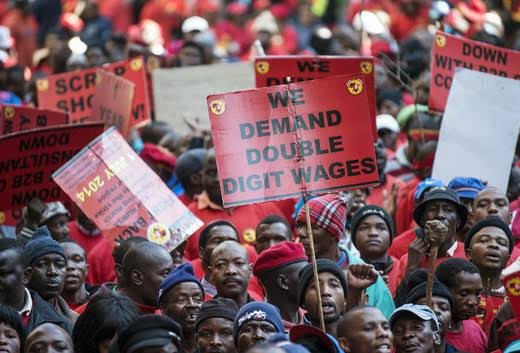
6 May 2025- The Republic of South Africa (RSA) president, Cyril Ramaphosa said they need to protect the rights of workers to build an inclusive economy. Ramaphosa said they have just observed Workers’ Day, which is commemorated across the world in honour of the struggles of workers for fair labour standards and conditions of work.
He further said since the advent of democracy in 1994, they have observed Workers’ Day also to acknowledge the historical role of workers and the labour movement in their broader struggle for freedom. Ramaphosa added that over the past 31 years, they have made considerable progress in improving their labour laws and protecting the rights of workers.
“We emerged from a past where black workers were deliberately denied their rights. For many years, black workers could not be organised into unions, through job reservation they were denied access to certain occupations and they often worked in unsafe and unhealthy conditions.
“Today, the rights of workers in South Africa are protected and enforced. The Constitution enshrines the rights of workers as it does the rights of every person who lives in South Africa. Since 1994, we have passed progressive laws to give effect to the rights of workers,” he said.
Ramaphosa said following extensive consultation with business, labour and civil society, in 2019, they introduced a National Minimum Wage, setting a wage below which no worker may be paid. He said studies have found that since its introduction the National Minimum Wage has led to a significant increase in hourly wages for workers, and has also played a role in reducing the gap between the highest and lowest paid workers.
“We have sought to break from our apartheid past where workers laboured under oppressive conditions to swell the profits of companies without receiving even the most basic benefits.
“This includes measures to advance worker ownership in companies. An increasing number of workers are part of worker share ownership programmes,” said Ramaphosa.
He said they have been deliberate in their efforts to protect the rights of women workers. Ramaphosa said the Employment Equity Act prohibits unfair discrimination on the basis of sex, gender, pregnancy and marital status.
“Female workers are guaranteed specific entitlements such as maternity and family responsibility leave, and we have laws that safeguard against sexual harassment and gender-based violence in the workplace.
“At a time of constrained economic growth and high unemployment, we have seen calls from some people, including political parties, for our country’s labour laws to be ‘relaxed’ in response to the prevailing economic climate,” he said.
Ramaphosa said stimulating economic growth and job creation and retaining worker protections are not mutually exclusive. He said in fact, worker rights have been found to improve productivity and thereby enhance the growth of companies and the economy.
“They also help to distribute the benefits of growth more equally and improve economic stability. In addition, South Africa’s labour laws are part of our effort to overcome the structural inequality of apartheid.
“The latest report of the Employment Equity Commission shows how far we still have to go in ending the race-based disparities that exist in our economy. Despite Africans constituting the majority of the economically active population, the majority of top management positions in the private sector are still held by white males,” said Ramaphosa.
He said this trend is observed at senior management level in nearly every economic category. Ramaphosa said black South Africans are predominantly in the semi-skilled and unskilled categories.
“While there has been much improvement since the advent of employment equity legislation, it is clear that not enough has been done to change the racial composition of the ownership, control and management of our economy.
“Employment equity is not the only area where challenges remain. The International Labour Organisation has highlighted problems of compliance with labour laws in South Africa, as well as inadequate safeguards for workers in the burgeoning informal sector,” he said.
 The Guardian