By BAKANG MOKOTO
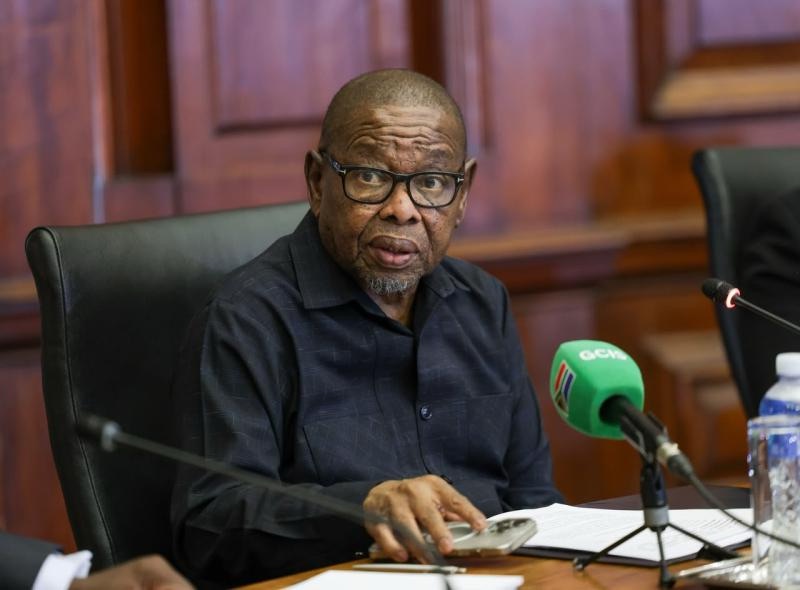
11 November 2026 – The Minister of Science, Technology and Innovation, Professor Blade Nzimande has proposed a cross-sector partnership involving government, universities, science councils and industry to strengthen South Africa’s research capabilities, develop skilled professionals and translate scientific knowledge into practical solutions. Nzimande outlined the proposal during a high-level Presidential engagement with university Vice-Chancellors and national science councils, hosted by President Cyril Ramaphosa at the Union Buildings in Tshwane on Tuesday.
The engagement, held under the theme: “Mobilising Universities and National Science Councils for the Developmental State, Economic Growth and Skills Revolution”, focused on harnessing research, innovation and skills development to promote inclusive economic growth, create jobs and strengthen the country’s developmental state. The proposed pact will bring together the Department of Science, Technology and Innovation, the Department of Higher Education and Training, universities, science councils and industry, including private-sector companies and state-owned enterprises.
“The partnership must go beyond a symbolic commitment and result in practical cooperation. It must be a working agreement, not simply a declaration of goodwill.
“The agreement will outline clear responsibilities, identify institutional leaders, establish agreed contributions and milestones, and provide guidelines on intellectual property, research publications and access to research facilities,” he said.
Nzimande also call for stronger protection of intellectual property generated through publicly funded research, supported, where necessary by an overarching commercialisation strategy. Addressing the need to strengthen domestic scientific and technological capabilities amid growing international competition in advanced technologies, he furher said South Africa must build its own research capacity while continuing to pursue international cooperation.
“We encourage universities to deepen partnerships across Africa and the Global South, with their success measured by the number of researchers trained, capabilities strengthened and practical solutions developed.
“We also call for the Presidential PhD programme to focus on helping candidates complete their research and apply their expertise in areas of national priority, rather than concentrating only on increasing participation,” said Nzimande.
He added that universities, science councils and industry were further encouraged to introduce joint supervision programmes and research placements while maintaining academic standards. Nzimande revealed that his department is exploring the establishment of Science and Technology Parks in each of South Africa’s Special Economic Zones.
“In September, I visited the Coega Industrial Development Zone, where discussions were held on a proposed Science and Innovation Park, as well visiting the existing Science and Technology Park in the East London Industrial Development Zone in October.
“We urge universities to participate in demand and feasibility studies to determine the focus of the proposed parks, identify the businesses they would serve and clarify operational responsibilities, funding models and access for smaller enterprises,” he said.
Nzimande said the ultimate test will be whether these parks turn knowledge into useful products, processes, and enterprises, not merely whether we have constructed new facilities. He also stressed the importance of making better use of existing Technology Stations at Universities of Technology, highlighting the potential of the Institute for Advanced Tooling at Walter Sisulu University to support industrialisation in the Buffalo City area.
“The proposals reflect my department’s new strategic direction, which seeks to place science, technology and innovation at the centre of government, education, industry and society,” concluded Nzimande.

