8 March 2026- The former ANC Member of Parliament (MP), Vincent Smith was sentenced to seven years imprisonment by the Johannesburg High Court after reaching a plea and sentence agreement with the state. Judge Mohamed Ismail presided over the matter and accepted the plea and sentence agreement in terms of Sec 105A of the Criminal Procedure Act, as presented by the state and confirmed by Smith on record.
The Investigating Directorate Against Corruption (IDAC) spokesperson, Henry Mamothame said Ismail remarked on the considerations he had to make, especially that the accused was a lawmaker entrusted with the responsibility of ensuring that the laws of the country are upheld. Mamothame said he described corruption as a scourge that has reached alarming levels, and needs to be addressed decisively.
“Smith pleaded guilty to charges that include the Contravening Section 7 of the Prevention and Combating of Corrupt Activities Act 12 of 2004 (PRECCA), fraud, money laundering and the Contravention of the Tax Act.
“He was subsequently sentenced to 12 years on each of the counts, with each suspended for five years on condition that he does not commit similar offences during the suspension period. Smith will effectively spend seven years in prison for his actions,” he said.
Mamothame further said the conviction relates to the corruption and fraud charges in his personal capacity, as well as in his capacity as a sole director and shareholder of Euroblitz 48, to which he failed to disclosed to the Registrar of parliamentary members’ interest, the gratification that he received from BOSASA, pursuant to the corrupt activities with which he, Euroblitz 48 and Agrizzi were charged for. He added that Smith further failed to disclose the taxable income of Euroblitz between March 2009 and July 2018, totalling to approximately R28 million.
“Charges against Euroblitz were however withdrawn. The NPA’s IDAC remains committed to ensuring that state capture matters are dealt with and that the courts hold those accountable for their alleged criminality,” said Mamothame.
Meanwhile, the National Director of Public Prosecutions, Advocate Andy Mothibi said: “In as much as the trial took longer than anticipated to be finalized, the wheels of justice finally got in motion and the rule of law upheld.
“I commend the prosecution team involved in the matter.”
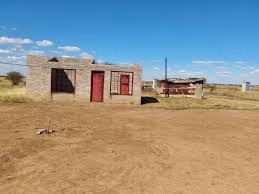
Picture: One of blocked RDP houses project/Generic
By BAKANG MOKOTO
8 March 2026- North West Premier, Lazarus Mokgosi has acknowledged that several challenges have hindered progress in fulfilling the housing mandate in the province, including budget cuts, a growing housing backlog and stalled or blocked projects. Mokgosi, who was delivering the 2026 State of the Province Address (SOPA), told the North West Provincial Legislature (NWPL) that, despite these challenges, progress is being made.
“To date, the provincial government has spent R30 million to complete 215 housing units that were previously abandoned by contractors in areas such as Lethabong, Glaudina, Sekhing and Kgomotso.
“This intervention will be extended to Tshunyane village in Mahikeng, where a contractor was appointed in January. Moreover, the Department of Human Settlements has so far spent R1.2 billion of its total R1.3 billion budget allocation on multi-year housing projects,” he said.
Mokgosi highlighted that the government remains mindful of the push-and-pull factors shaping development in distressed mining towns, particularly the shortage of adequate housing. He further said in response, they have committed over R500 million towards the construction of 1148 housing units in Madibeng, Moses Kotane and the City of Matlosana Local Municipalities.
“Additionally, bulk infrastructure has been installed on more than 1800 sites. Regarding the eradication of asbestos roofs, the provincial asbestos removal programme is progressing well, with R43 million allocated for implementation in Madibeng, JB Marks, Mahikeng and Ditsobotla Local Municipalities.
“Underscoring the significance of ensuring security of tenure and orderly regularisation. The government will dispose of 288 state-owned houses built on tribal land, prioritising current lawful occupants,” added Mokgosi.
He said these properties are located across the Bojanala, Ngaka Modiri Molema and Dr Ruth Segomotsi Mompati Districts. Mokgosi said the Department of Human Settlements has committed to spending 80% of its allocation on unblocking stalled projects, including multi-year developments across the province, the eradication of mud houses, military veterans’ housing, rural and urban housing projects, asbestos roof removal, bulk infrastructure installation, the title deeds programme and the resolution of blocked projects.
“The remaining 20% will be directed towards new housing developments,” said Mokgosi.
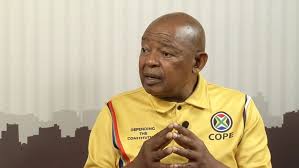
Picture: Former COPE leader, the late Mosiuoa Lekota
By AGISANANG SCUFF
8 March 2026- Republic of South Africa (RSA) president, Cyril Ramaphosa has declared that the late former Minister of Defence and leader of the Congress of the People (COPE), Mosiuoa Terror Lekota will be honoured with a Special Official Funeral Category 2 on 14 March 2026. Lekota, who served the nation as a struggle activist, inaugural Chairperson of the National Council of Provinces, Premier of the Free State, Minister of Defence, and co-founder of the Congress of the People (COPE), passed away on 4 March 2026, at the age of 77.
Ramaphosa reiterates his deep condolences to the Lekota family, the COPE and Lekota’s comrades and associates across the political spectrum. He has paid tribute to Lekota as “a patriot, freedom fighter, and servant of the people whose life story is closely intertwined with their journey of struggle and the realisation of democracy.
“We honour him especially for his principled dedication to non-racialism during our struggle and in a liberated South Africa. We deeply value his service to his home province, where he served as Premier and to our Armed Forces and our national security, in his role as Minister of Defence.
“Reflecting the nation’s appreciation, we have declared that Lekota will be accorded a Special Official Funeral Category 2 which will take place in Bloemfontein on Saturday, 14 March 2026,” said Ramaphosa.
He said the funeral will feature ceremonial elements provided by the South African Police Service (SAPS). Ramaphosa has directed that the National Flag be flown at half-mast at all flag stations from 7 until 14 March 2026.
The Chairperson of the Portfolio Committee on International Relations and Cooperation, Supra Mahumapelo sent his condolences to the family, friends and members of the COPE party on the passing of Lekota. Mahumapelo said Lekota has left behind a legacy of activism and service.
“His name is synonymous with courage, resilience and dedication to the people of South Africa. As a veteran of the anti-apartheid struggle, Lekota’s life has been a testament to the power of conviction and the pursuit of justice.
“His contributions to the fight against apartheid, including his time on Robben Island, are a testament to his unshakeable resolve. As a leader, Lekota has inspired countless individuals to join the struggle for freedom and equality,” he said.
He said Lekota showed the ability to serve and lead with integrity. Mahumapelo said he also served on the Portfolio Committee of International Relations and Cooperation with diligence and commitment.
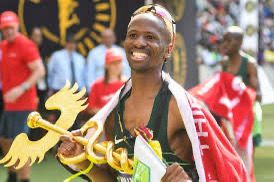
8 March 2026- The North West University (NWU) said it is proud to announce the appointment of internationally acclaimed marathon champion, Tete Dijana, as a protection officer at its Mahikeng Campus, effective 1 April 2026. Dijana, a three-time Comrades Marathon champion, has become a symbol of endurance, discipline, humility and excellence in South Africa and beyond.
His remarkable athletic achievements have inspired millions, and his journey reflects resilience and determination of the highest order.
The NWU principal and vice-chancellor, Prof Bismark Tyobeka, welcomed Tete to the NWU community.
“We are deeply honoured to welcome Tete to the NWU family. His appointment reflects our belief that excellence is not confined to titles or accolades, but is embodied in character, discipline and service.
“Dijana’s presence at our Mahikeng Campus has and will continue to inspire both staff and students, reminding us that greatness and humility can walk hand in hand. The appointment is testament to the NWU’s commitment to recognising and embracing individuals who exemplify the university’s core values of responsibility, integrity, accountability and perseverance,” he said.
Tyobeka further said while Dijana’s achievements on the international athletics stage have brought immense pride to the nation, his new role affirms the dignity of work and the university’s appreciation for every member of its community who contributes to a safe and enabling learning environment. He added that protection officers are the custodians of safety on our campuses.
“They are often the first point of contact for students and visitors. To have an individual of his stature join this critical function is both a privilege and a powerful statement about service and community.
“Endurance and excellence are not values reserved for the athletics arena alone but are foundational to the life of an academic institution. Universities, like marathon runners, operate in the realm of endurance,” said Tyobeka.
He said academic success requires sustained focus, intellectual stamina, resilience in the face of complexity, and the courage to pursue excellence over the long distance. Tyobeka said Dijana’s journey mirrors the discipline, perseverance and consistency that define scholarly achievement.
“His presence among us symbolises the alignment between athletic endurance and academic excellence — both demand commitment, sacrifice and an unwavering pursuit of purpose.
“While Dijana is employed as a protection officer, the NWU would, without doubt, leverage on his athletics skills and experience, and involve him in the development of student athletes for high-performance sport, especially athletics,” he said.
Tyobeka said the NWU looks forward to formally welcoming him when he assumes his duties on 1 April 2026.
8 March 2026- The excitement of the Betway Premiership S’bonise & Win campaign continued in Polokwane as supporter Maria Mokgahlane walked away with R50 000 during the Dial Up fixture between Polokwane City and Orlando Pirates at the Old Peter Mokaba Stadium on Wednesday evening. Mokgahlane became the eighth Dial Up winner of the season, with the prize doubled courtesy of her active Betway account.
The Betway Premiership S’bonise & Win campaign rewards supporters who show up to matches proudly dressed in their club colours, turning their passion for the game into a chance to win. Dial Up fixtures take the experience even further, giving fans the opportunity to win bigger prizes and enjoy special matchday moments.
Following the announcement, Mokgahlane expressed her gratitude, sharing that part of her winnings will go towards finishing the construction of her crèche, a project that had come to a standstill due to financial constraints. She further said the prize will help ensure the project can finally be completed, something she described as a meaningful step for both her and the children in her community.
Betway Squad member, Hlompho Kekana was also in attendance to hand over the cheque, adding to the excitement and celebration on the night. Kekana said moments like this are what make campaigns like S’bonise & Win so special.
“Seeing supporters rewarded in this way and hearing how the winnings will make a real difference in their lives is incredibly meaningful. It shows how powerful football can be in bringing positive change to communities,” he added.
With eight Dial Up winners now confirmed, attention now turns to Rustenburg, where the next Betway Premiership S’bonise & Win Dial Up fixture will take place as Orbit College FC take on Mamelodi Sundowns on Monday evening, continuing the campaign’s mission to bring even more excitement to the matchday experience. Fans are encouraged to join the conversation using #BetwayPrem and #BetwaySboniseAndWin.
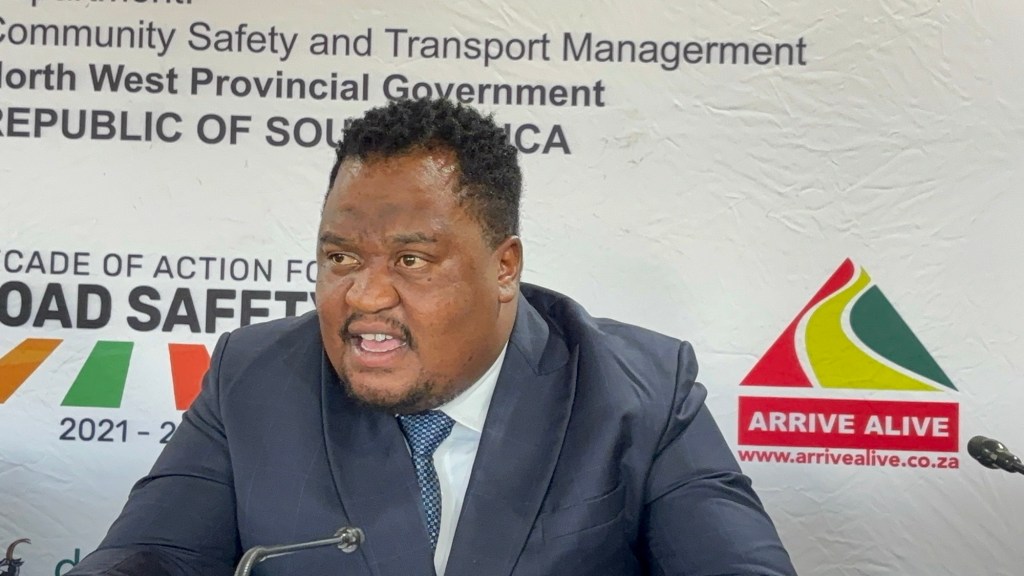
Picture: North West MEC for Community Safety and Transport Management, Wessels Morweng
By OBAKENG MAJE
8 March 2026- Rampant corruption and bribery allegations have been levelled against the North West Department of Community Safety and Transport Management amid systemic failure of scholar transport tender. There are allegations that some service providers are bribing traffic officers not to impound their unroadworthy buses.
The Member of Provincial Legislature (MPL) of Umkhonto weSizwe Party at the North West Provincial Legislature (NWPL), Lerato Tsholo said they condemn the alleged ongoing rampant corruption and bribery within the scholar transport sector. Tsholo said the scholar transport service providers who pay bribes to avoid impoundment of their non-compliant buses are undermining the safety of their passengers and perpetuating a culture of corruption.
“By paying off officials, and Members of Provincial Legislature (MPLs), who are doing oversight on them, these service providers are essentially buying their way out of accountability, putting the lives of innocent children and other road users at risk.
“This behaviour is not only unethical, but also illegal. So, it is high time we call it out for what it is – a blatant disregard for the law and human life. Furthermore, this practice creates an unfair advantage for those who are willing to bribe, making it difficult for compliant transport service providers to compete,” she said.
Tsholo further said it is a vicious cycle or chain that needs to be broken. She added that, instead of paying bribes, scholar transport service providers should prioritize maintaining their buses to ensure they meet safety standards.
“Let’s condemn this behaviour and advocate for a safer, more transparent transportation system. On the other hand, while condemning the behaviour of scholar transport service providers as far as bribery and corrupt elements are concerned, an appeal is thereby made to the North West Department of Community Safety and Transport Management to make sure that they pay them timeously so that they are able to maintain and service their buses to meet the compliance requirements,” said Tsholo.
Meanwhile, the North West MEC for Community Safety and Transport Management, Wessels Morweng said: “There are allegations of corrupt officials from my department and some MPLs. Corruption must immediately be reported to the relevant authorities.
“I also indicated that in the process of corruption, there is always a corruptor and a corruptee. Now, my hands are itching and if you can give me the names of those corrupt officials, I will put them on suspension pending investigation.”
Morweng said the issue of scholar transport is very painful. He said these corrupt officials go and collect bribes from service providers, which their buses are unroadworthy and risk the lives of the learners in the process.
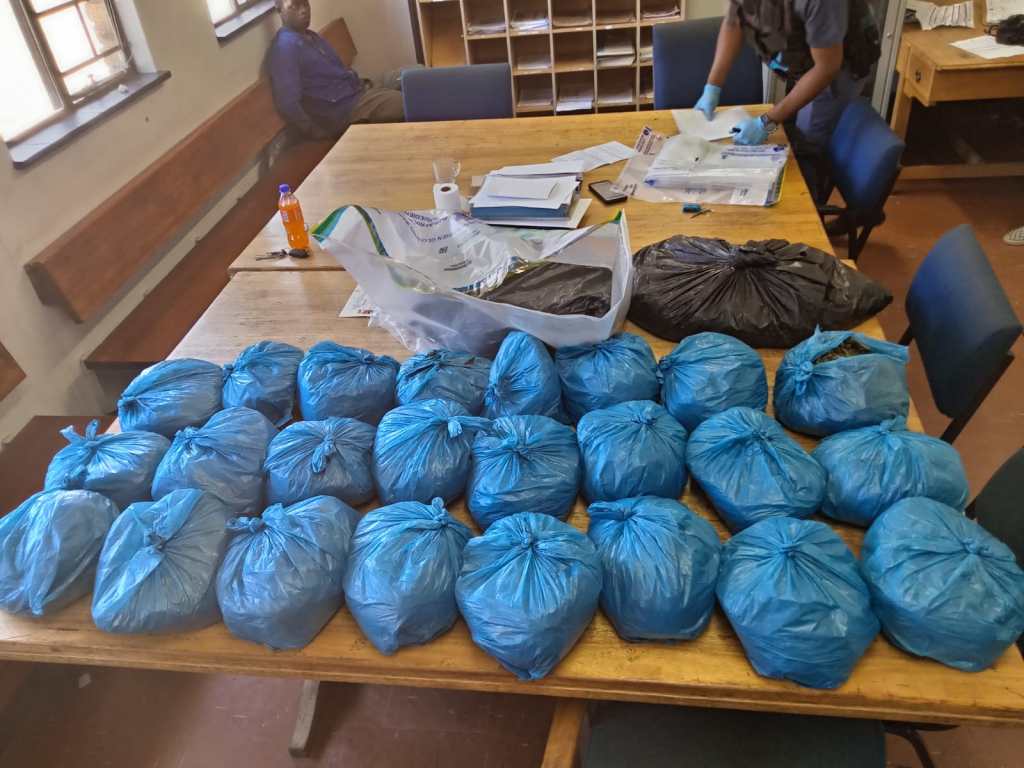
8 March 2026- Alleged drug dealer (25) was arrested after the police discovered dagga worth R478 000 in his vehicle in Upington. The police were conducting routine patrols along Schroder Street in Upington when they noticed a vehicle and the driver acting suspicious after seeing the police vehicle.
The Northern Cape police spokesperson, Lieutenant Colonel Thabo Litabe said the suspect allegedly attempted to change lanes abruptly, prompting officers to pull the vehicle over. Litabe said when requested to produce his driver’s licence, the suspect failed to do so.
“While speaking to the driver, vigilant members detected a strong smell of dagga emanating from the vehicle. They subsequently conducted a search and discovered multiple bags of dagga loaded inside the vehicle.
“The suspect was immediately arrested and charged with dealing in dagga. He is expected to appear in the Upington Magistrate’s Court on Monday,” he said.
Meanwhile, the ZF Mgcawu District Police Commissioner, Major General Monica Sebili, commended the police for their vigilance and for disrupting the supply of drugs to local communities. Sebili also issued a stern warning to potential drug dealers, that the police in the ZFM District have adopted a zero-tolerance approach when it comes to drug trafficking and will squeeze their space to operate.
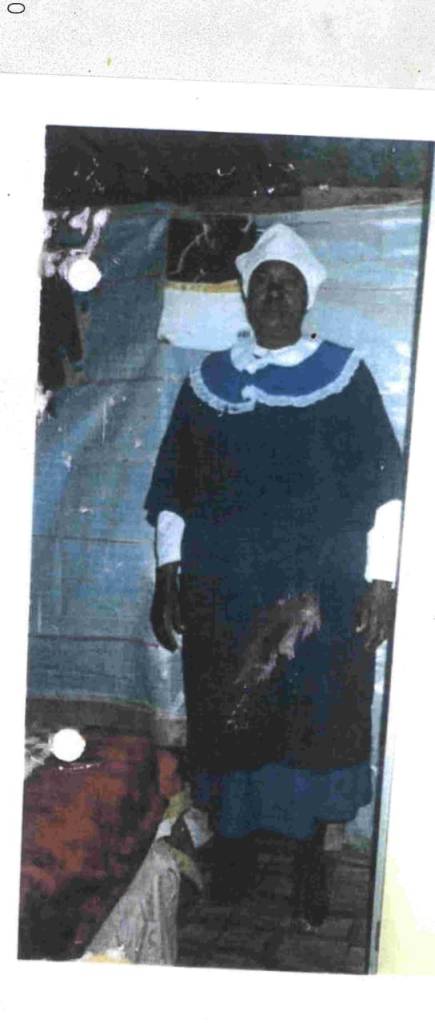
Picture: The missing Xoliswa Francis Duba/Supplied
By BAKANG MOKOTO
6 March 2026 – The police in Kanana request the community’s assistance in locating Xoliswa Francis Duba (72), who resides at Kanana Township, in Orkney. The police said Duba was last seen by her neighbour on 15 June 2023.
The North West police spokesperson, Sergeant Kelebogile Morake said a search commenced and extensive investigations were conducted around Kanana without any positive results. Morake said at the time of her disappearance, Duba was wearing a brown and white jersey and a blanket and blue slipper.
“Duba is dark in complexion, has a medium built body and short black and grey hair. The police request anyone who may have information regarding Duba’s whereabouts to contact the Investigating Officer, Sergeant Thembani Mvala on 072 703 3657.
“Alternatively, call your local police station or Crime Stop on 08600 10111. Anonymous tip-offs can also be communicated via the MySAPS App from your smartphone,” she said.
5 March – The South African Football Association (SAFA) welcomes the Supreme Court of Appeal’s judgment handed down on 24 February 2026, where the court dismissed with costs, Ria Ledwaba and Solly Mohlabeng’s latest attempt to overturn the SAFA 2022 Presidential electoral outcome.
Ledwaba and Mohlabeng made a special application for leave to appeal in terms of Section 17(2)(f) of the Superior Court’s Act, where they sought the President of the Supreme Court of Appeal (SCA) to reconsider the Court’s earlier decision to dismiss their application for leave to appeal.
SAFA CEO, Lydia Manyepao said the court dismissed their special application due to their failure to demonstrate to the court that a refusal of their special leave to appeal would result in grave injustice or would bring the administration of justice into disrepute. Manyepao said the High Court’s ruling in the same matter, which had become the subject of the dispute before the SCA, unequivocally rejected the continued efforts by Ledwaba and Mohlabeng to disrupt the administration of football in South Africa.
“The High Court judgment reinforced the integrity of SAFA’s election processes and served as a clear message against all efforts designed to undermine the Association. With the recent judgment, the SCA simply upheld the same position.
“In October 2022, after suffering a significant defeat in the SAFA Presidential elections, Ledwaba and Mohlabeng sought to overturn the results. They launched an Application at the Pretoria division of the High Court, seeking to invalidate and set aside the election outcome,” she said.
Manyepao further said SAFA opposed the application, standing firm in defense of the rights of the SAFA National Executive Committee members who participated in the voting process and further sought to uphold the SAFA statutes, which govern the election and administration processes. She added that on February 9, 2025, the Pretoria High Court, under Judge Holland-Muter, ruled that the applicants no longer held membership or positions of authority within SAFA structures.
“As such, they had no legal standing to invoke the SAFA Statutes or pursue any disputes under the jurisdiction of SAFA. The court accurately dismissed their application with costs, including costs of two counsels, with one being a senior counsel.
“Undeterred, Ledwaba and Mohlabeng filed for leave to appeal on 21 February 2024, citing misinterpretations of the SAFA Statutes and their submissions. The leave to appeal was heard on 4 December 2024 and on 5 December 2024, the High Court once again ruled against them, confirming that their appeal lacked reasonable prospects of success,” said Manyepao.
She said the court further emphasised that no other court would likely reach a different conclusion and that there were no compelling circumstances justifying consideration by a higher court, including that there is an important point of law that they raised which justify consideration by a higher court. Manyepao said once again, the application for leave to appeal was dismissed with costs, including costs of a senior counsel.
“This marks the sixth time in just three years that Ledwaba and Mohlabeng have failed in their legal attempts to disrupt the Association. Their repeated court defeats underscore their ongoing attempts to distract SAFA from its commitment to develop football in the country.
“SAFA remains resolute in its mission to foster the growth of football, promote social cohesion, and unite the country through the power of the sport. This judgment reaffirms SAFA’s commitment to develop football in South Africa and safeguarding its governance and administration from unwarranted disruptions,” she said.
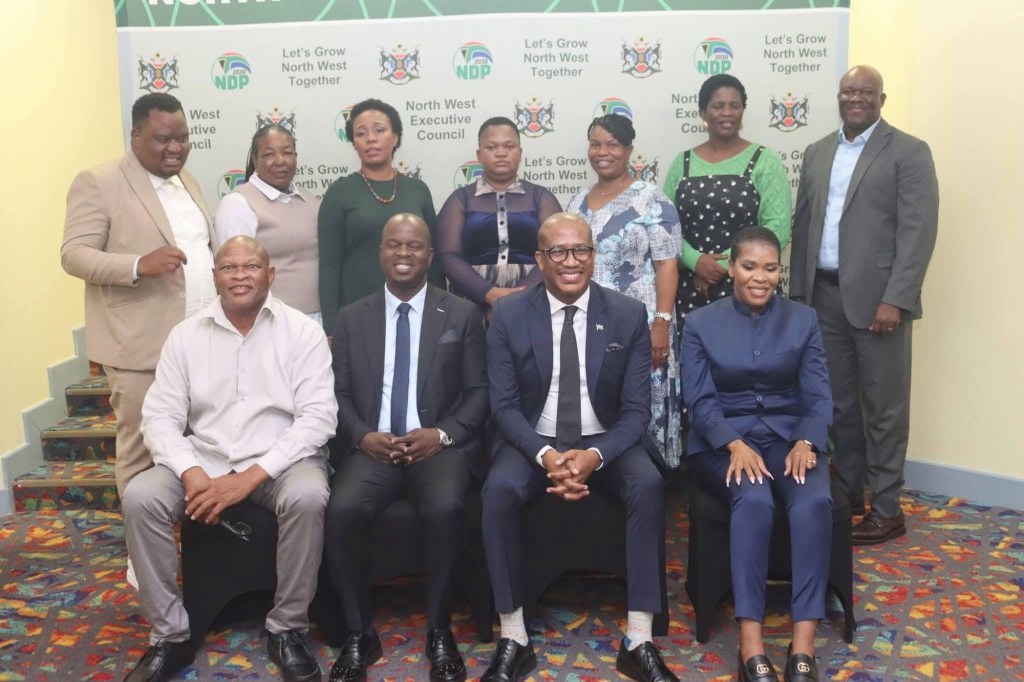
Picture: The deputy president in the Presidency, Kenny Morolong, North West Premier, Lazarus Mokgosi with delegates
By OBAKENG MAJE
5 March 2026- The deputy minister in the Presidency, Kenny Morolong and delegates from the Government Communication and Information System (GCIS), Media Development Diversity Agency (MDDA) and Brand SA, engaged the North West Executive Council on the coordination of government communication, nation branding and community media support in the North West. Morolong said the main reason for their engagement was to socialise the provincial executive council on the government communications policy, which was recently adopted by the cabinet.
He further said the government communications policy, set out rules, procedures and processes for government communications. Morolong added that they had a quite involved discussion with the provincial executive council on how best they can improve communication at a strategic function of a fictional government.
“The province has also engaged the GCIS on its mandate and some of the communication challenges that had besieged the province for quite some time. However, we have been able to respond to them and we have identified the areas of collaboration.
“The second discussion was on MDDA and its attended mandate, which is to support small and commercial media. Our discussion is centered around the need for MDDA to continue to be consistent with its mandate to capitalise small and commercial media and we were particularly focused on the North West,” he said.
Morolong said he reminded the provincial executive council that, not so long ago, they had a workshop with MDDA and community media, which was aimed at sensitising community media about requirements for funding. He said they have received information from the MDDA regarding the number of community media projects that have been funded and are able to give a sense of where they are within the North West and which projects are potentially being able to fund.
“We have yet to formally communicate with those who have been successful on their applications. We also had a discussion with Brand SA, which is one of our entities responsible for the promotion of the nation’s brand.
“They have been able to reflect on the brand. The Brand SA has got responsibility to be a marketing agency of South Africa. It also has the responsibility to ensure that South Africa, as a brand, is admired globally,” said Morolong.
He said it also has a responsibility to make sure that South Africa is seen as a brand that is globally competitive. Morolong said they had a fruitful discussion about the mandate of these entities together with the GCIS.
“We looking forward to the future engagement. What came out of this discussion is that, we should have a provincial communicators’ forum to socialise communication on the discussion that have ensued on the concerns that have been raised by the executive council and how we have been able to go about delving into possible way and solutions to respond to some of the questions that have been raised in our discussions with the executive,” he said.
The North West Premier, Lazarus Mokgosi said: “Indeed as a province, we are very excited to have hosted you today from GCIS and its entities. We had a conversation and they highlighted that this is what the cabinet had reviewed regarding communications strategy.
“Now, the government at a national level is responsible to craft policies and us as provinces, our responsibilities are to implement. When these reviews are done, we take communications and put it in the strategic planning on how we communicate with our people.”
Mokgosi said there is a general belief that the government is doing a lot, but communicating less, if not at all. He said hence generally have surveys and perceptions that there is a mood of people not happy with government works.
“When we evaluate at a factual point, you will realise that the government is doing very well. Now, part of the discussion today is how do we possess communication in the three spheres of government at the centre of communicating to our people.
“The service delivery without shying away on limitations and weaknesses that the government will have. Our responsibility is to tell people what the government does. Also, it is important on how we integrate South Africa because as a province, for instance, we go abroad trying to market the province but the reality is as you market the province, the brand must be well packaged,” said Mokgosi.
He said they must ensure that the brand is well-resourced and has tools of trade. He said the province will be hosting an investment conference job summit. Mokgosi said the Brand South Africa must be able to come in and assist.
Meanwhile, the MDDA CEO, Shoeshoe Qhu said there are media houses funded in the North West and funding does not have favoritism. Qhu said there is a criterion the agency follows.
“We did come to the province and went through that process that led to the funding. In total, we have a budget of R49 million to fund community media and this is funds we transfer to community media.
“Additionally, we have non-financial support which includes capacity building initiatives to help community media and publishers to manage the resources and their projects to be sustainable,” she said.

 The Guardian