Kleinfontein raises old race questions


Image

Kleinfontein – There are no signs that say “Whites Only.”


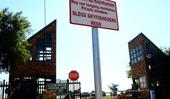
There are, though, men in military fatigues who log the license plates of vehicles approved to enter Kleinfontein, a rural enclave that is home to about 1 000 Afrikaner whites. And there is a bust of Hendrik Verwoerd, the former South African leader who spearheaded white racist rule.


This exercise in separate, self-sufficient living near the South African capital, Pretoria, is more than just a throwback to the apartheid era that ended with the country’s first all-race elections in 1994. In recent days, Kleinfontein and its campaign to be formally recognized as a township have become a touchstone for fresh debate about law, freedom and the kind of “rainbow nation” that South Africa is trying to be.


Kleinfontein, which is all private property, requires its residents to be Afrikaners, descendants of settlers who arrived from Europe centuries ago and speak Dutch-based Afrikaans, the idiom of South Africa’s former overseers. That brings accusations of racism in a nation whose population of over 50 million is mostly black, but the community skirts race references in its manifesto. Descendants of British settlers, for example, would not be welcome to live here.


The community is not organized “on the basis of race,” said Jan Groenewald, chairman of the board of directors of Kleinfontein, which means “Little Fountain” in Afrikaans. Instead, he said, the goal is to preserve a cultural bedrock that stretches back to the lore of the hardy Voortrekker settlers.


The dig-in mindset at the austere settlement echoes that of its ancestors, who drew ox wagons into a defensive circle, a tactic that helped them defeat a much bigger Zulu force at the Dec. 16, 1838 Battle of Blood River. The date has near-mystical import for staunch Afrikaners, though the vast majority of whites accepted South Africa’s new, multi-racial order in 1994 as part of a negotiated settlement.


“We are here to stay,” read Afrikaans-language signs outside modest brick-and-tile homes linked by dirt roads in Kleinfontein.


Residents don’t pay taxes on municipal services because they don’t receive them. They draw water from a spring and are building a sewage system. There is a cafe, a primary school and a care center for the elderly. Zebra, antelope and wildebeest roam in one part of the fenced, 721-hectare (1,780-acre) property. Residents buy many of their goods from outside the fence.


“If I was a racist, we wouldn’t speak to a black. We wouldn’t do business with them,” said Annatjie Oncke, a 49-year-old house cleaner living in a caravan park. She and other poor residents do the kind of menial labor reserved for blacks in the era when whites were in charge. Kleinfontein also has engineers and other skilled workers, as well as retirees.


In the past, small bands of Afrikaners have sought to establish enclaves elsewhere in South Africa, notably in the Northern Cape community of Orania, founded in 1990. Nelson Mandela, South Africa’s first black president, traveled to Orania in 1995 and had coffee there with Verwoerd’s widow in a show of racial reconciliation. Verwoerd was assassinated in 1966.


Kleinfontein has been around almost as long as Orania, but is now under scrutiny in part because it wants local authorities to recognize it as an entity with the right to run its own affairs. The Times, a South African newspaper, reported that provincial lawmakers were informed last year that black police officers were barred from entering the enclave.


Last week, members of the Democratic Alliance, a political party, protested outside Kleinfontein.


“By creating a ‘whites-only’ area, this community is saying that it has no respect for people who are different from them. It is saying that it fears people who are different,” said Mbali Ntuli, the party’s youth leader.


On Wednesday, Kgosientso Ramokgopa, the mayor of Pretoria and surrounding areas, visited Kleinfontein as part of an inquiry into its alleged failure to comply with municipal planning laws. Delegations of the two sides met in a hall with a corrugated iron roof, a church bell mounted outside in a scaffold.


Ramokgopa noted the right of every citizen to “reside in any part of the country,” while Groenewald, Kleinfontein’s chairman, spoke of the right to “self-determination.”


The mood was diplomatic, and jovial at times. Ramokgopa joked about “koeksusters,” a fried, sugary snack favored by his Afrikaner hosts. Groenewald referred to Mandela’s leadership, but also hinted at his resolve with a mention of Koos de la Rey, a general in the 1899-1902 Anglo-Boer war who did not want conflict but fought hard when it began.


South Africa’s national flag does not fly in Kleinfontein, though some residents were seen recently with the “Vierkleur” (“Four-color”), the flag of the Transvaal republic, which in the 19th century formed part of what is now South Africa. A community member handed out a declaration that complained of betrayal and persecution of the “Boer-Afrikaner nation,” and described South African democracy as a sham.


“We find ourselves exiles in our own fatherland,” the statement said. “We experience this new dispensation not as a democracy, but as the dictatorship of an alien majority.”


For some observers, any uproar over Kleinfontein masks bigger challenges about racial integration in South Africa, where average income levels of whites still outstrip those of blacks. Unemployment is high and residents of some districts have protested violently against the government’s failure to provide basic services, a fact that Kleinfontein’s leaders did not let slip in their discussions with Pretoria officials.


Author Eusebius McKaiser said the country is still wrestling with the legacy of “apartheid geography,” in which some districts originally designed for different races still remain largely segregated.


“We need to stop gloating about the anger we feel towards people like those who live in Kleinfontein,” McKaiser wrote in The Star newspaper. “They are honest and crude about their revulsion of people who are different to themselves. We are not fundamentally different to Kleinfontein’s people. We are just less honest, more subtle.”


Ramokgopa, the mayor, toured Kleinfontein in a convoy of vehicles that kicked up dust and had residents peering at the commotion from their windows. He said the “inherent contradictions” at play over Kleinfontein would emerge elsewhere.


“The nature of the conflict in South Africa is defined by race and that’s something that we need attend to,” he said. “The next generation will still be grappling with this question.” – Sapa-AP


NUM calls for peaceful Mine talks


Image

Johannesburg – There is a need for stability in the mining sector and in centralised bargaining processes, the National Union of Mineworkers (NUM) said on Friday.

“That normality must be brought by parties’ adherence to the rules of collective bargaining, mutual respect and non-violent means of engagement,” spokesperson Lesiba Seshoka said in a statement.

He said the union supported President Jacob Zuma’s call for stability and appealed to all parties to abide by the peace accord signed earlier in the year.

At a briefing in Pretoria about the economy and developments in the mining sector on Thursday, Zuma told reporters South Africa needed a stable mining industry to increase economic growth.

“Our country needs a stable and growing mining industry. Mining has been a key feature of this country’s economy for more than 130 years,” Zuma said at the Union Buildings.

Mining accounted for 6% of the country’s gross domestic product (GDP) and generated 60% of South Africa’s export revenue, he said.

Zuma said the mining sector had been negatively affected by the depressed global economic growth, especially in Europe.

“The global recession has led to substantial declines in commodity prices and in the demand for our minerals abroad. And when our mining sector is in difficulties, this affects the wider economy, leading to industrial slowdown.”

Zuma said 2012 was a difficult year for the mining sector, with the deaths of 44 people during a strike in Marikana, North West, in August. However, government had acted to address labour relations in the mining sector.

Play by the rules

Following Zuma’s speech the NUM called on all parties, including mining companies, to play by the rules.

NUM general secretary Frans Baleni said: “As a union we are determined to play by the very same rules we want others to play by.”

However, the union said this did not mean that it should not demand what was fair for its members.

Seshoka said: “It also shouldn’t be interpreted to mean that strike action would cease to be the last resort as we normally do when parties are unable to agree.”

On Friday the ANC said reports linking Zuma’s address to the weakening of the rand were “unfounded”.

“Suggestions in the media linking the president’s speech to the news of the weakening rand are scientifically unfounded,” the office of ANC Chief Whip Moloto Mothapo said in a statement.

“The president’s bold intervention to address economic challenges cannot be the reason for the decline of the rand.”

On Thursday, the rand fell to around R10/$ a few hours after Zuma tried to assure the nation and investors that government was dealing with the instability in the mining sector. This was its lowest level in four years.

Mothapo’s office said the mining industry welcomed Zuma’s call to work together with government and labour. It welcomed Zuma’s “frank reflections” on the state of the South African economy, and said the country had done well on the economic front since the first democratic elections in 1994.

The Democratic Alliance said Zuma’s address was a missed opportunity.

DA MP Lindiwe Mazibuko said Zuma should have spoken decisively about the problems facing the economy.

“But instead of a plan of action on how to address our economic growth collapse to just 0.9 percent in the first quarter, we received only more of the vague reassurances which have characterised his term in office,” said Mazibuko.


Itu Khune cleans up at Chiefs Awards


Image

By Obakeng Maje

Johannesburg-Kaizer Chiefs held their season ending awards tonight in Johannesburg for 2012/13.

Bafana and Kaizer Chiefs skipper Itumeleng Khune was the biggest winner of the night as he repeat what he did last week at Absa Premiership Awards.

Itu scooped four awards and he was the head over the shoulders. Kaizer Chiefs chairman Kaizer Motaung congratulated all the winners and also awarded former players.

The Award Winners below:

Fair Play Winner of this award is to the player who displays good sportsmanship on and off the field of play winner Eric Mathoho Amakhosi Readers’ Choice winner: Itu Khune Kaizer Chiefs Online Player of the Year winner: Itu Khune Goal of the Year: Bernard Parker Most Improved Player:Willard Katsande Players’ Player of the Season: Itu Khune Player of the Season:Itu Khune

Follow us on Twitter@Taung_DailyNews

Gigaba blasts sub-standard work at Medupi


Image

Cape Town – Strong measures were taken against Hitachi for its “sub-standard work” in the building of the Medupi power station in Limpopo, Public Enterprises Minister Malusi Gigaba has revealed.

Hitachi Power Africa’s performance bond was called up in February, according to a written reply Gigaba gave to a question from Freedom Front Plus MP Anton Alberts. Alberts released the reply on Friday.

A performance bond protects a client, in this case Eskom, against losses resulting from a contractor’s failure to meet its obligations. It is issued by an insurance company or bank.

Hitachi’s failure to implement appropriate plans to rectify its performance to Eskom’s satisfaction was cited as a reason for the power utility’s action.

Construction at Medupi has been delayed due to failures by Hitachi to deliver top quality boilers at the plant. The welds on the boilers were found to be sub-standard.

“The calling up of a performance bond is considered to be a standard operating procedure agreed between the two,” Gigaba said.

In March Eskom called up French company Alstom’s performance bond. This meant Alstom lost 10% of its contract price because its systems failed, further delaying the Medupi project. Alstom is creating the software for the boiler systems.

In the same month, Eskom CEO Brian Dames was quoted as saying they were considering cancelling two key contracts. 

The contracts are with Hitachi, in which the ANC’s investment arm Chancellor House has a 25% stake, and Alstom.

Eskom spokesperson Hilary Joffe on Friday said there were no immediate plans to cancel the contracts and that Hitachi was still in charge of building the boilers.

Alberts said he was disappointed about the failures at Medupi. He believed the power plant could miss its deadline of coming on line in December. This would put serious strain on the power grid, which experts said could lead to blackouts next year.

“According to reports, the ANC had at the beginning of 2013 already earned R1bn from the investment. The contract had amounted to R38.5bn.

“The struggling Medupi project had, as a result of various problems, never got off the ground properly,” Alberts said.


For more http://www.news24.com

Lawyer: Zuma recognised that he must be criticised


Image

Johannesburg – A media lawyer said on Friday that President Jacob Zuma’s move to withdraw all outstanding defamation cases he had against the media shows that he recognises that as head of state, he must be the subject of legitimate criticism.


Media lawyer Dario Milo, from Webber Wentzel, who managed defences on about half the cases, welcomed the decision.


“I think that the sheer magnitude of the claims by the president sent out a signal that was detrimental in terms of freedom of expression.


“The decision to withdraw has to be welcomed, because it does mean that Zuma recognises that as head of state, he must be the subject of legitimate criticism.”


Earlier, presidential spokesperson Mac Maharaj said that in consultation with his legal team, the president had elected to withdraw his claims against the various entities and in so doing bring these matters to a close, mindful as he is that much of the litigation commenced before the president assumed office.


The material, from 2006 to 2010, prompted Zuma to institute legal action against various media groups and individuals associated with them.


Now he felt “that measured as against the broader national interest and challenges which the country is faced with, his personal sentiments, however aggrieved he may feel, must give way”.


Maharaj said Zuma considered the cartoons and articles defamatory or calculated to “bring his good name, and in some instances the office of the president, into disrepute”.


In some instances they sought to cast black men in a particularly negative light with “bigoted and racist overtones and innuendo”.


Joke


Maharaj said the decision was “informed by the broader agenda of reconciliation and nation building”.


The president also intended redressing prejudice and inequality through government-led programmes and forging better working relationships with like-minded interest groups.


Milo said he handled the “Lady Justice” cartoon case which Zuma brought against Jonathan “Zapiro” Shapiro. Zuma withdrew the case in October, before it got to court.


He handled two other Zapiro cases. One involved a cartoon depicting the “Moral Degeneration Movement”, and another depicting Zuma about to give evidence in his rape trial.


Webber Wentzel also dealt with a joke in the Sunday World, a column by William Gumede in the Sunday Independent, a report in The Star (“ANC Gags Zuma”), and one in The Citizen.


In April, Beeld reported that Zuma’s defamation case of R5m against Rapport was dismissed with costs. This was after he failed to respond to an interim court order.


Zuma’s claim in that case was related to an article and photo published on 30 December 2007 in Rapport, under the heading “Piekniek by Dingaan [Picnic with Dingaan]”.


The photo shows Zuma in the company of film maker Leon Schuster and singer Steve Hofmeyr.


Zuma is currently in Japan attending the fifth Tokyo International Conference on African Development.


SAPA

Johnson’s SSU Deal 99% Done


cf359125e34be3c1b698a674f53f9fbe110
The Siya crew can confirm that Cavin Johnson’s move to SuperSport United has been all but confirmed, with the coach having agreed on terms with the Tshwane-based outfit, although expect denials all around.

As predicted by the crew in January, Gavin Hunt’s exit from Matsatsantsa was confirmed on Wednesday, with Hunt subsequently joining Wits. SuperSport are now looking to replace their long-time coach and fill the void left on the bench.

Soccer-Laduma since revealed SuperSport’s short-list for the head coach role, which included the likes of Cavin Johnson, Steve Komphela, Ernst Middendorp, Mark Harrison, Owen da Gama and Ruud Krol.

Johnson has been the odds-on favourite for the job, and it as since been revealed that the club and Johnson have agreed to a deal.

However, the deal cannot be announced as of yet because of Johnson’s contractual obligations to Platinum Stars. The coach is contracted to the Phokeng-based side and will need to be released if he is to pursue his coaching career with SuperSport.

Johnson is in the process of negotiating with Platinum Stars.
For more http://www.soccerladuma.com

Millions of cigarettes destroyed


3546024766
Musina – Eleven million contraband cigarettes have been destroyed in Musina, the Tobacco Institute of Southern Africa (Tisa) said on Friday.

“Over two days, starting yesterday (Thursday) more than 1001 mastercases were destroyed, or 11 million cigarettes,” said spokesman Francis van der Merwe.

“The excise lost to the government was R6 million. This (destroying cigarettes) was an ongoing thing.”

Last year Tisa destroyed between 80 and 100 million contraband cigarettes, with 340 million destroyed in 2011.

Van der Merwe said eight and three million contraband cigarettes were destroyed last week in KwaZulu-Natal and the Western Cape respectively.

Tisa destroyed the cigarettes at their own cost as part of a partnership with government. Its aim was the destruction of one billion contraband cigarettes a year.

“Last year, South Africans smoked between eight to nine billion cigarettes. We have to destroy them by the millions. This is what we do in our partnership with government,” he said.

“After government seizes them, we destroy them under their provision. We are sending a message out there that we will not tolerate this.”

The impact of contraband cigarettes was large, with government losing billions in tax and the industry losing the same in revenue, said Van der Merwe.

Last year, government lost more than R12 billion due to contraband cigarettes.

Around 7.7 million people in South Africa used tobacco products.

He said Tisa, beyond destroying the cigarettes, worked with police, customs, and security agencies in sharing information cigarette manufacturers gathered on the market.

They also assisted government in training officials, who worked at border posts, for example.

“About 30 percent of the cigarettes in the market are illegal. When you are a smoker, make sure you buy a legal product,” he said.

About 55 percent of all contraband cigarettes in 2012 were made in Zimbabwe, with countries such as Mozambique and Swaziland used as means of entry into South Africa.

“More than 30 percent (of contraband cigarettes) are manufactured locally,” said Van der Merwe.

He said the only people benefiting from contraband cigarettes were criminals. – Sapa

Top 10 PSL signings of the season


3631319783
Johannesburg – Tshepang Mailwane assesses the most astute signings of the 2012/13 Premiership season.

Eric Mathoho (Bloemfontein Celtic to Kaizer Chiefs)

Mathoho did not allow Patrice Motsepe’s millions to lure him to Mamelodi Sundowns, instead choosing to join Kaizer Chiefs, the club he supported as a boy. Today, Mathoho is a league and cup double winner with Amakhosi, having featured regularly for the club in defence as they conceded only 21 goals in 30 matches. It’s certainly proven to be a great decision to snub Sundowns, where he felt he would not have played much. Mathoho partnered Tefu Mashamaite in central defence and together they kept out some of the country’s most talented attackers. Mathoho was solid and calm in defence for Amakhosi.
For more http://www.iol.co.za

‘Reckless’ hummer driver jailed


handcuffs
Pretoria – The Hummer driver who crashed into motorcyclists in 2010, killing two and causing a third to lose a limb, was jailed for six years on Friday.

Pretoria North Regional Court Magistrate Ben van Schalkwyk sentenced Zambian national Indi Himalindi Chiyabu to two nine-year terms on two culpable homicide counts.

Three years of each sentence were suspended for five years, and the two sentences would be served concurrently.

Van Schalkwyk also sentenced Chiyabu to a further 18 months’ imprisonment for contravening road traffic legislation.

Chiyabu fled the scene shortly after the accident and did not report it to police, in contravention of the law. He handed himself to the authorities five days later.

The 18-month prison term would also run concurrently with the initial two sentences.

The magistrate said he was convinced Chiyabu was a reckless driver and had caused the accident and the subsequent deaths of the motorcyclists.

Chiyabu was apparently driving in the wrong lane, facing oncoming traffic when the accident occurred.

“All over the country, people are dying on the roads because of people who drive without the necessary care.

The accused clearly did not keep a proper look-out,” said Van Schalkwyk.

“According to photographs of the accident scene, visibility was good outside the car. The court is satisfied that the accused caused the death of the two deceased in a reckless manner.”

Bail denied

In passing sentence, Van Schalkwyk said he had considered numerous factors, including the prevalence of culpable homicide in South Africa, Chiyabu’s personal circumstances, and the severity of the crime.

“With regards to culpable homicide, it is a prevalent crime in South Africa. A lot of accidents are being reported in the news media every week,” he said.

Van Schalkwyk suspended Chiyabu’s Zambian-issued international driving licence from use in South Africa.

The accident occurred on Rachel de Beer Road, Pretoria, in October 2010.

The Hummer and two of the motorcycles caught fire.

Pieter Coetzee, 49, and JP Kruger, 32, died at the scene. Coetzee’s son Pieter survived, but had to have a leg amputated.

The wheelchair-bound amputee was in court on Friday, accompanied by relatives.

Chiyabu was found guilty on the two counts of culpable homicide in February.

Shortly after the sentence on Friday, Chiyabu’s lawyer Makhi Nogaga brought an application for leave to appeal and for bail to be granted pending the appeal process.

“The trial became unfair to the accused. The constitutional issue in this case has to be tested at least by the High Court, and ultimately by the Constitutional Court,” he said.

“Without seeming to disrespect the judgment, we are of the opinion that a different court may reach a different conclusion on this matter.”

Van Schalkwyk granted leave to appeal, but declined the application for bail sought pending the appeal process.

He said even though Chiyabu’s travel documents were in police possession, it was possible that the man who hails from Lusaka would “disappear”.

“The accused can return to Zambia where he has three kids. He can go somewhere in Polokwane, his mother has a farm there. It is easy, people disappear in South Africa,” said Van Schalkwyk.

– SAPA

Minister ‘honoured’ by Zimbabwe comparison


1a4f0b3d0ba24b078dfef0e78aa73690
Cape Town – It is an “honour” to have South Africa’s land reform process compared to what happened in Zimbabwe, Land Reform Minister Gugile Nkwinti told MPs on Friday.

“[President Robert] Mugabe is reversing what the British did to the people of Zimbabwe. It’s an honour,” he said in the National Assembly following an often angry and emotion-filled debate on his department’s 2013/14 budget.

Nkwinti was responding to remarks made earlier in the House by Freedom Front Plus MP Pieter Groenewald, who warned the minister he was “playing with fire” by whipping up emotions on the land issue.

“You are creating insecurity. I want to say to the honourable minister, you are creating a typical Zimbabwe situation.

“You are busy, before the election, to blame whites and apartheid [for the land situation],” Groenewald said.

Nkwinti told Groenewald he was right.

“You were right… about whipping up emotions, just like Zimbabwe. Yes, President Mugabe is the president of Zimbabwe, and here we have President Zuma.

“But he [Groenewald] says we’re like him [Mugabe]. That is a praise, by the way.”

At this point, Nkwinti was interrupted by loud cries and heckling from opposition benches.

The minister responded to these by repeating he considered the comparison with Zimbabwe to be praise for the work government was doing on land reform.

“Yes, it is praise… he [Groenewald] says we’re like Zimbabwe. That is praise, thank you very much.

“It’s an honour. It is an honour. What did you expect?

“Would you have been happier if he [Groenewald] had said, we were like the British colonialists who killed South Africans to take our land? Would that have been an honour?” Nkwinti asked, to loud cheers from ANC benches.

Achilles heel

Earlier, he spelled out government’s aims on land reform and the future of South Africa in this regard.

“The Mangaung conference of the ANC has given us very clear instructions on this – go and change the skewed land ownership pattern in South Africa so that we can have black people taking control of the economy of the country,” Nkwinti said, to loud acclamation from ANC MPs.

The emotive tone of the debate was sparked earlier by outgoing Democratic Alliance MP Atholl Trollip, who fired a final stinging broadside against rural development and land reform officials.

“Your departmental staff are the Achilles heel of your department,” he told Nkwinti

“Regrettably, due to the shocking work ethic of your staff, I leave here with the queries I inherited from my predecessor – and those that were generated during my time in the portfolio — mostly unanswered.”

Trollip is leaving Parliament to take up a seat in the Eastern Cape legislature. He took over as DA spokesman on rural development and land reform last year, after losing his position as parliamentary leader to Lindiwe Mazibuko.

Delivering his last speech, he told Nkwinti his department was failing.

“This department is failing to meet its enormously important mandate. This regrettable state of affairs could not come at a worse time… the centenary of the passing of the 1913 Native Land Act.”

He told MPs the minister had conceded that 90 percent of the department’s land reform programme projects had failed.

“This failure has provided those that prey on the resources of the state easy access to a source of ready cash.

“The so-called recapitalisation programme, set up to resuscitate commercial farms that this department has allowed to fall into unproductive disrepair, has become a veritable cash cow for corrupt officials and their cohorts.”

Failing black farmers

Trollip suggested Nkwinti focus on the “facts” in agriculture. These included that the contribution of agriculture to South Africa’s GDP had dropped from 9.1 percent in 1965, to less than two percent last year.

“[Further], the number of commercial farmers has gone from 100 000 to 36 000 in 15 years.

“These are the people that feed the nation, who employ hundreds of thousands of people. But they are disappearing,” he warned.

Trollip suggested Nkwinti was failing emerging black farmers.

“This is your responsibility, and you are failing them dismally. If you are honest, honourable minister, you will have to admit you are not producing new, competent commercial farmers, or competent small-scale farmers through the land reform programme.”

Other important facts constraining the department’s ability to deliver included successive qualified audits by the auditor general; financial irregularities that had prompted an SIU investigation; huge claims against the department resulting from negligent and slipshod legal proceedings; and, persistently high levels of irregular, fruitless, and wasteful expenditure amounting to R83.4 million in 2011/12.

Trollip said his experience of interacting with department officials had been one of frustration “as a direct result of ineptitude, carelessness, lack of Batho Pele, lack of professionalism, lack of integrity, and blatant dishonesty”.

He then took his farewell.

“Honourable members, it has been an honour serving with you only when we were honest with each other,” he told MPs.

– SAPA