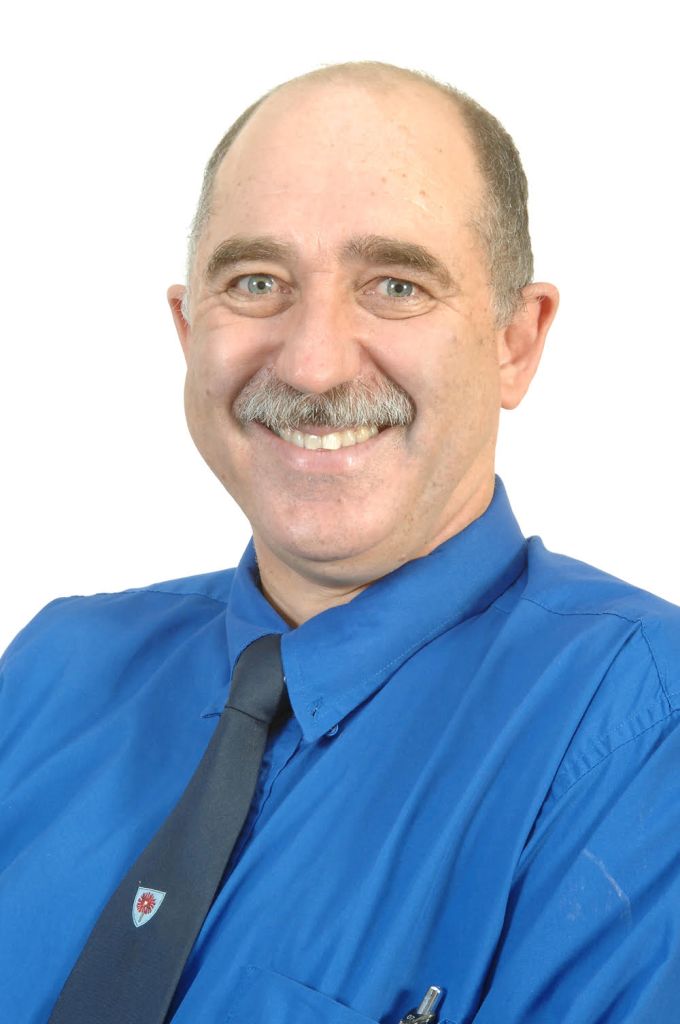
Picture: NWU political analyst, Prof André Duvenhage/Supplied

By BAKANG MOKOTO
10 February 2026- The Republic of South Africa (RSA) president, Cyril Ramaphosa will deliver his 2026 State of the Nation Address (SONA) on 12 February 2026, and he will do so in a world starkly different from that of a year ago. Political uncertainty, strained international relations and domestic pressures mean the president is operating in a political climate that is no longer simmering, but rapidly reaching boiling point.
According to the North West University (NWU) political analyst, Prof André Duvenhage said SONA 2026 is likely to reflect domestic tensions and demands, as well as shifting global dynamics, rather than signalling a dramatic policy shift. Duvenhage said before getting to the SONA itself, he would like to sketch a bit of the broader context.
“We are living in dramatically changing times — at the level of local government, nationally in terms of political developments, but especially internationally. I think all of these environments will, in one way or another, be reflected in the SONA.
“At the local level, I expect the president to highlight certain aspects relating to local government. He may possibly announce an election date or offer particular perspectives in that regard. The fact remains that local government — not only within an electoral context but also as a governance focus — will receive considerable attention,” he said.
Duvenhage further said the ANC is very concerned about its declining support and therefore, he expects both the SONA and the subsequent Budget Speech to place particular emphasis on local government, especially service delivery and related issues. He added that at the national level, he thinks the focus will very strongly be on the Government of National Unity (GNU), its performance and perhaps somewhat concealed its lack of performance.
“Much of the recent populist legislation that has been passed or is in progress — such as land expropriation without compensation, the BELA Act, higher education matters and National Health Insurance — will likely be presented in a positive light.
“The president will attempt to ‘sell’ these developments to South Africans and highlight achievements in particular ways. Naturally, he is unlikely to focus on failures or limited successes, but I do not think that should necessarily dominate our interpretation of the address,” said Duvenhage.
He said internationally, he expects the government to adopt a stance that leans towards Russia, China, Iran, Venezuela and Cuba, which implies a fairly strong anti-American posture. Duvenhage said the relations between the United States and South Africa have clearly deteriorated significantly.
“One can think, for example, of legislation currently being considered in the US Congress that increasingly identifies South Africa not merely as an opponent of the US, but potentially even as an adversary. Donald Trump has spoken quite explicitly on this matter.
“I also expect that there may be passing references to issues of perceived disloyalty. Here one might think of organisations such as Solidarity and AfriForum, which the president has suggested are not acting patriotically, as well as debates around farm murders, transformation and minority concerns. I expect he may respond quite strongly to those narratives,” he said.
Duvenhage said furthermore, the president is likely to follow traditional ANC themes. He said he thinks he will refer to commissions of inquiry and investigative processes, emphasising that committees have been appointed, that investigations are underway, and that progress will continue over the course of the year.
“The identification of certain police officials in ongoing matters may also be presented as evidence that action is being taken. Economic growth will almost certainly receive strong emphasis. Figures will probably be cited to suggest either improved growth or improved prospects, despite the reality that the economy has grown at less than 1% annually over the past decade.
“Infrastructure development should also feature prominently. Issues relating to women and children, gender inequality, crime prevention and related social concerns will likely form part of the familiar political rhetoric. The recent appointment of a new National Director of Public Prosecutions may also be highlighted, although arguably this is simply another Ramaphosa-era appointment,” said Duvenhage.
He said it will be interesting to observe the behaviour of opposition parties in this context. Duvenhage said he knows for a fact that within the Government of National Unity there is no consensus on certain issues, particularly foreign policy.
“We are also seeing a significant repositioning of political forces and alliances, and this could in some way be reflected in the State of the Nation Address. In short, I do not believe the president has much genuinely positive to report, and I expect the aftermath of the address to involve substantial and possibly intense criticism, both of him personally and of the substance of the speech.
“This brings me back to my opening point: we are living in very uncertain times. Political dynamics are being reshaped rapidly, and in my personal view — which is simply an opinion — South Africa is struggling to adapt to these changing circumstances,” he said.
 The Guardian