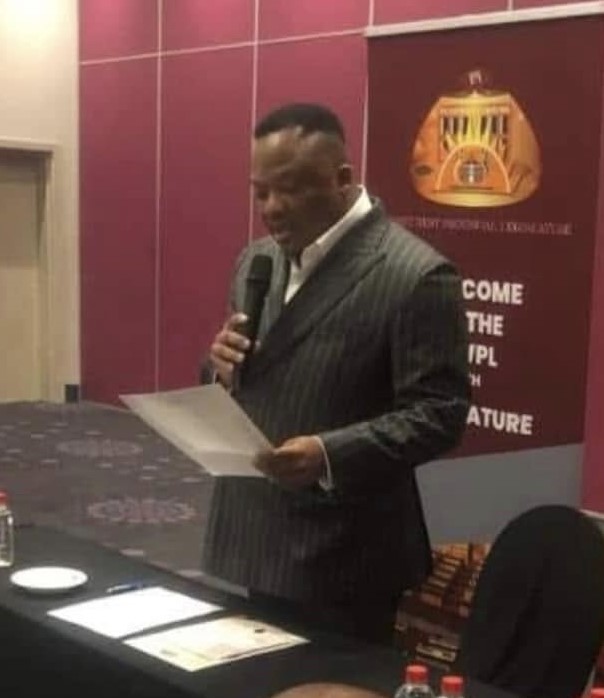
Picture: The Chairperson of the Ad Hoc Committee, Nathan Oliphant
By REGINALD KANYANE
20 January 2026- The North West Provincial Legislature’s Ad Hoc Committee established to investigate allegations made by the Naledi Local Municipality mayor, Clifton J Groep against the North West Premier, Lazarus Mokgosi, will resume its work from 26 to 30 January 2026. This comes after the conclusion of the first round of witness testimonies during the Committee’s sittings held from 24 to 27 November 2025, as well as the extension of the Committee’s mandate by the Legislature until 31 March 2026, to allow sufficient time for the completion of its work.
The Chairperson of the Ad Hoc Committee, Nathan Oliphant said the forthcoming sittings will commence with the continuation of testimony by the former Director: Corporate Services at the Naledi Local Municipality, Thabo Appolus. Oliphant said evidence will continue to be led by the senior counsel, Pule Seleka.
“The hearings will take place at the Sun City Convention Centre, daily from 9am. I reaffirm that the Committee continues to execute its work in a manner that is fair, transparent and consistent with the principles of natural justice and the Legislature’s constitutional oversight responsibilities, and emphasised that the Committee will not pre-empt the outcome of its deliberations.
“Members of the public and interested stakeholders are encouraged to access the Ad Hoc Committee webpage for more information on the work of the Committee at: https://nwpl.gov.za/adhoc-on-premier/. Further details regarding the programme and procedural arrangements will be communicated in due course,” he said.
Picture: Executive Secretary, African Refiners and Distributors Association (ARDA), Anibor Kragha
Investors do not chase potential – they chase predictability. Africa has plenty of the former and is steadily building the foundations for the latter.
The downstream sector is at a make-or-break moment. Population growth, industrialisation and urbanisation are pushing fuel and LPG demand to unprecedented levels. The opportunity is immense – but it will remain theoretical unless the continent addresses regulatory fragmentation, infrastructure gaps and financing hurdles that continue to undermine investor confidence.
This is where the African Refiners and Distributors Association (ARDA) is taking the lead: building a modern, coherent ecosystem for Africa’s downstream industry – one where projects are structured, transparent, compliant and investment-ready.
Capital flows to discipline, bankability, and credibility—not uncertainty. That’s why, to turn Africa’s downstream potential into real investment, ARDA is advocating for concrete action: harmonised fuel standards, upgraded infrastructure, and a proven track record of delivering projects on time and within budget.
Africa’s Energy Demand: The Demographic Boom Demanding Investment
By 2050, one in every four people on earth will live in Africa. This demographic reality will either power prosperity or deepen dependence. The decisive factor will be investment in the continent’s downstream sector – refining, storage, distribution and end-use fuel systems.
Current trends make the opportunity impossible to ignore:
Crude oil consumption in Africa is set to rise from 1.8 million barrels per day in 2024 to 4.5 million barrels by 2050. Yet downstream investment has stagnated even as upstream production grows, leaving Africa stuck in the costly paradox of exporting crude and importing refined products at a premium.
OPEC estimates that Africa will need over $100 billion in refining investment between now and 2050 – a mix of upgrades, expansions and greenfield projects in order to meet the continent’s booming demand for petroleum products over the same period.
The opportunity is immense. But the barriers are equally real.
Why Downstream Projects Fail: The Bankability Gap
Across the continent, downstream projects rarely advance beyond the drawing board because they fail the first test applied by global investors: bankability.
Investors want clarity, not chaos. They look for predictable feedstock and offtake arrangements, stable regulation, enforceable contracts and credible technical and financial modelling. They expect realistic timelines, professional project preparation and ESG compliance that can unlock lower-cost capital. Instead, they often encounter inconsistent policies, market fragmentation, shallow ports, congested depots, inflationary pressures, exchange-rate volatility and mismatched fuel specifications.
Fuel Specifications: A Hidden Barrier to Investment
Across the 54 African countries, 46 maintain national fuel specifications, yet the continent still has 12 different gasoline grades with sulphur levels ranging from 10 to 2,500 ppm, and 11 diesel grades ranging from 10 to 10,000 ppm. Closing these gaps is essential: upgrading existing African refineries to meet cleaner fuel standards would require about $16 billion – an investment that would unlock regional trade, improve efficiency and create economies of scale.
Infrastructure Challenges: A Drag on Africa’s Energy Potential
A 2024 whitepaper by CITAC and Puma Energy, highlights major logistical constraints. Many African ports are too shallow for large vessels, berths are congested, storage capacity is often inadequate, and roads and pipelines are over-used, with widespread single points of failure. Collectively, these shortcomings add $20–30 per tonne to landed fuel costs and erode investor confidence in the system’s reliability.
Despite the expansion of refining capacity, with the Dangote refinery and others coming onstream, this alone will not close the supply shortfall or enable the continent to deliver cleaner fuels at scale.
Africa faces broader challenges in moving fuel efficiently across the continent, which results in inefficient and incomplete supply chains from coast to inland zones of consumption, including the mining sector, stifling economic growth.
Addressing Africa’s energy security challenges depends equally on transport infrastructure. Both coastal and land-linked countries require coordinated investment in pipelines, roads, and rail networks to ensure that petroleum products can reach markets reliably and at lower cost to the consumer.
Clean Cooking: A Massive Untapped Market
More than one billion Africans still rely on biomass for cooking, and the number has grown by 220 million since 2010. The health, environmental and social consequences are enormous – and so is the opportunity. The scale of unmet demand positions Africa as one of the most attractive markets for LPG investments globally.
The conclusion is unavoidable: Africa must modernise its downstream industry to attract global capital, and ARDA is leading this transformation.
ARDA’s Blueprint for Investment-Ready Downstream Markets
As the continent’s leading voice for the downstream sector, ARDA advocates for technical standard-setting, acts as an investment catalyst and partners on policy. Its mission for Africa is clear: build a bankable, future-ready downstream sector capable of attracting global capital at scale.
The association has identified five strategic priorities designed to create a fully investment-ready ecosystem.
1. Harmonising Fuel Specifications
ARDA is driving adoption of low-sulphur AFRI standards, including AFRI-6 (10 ppm), to enable regional markets, reduce supply-chain costs, improve public health, support refinery upgrades and align Africa with global norms. Through partnerships with the African Union Commission, IPIECA, UNEP, and regional economic communities, ARDA is advancing a continent-wide shift to cleaner fuels.
2. Rebuilding Infrastructure End-to-End
ARDA advocates a comprehensive upgrade of the downstream value chain – including deeper ports and modernised jetties, offshore SPMs and CBMs, expanded storage facilities with tanks exceeding 150,000 m³, new and rehabilitated pipelines, and multimodal logistics systems designed for redundancy. These improvements are essential for achieving economies of scale and giving investors the confidence that supply systems can perform reliably.
3. Embedding Regulatory and Investment Discipline
To ensure projects are fundable, ARDA promotes transparent, long-term regulatory frameworks; turnkey, fixed-price EPC contracts; bankable offtake agreements; and rigorous project preparation covering scope, cost, schedule, technology, economics and compliance. ARDA also advances ESG-aligned project design, enabling access to the sustainable finance instruments increasingly favoured by global capital markets.
4. Delivering Clean Cooking at Scale
Recognising LPG as both a health and climate priority, ARDA supports the rollout of large-scale LPG and bio-LPG infrastructure, advocates policy reforms that accelerate adoption, and drives partnerships such as the innovative ARDA-GLPGP drive to mobilise public and private sector capital into a $1 billion LPG Fund that will identify, conduct due diligence and finance bankable LPG projects to propel sustainable LPG market growth across Africa.
5. Building a Pipeline of Bankable Projects
Through seven thematic workgroups – Refining & Specifications, Storage & Distribution, LPG, Regulation, Sustainable Financing, HSE & Quality (HSEQ) and Human Capital – ARDA is promoting standardised frameworks, sharing best-in-class technical expertise and championing the building of a resilient workforce to achieve Africa’s energy transition ambitions.
A register of investable downstream projects is being built, with clearly defined feedstock, offtake structures and governance, while ARDA’s platforms – including high-level forums such as the recent Storage, Distribution & Jet Fuel Forum in Dakar, Senegal and the LPG Forum in Lusaka, Zambia – are used to highlight key bottlenecks and accelerate policy reforms that attract investment.
Additionally, a Training School – the Human Capital Centre-of-Excellence at ARDA’s Headquarters in Abidjan, Côte d’Ivoire – offers capacity-building programs for the ecosystem and maintains a database of pan-African industry professionals to support project execution across the continent. This initiative is helping to develop the leaders and professionals of tomorrow who will drive the industry’s growth and advance Africa’s energy transition.
The Bottom Line for Investors
Africa’s downstream sector is one of the world’s last large-scale, high-growth energy investment frontiers. The demand curve is defined by demographics. The supply deficit is structural. The capital requirement exceeds $100 billion. And the economic upside is transformative.
One thing is certain. For investors seeking long-term returns anchored in real demand, Africa’s downstream sector is not just an opportunity – it is the next frontier.
But capital will only flow where discipline is demonstrated, and that discipline is precisely what ARDA is building through a harmonised, integrated, ESG-ready downstream ecosystem designed for investment.
Anibor Kragha
Executive Secretary, African Refiners and Distributors Association (ARDA).
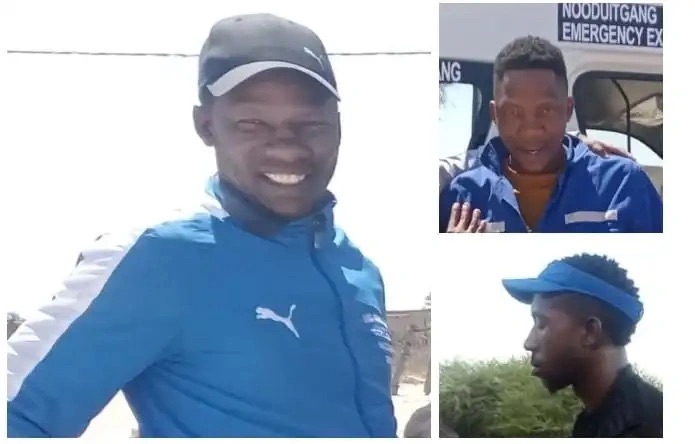
Setshwantsho: Balatofadiwa ba polao, Bakang, Phenyo Katong le Katlego Mosimege
OBAKENG MAJE
20 Ferikgong 2026- Kgetsi ya polao kgatlhanong le banna ba le bane ba kwa motseng wa Manthe, gaufi le Taung, e tla boela kwa kgotlhatshekelo ya sedika ya Taung fa kgwedi ya Ferikgong e tlhola matsatsi a le 22. Bakang Katong (32), yo o atlholetsweng dingwaga di le robedi kwa kgolegelong mo kgetsing ya petelelo, ga mmogo le balatofadiwa nae mo kgetsing ya polao, Thabang Lenyai (23), Katlego Mosimege (31) le Phenyo Katong (34), ba ne ba tshwarwa dingwaga di le nne tse di fetileng morago ga go latofadiwa ka go bolaya Thabiso Mothibedi (35), setlhogo.
Go begwa fa ba ile ba mo teketa le go mo golegelela mo generateng. Seno se tla morago ga gore ba mo latofatse ka go ba utswetsa madi a seatleng a lekanyediwang go R20 000 le motsoko wa R600.
Sebueledi sa sepodisi mo Bokone Bophirima, Lieutenant Colonel, Sam Tselanyane, o ile a tlhalosetsa ba lekwalo-dikgang la The Guardian Newspaper gore dipatlisiso di shupa fa tiragalo e, ele ya di 29 Moranang 2022. Tselanyane are go ile ga begwa fa moswi a ile a siela kwa motseng wa Longaneng.
“Fela, go begwa fa balatofadiwa ba ile ba tswa letsholo le go mo latela. Go begwa fa go gorogeng ga bone kwa motseng wa Manthe, ba ile ba mo gokelela mo generateng, mme ba mo teketa go fitlhelela a tlhokafala.
“Go begwa fa balatofadiwa ba ile ba tabogisetsa moswi kwa kliniking ya selegae fa ba bona a neela mowa. Baoki ba ne ba ba tlhalosa fa go se sepe se ba ka se dirang go boloka moswi, gonne one a setse a balelelwa le badimo,” Tselanyane wa tlhalosa.
Kgabagare, ka di 1 Motsheganong 2022, baagi ba ile ba bolotsa mogwanto kgatlhanong le balatofadiwa, mme ba ile ba fisa matlo a bone a le mararo le sejanaga mo tiragalong e. Gape, baagi ba ile thuba le go senya ntlo-maitiso ya balatofadiwa, mme ba itseela le nnotagi.
Go begwa fa Katong a boleletse lekgotlha ka mokgwa wa tiriso ya lekwalo gore o ipona molato mo ditatofatso tsotlhe kgatlhanong le ene. Lenyai le ene go ne ga begwa fa a ipone molato mo ditatofatsong tsotlhe kgatlhanong le ene, fela one a fetoga mme a kopa lekgotlha fa a batla go fetola mmueledi wa gagwe.
Go begwa fa Katong o tlhaloseditse lekgotlha fa Mosimege le mogoloe, Phenyo, ba ne ba sena seabe mo tiragalong e.
Kgabagare, bosekisi le bone bo tlhalositse fa boitekanetse go ka tswelela ka tsheko, mme bo shupa fa bona le kgetsi e kwenneng kgatlhanong le banna ba, ba le bane. Tsheko mo kgetsing e, ene ya bosediwa morago mo letsatsing la maabane gonne balatofadiwa ba bangwe ba ne bas a iponagatsa kwa kgotlhatshekelo ntle le Bakang Katong.
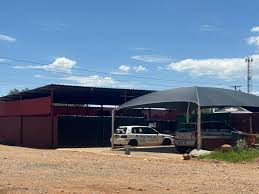
Picture: The Meat Brother’s Pub in Lokaleng village, near Taung
By OBAKENG MAJE
20 January 2026- The Magistrate, National Prosecuting Authority (NPA) and other stakeholders involved in an attempted murder case against The Meat Brother’s Pub owner, Tshwaro Mangwegape (41), will conduct a loco inspection today. This aims to gather firsthand information regarding what might have happened on 17 December 2023, when Mangwegape allegedly shot and killed the NWU Soccer Institute player, Undivile “Vilo” Mdi (28) and injured his friend, Aobakwe Ernest Kokwe (33).
The trial in this case commenced on Monday.
On 17 December 2023, Mdi and Kokwe were amongst patrons who visited The Meat Brother’s Pub that was full to capacity. It is alleged that Mdi and Kokwe went outside and the security guards refused them entry on their return because the area was packed to capacity. Mdi and Kokowe allegedly tried to gain entry forcefully, but Mangwegape allegedly pulled out a gun and shot at them.
Mdi was fatally shot, while his friend was rushed to the hospital with terrible gunshot wounds. The injuries led to Kokwe’s leg being amputated. Mangwegape was arrested and charged with attempted murder and murder. He is out on a R5000 bail and the trial continues.
20 January 2026- The South African National Civic Organisation (SANCO) in Naledi said it will march to the Vryburg Magistrate’s Court today. SANCO said it will be marching regarding the alleged numerous tragic incidents that occurred at a privately-owned residential area in Vryburg.
SANCO Zonal Secretary, Tumisang Badise said about four victims, who were tenants in that yard, have been brutally attacked by pit bull dogs and unfortunately, two of the victims succumbed to their injuries. Badise said these incidents are inclusive of Remoratile Maphike (12), who was attacked by these pit bull dogs on 16 June 2024.
“Although she survived this ordeal, it has left her with severe physical injuries and psychological trauma. The recent incident occurred in the early hours of Thursday, 1January 2026 in the same yard. The victim, Mahommed Shahete (39), died on 2 January 2026 at Joe Morolong Memorial Hospital in Vryburg.
“The motive behind the march is to seek clarity from all relevant stakeholders as to why the pit bull dogs were not killed immediately after the first incident to avoid continuous loss of lives and injuries to others. The South African Police Services (SAPS), SPCA and the North West Department of Community Safety and Transport Management were aware of the first and second incidents, but no arrest was made,” he said.
Badise further said the pit bull dogs were not seized or killed. He added that, according to the police, the owner of pit bull dogs, Annamei Smith and her boyfriend, were arrested after the attack on Maphike, but she was released on warning because according to the court, it was her first offence.
“This puzzles us because before the attack on Maphike, these pit bull dogs killed a man. The third victim had to relocate without opening a case because he received threats from some police officials and the landlord, while trying to lay charges.
“He was ordered to leave Vryburg and he sold his businesses. The mother of a 12 year-old victim is now currently receiving threats from unknown numbers for speaking out to the media and seeking intervention. These threats have provoked the community and swear that there will be no rest, if something happens to the victims,” said Badise.
He said Smith has not paid any hospital bills or compensated any of the victims, not even a follow-up after all these incidents. Badise said instead, she is rude, provocative and racist.
“SANCO, Bua Moagi, Pakistan Association in South Africa, Naledi Council of Churches, ANCWL and the community at large, have been triggered and have raised their concerns for lack of safety in this town. There is no accountability and now the community lives in fear.
“The post-mortem has confirmed that indeed the recent victim was killed by the dog bites, but the owner is still walking free with no remorse,” he said.