10 June 2025- A girl (13) was allegedly mauled by the dogs in Vryburg. It is alleged that, the victim, Remoratile Maphike, was attacked by the dogs of the suspects, Anneme Bam-Smith (42) and Raynold Izak van Niekerk (46), after entering the yard, to get to the residence, where they rented a room with her family.
The Dr Ruth Segomotsi Mompati District Police spokesperson, Warrant Officer Tryphosa van Rooyen said, following the attack, Remoratile was taken to hospital for medical attention.
“The suspects were summoned and are attending court. The case was investigated, then taken to prosecution for a decision, hence the suspects were summonsed.
“Their next court date is on 17 June 2025,” said van Rooyen.
Meanwhile, one of the residents only known as Ndede Uncle Dee said the upcoming court case set for 17 June 2025, highlights the urgent need for accountability in cases of dog attacks, particularly those involving vulnerable individuals such as children. Ndede Uncle Dee said a young girl, who remains severely injured after being mauled by two dogs, is at the centre of this case, which has drawn attention to the responsibilities of dog owners under South African law.
“Both accused, believed to be the owners of the dogs involved in the incident, have been charged under Section 1 to 6 of the Animal Matters Amendment Act 42 of 1993.
“This legislation serves to protect the public from reckless and irresponsible pet ownership, emphasizing that owners must take necessary precautions to prevent their animals from causing harm,” he said.
Ndede Uncle Dee further said the allegations against the accused reflect a serious disregard for these legal obligations. He added that, despite the charges, both individuals have been released on warning, raising concerns about the message this sends regarding the seriousness of dog attacks and the responsibilities of pet owners.
“The law clearly states that owners are liable for any injuries caused by their dogs, and it is imperative that we hold them accountable to ensure the safety of our communities.
“The young victim, whose identity is being protected, continues to suffer from the physical and emotional consequences of this attack. Her injuries have not only caused immense pain and suffering but have also resulted in significant financial burdens for her family,” said Ndede Uncle Dee.
He said medical bills, ongoing treatment, and psychological support are just a few of the costs that her parents are now facing as they seek to help their daughter recover. Ndede Uncle Dee said South African law provides a framework for addressing such incidents.
“This includes strict liability. Dog owners are held strictly liable for injuries caused by their dogs, regardless of whether they were aware of the dog’s aggressive tendencies.
“Owners are required to ensure that their dogs are properly restrained and controlled at all times to prevent harm to others. Failure to comply with these duties can result in criminal charges, fines, and civil liabilities,” he said.
Ndede Uncle Dee said this case serves as a critical reminder of the need for responsible pet ownership and the enforcement of laws designed to protect citizens. He said they call upon the community to support the young victim and her family as they navigate this challenging time and they urge the judicial system to take the necessary steps to ensure justice is served.
“As we approach the court date, we encourage the public and media to remain engaged and informed about this case and the broader implications for animal control and public safety in South Africa,” said Ndede Uncle Dee.
10 June 2025- A rape case against a well-known man (45) in Taung, will resume today in the Taung Magistrate’s Court, for formal bail application. This comes after the accused, Kagalelo Setlhare, who is affectionately known as Starzen, was arrested and charged for rape.
The North West police spokesperson, Brigadier Sabata Mokgwabone said the complainant was attending a Taung Annual Gospel Music Festival at PH Moeketsi High School, a few months ago and she went outside the venue to look for her friend. Mokgwabone said Setlhare allegedly grabbed and pulled her to the nearby bushes, where he allegedly assaulted and raped her.
“Although the complainant works at the place in question, she was not on duty on the day of the incident, but attending a gospel festival. The accused appeared before the Taung Magistrate’s Court.
“He was arrested on Tuesday and charged with rape,” he said.
10 Seetebosigo 2025- Kgetsi ya polao kgatlhanong le monna wa kwa motseng wa Lokgabeng, gaufi le Taung, Simon Molale (23) e tla boela kgotlhatshekelo ya Taung mo letsatsing la gompieno. Molale o latofadiwa ka go tlhaba le go bolaya lekgarebe la gagwe, eleng Tshepiso Medichane (21).
Go begwa fa Molale a ile a tlhabakaka Medichane ka thipa, mme a le botsa phokoje kwa lefelong la tiragalo fa a bonwa ke batho. Fela, go begwa fa ba lelapa la gagwe ba ne ba mo tshwara le go mo isa kwa seteisheneng sa sepodisi sa Taung di ura morago ga tiragalo.
Sebueledi sa sepodisi mo sedikeng sa Dr Ruth Segomotsi Mompati, Warrant Officer Tryphosa van Rooyen are Molale one a tshwarwa le go latofadiwa ka polao ya ga Medichane.
“Ke nnete molatofadiwa mo kgetsing e ya polao o tshwerwe. Molatofadiwa one a isiwa kwa seteisheneng sa sepodisi ke ba lelapa la gagwe.
“One a na le dikgobalo, mme o ile a amogelwa kwa bookelong jwa selegae. Molatofadiwa o lebagane le kgetsi ya polao, mme thipa e e dirisitsweng go bolaya moswi ene ya fitlhelwa kwa lefelong la tiragalo.”
Kgabagare, Molale one a ganelwa ka beile ke kgotlhatshekelo ya Taung morago ga magatwe a gore o lekile go tsaya botshelo jwa gagwe.
Picture: Some of items seized by the police/Supplied
By OBAKENG MAJE
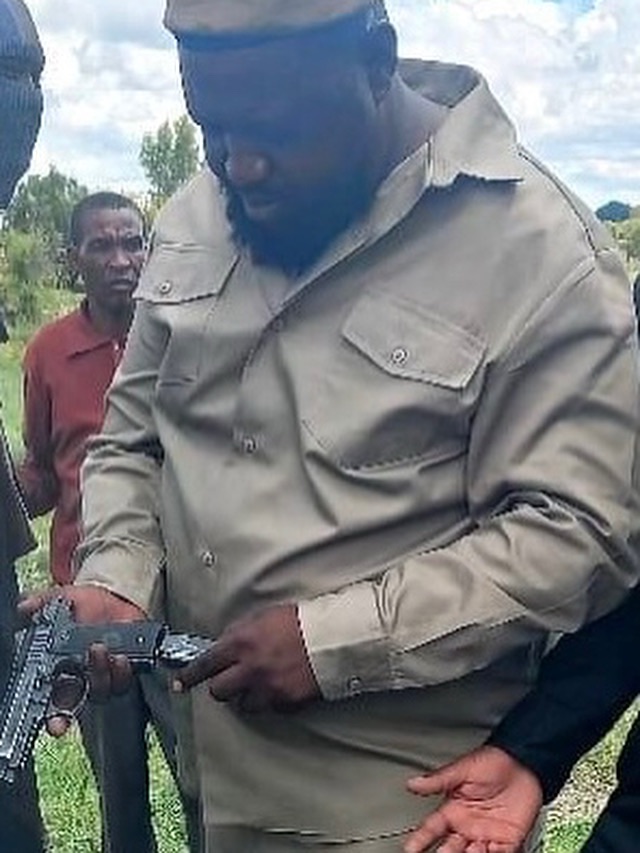
10 June 2025 – More than 851 suspects were nabbed for various crimes during the weekly high density Operation Shanela. They were arrested for crimes ranging from burglaries at residential and non-residential premises, aggravated robberies, murders and rapes.
The North West police spokesperson, Brigadier Sabata Mokgwabone said this includes, dealing in and possession of drugs, driving under the influence of liquor, illegal possession of firearms and ammunition, illegal possession of explosives, which are used during illegal mining and cash in-transit robberies, among others.
Mokgwabone further said the operation was conducted between 2 and 8 June 2025. He added that, out of 851 arrested suspects, it is worth noting that 400 were arrested by the detectives as those on the circulated wanted suspects’ lists.
“Also, 28 illegal immigrants were arrested for being in the country in contravention of the Immigration Act, 2002. As part of the operation, the police identified crime generators through Joint law enforcement compliance inspections to enforce the provisions of the Liquor and Second Hand Goods Acts.
“Twenty six unlicensed Liquor outlets (shebeens) were closed and large quantities of liquor and items such as four vehicles and tobacco products were confiscated. In Rustenburg, a suspected rhino poacher, Sergio Django (40) is expected to make a second appearance in the Rustenburg Magistrate’s Court on 17 June 2025, for rhino poaching,” said Mokgwabone.
He said Django, who is Mozambican, was arrested on Tuesday morning, 3 June 2025, after police and local farmers worked together to stop a vehicle believed to be linked to rhino poaching at Lindleyspoort, near Boshoek. Mokgwabone said the accused was found with an unlicensed hunting rifle, five rounds of ammunition and three knives.
“In Phokeng, crime intelligence led operation by the Rustenburg Tactical Response Team (TRT) led to the arrest of a man (48), for possession of unlicensed firearm and ammunition on 5 June 2025, after being found in possession of a Revolver and 48 rounds of ammunition.
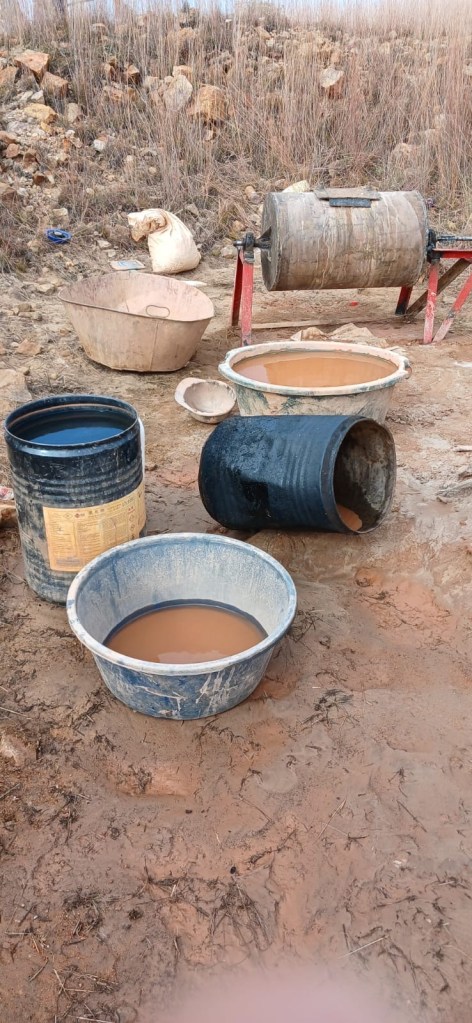
“He was granted R1000 bail upon appearance in the Bafokeng Magistrate’s Court on 6 June 2025. The case was postponed until 22 August 2025. In Klerksdorp, a disruptive illegal mining operation by a multidisciplinary team at Rocin mine in the area of Wolverine on 5 June 2025, led to the confiscation of illegal mining equipment,” he said.
Mokgwabone said among others, included various explosives, four generators, jack hammers, spades, a welding machine, gas bottles, a water pump, four self-made sifting contraptions commonly referred to as pendukas and gold bearing material.
Meanwhile, the acting North West Police Commissioner, Major General Patrick Asaneng said the arrests as well as seizures or confiscation of dangerous weapons, explosives made in a space of a week is testament to the hard work done by members during the Weekly Shanela High Density Operations.
“What is disturbing is that, despite the correctional centres and courts that are overwhelmed by the volumes of detainees, the high levels of serious and violent crimes are not subsiding with Human and Civil Rights groups, wanting to blame this on the police.
“The message that should be clear and unambiguous is that the police will relentlessly pursue those who break the law and violate the rights of law-abiding, innocent and hard-working citizens,” said Asaneng.
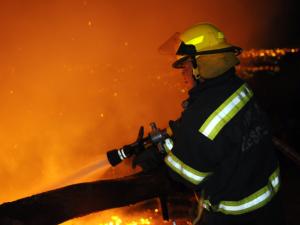
Picture: Fire Department personnel extinguishes fire/Generic
By KEDIBONE MOLAETSI
10 June 2025- As the winter chill tightens its grip, communities across the North West are being urged to remain vigilant amid severe weather conditions as well as strong fire-spreading winds. The North West MEC for Cooperative Governance, Human Settlement and Traditional Affairs (COGHSTA), Oageng Molapisi said as freezing weather is upon them, an increasing dependence on indoor heating techniques like paraffin stoves, heaters and open fires are likely to be the order of the day and community members are therefore advised to exercise extreme caution to avoid disastrous domestic and veld fires.
Molapisi said the weather forecasts indicate that the cold weather will persist over the next coming days, bringing with it a combination of snowfall in high-lying areas, strong winds, severe thunderstorms, and extremely cold daytime temperatures.
“Families are encouraged not to leave children unattended near open flames or heating devices, and to practice safe fire behaviours during the winter season.
“These conditions significantly increase the potential for uncontrolled fires, both in domestic settings and across open veld. Strong winds, in particular, can propel and rapidly spread veld fires, putting lives, property, and natural ecosystems at great risk,” he said.
Molapisi said, in addition, the use of heating appliances and open flames indoors during extremely cold weather often results in accidental domestic fires, especially in informal settlements. He further said they urge all residents and communities to take extra precautions during this winter season.
“Avoid leaving fires, candles, or stoves unattended. Use heating appliances safely and keep them away from flammable materials. Do not start fires in open areas, especially on dry, windy days.
“Report any signs of veld fires immediately to local disaster management or emergency services. Disaster management teams led by Provincial Disaster Management Centre, are on high alert and ready to respond for any eventuality,” said Molapisi.
He added that individuals should do their part to stay warm, safe and protect themselves from unnecessary fire disasters this winter.
Picture: The entrance of Connie Vorster Hospital in Hartswater
By BAKANG MOKOTO
10 June 2025- The Democratic Alliance (DA) has asked the Northern Cape Provincial Legislature’s Portfolio Committee on Health to convene urgently as an alleged growing financial crisis, marked by the non-payment of health care workers, spills over into the districts.
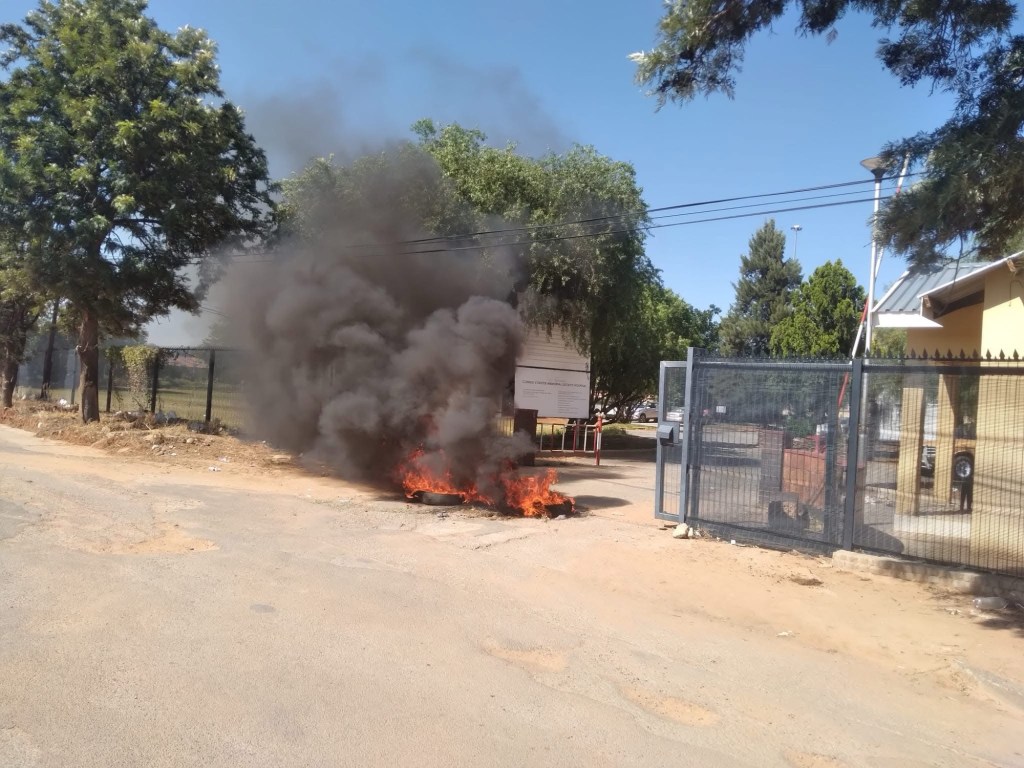
Yesterday, health personnel of the Connie Vorster Hospital in Hartswater, including emergency medical services (EMS) staff members, allegedly downed tools in protest of the deteriorating conditions under which they are expected to work.
The DA spokesperson of Health and Member of Provincial Legislature (MPL), Isak Fritz said the protest comes after a three-week go-slow failed to secure a departmental intervention. Fritz said personnel at Connie Vorster Hospital have not received overtime allowances for time worked on weekends, public holidays and night duty, since March 2025.
“The situation mimics the non-payment of sessional doctors in places like Warrenton, and outstanding overtime allowances dating back to August, at the Robert Mangaliso Sobukwe Hospital in Kimberley.
“Aside from the gross violation of their employment contracts, the Connie Vorster Hospital is seriously understaffed. With only 16 nurses employed at this district hospital, at times, there are only two sisters on night shift,” he said.
Fritz further said patients wait up to five hours for their files to be traced, without seeing a doctor. He added that sick patients lie unattended for hours.
“Toilets are blocked and the hospital is dirty. Patients complain of going hungry. Mentally ill patients are also not kept in a separate, supervised ward, posing a further threat to staff and patients.
“Despite the Northern Cape MEC for Health, Maruping Lekwene being made aware of the health workers’ plight at an event last week, he remains tone deaf to the challenges faced by health care personnel,” said Fritz.
He said instead of treating the escalating crisis at Dr Connie Vorster as a priority, showing that he truly values our frontline health care workers, he spent the weekend campaigning for the upcoming Ward 1 by-election in Sol Plaatje.
Fritz said they have submitted a written request to the Chairperson of the Portfolio Committee, detailing their concerns and asking for a meeting to be scheduled with the provincial department and provincial treasury, as soon as possible. He said healthcare workers are already waging a war on disease, injuries and ill health.
“They should not also have to fight the ANC-led provincial government for decent working conditions and quality healthcare provision,” said Fritz.
Picture: The accused, Clifford Seiso Shoarane/Facebook
By OBAKENG MAJE
10 June 2025- The former Naledi Local Municipality employee, Clifford Seiso Shoarane, who was found guilty of rape by the Vryburg Regional Court, has been sentenced to nine years imprisonment on Momday. Shoarane, who was working as Assistant Manager in the security department at the municipality, raped a woman in Vryburg a few years ago.
It is alleged that the woman in question was a well-known prostitute in Vryburg. According to information, the woman was hitchhiking to go to Huhudi Township when she met Shoarane. Shoarane promised the woman to take her safely to Huhudi, but instead, he headed to a dilapidated building, where he raped her.
After the ordeal, Shoarane dumped the woman in the streets and left. The woman went to the Vryburg Police Station, where she opened a rape case against him.
9 JUNE 2025- In the damp, grassy slopes of the KwaZulu-Natal Midlands, an unassuming amphibian has leapt into the scientific spotlight. Named Breviceps batrachophiliorum – Latin for ‘frog-loving people’ – this newly described species of rain frog is a triumph of taxonomy and a compelling example of the intersection of citizen science and academic rigour. Professor Louis du Preez of the North-West University (NWU) led the discovery, drawing on his long and distinguished career as a herpetologist.
The breakthrough came thanks to three passionate frog enthusiasts: Nick Evans, Dylan Leonard, and Cormack Price. They set out on a mission to spot and document every frog in Prof du Preez’s field guide. One night after some heavy rain, they set out to find the elusive Bilbo’s rain frog (Breviceps bagginsi), named after Bilbo Baggins, from The Lord of the Rings, who also lived in a hole in the ground. When they found what they believed to be Bilbo’s rain frog, they sent a photograph and an accompanying call recording to Prof du Preez.
“There was something curious,” recalls Prof du Preez. “I thought they had mixed up the images and the sounds. But when I pointed this out, they sent a video, and that’s when I realised that we were looking at a new species.”
What followed was a meticulous analysis process, detailed in the African Journal of Herpetology. The team employed an integrative approach, blending morphology, genetics and, crucially, bioacoustics. The frog’s call, a vital identifier in such a visually cryptic genus, diverged sharply from those of its closest relatives. Genetically, it showed a 7.5% difference in mitochondrial 16S rRNA compared to Breviceps verrucosus. This clear signal indicated that this frog was not only new to science but also worthy of its own species status.
Though short-limbed, round-bodied, and earth-toned, B. batrachophobia is far from plain. Its eardrum is unusually visible, a rare feature among its kin, and the position of its mouth sets it apart from B. verrucosus. In acoustic terms, its calls are shorter, faster, and more frequent than those of similar species. Such subtleties are crucial in frog courtship and therefore in species recognition.
Prof du Preez and his co-authors, E.C. Netherlands and L.R. Minter also stresses the importance of this discovery for conservation. With an occupancy area of just 1 108 km², this frog’s habitat is largely restricted to three types of mistbelt grassland in the KwaZulu-Natal Midlands. Although some populations occur within protected areas such as the Clairmont Nature Reserve, the species’ limited range raises concerns about its vulnerability to habitat destruction and climate change.
This tale is about more than just taxonomy. It is also a cautionary tale about the fragility of ecological knowledge. The new frog was once misidentified as Bilbo’s rain frog
(Breviceps bagginsi), a mistake with far-reaching consequences. The description of the new species means that Bilbo’s rain frog is now only known to exist in one population in a highly transformed area, and as a result its conservation status jumped to Critically Endangered. With the correction in place, the true distribution range of both species can be assessed more accurately. This is a small but vital victory for conservation science.
Importantly, the discovery highlights a broader trend. Since 2000, over a third of Breviceps species have been described, a surge largely driven by advances in molecular biology and acoustic analysis. South Africa, with its rich and still unfolding biodiversity, is at the heart of this amphibian renaissance.
Ultimately, Breviceps batrachophiliorum is more than just another new name in a long list. It serves as a reminder that discovery still hides in plain sight, and that with enough passion, patience and a bit of rain, even the quietest calls can be heard.
9 June 2025 – The police in the Northern Cape have expressed a serious concern over the increasing number of violent crimes committed using dangerous weapons—particularly knives. In response, the police are appealing to the public to implement safety measures to help reduce these incidents.
The Northern Cape police spokesperson, Lieutenant Colonel Sergio Kock said people should understand that knives, bottlenecks, and any sharp objects can be classified as dangerous weapons capable of causing serious or even fatal injuries. Kock said tavern owners are urged to employ additional security personnel and conduct thorough searches on patrons entering their premises.
He further said substance abuse and excessive alcohol consumption often contribute to violent altercations in bars and taverns, where sharp objects may be used to injure, rob, rape, or kill. Kock added that people should always handle knives with extreme care.
“Never touch the blade edge and adhere strictly to safety precautions. Store knives securely, out of reach of children and unauthorized individuals. Never use knives as toys or for improper purposes.
“Adhere to all applicable laws, by-laws, and regulations regarding the possession and use of weapons. Unlawful behaviour or possession may result in fines or imprisonment,” he said.
Kock said people should always treat every firearm as if it is loaded, regardless of what they are told. He said people should never handle a firearm without proper training and legal authorization.
“Ensure that you possess a valid firearm license. Wear appropriate personal protective equipment (e.g., bulletproof vests) when handling firearms. Always point firearms in a safe direction—away from people, pets, or valuables.
“Keep your finger off the trigger until you are ready to fire. Firearms must be stored securely and kept out of reach of children and unauthorized individuals. Be alert to the risk of theft or robbery,” said Kock.
He said people should never handle or carry a firearm if they are under the influence of alcohol, medication, or drugs. Kock said they should also avoid bringing firearms to establishments, where alcohol is consumed, such as taverns or nightclubs.
“Remember, safety is everyone’s responsibility.
Always prioritize caution and follow proper procedures when handling dangerous weapons, as misuse can have fatal consequences.
“The SAPS urges all community members to assist in reducing violent crimes. If you see something, say something,” he said.
Picture: The North West Social Development communicator, Lerato Digoamaje/Supplied
By LERATO DIGOAMAJE
9 June 2025- As crime against children surges, the need for deliberate action by all members of the society has never been more urgent. With the trend of recent high-profile cases referencing denominations of child abuse, neglect, and exploitation, such as the kidnapping of Joshlin Smith in the Western Cape and the tragic case of seven-year-old Cwecwe from the Eastern Cape, the national conversation around child protection remains critical to the cause.
Even more jarring is the reality that South Africa, it has been explicitly established that a child goes missing every five hours. These are not just headlines, but a reflection of a ‘pandemic’ that cuts across communities.
If we are serious about rescuing vulnerable children from bleak futures, there is one critical question to tackle: How do we rewrite their destinies?
The uncomfortable truth, often overlooked, is that the answer begins at home. When we grew up in those plastic years, we usually heard parents saying, it takes a village to raise a child.
Every person on the street was a care giver and would do anything in their power to protect children. Today, people tend to turn a blind eye, precisely because it not their child that is being abused.
We have reached a point where we have produced bystanders and videographers of Gender-Based Violence. This is a sign of a broken moral fibre of our society.
The contribution of the family unit in child protection cannot be overstated. It is within these homes that children must feel safe, loved, and valued. Yet, many South African families are tackling with immense pressures, cultural norms, socioeconomic challenges, and, at times, the very systems meant to protect them.
In this climate, government initiatives such as the recent outreach at Thari Primary School in the
Moses Kotane Local Municipality, led by the North West Department of Social Development, remain crucial in addressing child safety and protection. However, no government programme, however well-intentioned, can displace the primary responsibility of parents and guardians in ensuring the role of nurturing potential within each child; a potential that, when left unattended, risks causing more harm and vulnerability for these children.
Recent community-led initiatives, such as the reintroduction of the Chommy programme
in Moses Kotane Local Municipality, highlight the importance of collective action. These
programmes focus on creating safe spaces for children to share their concerns and experiences, as well as providing educational tools that enable them to understand how their rights work and be in better positions to recognise potential threats.
These kind of government initiatives still play a progressive role, but they must be supported by a
cultural shift within many homes. The home should be the first line of defense against
abuse, where children are allowed to speak out with the knowledge that their concerns
will be heard and acted upon.
In South Africa, particularly in the North West province, a total of 751 cases were reported by the South African Police Services (SAPS) in the latest statistics report during the 2024/2025 fiscal year, with sexual abuse and deliberate neglect being primed the most prevalent forms of child abuse.
During this year’s launch of the Child
Protection Week, led by Minister Sisisi Tolashe in the Free State, she revealed an additional worrying load of statistics, that hail that some 26 852 cases were reported during the 2024/2025 fiscal year, with physical abuse playing secondary an approximate of 3965 cases being recorded.
However, the challenges facing families are not just about creating awareness, they are deeply tied to cultural practices and historical contexts linked to our homes. Take, for example, the normalised use of corporal punishment, which is still prevalent across many households, predominantly in rural areas.
Studies have shown that corporal punishment can have severe long-term psychological effects on children, increasing their vulnerability to violence. Additionally, cultural norms that promote emotional detachment between parents and children contribute to a sense of isolation and vulnerability.
These practices not only perpetuate abuse but also hinder open communication, one of the most effective tools in child protection. In homes where children feel emotionally supported, they are more likely to report abuse, neglect, or any form of violence they might be experiencing.
Parents or guardians who foster an environment of open dialogue can spot signs of distress, which could then in turn make the difference between a child’ safety and continued suffering. Emotional literacy does not require financial resources; it requires commitment, time, and the willingness to change cultural practices that have done more harm than good.
In tandem with these grassroots efforts, government initiatives like the North West
Department of Social Development’s intervention in Bojanala Platinum District have proven to play a progressive role in offering a safe refuge for vulnerable children. The department oversees several Child and Youth Care Centers (CYCCs) across the province, which provide key services to children in distressing circumstances.
These centers, including Care 2be Kind, Rustenburg Child and Youth Care Centre, and SOS Children’s Village, offer more than just temporary refuge. They provide educational support, life skills training, and health screening, all of which interplay integral components in the long-term recovery of children who have experienced abuse, neglect or exploitation.
Moreover, the CYCCs in the region, such as the Reamogetswe Child and Youth Care Centre, do not only serve as safe refuges for children between the ages of 0 (the age of infancy) until 18, but also get to provide progressive educational foundations for their future. These centers collaborate closely with local schools and the department’s social
welfare services to ensure that every child in their care receives proper schooling, health checks, and consistent psychosocial support. In many ways, these centres represent the physical manifestation of what families need to become: nurturing, protective spaces where children can heal and thrive.
How do we ensure that the progressive work being done by the government and non-
profit organisations is supported by a parallel cultural shift in family structures?
Government can and does intervene, but the real change begins when each of us takes
responsibility for our children’s safety. The recent case of a newborn baby abandoned in
Boitumelong, Bloemhof, now under government care entities, indicates just how urgent
our collective action should be. Every step, from government interventions to local
community outreach, contributes to preventing these heart-wrenching stories from
becoming the norm.
Parents must understand that child protection is not just the responsibility of schools,
social workers, or the police—it starts with them. Simple actions like engaging in open
communication, fostering empathy, and creating safe emotional spaces can go a long
way in ensuring that children grow up in environments that respect their dignity and
protect their rights. While interventions like the Thari Primary School outreach and the
work done in our CYCCs are essential, we must not forget that the home is where the
foundation for child safety begins.
Let us focus on taking concrete actions within our own homes to foster a culture of
respect, understanding, and care. It starts with the decisions we make everyday as
parents, caregivers, and community members. Through a contingent collective effort, at
home, in our schools, and through government programmes, the urgent call to intervene
on this “pandemic” is a plausible cause.
(Note: Lerato Digoamaje is Communicator in the Department of Social Development based in
Bojanala District Office and the content of the article remain the views of the author. The Guardian Newspaper and its associates do not agree nor disagree with the content written.)






 The Guardian